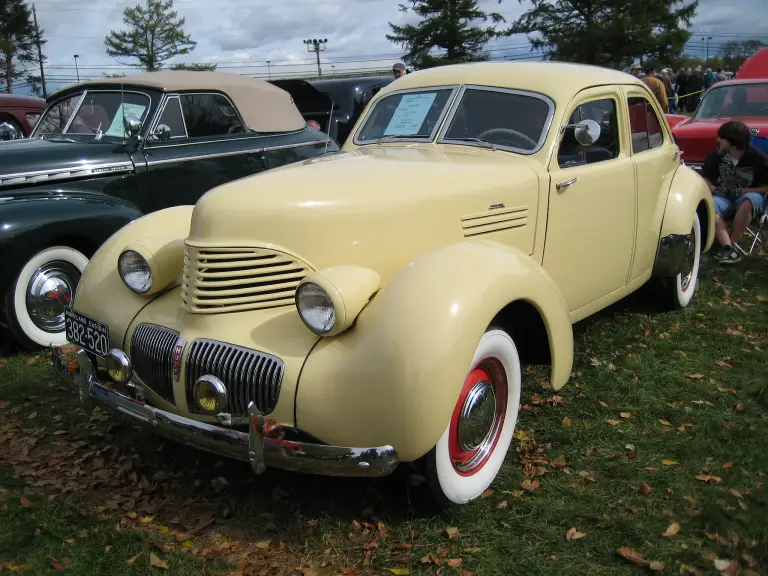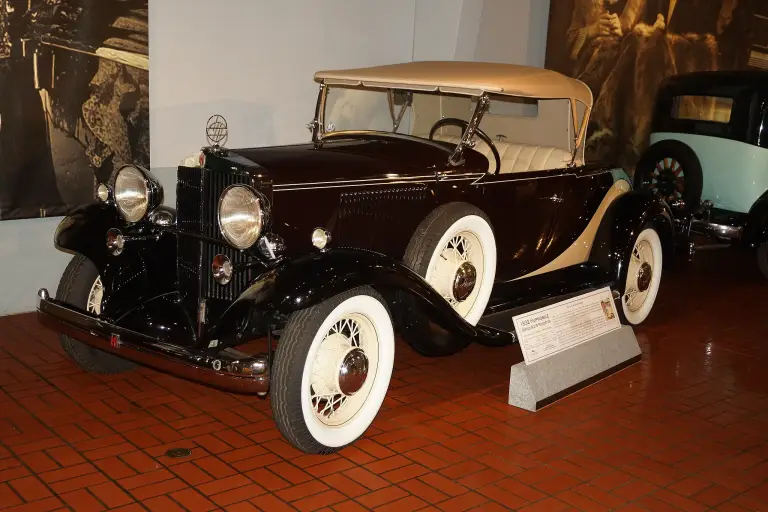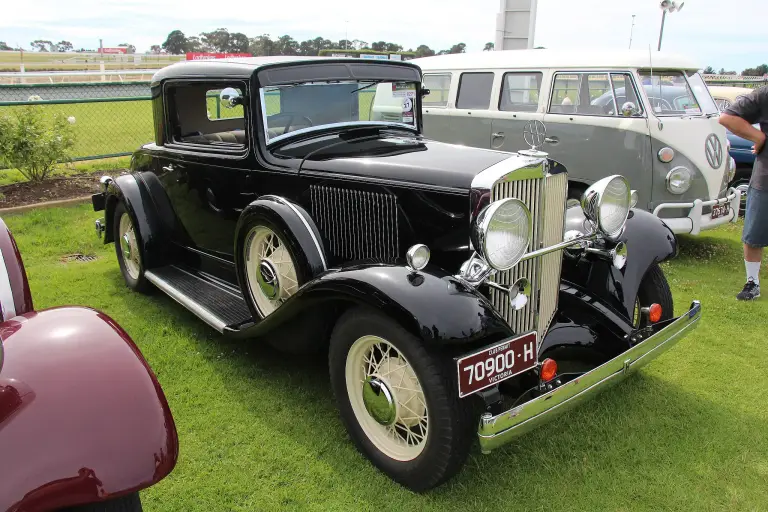
The Hupmobile Aerodynamic was the streamlined body style that Hupp Motor Car Company introduced in 1934, after sales had begun to fall and the make had abandoned the conservative lines it had sold since 1909. The styling was the work of the industrial designer Raymond Loewy.
Hupmobile Aerodynamic at a glance
| Maker | Hupp Motor Car Company, Detroit, Michigan |
|---|---|
| Designer | Raymond Loewy |
| Styling introduced | 1934 |
| Body | streamlined, aerodynamic lines |
| Cheaper companion | Series 417-W with Murray-built bodies |
| Engine | straight-eight from 1925; six- and eight-cylinder line from 1938 |
| Carried over to | Skylark of 1938, built on Cord 810/812 body dies |
| Make built | 1909–1939 |
| Peak sales | 65,000 cars in 1928 |
| Company closed | after 319 Skylarks were built |
There is no separate Wikipedia article on this model: the page is based on the brand article “Hupmobile” in English, German and Italian, which dates the make 1909–1939 (English) or 1909–1941 (German and Italian).
History of the Hupmobile Aerodynamic
Hupmobile had sold upright, conservative cars since 1909 and had been one of the strongest of the smaller Detroit makers: 65,000 cars were sold in 1928. The streamlined Aerodynamic body of 1934 was the make’s attempt to look modern at a time when its sales were already slipping.
Raymond Loewy and the Cyclefender
Sales and production at Hupp began to fall before the Depression set in around 1930. The company’s answer was to leave its conservative product line and turn to the industrial designer Raymond Loewy, who in 1932 drew the Hupp Cyclefender: an elegant roadster that won races but could not reverse the fall in sales.
The Aerodynamic style of 1934
Two years later, in 1934, Hupmobile introduced the elegant Aerodynamic style that Loewy had designed. It was the first body from the make to be shaped around the idea of airflow rather than around the upright radiator and separate wings of the 1920s cars. Alongside it the company offered the cheaper Series 417-W, which used lightly modified Ford bodies built by Murray.
Trouble inside the company
The new styling did not solve Hupmobile’s problems. In 1935 the company had to deal with disputes between its shareholders and an attempted hostile takeover; in 1936 it sold part of its factories and land; and in 1937 production of the Hupmobile was stopped for a time. A new line of six- and eight-cylinder cars arrived in 1938, but Hupp had lost too many dealers and sales stayed disappointingly low.
The last of the line
To win back its old place in the market, Hupp bought the plans of the Cord 810 and Cord 812 from the former Cord Automobile Company in 1938 and showed the elegant Cord design on a cheaper, more conventional car called the Skylark. Thousands of customers ordered one, but delays in production angered buyers and only 319 Skylarks were built before the company closed.
Design and features
- Streamlined shape: the first Hupmobile body designed around airflow, introduced in 1934.
- Loewy styling: the work of Raymond Loewy, who had drawn the Cyclefender roadster two years earlier.
- Two price levels: the Aerodynamic alongside the cheaper Series 417-W with Murray-built Ford-type bodies.
- Straight-eight power: Hupmobile had offered an eight-cylinder model since 1925.
Hupmobile Aerodynamic versions
- Cyclefender (1932): Loewy’s sporting roadster, the first step away from the old styling.
- Aerodynamic (1934): the streamlined body itself.
- Series 417-W: the cheaper line built with lightly modified Ford bodies from Murray.
- Skylark (1938): the Cord-derived body that followed the Aerodynamic idea to its end.
The Aerodynamic idea ended with the Hupmobile Skylark, built on Cord body dies. Closed bodies of the same make are covered in the article on the Hupmobile coupe, and the open cars in the article on the Hupmobile roadster. More cars are in the Hupmobile collection.
Video: 1935 Hupmobile Aerodynamic four-door sedan
Video on YouTube.
Sources
- Hupmobile, English Wikipedia: history of the make, Cyclefender, Aerodynamic style, Cord plans
- Hupmobile, German Wikipedia: Loewy styling, Series 417-W, company troubles
- Hupmobile, Italian Wikipedia: Skylark, production total, end of the company