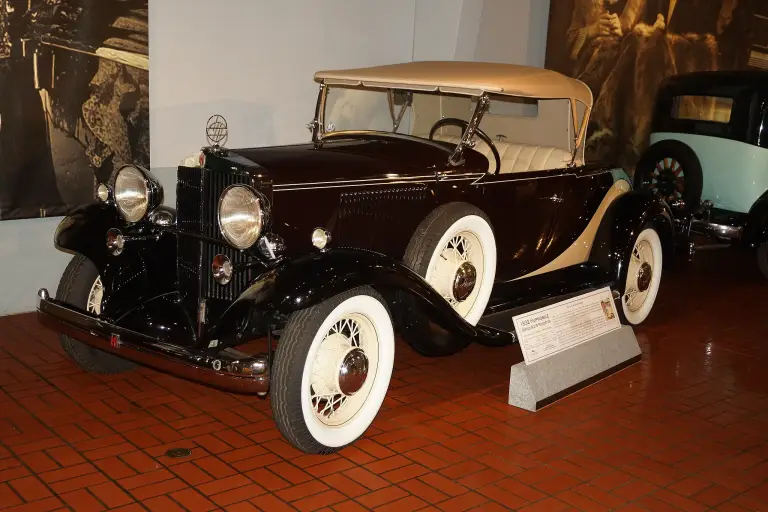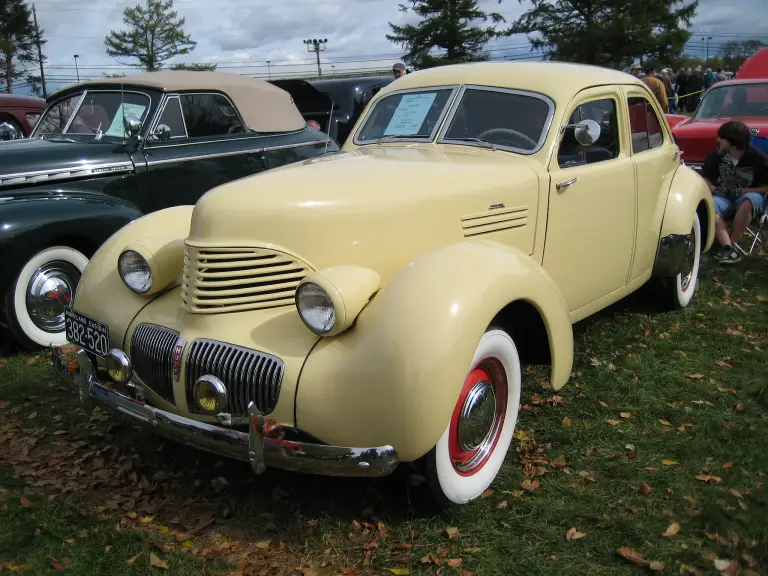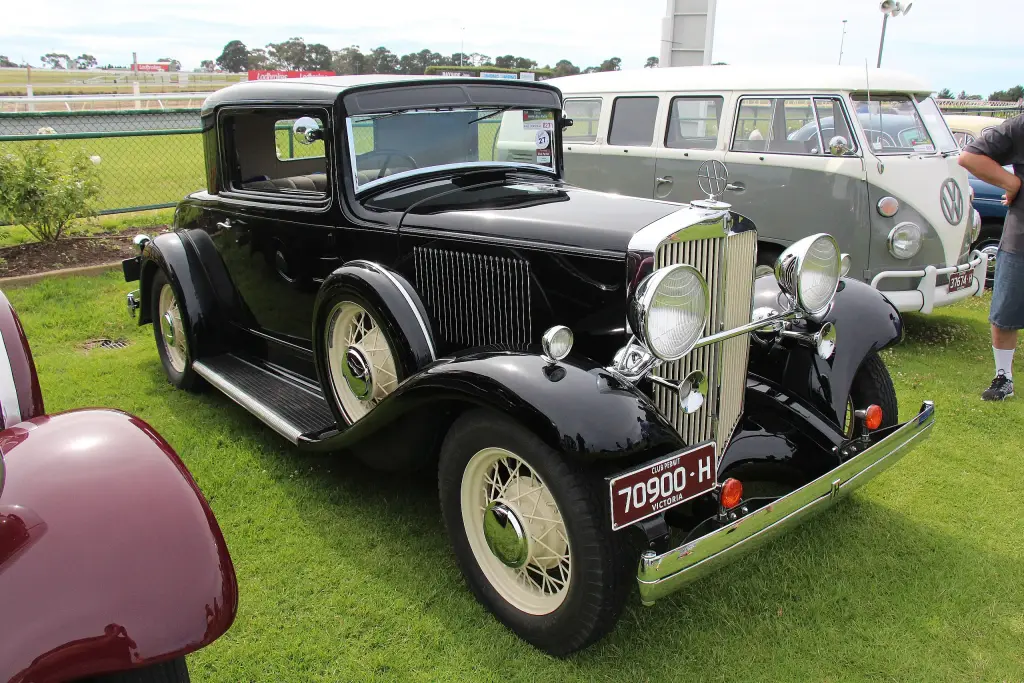
The Hupmobile coupe was the closed two-door body in the Hupp range, offered alongside the open runabout and touring car. The make is remembered for one of the earliest all-steel coupe bodies, built for the Hupp 32 in 1911.
Hupmobile Coupe at a glance
| Maker | Hupp Motor Car Company, Detroit, Michigan |
|---|---|
| Body style | closed two-door coupe |
| All-steel coupe | Hupp 32, 1911 |
| Body development | Hale & Kilburn, Philadelphia |
| First engine | four-cylinder, 16–20 hp |
| Engine from 1925 | straight-eight; the four was dropped |
| Body supply 1919 | over 1,000 bodies a month from C.R. Wilson |
| Own body plant | H & M Body Corporation, founded 1919 with Mitchell |
| Bodies needed 1922 | 20,000, more than H & M could build |
| Sales peak | 65,000 cars in 1928 |
There is no separate Wikipedia article on the coupe; the page is based on the brand article “Hupmobile” in English, German and Italian.
History of the Hupmobile Coupe
Hupmobile was founded in 1909 and sold its first cars with open bodies; closed coupes came with the growth of the range. By the 1920s the coupe was one of several bodies offered on each chassis, and by the 1930s it was a way to sell the make’s eight-cylinder cars to buyers who wanted a closed car for two.
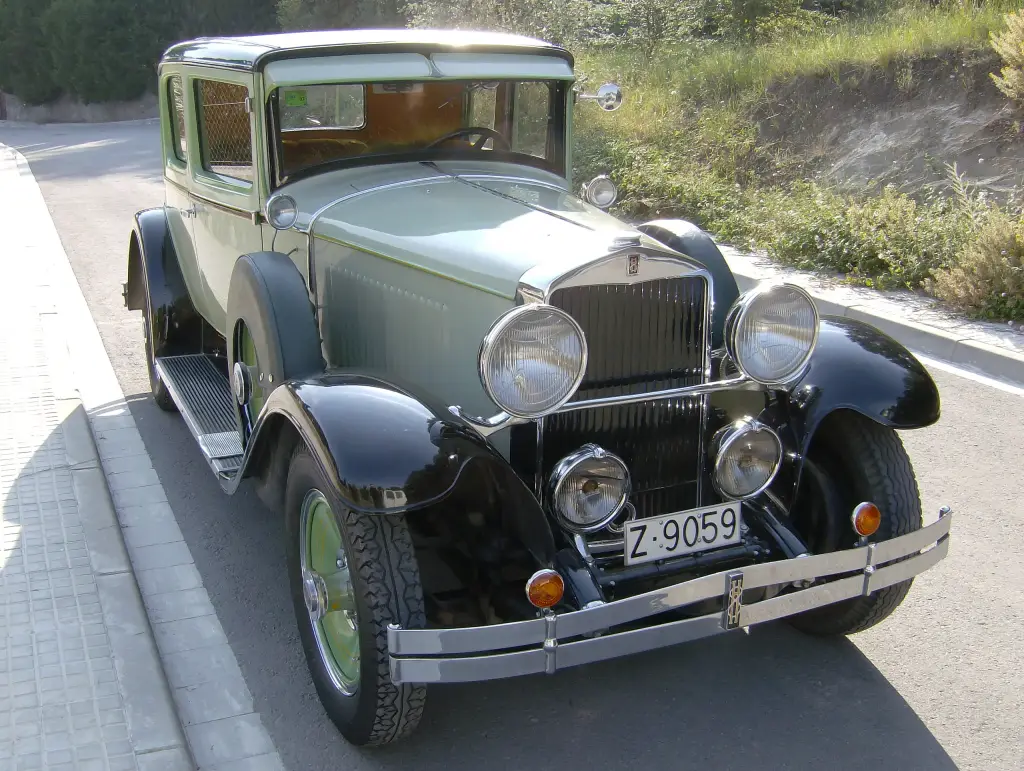
The all-steel Hupp 32 coupe
In 1911 Hupp became one of two makers in the world to pioneer all-steel bodies, together with BSA in Britain. The company’s chief engineer Emil Nelson went to Hale & Kilburn of Philadelphia, where Edward Budd was general manager and Joseph Ledwinka an engineer. None of the Detroit plants would contract to build the body, so the steel stampings were welded by hand at Hale & Kilburn, held together with angle-iron supports, shipped disassembled by rail to Detroit and there assembled, painted and trimmed in the Hupmobile factory.
Both a touring car and a coupe were made this way, and even one Hupmobile limousine. Several thousand all-steel touring cars were built before Nelson resigned in 1912, and the rest of Hupp 32 production went back to conventional body assembly. Nobody thought to patent the process in 1911; when Ledwinka patented it in 1914 the courts later held, using the Hupp 32 as an example of prior art, that his patent was invalid.
Bodies and the eight-cylinder years
As production grew, Hupmobile depended on outside body suppliers. In 1919 it took more than 1,000 bodies a month from C.R. Wilson, and when a strike there stopped Hupmobile production the company joined Mitchell Motors of Racine, Wisconsin, in founding its own body works, the H & M Body Corporation. By 1922 it needed 20,000 bodies, more than H & M could supply. Mitchell went bankrupt in 1924 and the plant was sold to Murray Body.
In 1925 Hupmobile introduced an eight-cylinder model and in time dropped its traditional four, moving upmarket. The make sold 65,000 cars in 1928 and bought the Chandler Motor Car Company for its factories, but sales fell from 1930 and the range became too wide for the numbers built. The last closed Hupmobiles were the streamlined Aerodynamic and the Cord-bodied Skylark, after which the company closed.
Design and features
- Early all-steel body: the 1911 Hupp 32 coupe was built from welded steel stampings, not wood and panels.
- Closed comfort: a two-door body for buyers who did not want the open runabout or touring car.
- Eight-cylinder power: from 1925 the coupe could be ordered with the make’s straight-eight.
- Outside body supply: Wilson and the H & M Body Corporation built bodies by the thousand.
Hupmobile Coupe versions
- Hupp 32 coupe (1911): the all-steel body developed with Hale & Kilburn.
- Four-cylinder coupes (to 1925): closed bodies on the traditional chassis.
- Eight-cylinder coupes (1925 onwards): the larger, more expensive cars.
- 1930s coupes: closed bodies in the Cyclefender and Aerodynamic years.
The open Hupmobiles are covered in the article on the Hupmobile roadster; the streamlined and Cord-based cars in the articles on the Hupmobile Aerodynamic and the Hupmobile Skylark. More cars are in the Hupmobile collection.
Video: 1931 Hupmobile Coupe L
Video on YouTube.
Sources
- Hupmobile, English Wikipedia: all-steel Hupp 32, body supply, eight-cylinder switch
- Hupmobile, German Wikipedia: H & M Body Corporation, sales peak, decline
- Hupmobile, Italian Wikipedia: production growth, place of the make