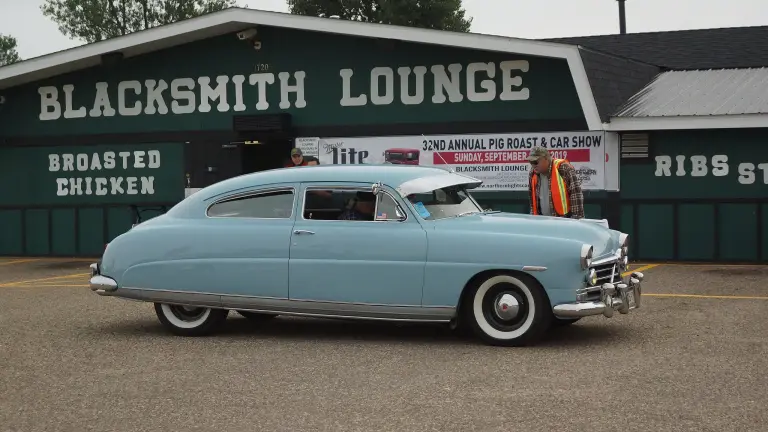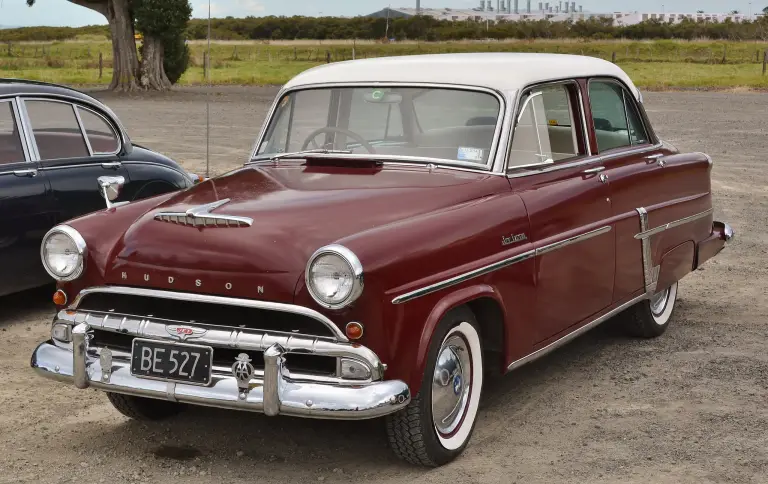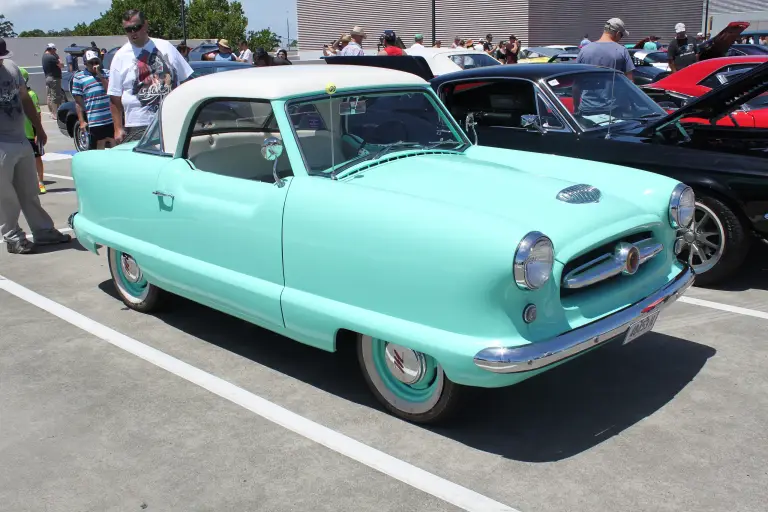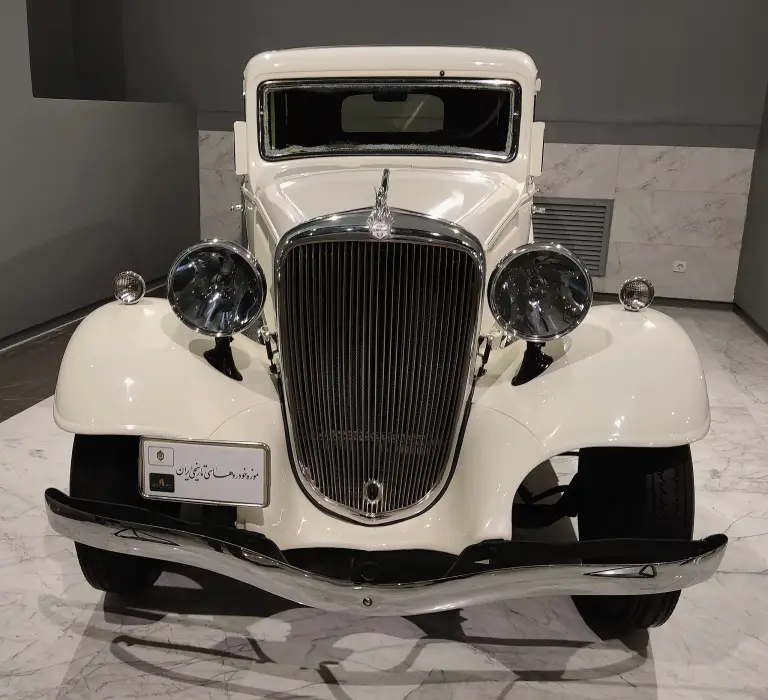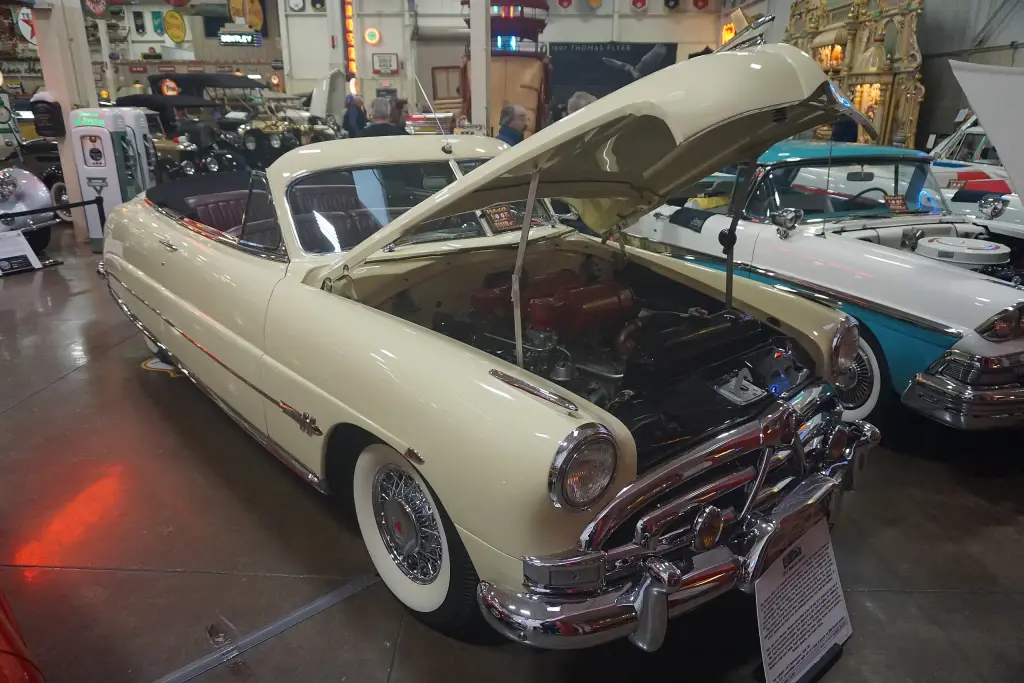
The Hudson Hornet was introduced for 1951 and became the best-known car of the step-down Hudson generation. Its low body, strong flathead six and good roadholding made it a dominant stock-car racer, and after the 1954 merger it continued as a badge-engineered Nash-based model until 1957.
Hudson Hornet at a glance
| Maker | Hudson Motor Car Company, Detroit; from 1955 the Hudson division of American Motors |
|---|---|
| Production | 1951–1954 as a Hudson; 1955–1957 under American Motors |
| Engine | 308 cu in (5.0 L) L-head straight-six, 145 hp with Twin H-Power |
| Torque | 275 lb·ft (373 N·m) at 3,800 rpm |
| 1951 prices | US$2,543 to US$3,099, the same as the Commodore Eight |
| 1951 production | 43,666 |
| 1952 production | 35,921, including about 2,160 hardtops and 360 convertibles |
| 1953 production | 27,208, including about 910 Hollywood hardtops |
| Body styles | two-door coupe, four-door sedan, convertible, two-door hardtop |
| 1954 changes | squared-off body, one-piece curved windscreen, functional hood scoop |
| Twin H-Power | twin one-barrel Carter carburettors, a dealer option at US$85.60 from mid-1951 |
| Chassis | step-down perimeter frame with recessed floor pans |
History of the Hudson Hornet
First generation (1951–1954)
The Hornet was based on the step-down design Hudson had introduced on the 1948 Commodore. The floor pans were recessed between the chassis rails instead of sitting on top of a conventional ladder frame, so the body sat low and the centre of gravity dropped. The car came as a two-door coupe, four-door sedan, convertible and two-door pillarless hardtop, priced like the Commodore Eight.
From 1951 to 1953 the Hornet used Hudson’s high-compression 308 cu in flathead six, developed from the earlier 262 cu in Super Six with a high-chromium alloy block. A factory-optional Twin H-Power system added a second one-barrel Carter carburettor and a dual intake manifold; fitted as standard from 1952, it gave 145 hp and 275 lb·ft of torque. The engine responded well to tuning, and Hudson built “severe usage” parts for racing. Combined with the car’s roadholding, this made the Hornet almost unbeatable on the dirt tracks of the early 1950s.
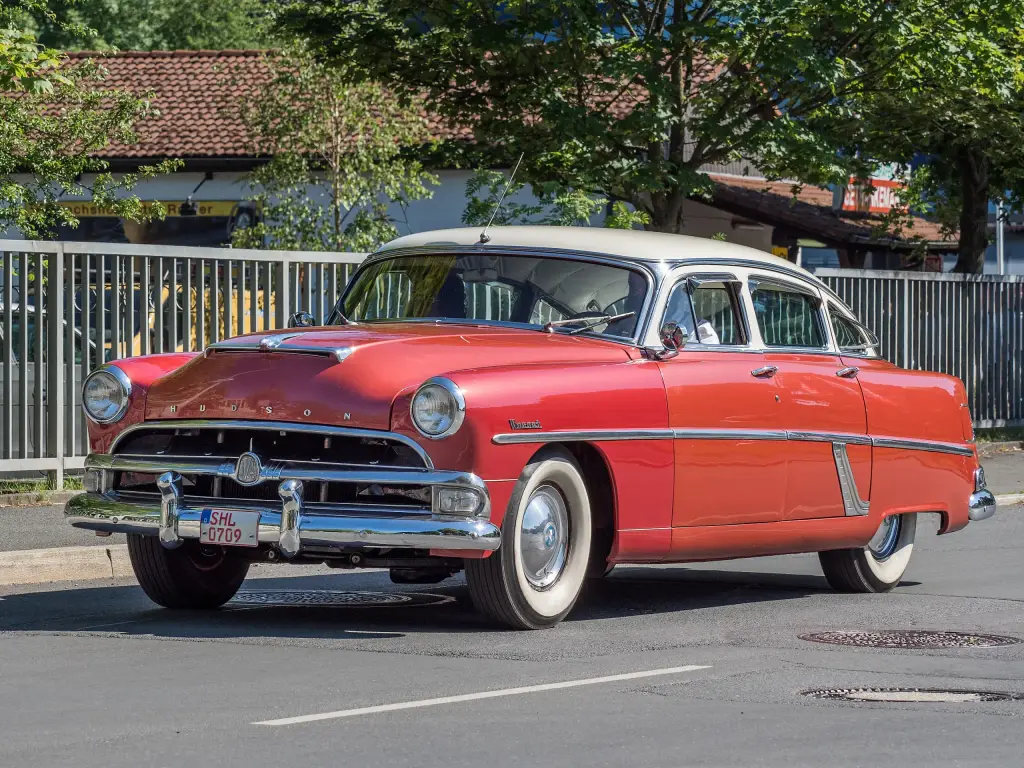
The 1952 cars changed little, and sales began to fall: the step-down body was expensive to restyle, while the big three could change their separate body-on-frame cars every year. For 1953 Hudson added a new grille and a non-functional air scoop on the hood; 1954 brought a major squarer redesign to match the compact Hudson Jet, with a one-piece curved windscreen, a simpler grille and a functional hood scoop that fed cold air to the carburettors.
Second generation (1955–1957)
After Hudson merged with Nash-Kelvinator in 1954 to form American Motors, Hudson production was consolidated at the Nash factory. The second-generation Hornet shared its unibody design and components with the Nash Statesman and Ambassador, and was in effect a restyled Nash sold with Hudson badges. It stayed in the Hudson range through the 1957 model year.
Design and features
- Step-down body: floor pans recessed between the frame rails gave a low centre of gravity and unusually good handling.
- Twin H-Power six: 308 cu in and 145 hp from a flathead engine at a time when rivals were moving to overhead valves.
- Racing record: light, over-built cars with strong torque dominated American stock-car racing in the early 1950s.
- 1954 modernisation: squarer body, one-piece windscreen and a working hood scoop.
Hudson Hornet versions
- Hornet coupe and sedan (1951–1954): the standard two-door and four-door cars.
- Convertible Brougham: open version, about 360 built for 1952.
- Hollywood hardtop: pillarless two-door, about 910 built for 1953.
- Twin H-Power cars: optional in mid-1951, standard from 1952.
- 1954 Hornet: restyled body with the functional hood scoop.
- 1955–1957 Hornet: Nash-based Hudsons built by American Motors.
The Hornet grew out of the Commodore and shared its step-down chassis; the compact Jet was its stablemate from 1953. More Hudson models are in the Hudson collection.
Sources
- Hudson Hornet, English Wikipedia: all facts on both generations