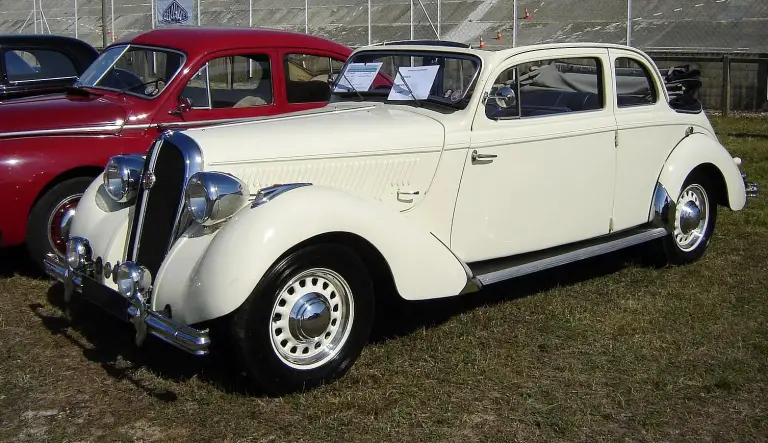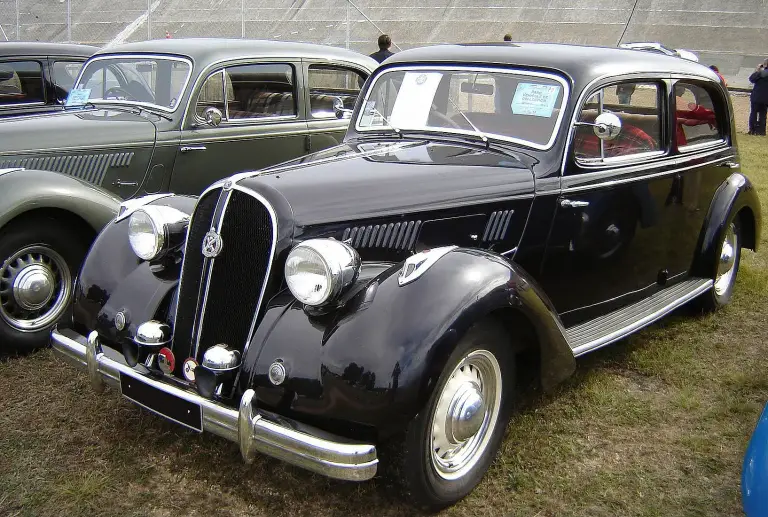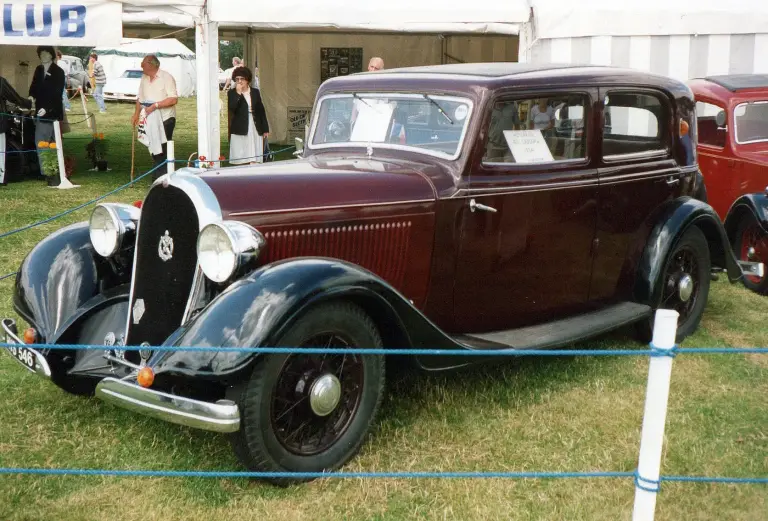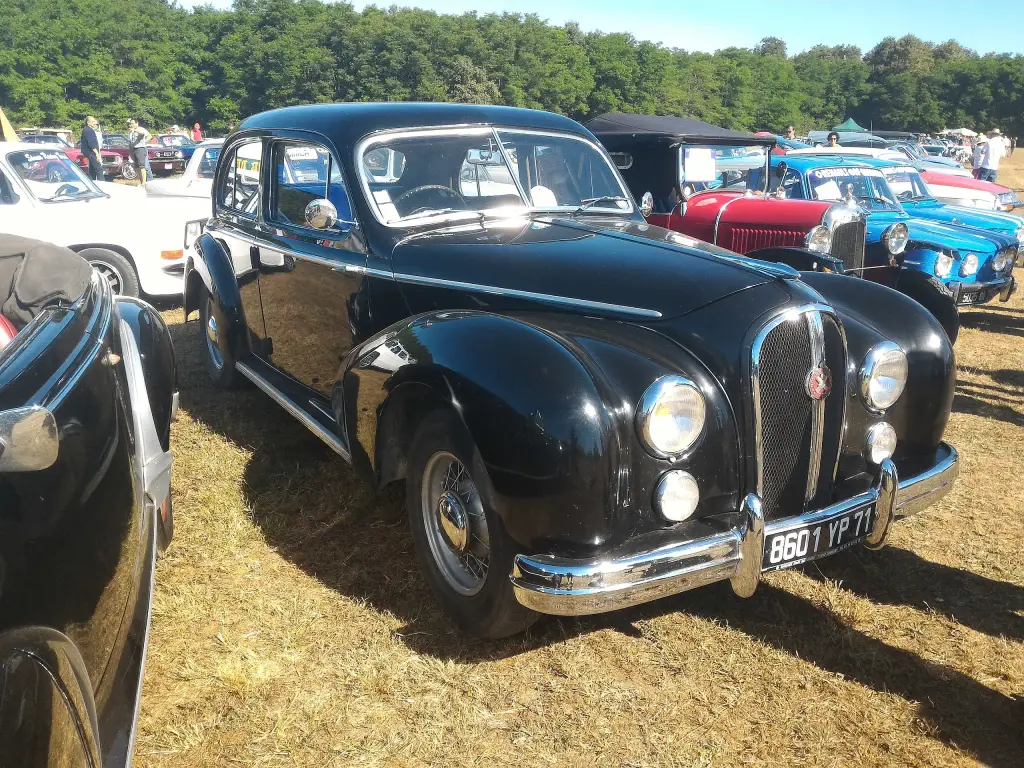
The Hotchkiss Anjou was a luxury car offered between 1950 and 1954, the last large saloon of the French maker Automobiles Hotchkiss. It was an updated version of the 486 and 686/866 cars of the 1930s and inherited their engines, which in turn dated back to overhead-camshaft units introduced in the mid-1920s.
Hotchkiss Anjou at a glance
| Maker | Automobiles Hotchkiss, France |
|---|---|
| Production | 1950–1954, with 1953 the last full year |
| Launched | autumn 1950 |
| Body | large limousine-style saloon, plus a few two-door coupés |
| Small model | 1350, 2,312 cc four-cylinder overhead-camshaft |
| Power | 72 or 75 hp, depending on carburettors |
| Top speed | 130 km/h (81 mph) |
| Large model | 2050, 3,485 cc six-cylinder overhead-camshaft, 20CV class |
| Power, six | 100 or 125 hp claimed |
| Top speed, six | 145 km/h (90 mph) |
| Gearbox | four-speed manual, optional Cotal electromagnetic on the 1350 |
| Built | 5,465, plus about 40 Anthéor cabriolets |
History of the Hotchkiss Anjou
An old car in a new body
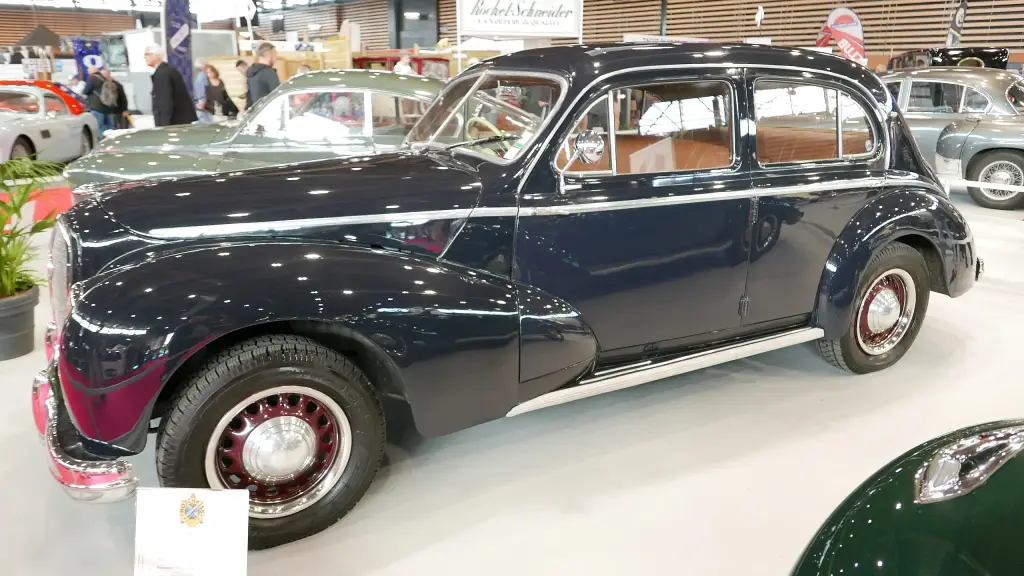
The Anjou was launched in autumn 1950 as the replacement for the 486 and 686/866 models that had first appeared in the 1930s. Its engines came from those cars, the four-cylinder and six-cylinder overhead-camshaft units first introduced in the mid-1920s, and the mechanical layout was equally familiar. What was new was the body: a large limousine-style shell considerably modified from that of its predecessors and characteristic of the period. Most cars were 1350s with the 2,312 cc four, while a longer-nosed version made room for the 3,485 cc six, the 2050, which put the car in the 20CV taxation class and raised claimed power from 72 or 75 hp to 100 or 125 hp.
Sales and taxation
The first year brought 1,787 cars and 1951 a further 2,666, which proved to be the model’s best year. After that the depressed state of the economy and the government’s punitive taxation of large cars took their toll: 815 were produced in 1952 and only 197 in 1953. That was the last year of production, but the company was still advertising new cars for sale at least until the end of 1954, which suggests that its financial problems were made worse by building more cars than it could sell earlier in the Anjou’s life.
Bodies and the Anthéor
A small number of two-door coupés were made, and the two-door cabriolet was sold under its own name, the Hotchkiss Anthéor. Carrosserie Worblaufen in Switzerland also built two four-door cabriolets based on the 2050. Both models were offered with the classic four-speed manual gearbox, and the smaller-engined car could be ordered with the electromagnetic Cotal gearbox, which had four forward and four reverse speeds and is seen by some as a precursor of modern automatic transmissions.
Design and features
- Two engines: the 2.3-litre four of the 1350 and the 3.5-litre six of the 2050, both pre-war overhead-camshaft designs.
- Long-nose six: the 2050’s longer bonnet made room for the six and lifted the car into the 20CV class.
- Cotal gearbox: an optional electromagnetic four-speed with four reverse ratios on the 1350.
- Coachbuilt derivatives: two-door coupés, the Anthéor cabriolet and two Worblaufen four-door cabriolets on the 2050.
Hotchkiss Anjou versions
- 1350: the four-cylinder car, the majority of production.
- 2050: the six-cylinder car with the longer nose.
- Coupé: a small number of two-door closed cars.
- Anthéor: the two-door cabriolet, built in about 40 examples.
- Worblaufen cabriolets: two four-door convertibles by the Swiss coachbuilder.
The Anjou replaced the Artois in 1950 and was sold alongside the far more modern Grégoire. More cars are in the Hotchkiss collection.
Video: Hotchkiss Anjou 1350
Video on YouTube.
Sources
- Hotchkiss Anjou, English Wikipedia: production figures, engines, bodies
- Hotchkiss Anjou, French Wikipedia: place in the range
- Hotchkiss Anjou, Italian Wikipedia: the 1950 Paris Salon