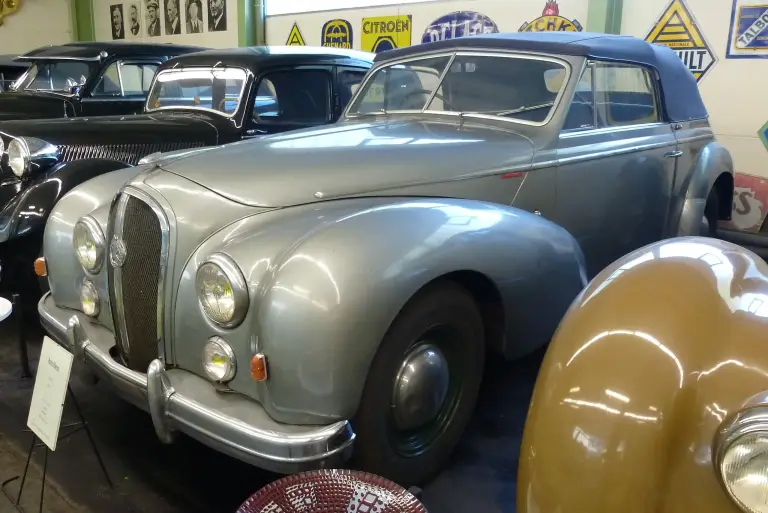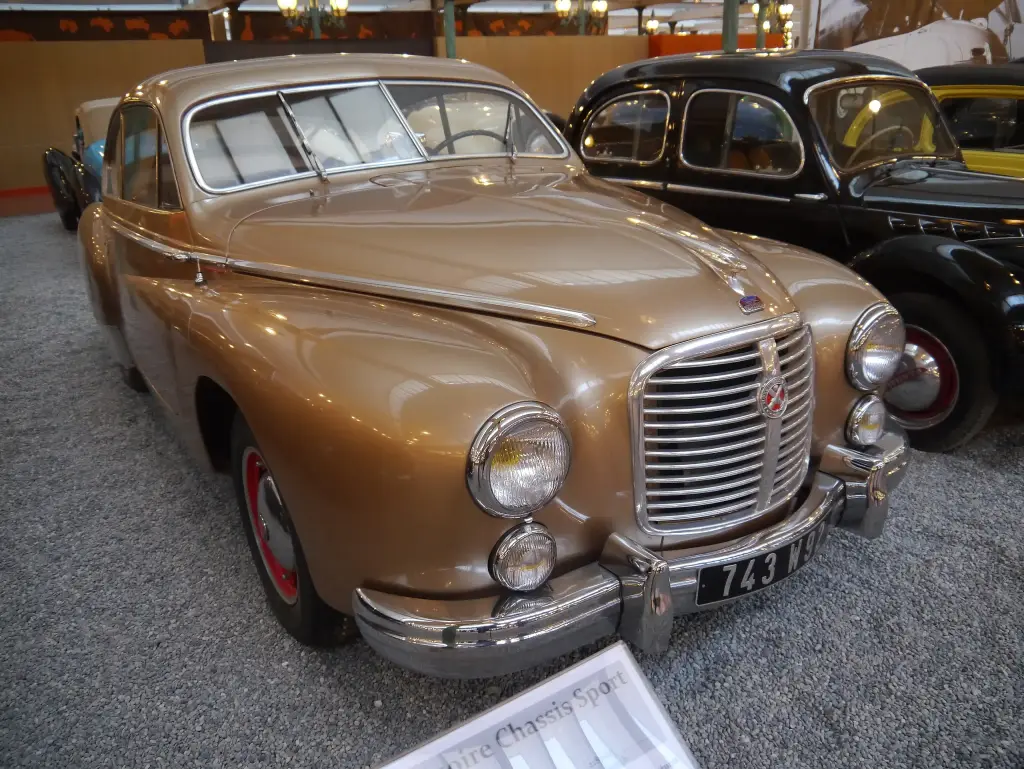
The Grégoire was a luxury car produced from 1950 to 1954 by the French maker Hotchkiss, and only about 247 were built, with serial numbers from 500 to 747. It was a modern-looking four-door saloon built on an aluminium-heavy chassis with front-wheel drive and a flat-four engine, a radical break from the conservative Hotchkiss line.
Hotchkiss Grégoire at a glance
| Maker | Automobiles Hotchkiss, France |
|---|---|
| Production | 1950–1954, with output slowing in 1953 |
| Designer | Jean-Albert Grégoire |
| Body | four-door saloon, 235 of the 247 built |
| Engine | 2,180 cc water-cooled flat-four, horizontal |
| Power | 70 hp claimed, 75 hp from 1952 |
| Drive | front-wheel drive |
| Chassis | lightweight construction with much aluminium |
| Gearbox | four-speed, synchromesh on the upper three, overdrive on fourth |
| Price, 1952 | twice that of a six-cylinder Citroën Traction 15CV |
| Built | 247, serial numbers 500 to 747 |
History of the Hotchkiss Grégoire
Gégoire and aluminium
For more than thirty years each new Hotchkiss had been a gentle evolution of the previous model; with the Grégoire the company made a radical bid for a new generation of cars. The car carried the name of its designer, Jean-Albert Grégoire, who had made his name in the 1930s with front-wheel-drive designs and had spent much of the war working on the use of aluminium in car production. After the war, with demand for aircraft suddenly gone, the young aluminium industry found customers in the more radical designs coming out of the car industry.
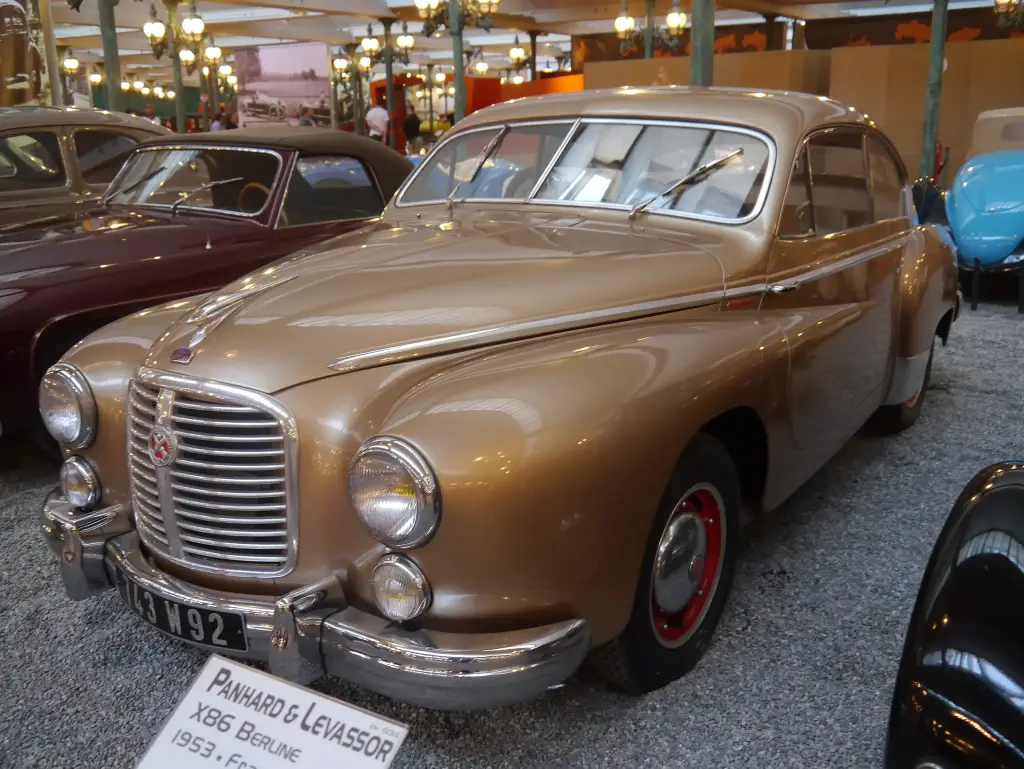
A car unlike any other Hotchkiss
The Grégoire’s most notable feature was its lightweight chassis, which incorporated much aluminium. It also had a new 2,180 cc water-cooled flat-four engine, quoted at 70 hp and from 1952 at 75 hp. Lying flat, the engine allowed a low bonnet line, but it was fitted well forward, which forced a long front overhang. The gearbox had four speeds, with synchromesh on the upper three ratios and overdrive on the fourth.
Price and failure
The car’s commercial performance suffered from the company’s thirty-year record of worthy but conservative saloons. High development costs had to be recovered from few cars, and the low sales led to a high price that depressed sales further: by 1952 the Grégoire cost twice as much as the similarly sized six-cylinder Citroën Traction 15CV, and French taxation of larger cars in the early 1950s made things harder. By 1953 output had slowed to about 40 cars, and when production stopped towards the end of that year 247 had been built, 235 of them four-door saloons. Late attempts to broaden the range included a streamlined coupé with a panoramic rear window bodied by Henri Chapron, and a cabriolet, both shown at the 1952 Paris Salon; the Monceau by Chapron was the last model and was made only in a handful of examples.
Design and features
- Aluminium-heavy chassis: a lightweight structure that took advantage of postwar aluminium capacity.
- Front-wheel drive: the layout Grégoire had championed since the 1930s.
- Flat-four engine: 2,180 cc, 70 hp and later 75 hp, low enough for a low bonnet but mounted far forward.
- Overdrive fourth: a four-speed gearbox with synchromesh on the top three ratios.
Hotchkiss Grégoire versions
- Saloon: the standard four-door car, 235 of the 247 built.
- Chapron coupé: a streamlined body with a panoramic rear window, shown in 1952.
- Cabriolet: a special-bodied convertible shown alongside the coupé at the 1952 Paris Salon.
- Monceau: the final Chapron-bodied model, produced in only a few examples.
The Grégoire was sold alongside the conservative Anjou, which it was meant to succeed, and followed the Artois. More cars are in the Hotchkiss collection.
Sources
- Hotchkiss Grégoire, English Wikipedia: design, engine, price, production
- Hotchkiss Grégoire, French Wikipedia: the 1951 Paris Salon
- Hotchkiss Grégoire, Italian Wikipedia: the end of Hotchkiss car production