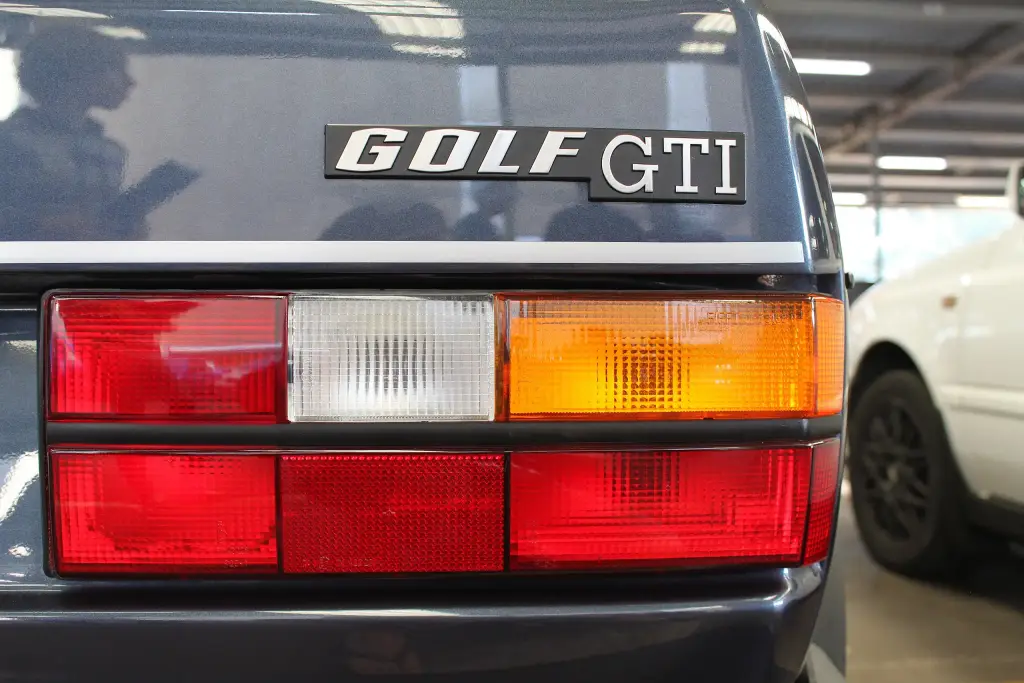

A hot hatch is a small, practical car that has been made to go fast. The idea is about fifty years old, and it gave us cars such as the Golf GTI, the Peugeot 205 GTI and the Honda Civic Type R. This guide follows the idea from the first sporty hatchbacks of the early 1970s to today’s all-wheel-drive and electric versions, and explains what makes a car a hot hatch rather than just a quick one.
The short version
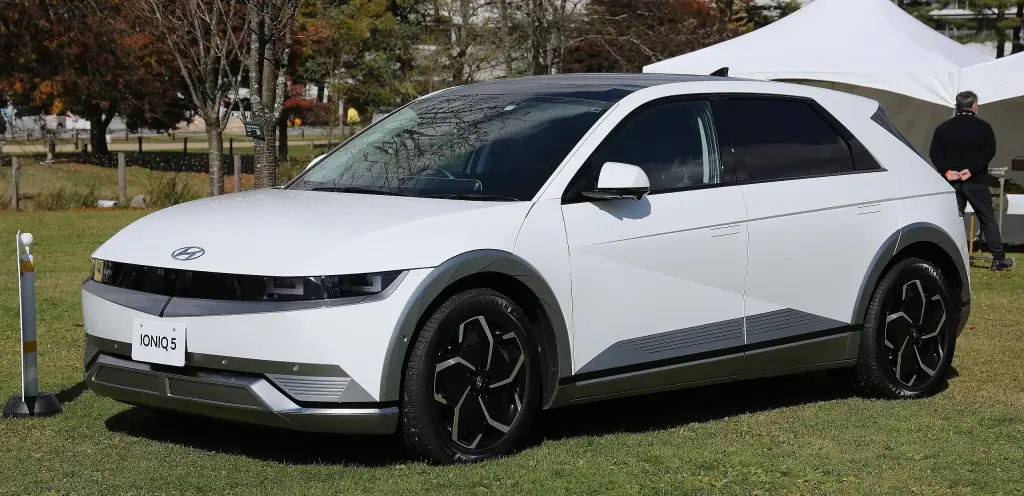
A hot hatch is a high-performance variant of a hatchback. Sporty versions of small hatchbacks appeared in the early 1970s, the Volkswagen Golf GTI made the class popular after 1976, and the market boomed from about 1984, when the name itself was coined in Britain. Most hot hatches use a front engine and front-wheel drive, though all-wheel drive has become more common since around 2010, and the newest record holder for acceleration among electric ones is the Hyundai Ioniq 5 N.
What the name means
The term “hot hatchback” began in the United Kingdom in 1983 and was shortened to “hot hatch” in 1984; it appeared in The Times in 1985. It is applied retrospectively to cars from the late 1970s, which were not called that at the time. The most common layout is a front engine driving the front wheels and burning petrol, and most hot hatches come from Europe or Asia. Since the 1990s and 2000s a second term has been used for slower sporting hatchbacks, the “warm hatch”, for a sort of junior version of a hot hatch. Wikipedia’s examples are the Mini Cooper, which sits below the Mini Cooper S, the Peugeot 207 GT below the 207 GTi, the Suzuki Swift Sport and the Toyota Yaris SR.
1960s and 1970s: before the name
The 1961 Mini Cooper was one of the first performance cars with a small body and front-wheel drive, but it was not built as a hatchback until 2001, so it does not count. The first car to meet the criteria of a hot hatch, according to Wikipedia, was the AMC Gremlin, introduced in the United States on 1 April 1970, with a standard 3.3-litre straight-six and a 5-litre V8 available by 1972. The first European one was the Autobianchi A112 Abarth of September 1971, with a 982 cc engine prepared by the Fiat group’s motorsport division. The Simca 1100 Ti followed in 1973, with its power raised by 40 per cent to 82 hp, and the Alfa Romeo Alfasud Ti with a 5-speed gearbox and a twin-choke carburettor, good for 160 km/h.
- 1970The AMC Gremlin appears in the United States on 1 April.
- 1971The Autobianchi A112 Abarth, the first European hot hatch, is introduced in September.
- 1973The Simca 1100 Ti and the Alfa Romeo Alfasud Ti are launched.
- 1976The Renault 5 Alpine goes on sale in May, and the Volkswagen Golf GTI, announced at the 1975 Frankfurt show, is released.
- 1984The market takes off and many makers add a hot variant to their ranges.
- 1997Honda introduces the Civic Type R.
- 2010The Volkswagen Golf R is the first of several 2010s hot hatches that spread all-wheel drive.
- 2019The Mercedes-AMG A 45 S passes 400 bhp.
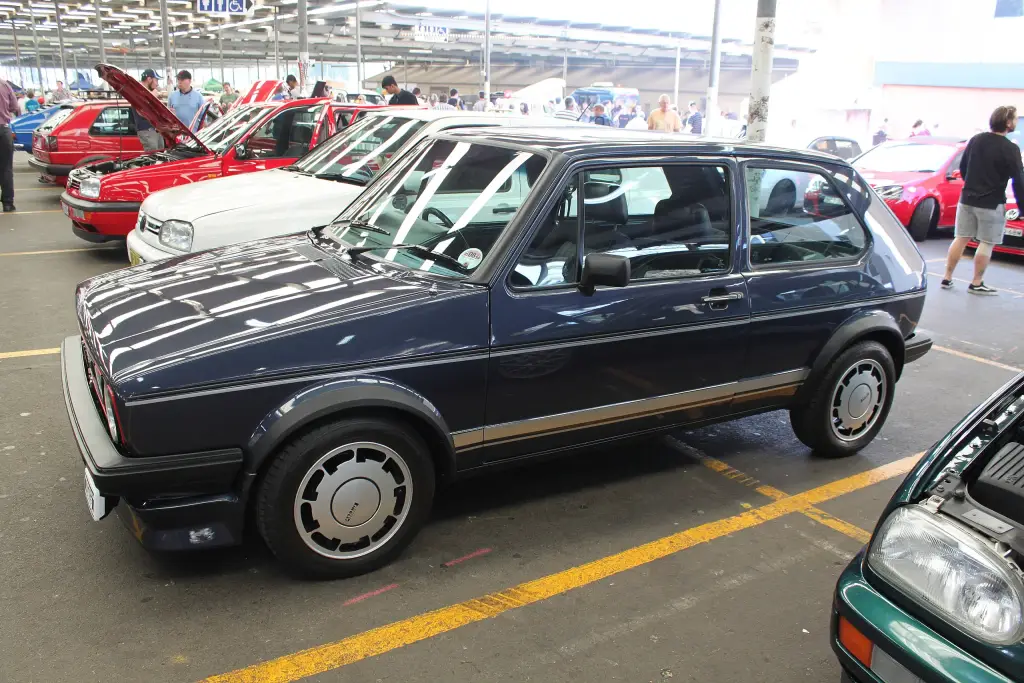
The car credited with establishing the popularity of hot hatches is the Volkswagen Golf GTI. It was announced at the 1975 Frankfurt Motor Show and released in 1976. Together with the Renault 5 Alpine, called Gordini in the UK, which had a top speed of 110 mph and could reach 60 mph in under ten seconds, it helped create a huge market for small, practical hatchbacks with the performance of contemporary coupés such as the Ford Capri 2.0. Two cars were built specially for competition: the Vauxhall Chevette HS and HSR of 1978, and the Lotus Sunbeam of 1979, which was rear-wheel drive but is still considered a hot hatch.

The 1980s: the boom
Until the early 1980s the Golf Mk1 GTI and the Renault 5 Alpine dominated the segment in many European markets. From about 1984 the market for sportier hatchbacks grew and many manufacturers added a hot variant to their range. They got the extra power in different ways: upgraded carburettors (the Ford Fiesta XR2), fuel injection (the Peugeot 205 GTI), turbocharging (the Renault 5 GT Turbo), supercharging (the Polo G40) or a bigger engine (the 2.0-litre Fiat Ritmo Abarth 130 TC). Other significant 1980s hot hatches include the Ford Escort RS Turbo, the Opel Kadett GTE, sold as the Vauxhall Astra GTE, the Renault 11 Turbo, the Citroën AX GT, the Suzuki Swift GTi and the all-wheel-drive Lancia Delta HF Integrale.
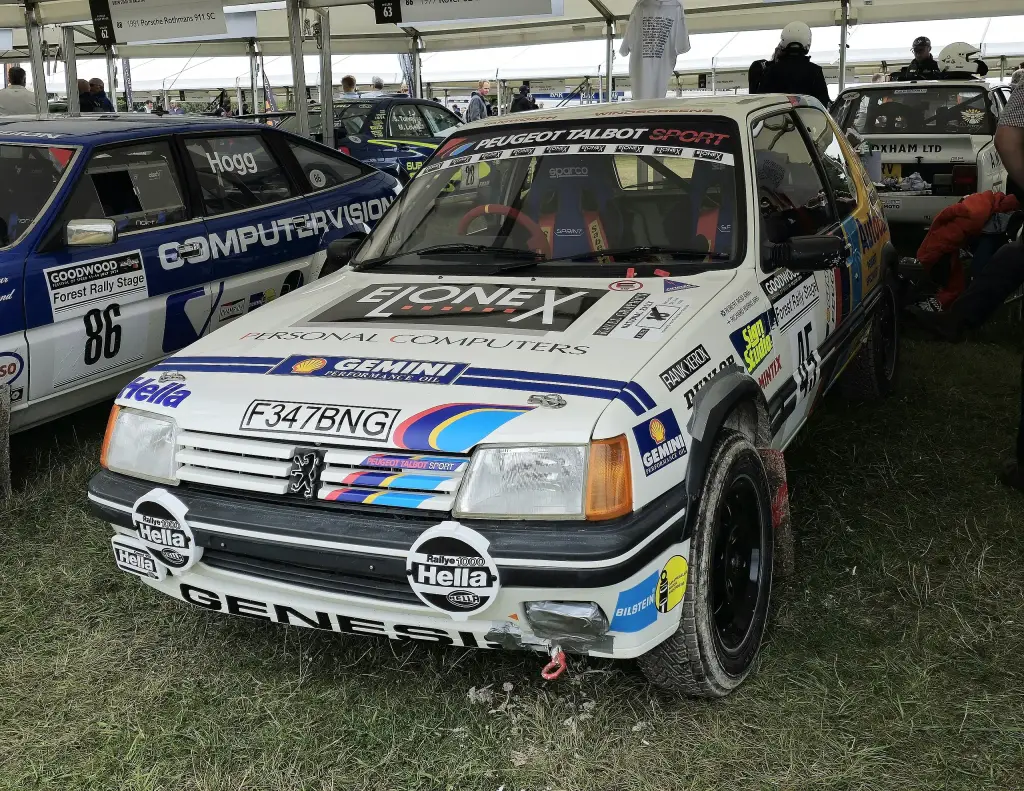

The brief heyday of Group B rallying pushed the genre to its limit, and small numbers of ultra-high-performance versions were built to meet the rally rules, often called homologation specials. They were a brief, extreme branch of the hot hatch and included the Lancia Delta S4, the MG Metro 6R4 and the Peugeot 205 T16; our guide to homologation specials explains the rule behind them.
The 1990s: Japan joins in
European makers kept building hot hatches through the 1990s, among them the Ford Fiesta RS Turbo, the Ford Escort RS Cosworth, the Peugeot 106 Rallye and GTi, the Peugeot 306 GTi-6, the Renault Clio Williams, the SEAT Ibiza GTi and the Ford Focus ST170. Japanese manufacturers began to make them too: the Honda Civic Type R, Mazda 323 GT-R, Nissan Pulsar GTI-R, Suzuki Swift GTi and Toyota Corolla GTi. Wikipedia’s list of Japanese hot hatches reaches back to the 1982 Honda City Turbo and the 1984 Isuzu Piazza XS Turbo.

The 2000s and 2010s: sub-brands and all-wheel drive
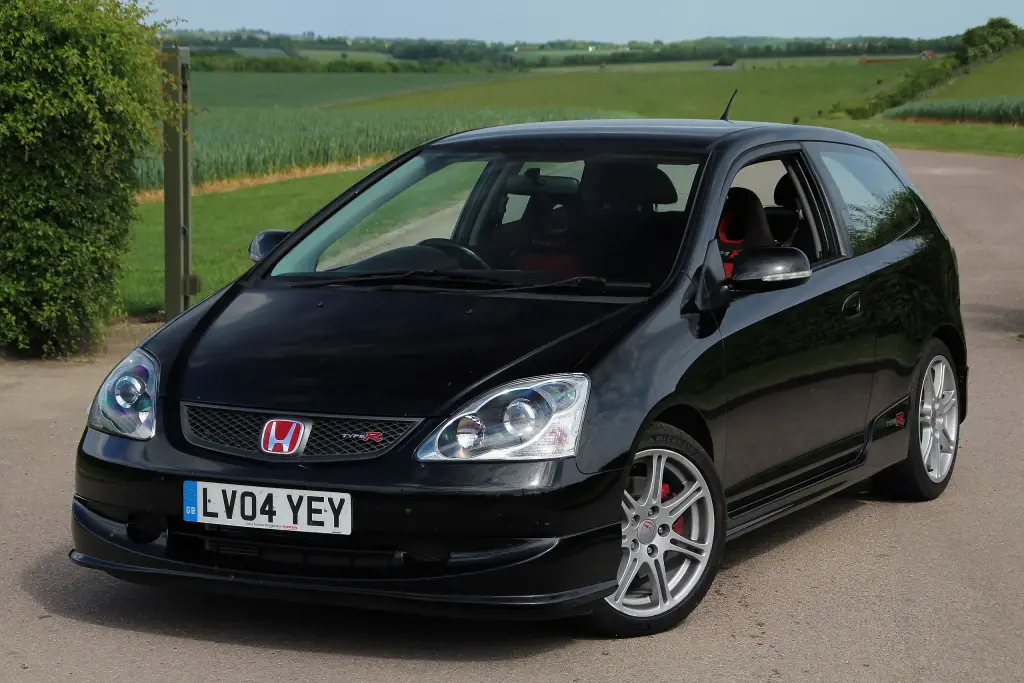
Through the 2000s hot hatches kept getting faster, with more turbocharged engines, and manufacturers began to promote the sub-brands of their sporting variants: Renault Sport, Opel’s OPC, Vauxhall’s VXR and Fiat’s Abarth. The decade’s cars include the Abarth Grande Punto, Alfa Romeo 147 GTA, Audi S3, Ford Fiesta ST and Focus ST/RS, Mini Cooper S and JCW, Renault Clio RS and Mégane RS, SEAT León Cupra and Volkswagen Golf GTI and Golf R, with the Honda Civic Type R, Mazdaspeed 3 and Proton Satria GTi from Asia.
All-wheel drive had been available since the 1980s, but higher power outputs led to its wider use in the 2010s: the 2010 Volkswagen Golf R, the 2011 Audi RS 3, the 2013 Mercedes-Benz A 45 AMG and the 2015 Ford Focus RS. The BMW M135i and M140i are a rare rear-wheel-drive hot hatch of the decade, and dual-clutch gearboxes became more common. Many models produced more than 270 bhp, the Ford Focus RS 500 345 bhp, and in 2019 the Mercedes-AMG A 45 S became the first mass-produced hot hatch to pass the 400 bhp border, with 416 bhp. South Korea joined with the Kia Pro_Cee’d GT in 2013, the Hyundai i30 N in 2017 and the Veloster N in 2019. In North America the 1980s had the Dodge Omni GLH (“Goes Like Hell”) and the Shelby GLHS, but Ford’s end of Fiesta and Focus production in 2018 left American makers with no hot hatch at all.

Today: records and the electric hot hatch
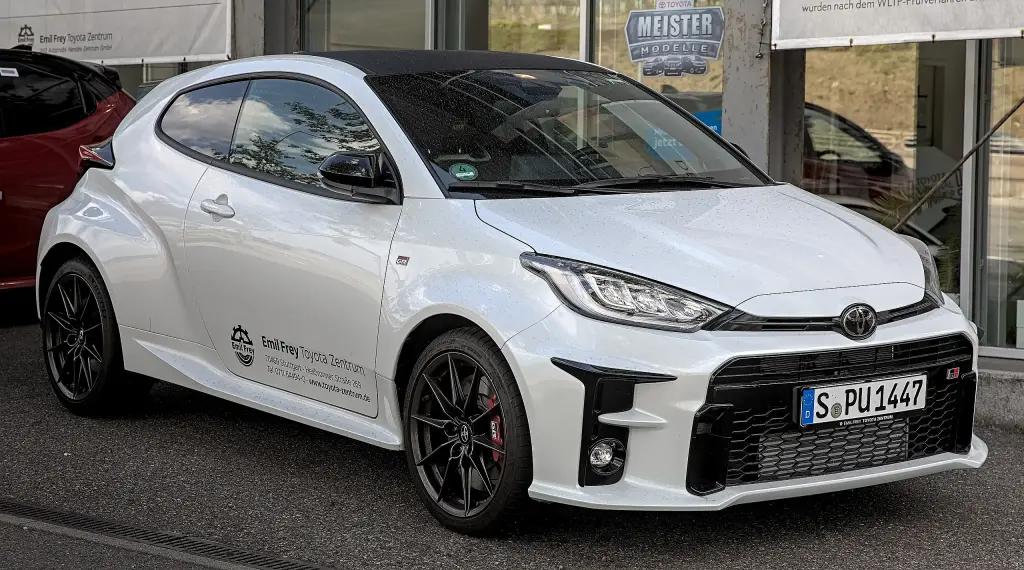
Wikipedia lists the Audi RS 3 as the fastest-accelerating petrol hot hatch, at 3.8 seconds to 62 mph, and the Hyundai Ioniq 5 N, at 3.4 seconds, as the fastest electric one. The top-speed record belongs to the Honda Civic Type R at 171 mph, and the most aerodynamic hot hatchback is the Mercedes A-Class AMG, with a drag coefficient of 0.25. The most recent Japanese entry in the list is the 2020 Toyota GR Yaris, a three-door four-wheel-drive car built to meet rally homologation rules.

Ten hot hatches at a glance
| Year | Car | What it showed |
|---|---|---|
| 1970 | AMC Gremlin | called the first car to meet the hot hatch criteria; 128 hp base engine |
| 1971 | Autobianchi A112 Abarth | the first European hot hatch, with a 982 cc engine |
| 1973 | Simca 1100 Ti | 82 hp, 0–60 mph in under 12 seconds, 105 mph |
| 1976 | Renault 5 Alpine | 110 mph and under 10 seconds to 60 mph |
| 1976 | Volkswagen Golf GTI | the car credited with making hot hatches popular |
| 1984 | Peugeot 205 GTI | fuel injection as the way to more power |
| 1997 | Honda Civic Type R | Japan’s hot hatch, later the top-speed record holder at 171 mph |
| 2010 | Volkswagen Golf R | one of the 2010s cars that spread all-wheel drive |
| 2019 | Mercedes-AMG A 45 S | the first mass-produced hot hatch over 400 bhp: 416 bhp |
| 2020s | Hyundai Ioniq 5 N | the fastest electric one: 3.4 seconds to 62 mph |
How to tell a hot hatch from a warm one
- Look at the base car. A hot hatch is a performance version of an ordinary hatchback, and it is built on its body and layout.
- Find the way the power was added. Carburettors, fuel injection, a turbo, a supercharger or a bigger engine each mark a different part of the story.
- Check the sub-brand. Renault Sport, OPC, VXR, Abarth, STI-style badges and Type R are the labels a maker puts on its hottest versions.
- Compare with the car below it. If the maker also sells a slower sporting version, such as a Cooper beneath a Cooper S, that one is a warm hatch.
- Check the drive. Front-wheel drive is the classic layout; all-wheel drive became common after about 2010.
Hot hatch questions and answers
What was the first hot hatch?
It depends on the definition. Wikipedia calls the AMC Gremlin of 1970 the first car to meet the criteria and the Autobianchi A112 Abarth of 1971 the first European one, while the Volkswagen Golf GTI is the car credited with making the class popular.
When was the term first used?
“Hot hatchback” came into use in the UK in 1983, was shortened to “hot hatch” in 1984 and appeared in The Times in 1985.
Is a hot hatch always front-wheel drive?
Mostly, but not always: all-wheel drive has been used since the 1980s and became more common from about 2010, and the BMW M135i and M140i are rear-wheel-drive examples.
Which hot hatch is quickest today?
By Wikipedia’s records, the Audi RS 3 among petrol cars, at 3.8 seconds to 62 mph, and the Hyundai Ioniq 5 N among electric ones, at 3.4 seconds.
Based on the English Wikipedia article on the hot hatch; the Golf GTI, Peugeot 205 GTI and GR Yaris details come from our own articles on those cars, which draw on the English Wikipedia articles on the Golf Mk1, the Peugeot 205 and the GR Yaris. I did not cross-check the lists and records against other sources.
Sources
- Hot hatch, English Wikipedia: the term, the history by decade, the models and the records
- Volkswagen Golf Mk1, English Wikipedia: the Golf GTI
- Peugeot 205, English Wikipedia: the 205 GTI
- Toyota GR Yaris, English Wikipedia: the three-door rally homologation car