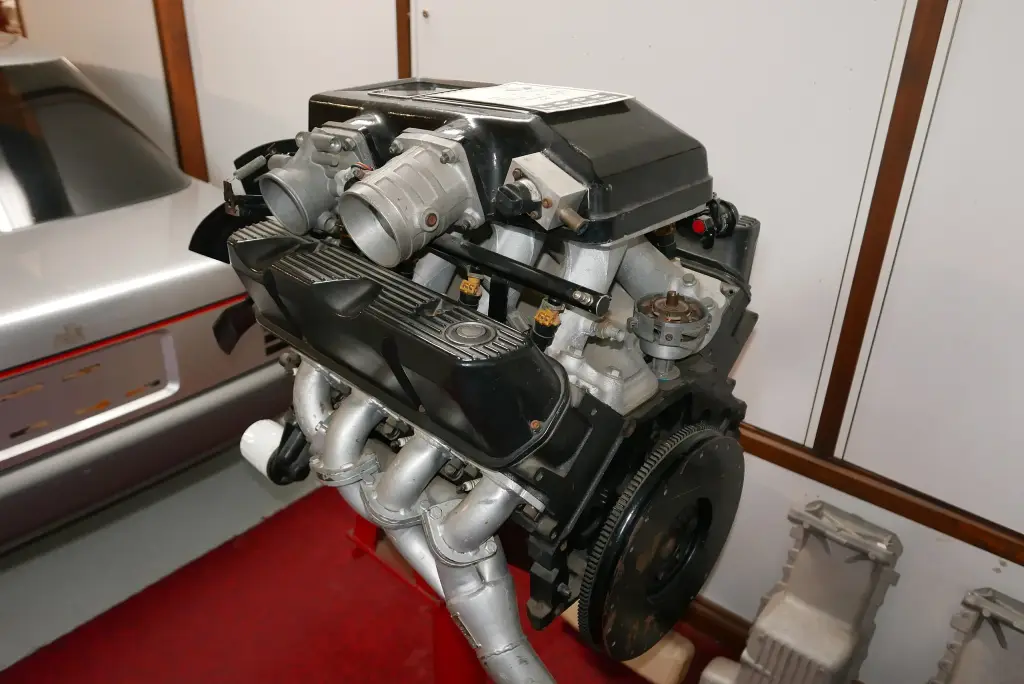
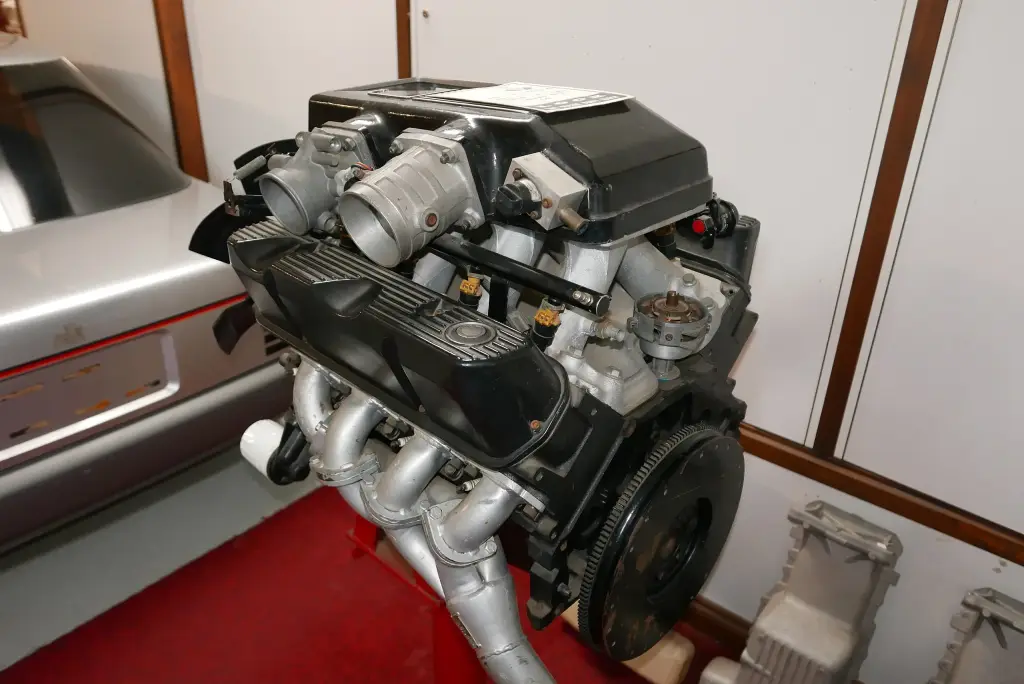
The Holden V8 engine, also known as the Iron Lion, was an overhead valve V8 produced by Holden between 1969 and 2000. Versions from 1969 to 1985 were usually called the Holden 253 or Holden 308, and after 1974 the Holden 4.2 and Holden 5.0 depending on capacity.
Holden V8 at a glance
| Maker | Holden, Australia |
|---|---|
| Production | 1969–2000 |
| Type | overhead valve V8 |
| Also called | Iron Lion |
| Capacities | 253 cu in (4,143 cc) and 308 cu in (5,044 cc) |
| First fitted | Holden HT, 1969 |
| Design weight target | 525 lb (238 kg) |
| Induction | two-barrel on the 253, four-barrel on the 308 |
| Final version | HEC 5000i |
| Phased out | VT Series II, WH Statesman and Caprice, June 1999 |
| Last use | VS Series III utility, until the VU of late 2000 |
| Racing | Australian Touring Car Championship and Bathurst 1000 until 1995 |
History of the Holden V8
Why Holden built its own V8
In 1964 Ford and Chrysler released V8 versions of their Falcon and Valiant models in the United States, and Holden expected locally assembled or built versions to follow. In January 1965 the engineering division began a forward engine programme review and concluded that by 1969 a V8 option would be necessary, forecasting that 35 percent of Holdens sold in 1970 would be V8s, rising to 50 percent by 1975. Six capacities from 237 to 308 cubic inches were planned over a twelve-year life cycle, but early in the design phase this was cut to two: an economy 253 and a larger performance 308, known as the 4.2 and 5.0 litre engines.
Design
The 308 was given targets of 525 lb (238 kg), lighter than equivalent American engines, and a net 161 hp (120 kW) at 4,000 rpm and 263 lb-ft (357 N·m) at 2,400 rpm. It was mechanically identical to the 253 apart from a larger bore, bigger pistons and heavier crankshaft counterweights to compensate for the increased reciprocating mass. An alloy inlet manifold was originally specified to save weight but was changed to iron after casting problems; the exhaust manifolds were cast iron too, while the timing case cover stayed alloy.
The first pre-production engine was the 253, which met and greatly exceeded the targets. The complete assembly weighed 460 lb, about 12 percent under target, and the higher-compression version with a two-barrel carburettor produced 185 hp (138 kW) and 262 lb-ft, matching or beating the figures set for the larger 308. The design was compact, 22 inches wide and only 80 lb heavier than the 186 cubic inch straight six while producing over 40 percent more power. The first running engine was delivered in October 1966 and failed after four days of testing with a seized oil pump, a problem traced to swarf residue rather than a design fault. Further testing showed the V8 to be smoother and more durable than Holden’s six.
Into production
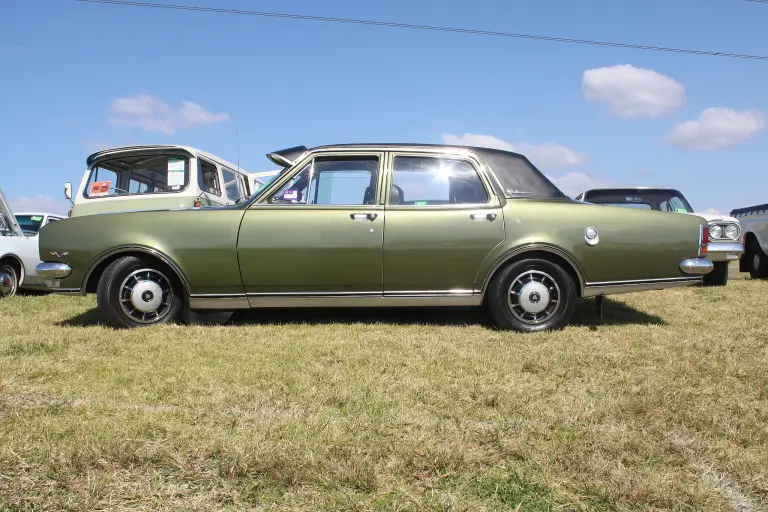
The new engines were meant to form part of the 1968 HK range, but production problems delayed the project and 307 cubic inch Chevrolet engines imported from Canada were used instead. The 253 made its public debut in highly modified form in the Holden Hurricane concept car at the 1969 Melbourne International Motor Show, producing over 250 hp. Mass production began soon afterwards in the HT range, with the 253 used for manual cars while the Chevrolet 307 was kept for automatics; the 308 debuted in the HT Brougham as an automatic only. The 253 came only with a two-barrel carburettor, while the 308 was always a four-barrel apart from its use in Bedford trucks in the late 1970s.
The end of the line
The engine was Holden’s mainstream performance unit throughout its life, and higher-performance versions were fitted to limited editions from the Holden Dealer Team and later Holden Special Vehicles. It was also used in limited-production vehicles from other makers and in kit cars, and it had a successful motorsport career, most notably in touring cars through the Australian Touring Car Championship and the Bathurst 1000 until 1995, as well as in Formula 5000 and sports sedans. The final iteration, the heavily revised HEC 5000i, was phased out of Holden passenger cars with the VT Series II Commodore and the WH Statesman and Caprice in June 1999, both of which used the imported 5.7-litre Generation III V8. It stayed in production a little longer in the Commodore VS Series III utility until the VU Ute arrived in late 2000, and it also powered Australian inboard-engined powerboats, especially those used for water skiing.
Design and features
- Iron Lion: the nickname for Holden’s own overhead valve V8.
- Two capacities: the 253 and 308, later called the 4.2 and 5.0.
- Light and compact: 460 lb complete for the early 253, 22 inches wide.
- Racing engine: used in touring cars, Formula 5000 and sports sedans.
- Long service: thirty-one years, from the HT of 1969 to the VS Series III ute.
Holden V8 versions
- 253 (4.2): the economy engine, two-barrel carburettor only.
- 308 (5.0): the performance engine, four-barrel carburettor.
- HEC 5000i: the final, heavily revised version.
- HDT and HSV versions: higher-performance engines for limited-edition cars.
- Bedford truck fitment: the 308 with a two-barrel carburettor in the late 1970s.
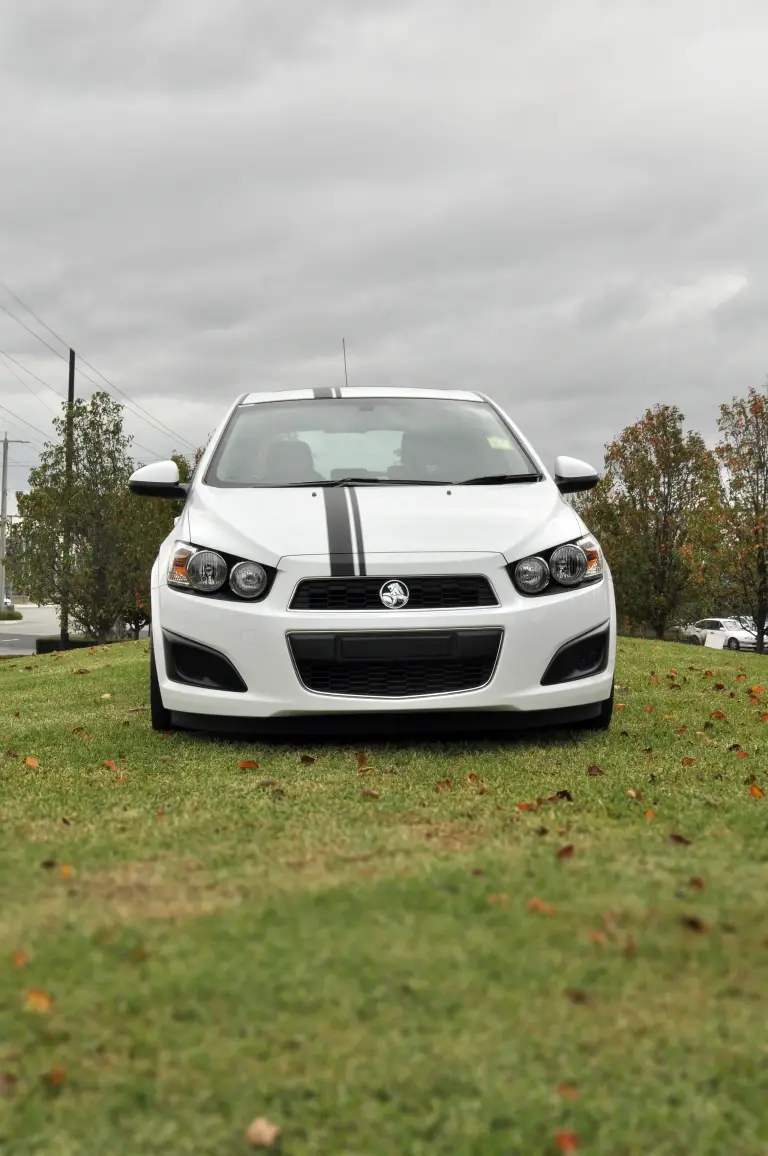
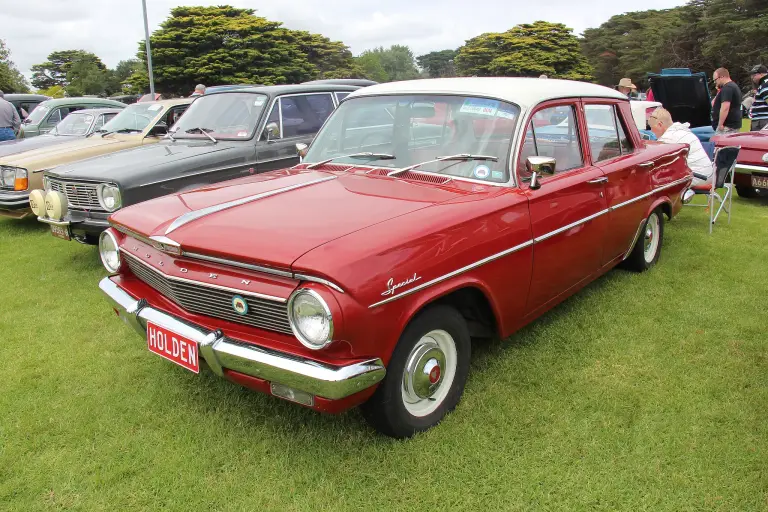
The engine powered the Holden Monaro, the Kingswood range and later Commodores such as the VN. More cars are in the Holden collection.
Video: Loudest Holden Ute SS V8 acceleration! Brutal exhaust sound!
Video by FinalCorner on YouTube.
Sources
- Holden V8 engine, English Wikipedia: design, production, end of the line