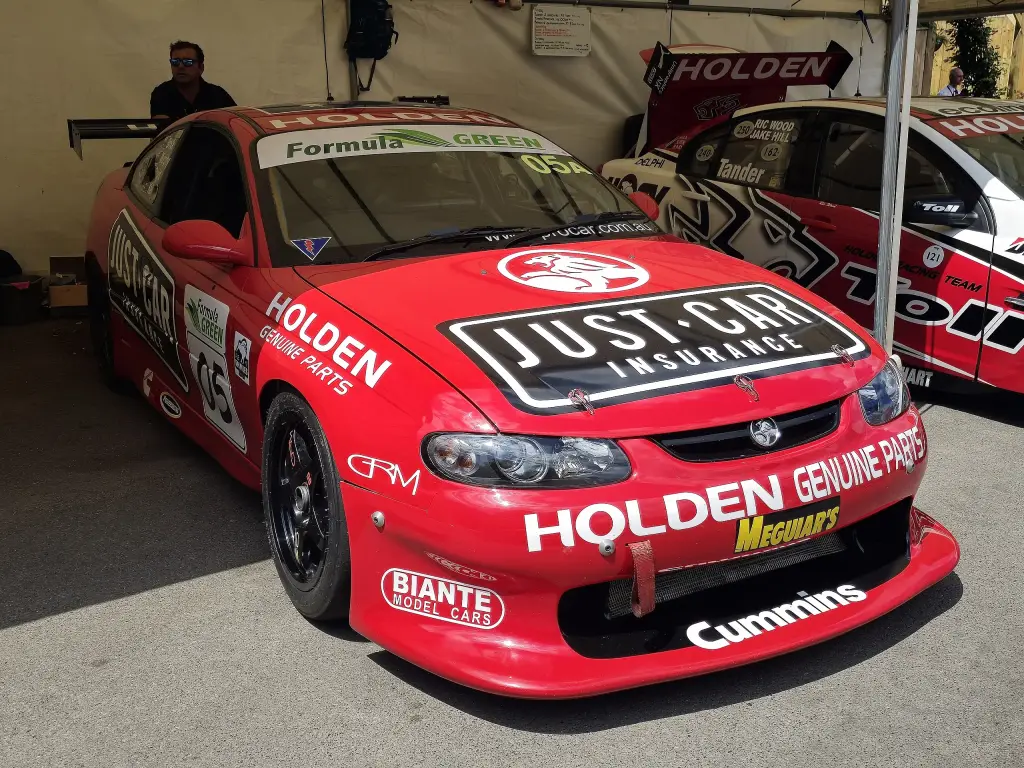
The Holden Monaro was made by General Motors’ Australian division with a front-engine, rear-wheel-drive layout. It was produced as a two-door coupé from 1968 to 1976 and again from 2001 to 2006, and as a four-door sedan from 1973 to 1979.
Holden Monaro at a glance
| Maker | Holden, Australia |
|---|---|
| Coupé production | 1968–1976 and 2001–2006 |
| Sedan production | 1973–1979 |
| First generation | HK, HT and HG, 1968–1971 |
| Second generation | HQ, HJ, HX and HZ, 1971–1979 |
| Third generation | VX, VY and VZ, 2001–2006 |
| HK launch | July 1968, two-door pillarless hardtop |
| HK models | base, GTS and GTS 327 |
| HK GTS 327 engine | 327 cu in Chevrolet V8, 250 hp (186 kW) |
| HK built | 8,945 |
| HT built | 14,437 |
| Exports | Chevrolet Lumina Coupe, Vauxhall Monaro, Pontiac GTO |
History of the Holden Monaro
HK: a coupé named after a region
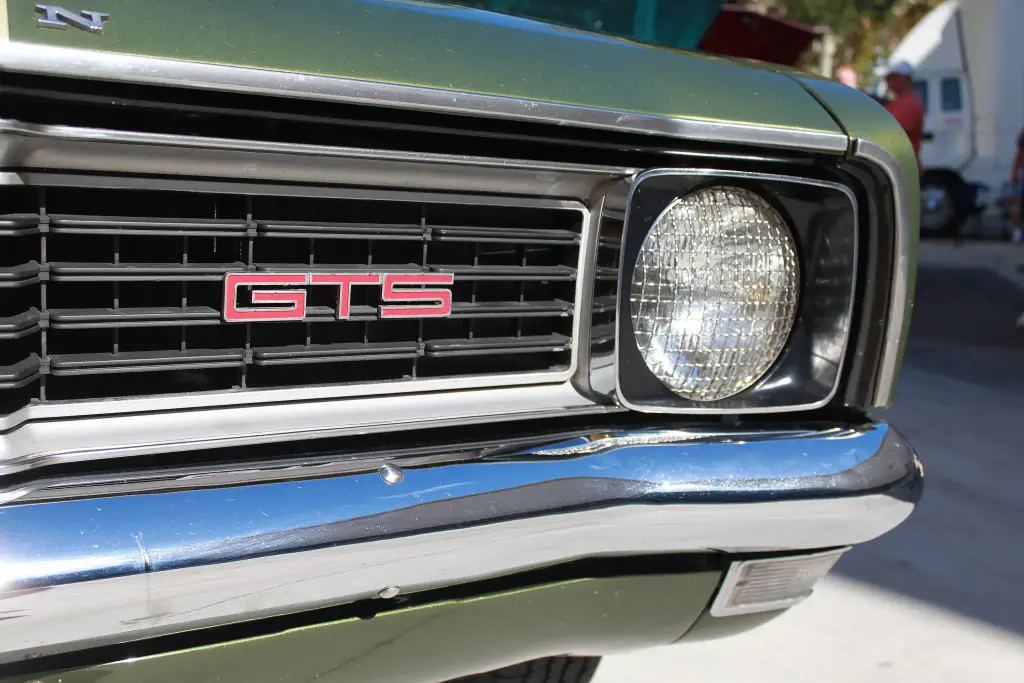
Named after the Monaro region of New South Wales, Holden’s new coupé was introduced in July 1968 as a two-door pillarless hardtop in three models: base, GTS and GTS 327. The GTS versions had full instrumentation including a tachometer mounted on the centre console, a position that proved poor because the driver’s knee obstructed the view and the unit often rattled.
The base Monaro used a 161 cubic inch straight-six, with two versions of the 186 cubic inch six as extra-cost options; the GTS came with the more powerful 186 “S” engine, and both the base car and the GTS could be ordered with a 307 cubic inch Chevrolet V8. The exclusive GTS 327 had a 327 cubic inch Chevrolet V8 rated at 250 hp (186 kW) with a four-speed manual only. The styling was unique but drew on GM shapes, with a “coke bottle” look recalling the late-1960s Camaro, Corvair and Nova coupés.
Holden engineers had claimed the engine bay was too small for the 327, which sped up development of Holden’s first Australian-designed V8, the 253 and 308. When that project fell behind schedule the bay was measured again and the original calculations turned out to be wrong, allowing the imported Chevrolet engines to be used after all.
A total of 8,945 HK Monaros were built. The HK Monaro GTS 327 gave Holden its first victory in the 1968 Hardie-Ferodo 500 with Bruce McPhee and Barry Mulholland, and Norm Beechey drove one to third place in the 1969 Australian Touring Car Championship. In early 1969 the HK Monaro range was named Wheels magazine’s Car of the Year for 1968.
HT: the GTS 350
In June 1969 the facelifted HT Monaro replaced the HK. The GTS 327 became the GTS 350 as the 327 was replaced by a 300 hp (224 kW) Chevrolet 350, largely in response to Ford’s XW Falcon GTHO Phase I. An automatic GTS 350 followed, using a lower-power version of the 350 with a two-speed Powerglide. The HT also marked the phasing out of the 5.0-litre Chevrolet V8 and the arrival of Holden’s own 253 and 308 engines, and late in the run the local Tri-Matic automatic became an option, though not on the GTS 350.
The HT is distinguished from the HK by plastic rather than metal grilles, two-section tail lights separated by a blacked-out panel, a round speedometer that allowed the tachometer to move into the main cluster, rubber front suspension bushings instead of sintered bronze, and larger tail lights. The HT had two broad stripes down the centre of the car and twin air scoops in the bonnet that served no real purpose. A total of 14,437 were built, and the GTS 350 was successful in series production racing: the Holden Dealer Team, formed in 1969 by Harry Firth, won the 1969 Hardie-Ferodo 500 with Colin Bond and Tony Roberts, with Des West and Peter Brock third in another team Monaro.
Later generations
The second generation covered the HQ, HJ, HX and HZ series from 1971 to 1979, and the third the VX, VY and VZ series from 2001 to 2006. The first-generation coupé was also built by General Motors South Africa from 1970 to 1973 from knockdown kits, and the third generation was exported as the Chevrolet Lumina Coupe in the Middle East, the Vauxhall Monaro in the United Kingdom and the Pontiac GTO in the United States. From 2001 to 2006 HSV also built high-performance derivatives of the third-generation car under its own badges without the Monaro nameplate.
Design and features
- Pillarless hardtop: the original HK coupé had no central pillar.
- Chevrolet V8s: the 307 and then the 250 hp 327 and 300 hp 350.
- Holden V8s: the locally built 253 and 308 arrived with the HT.
- Racing pedigree: a win in the 1968 Hardie-Ferodo 500 and a Car of the Year award.
- Export model: the third generation became the Pontiac GTO in the United States.
Holden Monaro versions
- HK (1968–1969): base, GTS and GTS 327, 8,945 built.
- HT (1969–1971): GTS 350 with a 300 hp Chevrolet V8, 14,437 built.
- HG (1970–1971): the final first-generation coupé.
- HQ to HZ (1971–1979): the second generation.
- VX to VZ (2001–2006): the third generation, exported as the Pontiac GTO.
The Monaro shared its body with the Holden Kingswood range and the HQ series, and HSV built its own versions. More cars are in the Holden collection.
Video: Holden Monaro/CV8 drive around the block
Video by Rob Paull on YouTube.
Sources
- Holden Monaro, English Wikipedia: generations, engines, racing, exports