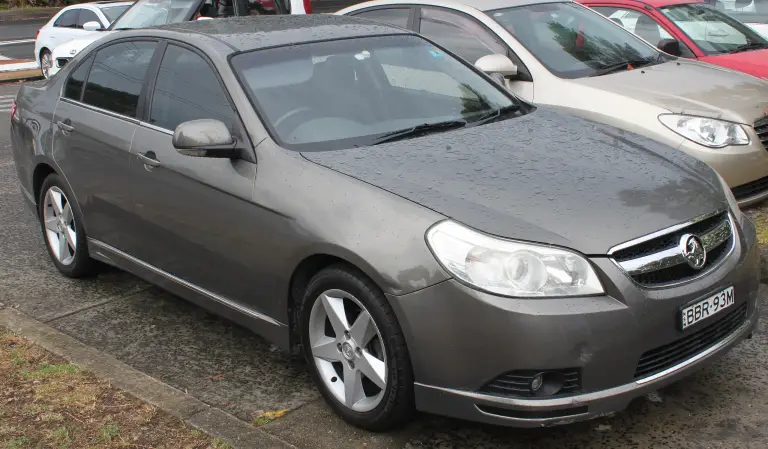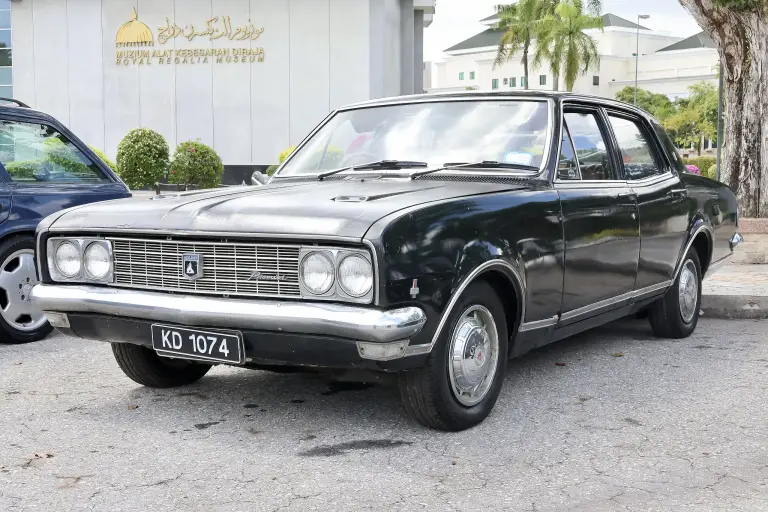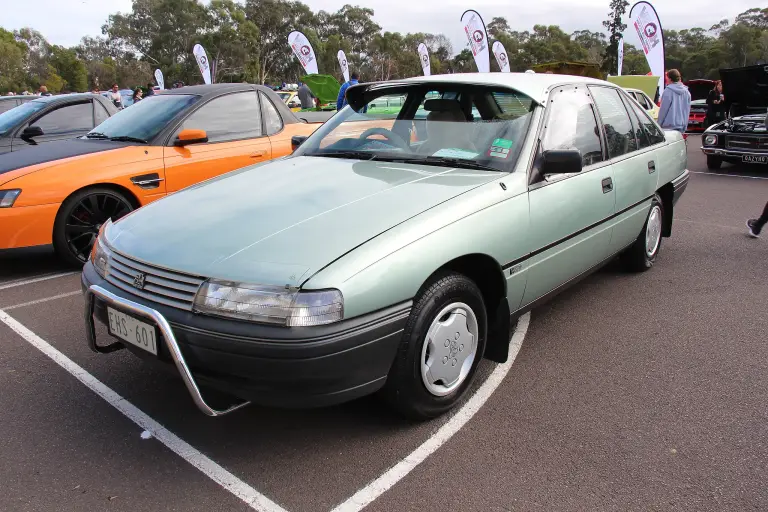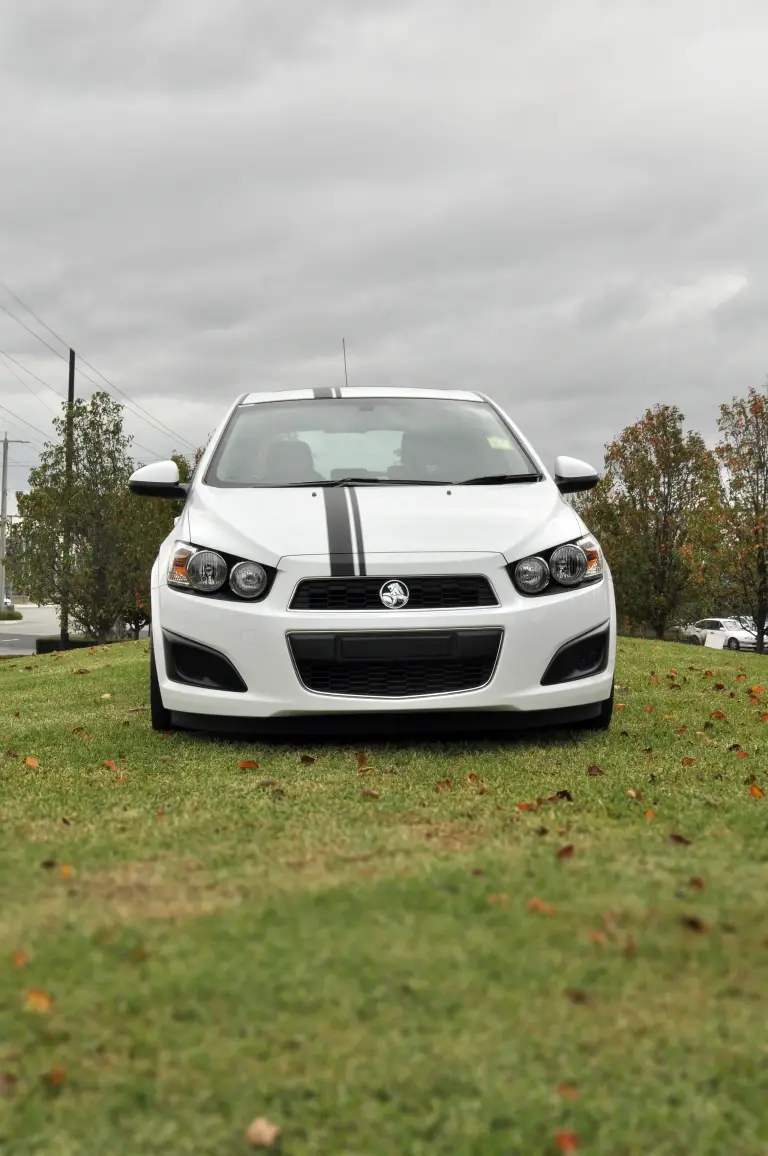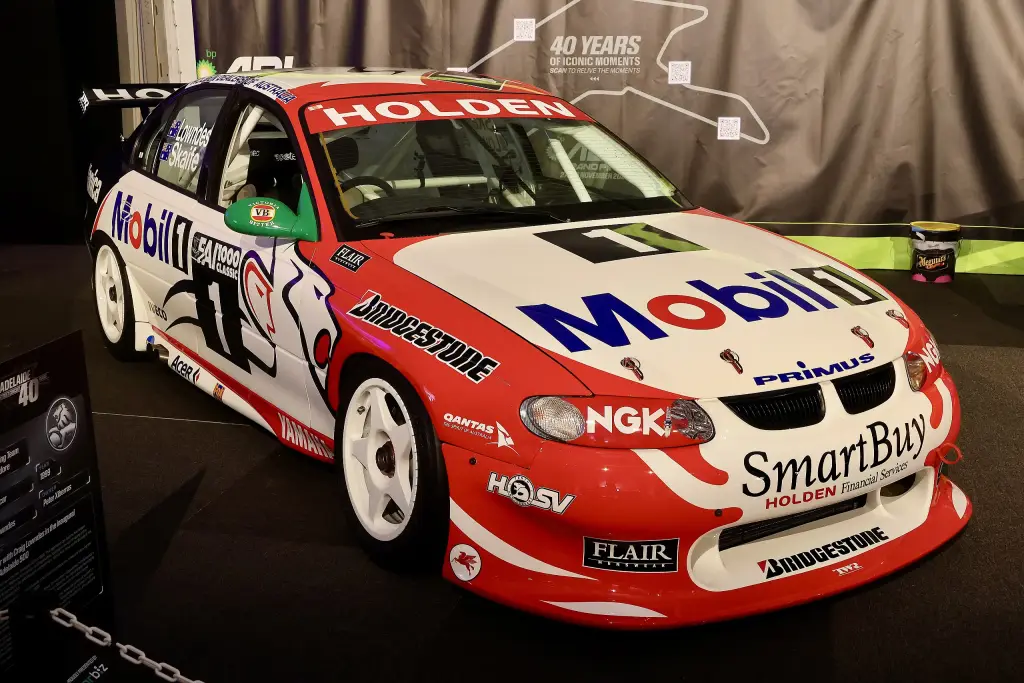
The Holden Commodore VT was produced from 1997 to 2000 as the first iteration of the third generation. It was the last Commodore powered by the locally made 5.0-litre V8, it won the 1997 Wheels Car of the Year award, and it became the best selling Commodore of its time.
Holden Commodore VT at a glance
| Maker | Holden, Australia |
|---|---|
| Production | 1997–2000 |
| Introduced | August 1997 |
| Replaced | Holden Commodore VS |
| Replaced by | Holden Commodore VX, October 2000 |
| Basis | Opel Omega B, widened for Australia |
| Development cost | A$600 million |
| Body stiffness | 30 percent stiffer than the VS |
| Drag coefficient | Cd 0.33 |
| Base engine | 3.8-litre Ecotec V6 |
| V8 | 5.0-litre Holden V8, plus 10 kW over the previous series |
| Built | VT and VT Series II, to October 2000 |
History of the Holden Commodore VT
An Omega, widened
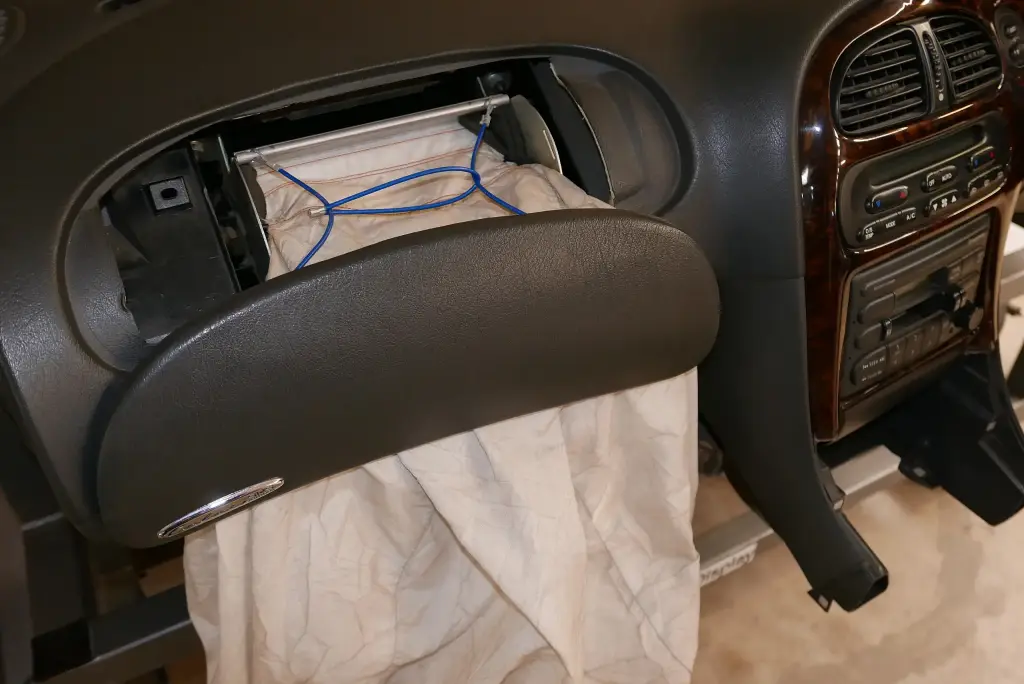
As with earlier Commodores, Holden looked to Opel in Germany for a donor platform. The VT was derived from the Omega B, broadened and adapted mechanically for Australian conditions; the alternative would have been to adopt the Omega unchanged or to reskin the second-generation VN–VS architecture. The result was Holden’s largest development yet, a A$600 million programme spanning more than half a decade, with many firsts for an Australian-built car in electronic systems, better dynamics and improved crash safety thanks to a body 30 percent stiffer than the VS.
The rounder exterior, with a 63-degree windscreen rake, was a styling exercise with little emphasis on aerodynamics: the sedan’s drag coefficient was an ordinary Cd=0.33. Holden’s aerodynamicists later conceded that the rounded trailing edge of the boot lid did not promote clean airflow separation, a problem corrected with the VY series in 2002.
Input from the United States
Holden’s parent company wanted a left-hand drive Commodore for the Buick range in the United States and became involved in the VT programme early. Holden received funds for the engineering changes and a prototype was shown to the American public in 1995 as the Buick XP2000 concept car, whose styling formed the basis for the VT. The project, known internally as Project 127, was abandoned in early 1994, well before the VT was released, but Holden made the most of it by exporting left-hand drive cars to parts of Indochina and the Middle East as the Chevrolet Lumina and to Brazil as the Chevrolet Omega.
Engineering
The base engine was the 3.8-litre Ecotec V6 first used in the VS Series II, unchanged apart from new exhaust manifolds and Bosch EV6 fuel injectors. Holden spent A$2 million to extract an extra 10 kW (13 hp) and 10 N·m from the 5.0-litre V8, and offered a supercharged Ecotec with 171 kW (229 hp) on the Commodore S and SS and the Calais. Gearboxes were a four-speed 4L60-E automatic and a five-speed Getrag 260 manual on V6 cars, with the same automatic, a Getrag 290 or an optional six-speed Tremec T56 on V8s. The 75-litre fuel tank sat ahead of the spare wheel well.
The new body was 166 to 195 kg heavier than the VS, the sedan being 23 mm longer, 60 mm wider, 47 mm taller and 57 mm longer in the wheelbase, which compromised performance and fuel economy. Holden also spent A$275 million upgrading the Elizabeth plant, with 43 percent more robots for a total of 130, 59 presses instead of 104 and main body spot-welding in 101 seconds, cutting final assembly time by 2.5 hours.
Consequences
The VT won the 1997 Wheels Car of the Year award, the fourth time a Commodore had taken it, and found ready acceptance because many buyers steered away from the radically designed Ford Falcon AU. A VT Series II followed in June 1999 before the restyled VX replaced it in October 2000. In 1999 the VT wagon platform served as the basis for the second-generation Statesman and Caprice, and the VT also formed the basis of the prototype that led to the return of the Monaro coupé in 2001, by then on the VX series.
Design and features
- Stiffer body: 30 percent more rigid than the VS, with better crash safety.
- Supercharged option: 171 kW Ecotec V6 on S, SS and Calais.
- Last local V8: the 5.0-litre Holden engine, with 10 kW more than before.
- Plant upgrade: A$275 million at Elizabeth with 130 robots.
- Monaro link: the VT underpinned the prototype that revived the coupé.
Holden Commodore VT versions
- VT (1997–1999): the first third-generation Commodore.
- VT Series II (June 1999–2000): the update before the VX.
- Berlina and Calais: the luxury versions of the range.
- Chevrolet Lumina and Omega: left-hand drive exports to Asia, the Middle East and Brazil.
The VT came after the VN generation and before the VY; its platform produced the Caprice and the Monaro. More cars are in the Holden collection.
Sources
- Holden Commodore (VT), English Wikipedia: development, engineering, exports, production