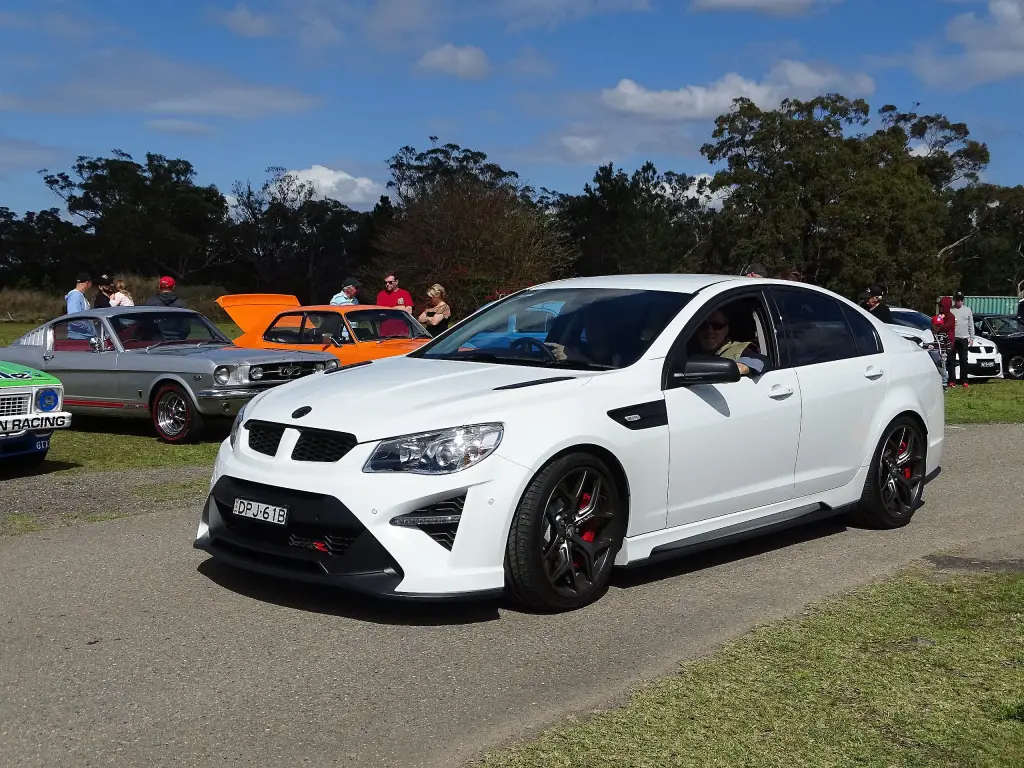
The HSV GTS was the flagship model of Holden Special Vehicles, the performance division of Holden, from 1992 to 2017. Each generation took the largest V8 available and added stronger running gear, bigger brakes and a more luxurious interior than the Commodore on which it was based.
HSV GTS at a glance
| Maker | Holden Special Vehicles, Australia |
|---|---|
| Production | 1992–2017 |
| Role | HSV flagship model |
| First model | VP GTS, 5.0-litre V8, 200 kW (268 hp) |
| 1994 VR | 5.7-litre stroker V8, 215 kW (288 hp) |
| 1996 GTS-R | limited run with XU3 Yellah paint |
| 2000 GTS 300 | Callaway C4B 5.7-litre V8, 300 kW (402 hp) |
| 2009 E Series 2 | LS3 6.2-litre V8, 325 kW (436 hp) |
| 2013 Gen-F | supercharged LSA V8, 430 kW (577 bhp) |
| 2017 GTSR W1 | supercharged LS9 6.2-litre V8, 474 kW (636 bhp) |
| GTSR W1 built | 275 cars: 250 for Australia, 25 for New Zealand |
History of the HSV GTS
Origins in New Zealand
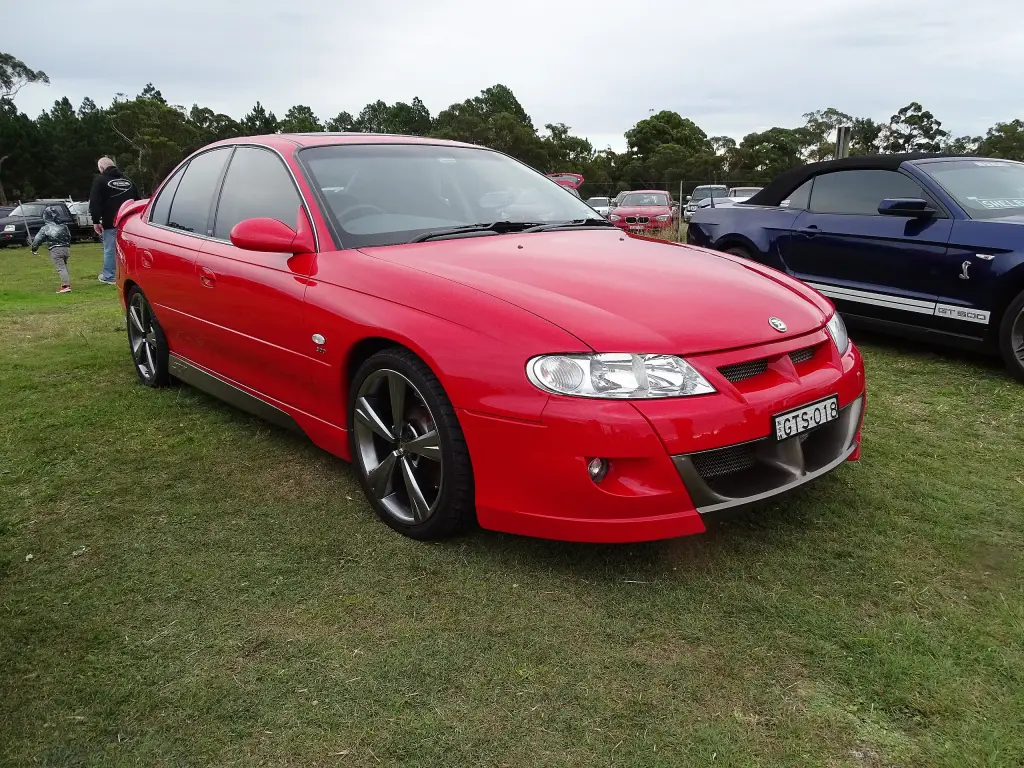
Before the GTS reached Australia, HSV built the GTS V6 for New Zealand only. It was launched in 1990 during the VN series and continued to 1992 with the VP series, using the 3.8-litre Buick V6.
VP to VS (1992–1996)
The GTS arrived in Australia in 1992 with the VP series as the flagship of the HSV brand. It combined more luxurious fittings with a higher-output 5.0-litre Holden V8 producing 200 kW (268 hp) and stronger running gear. The 1994 VR series moved to the 5.7-litre stroker version of the 5000i Holden V8 at 215 kW (288 hp). The VS series, launched in April 1995, kept the same power but improved the brakes and added electronic rear suspension levelling.
In 1996 HSV released the GTSR as a limited production run within the VS series. It had a worked engine, a custom interior and unique XU3 Yellah paintwork, and examples have since sold for upwards of A$1,000,000.
VT to Y series (1997–2004)
The VT series GTS of 1997 started with the 5.7-litre stroker at 220 kW (295 hp). In April 2000 the VT II GTS 300 arrived with a Callaway-tuned C4B engine at 300 kW (402 hp), based on the LS1. The VX series of November 2000 and the Y series GTS of 2002 kept the 300 kW C4B; no Z series GTS was made.
E series (2006–2012)
The E series GTS of 2006 used the LS2 at 307 kW (412 hp), shared with the rest of the HSV E series range. The E Series 2 of September 2009 moved to the LS3 at 325 kW (436 hp) and introduced twin bonnet scoops, daytime running lights and a competition setting for the electronic stability control. The E Series 3 of September 2010 kept the 325 kW LS3 and added a bi-fuel option running on LPG and petrol.
Gen-F and the end (2013–2017)
The Gen-F GTS of 2013 was powered by a supercharged LSA at 430 kW (577 bhp). The GTSR nameplate returned for the Gen-F 2 series in 2015 with a supercharged LS9 at 435 kW (583 hp). In 2017 HSV announced the GTSR W1, of which 275 examples were produced, 250 for Australia and 25 for New Zealand. It used a supercharged 6.2-litre LS9 at 474 kW (636 bhp) with carbon fibre parts and a bespoke interior, and four examples of the GTSR W1 Maloo were also built. The GTS was discontinued in 2017.
Design and features
- Flagship equipment: each GTS carried more luxury fittings than the HSV range below it.
- Stronger running gear: uprated driveline and brakes came with every power increase.
- Electronic rear suspension levelling: added with the VS series in 1995.
- Twin bonnet scoops: a feature of the 2009 E Series 2, along with daytime running lights.
- Carbon fibre details: the 2017 GTSR W1 used carbon fibre parts and a custom interior.
HSV GTS versions
- GTS V6 (1990–1992): New Zealand-only export with the 3.8-litre Buick V6.
- VP GTS (1992): the first Australian GTS, 5.0-litre V8 at 200 kW.
- VR and VS GTS (1994–1996): 5.7-litre stroker at 215 kW, improved brakes from 1995.
- VS GTSR (1996): limited run in XU3 Yellah paint.
- GTS 300 (2000–2004): Callaway C4B at 300 kW in VT II, VX and Y series.
- GTSR W1 (2017): 474 kW LS9, 275 cars, plus four W1 Maloo utes.
The GTS sat at the top of the range built by Holden Special Vehicles on the Holden Commodore. More cars are in the Holden collection.
Video: Supercharged VS GTSR road test.
Video by Marks .Workshop on YouTube.
Sources
- HSV GTS, English Wikipedia: models, engines, production numbers