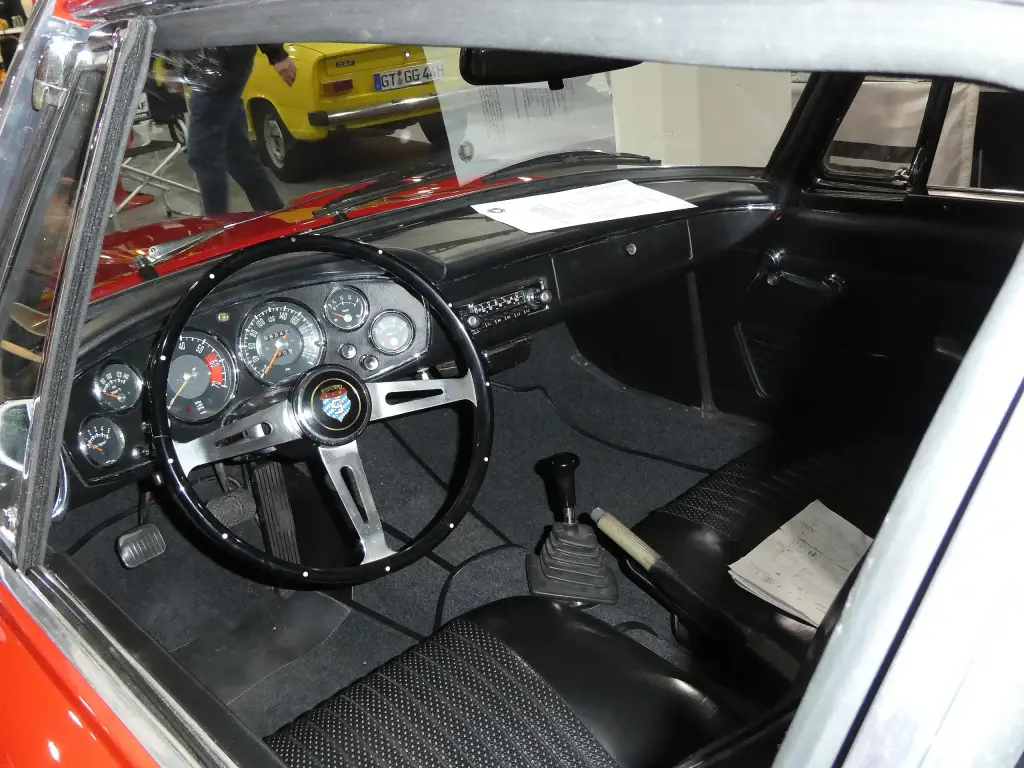
The Glas GT was a sports coupé produced by Hans Glas GmbH at Dingolfing. It arrived as the Glas 1300 GT in 1964, gained a 1,682 cc 1700 GT version in 1965, and was built in coupé and cabriolet form until BMW took over the model as the BMW 1600 GT.
Glas GT at a glance
| Maker | Hans Glas GmbH, Dingolfing |
|---|---|
| Also called | Glas 1300 GT, Glas 1700 GT |
| Body designer | Frua, Moncalieri; shells built by Maggiora |
| Production | March 1964 – 1967; BMW 1600 GT to August 1968 |
| Engine, 1300 GT | 1,290 cc four-cylinder, overhead camshaft, 75 PS |
| Engine, 1700 GT | 1,682 cc four-cylinder, 100 PS |
| Top speed | 170 km/h, 175 km/h after 1965, 185 km/h for the 1700 GT |
| Body styles | coupé; cabriolet from May 1965 |
| Dimensions | 4,050 mm long, 1,550 mm wide, 1,280 mm high, 2,320 mm wheelbase |
| Built | 5,376 Glas GTs including 363 cabriolets; 1,259 BMW 1600 GTs |
History of the Glas GT
Frua design, Italian bodies
The Glas 1300 GT was first presented at the Frankfurt Motor Show in September 1963, and deliveries of series cars began in March 1964. The body was designed by Frua of Moncalieri and the shells were built nearby by Maggiora. They then travelled to Dingolfing in open goods wagons, unpainted and unprotected, so cars could arrive with serious rust problems depending on the weather on the way; painting and assembly took place at the Glas factory. The 1,290 cc engine was a bored-out version of the overhead-camshaft unit that had powered the 1004 since 1962, with a belt-driven camshaft. It produced 75 PS at 5,500 rpm and gave a top speed of 170 km/h.
1700 GT and cabriolet
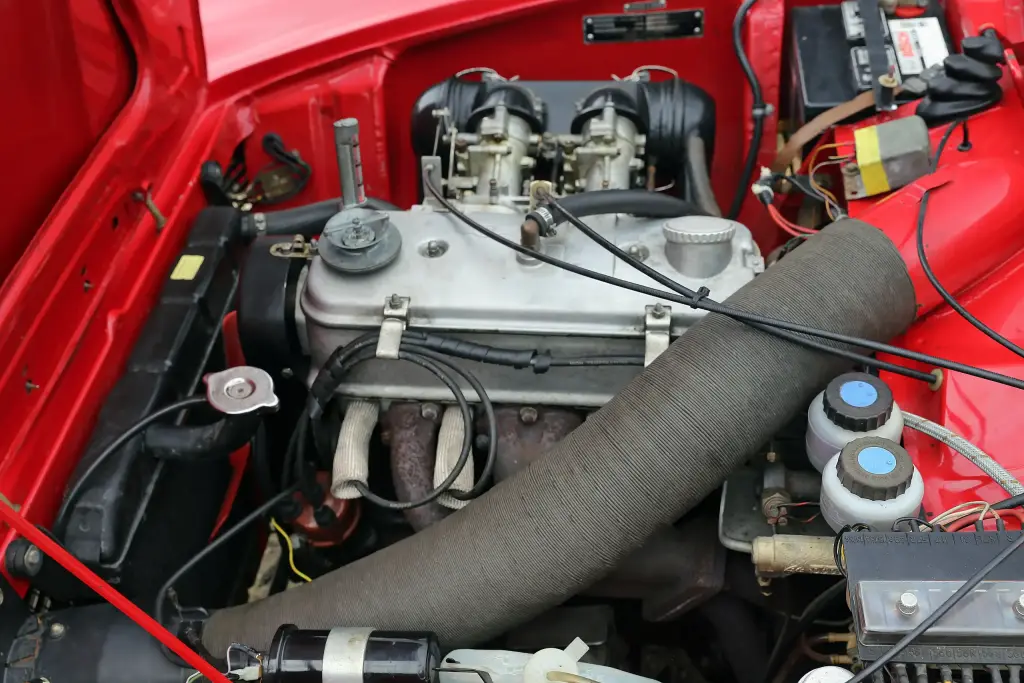
A cabriolet version appeared in May 1965 and was always much rarer than the coupé. In September 1965 Glas raised the 1300 GT’s output to 85 PS and its top speed to 175 km/h, and at the same time began offering the 1,682 cc engine from the new Glas 1700 TS saloon: with 100 PS it pushed the 1700 GT to 185 km/h. Because the longer-stroke 1,682 cc engine was taller than the 1,290 cc unit, the 1700 GT needed a ridge along the centre of the bonnet; from September 1965 all GT models, whatever their engine, received the same bonnet with the ridge. The 1700 GT was also homologated for sale in the United States, then a lucrative market for European sports cars.
BMW 1600 GT
After BMW acquired the Glas business, the GT was adapted to take the 1,573 cc engine already used in the BMW 1600, canted over at 30 degrees so it would fit under a lower bonnet. Branded the BMW 1600 GT, it now produced 105 PS, and BMW fitted its semi-trailing-arm rear axle with coil springs in place of the Glas rigid axle and leaf springs, along with the twin-kidney grille and round rear lights from the 02 range. BMW built 1,259 cars between June 1967 and August 1968; the BMW 1600 GT cost 15,850 DM in January 1968. A cabriolet version of the BMW 1600 GT, developed by Frua at the suggestion of Max Hoffman, never reached production, and the single surviving prototype was restored at the Dingolfing plant in 2018.
Design and features
- Frua body: a clean coupé shape built in Italy by Maggiora and finished at Dingolfing.
- Belt-driven camshaft: the 1,290 cc engine carried over the Glas speciality of a toothed-belt timing drive.
- 1700 GT performance: 100 PS and 185 km/h, with a bonnet ridge to clear the taller engine.
- Rare cabriolet: only 363 open cars among the 5,376 Glas GTs.
- BMW conversion: BMW engine, semi-trailing-arm rear axle and twin-kidney grille for the 1600 GT.
Glas GT versions
- Glas 1300 GT (1964–1967): 1,290 cc, 75 PS, 170 km/h; 85 PS and 175 km/h from September 1965.
- Glas 1700 GT (1965–1967): 1,682 cc, 100 PS, 185 km/h.
- Cabriolet (1965–1967): open version of the coupé, 363 built.
- BMW 1600 GT (1967–1968): BMW engine and rear axle, 105 PS, 1,259 built.
The GT’s 1,682 cc engine came from the Glas 1700 saloon, and its smaller unit was a bored-out version of the Glas 1304 engine. More cars from Dingolfing are in the Glas collection.
Video: Glas 1300 GT
Video on YouTube.
Sources
- Glas GT, English Wikipedia: launch, engines, production, BMW 1600 GT
- Glas GT, German Wikipedia: Maggiora bodies, rust, dimensions, BMW conversion