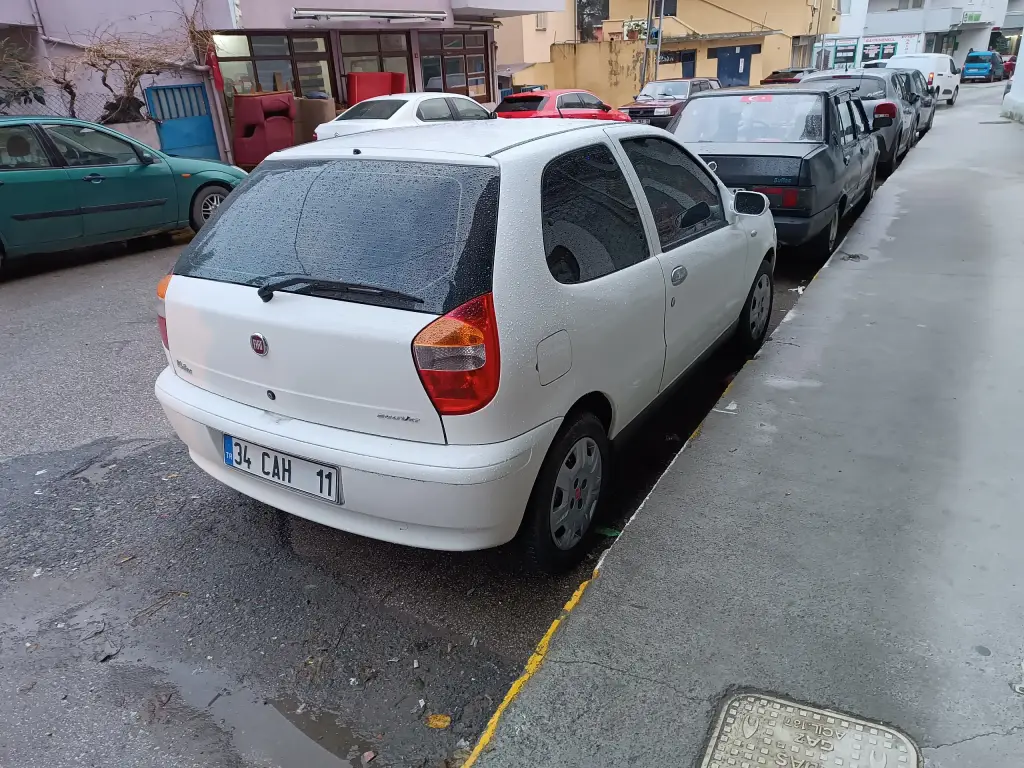
The Fiat Palio is a supermini released by Fiat in April 1996 and produced until 2018 as a hatchback and until 2020 as a wagon. It is a world car, developed by Fiat Automóveis with developing countries in mind, and it has been built in many countries around the world.
Fiat Palio at a glance
| Production | 1996–2018 (hatchback), to 2020 (wagon) |
|---|---|
| Project | 178 |
| Class | supermini |
| Body | hatchback, sedan, pickup, station wagon |
| Chassis | developed from the Fiat Uno |
| Suspension | MacPherson struts, torsion beam; trailing arms on the Weekend |
| Body design | I.DE.A Institute, Turin |
| Facelifts | 2000 and 2004, both by Giorgetto Giugiaro |
| Built in | Brazil, Argentina, Venezuela, Poland, Morocco, Turkey, India, South Africa, Egypt, China |
| Related models | Siena, Palio Weekend, Palio Adventure, Strada |
History of the Fiat Palio
Origins of the badge
The Palio name first appeared on the European Mark II Fiat 127 of 1977, where it was a trim designation rather than a model: the 127 Palio had alloy wheels, a more luxurious interior and the metallic paint of the 127 Sport. The name was used again on other Fiat models through the 1980s and 1990s in various markets.
First generation, 1996–2002
Launched in Brazil in 1996 as part of Fiat’s Project 178, the Palio was Fiat’s first attempt at a world car, the same basic design produced in many nations. Four principal models were made — hatchback, sedan, pickup and station wagon — with different versions for different markets, and both diesel and petrol engines varied by region according to local production, legislation and demand. The basic chassis was a development of the European Fiat Uno, but little remained unchanged: the structure was significantly stronger to cope with the rougher roads of some markets. Suspension followed the Uno with MacPherson struts at the front and a torsion beam at the rear, although the Weekend estate used the fully independent trailing-arm rear end of the Fiat Punto. The body was a completely new design by the I.DE.A Institute of Turin, which also designed the interior, and some engines came from other Fiats such as the Punto and the Bravo.
Production began in Brazil in 1996, followed later that year by a plant in Argentina. In 1997 the car started in Venezuela, in Poland for the European market and in Morocco at the Somaca plant, and Turkey followed in 1998. In India it was assembled at Pune in the new Fiat-Tata Motors factory, and in South Africa by Nissan together with the pickup version called Fiat Strada; production there began in 1999, in Egypt in 2001 and in China in 2002. The Palio Weekend estate was launched in Brazil in 1996 and later in Europe, where it became the most commonly sold version.
2000–2006
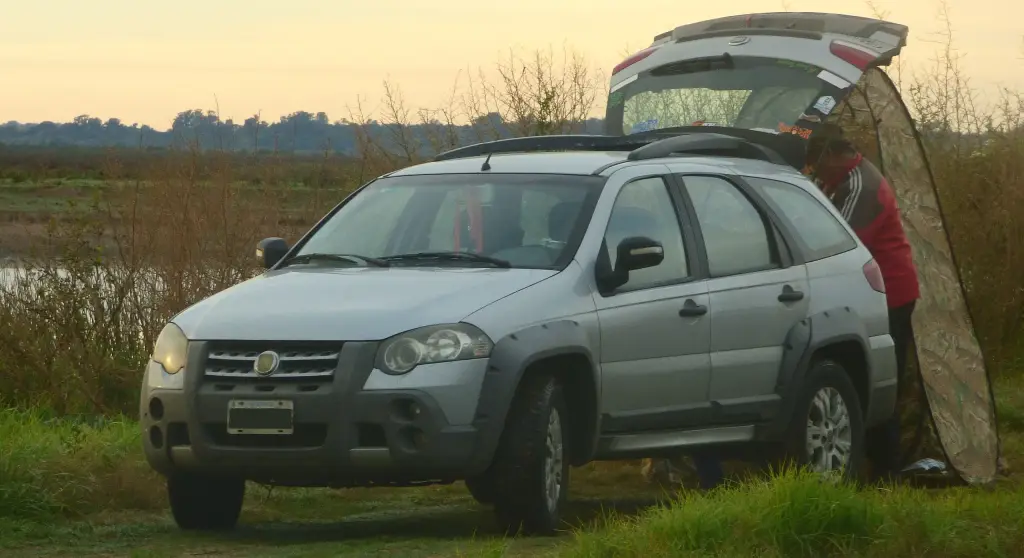
The first facelift came in 2000, designed by Giorgetto Giugiaro, with new front and rear fasciae and a completely new interior. New engines followed: the Fire 16-valve 1.0 and 1.2-litre units and the Sporting, a 1.6-litre 16-valve engine of 120 hp made in Turkey. The 2001 Palio was the first Fiat built in China, by Nanjing Automobile, and some markets offered a Speedgear CVT. The 2000 facelift was the last version sold in Italy. In 2001 Fiat added the South American crossover version, the Palio Adventure, based on the Weekend, and in Europe the Weekend was succeeded in 2003 by the Fiat Idea MPV.
The Chinese Palio appeared in November 2001 with a 60 PS 1.2-litre or an 85 PS 1.5-litre engine. The Siena sedan followed in November 2002 and the Palio Weekend in June 2003, the estate without the smaller engine; a 1.6-litre 72 kW Weekend was planned but never sold. The Albea, the sedan version, scored 8.5 points in a Russian frontal test to the latest Euro NCAP standard, equivalent to three stars with a standard driver airbag, while the Chinese Fiat Perla averaged 31 points, three stars, in China-NCAP testing.
2004–2016
A second revision was released in 2004, again designed by Giugiaro and essentially a facelift. The 2004 Palio was the first Brazilian B-segment car available with four airbags, parking assistance and light and rain sensors. In Europe the new model had a redesigned front and interior with a rear similar to the 2001 car. Brazil also received a sport version, the Palio 1.8R, with a 1.8-litre GM X18XE engine rated at 115 hp on ethanol and 112 hp on petrol, lowered suspension, 14-inch alloy wheels and new seats. The third generation sold in huge numbers, in some months outselling the Volkswagen Gol, Brazil’s best-seller for over 24 years, and a cheaper Palio Fire Economy was offered alongside it. The top model was the Weekend Adventure with a 1.8-litre flex-fuel engine.
Design and features
- World car: one design built in ten countries on four continents.
- Stronger structure: the Uno chassis was heavily reinforced for rough roads.
- Giugiaro facelifts: both the 2000 and the 2004 revisions were his work.
- Four body styles: hatchback, sedan, pickup and station wagon from one range.
- Market-specific engines: petrol and diesel units varied by country and local rules.
Fiat Palio versions
- Palio hatchback: the core model, in three and five doors.
- Palio Weekend: estate, the best-selling version in Europe.
- Palio Adventure: crossover based on the Weekend, from 2001.
- Palio 1.8R: Brazilian sport version with a 1.8-litre GM engine.
- Palio Fire Economy: cheaper Brazilian model derived from the Uno Mille Fire Economy.
The Palio shared its platform with the Fiat Siena and the Fiat Strada pickup, and its chassis came from the Fiat Uno. More cars are in the Fiat collection.
Sources
- Fiat Palio, English Wikipedia: project 178, chassis, production countries, facelifts and versions