The Fiat Croma name was used for two distinct large family cars. The first was a five-door liftback manufactured and marketed from 1985 to 1996; after a nine-year hiatus the name returned on a crossover station wagon built from 2005 to 2010. Both were styled by Italdesign.
Fiat Croma at a glance
| First generation | 1985–1996 |
|---|---|
| First generation code | Type 154 |
| Second generation | 2005–2010 |
| Second generation code | Type 194 |
| First body | five-door liftback |
| Second body | high-roof crossover wagon |
| Platforms | Type Four, then GM Epsilon |
| Replaced | Fiat Argenta |
| First replaced by | Fiat Marea, in effect |
| Second replaced by | Fiat Freemont |
based on one source
History of the Fiat Croma
First generation, 1985–1996
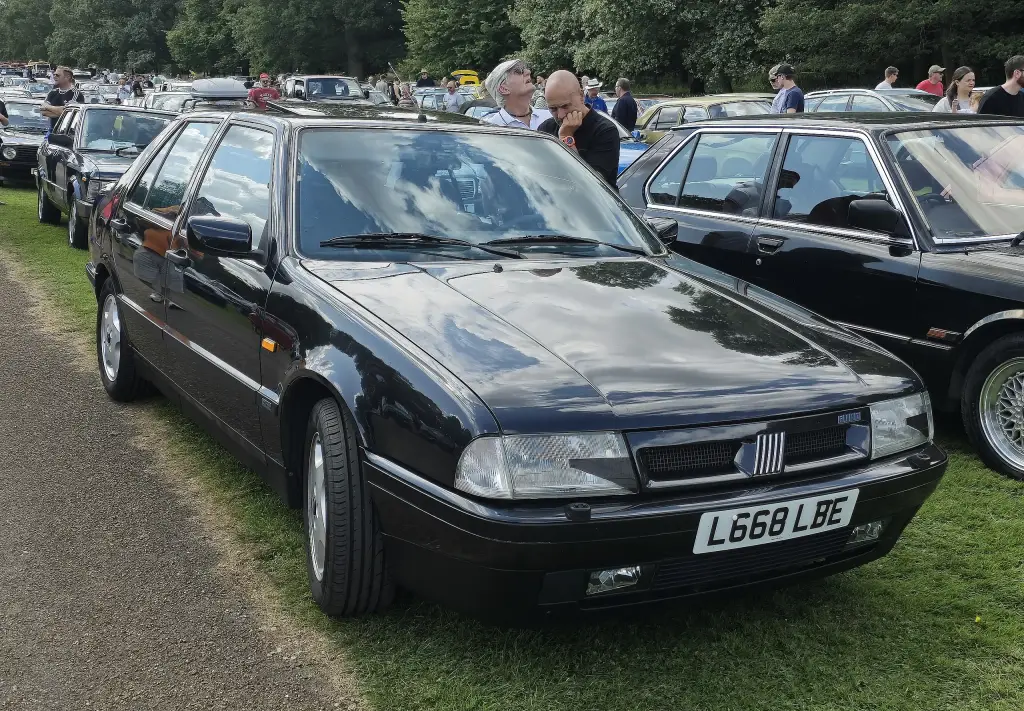
The original Croma, the Type 154, was a five-door notchback liftback styled by Giorgetto Giugiaro of Italdesign on the Type Four platform, shared with the Saab 9000, Lancia Thema and Alfa Romeo 164. Released in December 1985, it replaced the Argenta in the Fiat line-up and was the first large Fiat with a transverse engine and front-wheel drive.
The car received a light facelift for 1988, first shown in Frankfurt in September 1987. The black plastic between the rear lamps became ridged rather than smooth, the lower parts of the bumpers were body-coloured, and the turn signals got clear glass instead of amber; the front also received small changes to bring it in line with the newly introduced Tipo. A more significant facelift came in January 1991 with a new front design, including changes to the lights, bumpers, grille and sheet metal on the wings and bonnet. In 1991 the direct-injection diesel was also given a variable geometry turbocharger. A further facelift followed in June 1993.
Production ended in December 1996, when Fiat left the large family car segment; the Bravo and Brava-based Marea small family car debuted at the same time as the Croma ceased production.
First generation engines
The Croma was available with a variety of petrol and diesel engines, most petrol units from Fiat’s Twin Cam family. Base models had a single-cam 1,585 cc four of 83 hp and the larger 1,995 cc Controlled High Turbulence engine of 90 hp, followed by two fuel-injected 2.0 litre twin-cam units, one with 120 hp and a turbocharged and intercooled version of 155 hp. The later 2.5 litre V6 petrol came from Alfa Romeo but, like the 1.6, was not available in all markets.
The 2.0 CHT was designed to give low fuel consumption under light and medium loads through two separate inlet manifolds of different diameters, making the Croma CHT one of the first volume-production cars with variable intake ducts. The Croma was also the first passenger car in the world with a direct-injection diesel engine, the Turbo D i.d., which went on sale in 1988: a 1.9 litre turbocharged unit producing 92 hp. It joined a 2,499 cc engine supplied by Iveco, offered naturally aspirated with 75 hp or turbocharged with 115 hp, the latter replacing an earlier 2,445 cc unit of 100 hp. Diesel variants were not marketed in the United Kingdom.
Second generation, 2005–2010
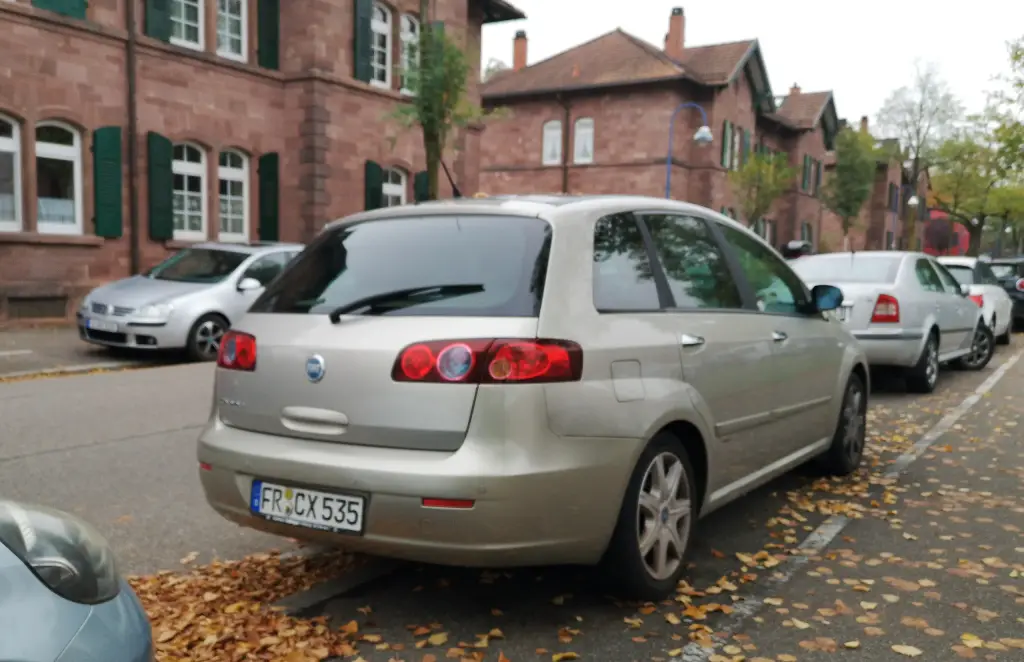
In March 2005 Fiat introduced the second-generation Croma, a large high-roof six-passenger crossover wagon with an upright tailgate and styling by Italdesign. Reflecting Fiat’s short-term joint venture with General Motors, the new Croma, the Type 194, used an extended variant of the GM Epsilon platform shared with the Opel Vectra, Opel Signum and Saab 9-3. It was presented at the Geneva Motor Show in spring 2005 and went on sale in Italy in June that year.
Aware of its lack of image in the upper market segments, Fiat chose to develop a Comfort Wagon with design elements of both estates and large MPVs rather than a standard large family car like the previous model. To underline the niche, Italdesign produced a one-off Croma 8tto V concept with a Maserati V8 engine and top-of-the-line appointments. At 1,600 mm high, the car sat between large MPVs such as the Mitsubishi Grandis and Ford S-Max and the lower SEAT Altea XL. In February 2007 Fiat UK announced that the Croma would no longer be generally available in Britain after fewer than 900 had been sold in 2005, although it remained on special order with right-hand-drive cars built to customer specifications.
The car had seven airbags, anti-lock braking, electronic brakeforce distribution and a five-star Euro NCAP rating for adult occupant protection. A facelift in November 2007 produced the Nuova Croma with a revised grille, headlights, rear bumper and interior, now called a Station Wagon rather than a Comfort Wagon; it was sold only in mainland Europe. The Croma was built at Fiat’s Cassino factory with three trim levels and five engines. Petrol units came from Opel, starting with the 1.8 Ecotec of 140 hp and the 2.2 Ecotec of 147 hp. Most cars used Fiat’s own Multijet diesel in 1.9 litre eight-valve 120 hp and 16-valve 150 hp forms, or the five-cylinder 2.4 litre 20-valve unit of 200 hp; diesels had a six-speed manual, with a six-speed automatic standard on the 2.4. Production of the second generation ended at the end of 2010 and the car was replaced by the Dodge-based Fiat Freemont.
Design and features
- Tipo Quattro: the first Croma shared its platform with the Saab 9000, Lancia Thema and Alfa 164.
- Direct-injection diesel: the Croma was the first passenger car in the world with such an engine.
- Variable intake: the 2.0 CHT had two inlet manifolds of different diameters.
- Comfort Wagon: the second generation mixed estate and MPV ideas with a high roof.
- Five-star safety: seven airbags and a five-star Euro NCAP adult rating.
Fiat Croma versions
- Croma Type 154: the 1985–1996 five-door liftback.
- Croma CHT: 2.0 litre engine with two inlet manifolds for low consumption.
- Croma Turbo D i.d.: the 1.9 litre direct-injection diesel of 1988.
- Croma Type 194: the 2005–2010 high-roof crossover wagon.
- Nuova Croma: the 2007 facelift, sold in mainland Europe only.
The first Croma replaced the Fiat Argenta, and the second was eventually replaced by the Fiat Freemont. The Fiat Tipo shared the 1988 facelift’s front-end look. More cars are in the Fiat collection.
Sources
- Fiat Croma, English Wikipedia: both generations, platforms, engines, facelifts, safety