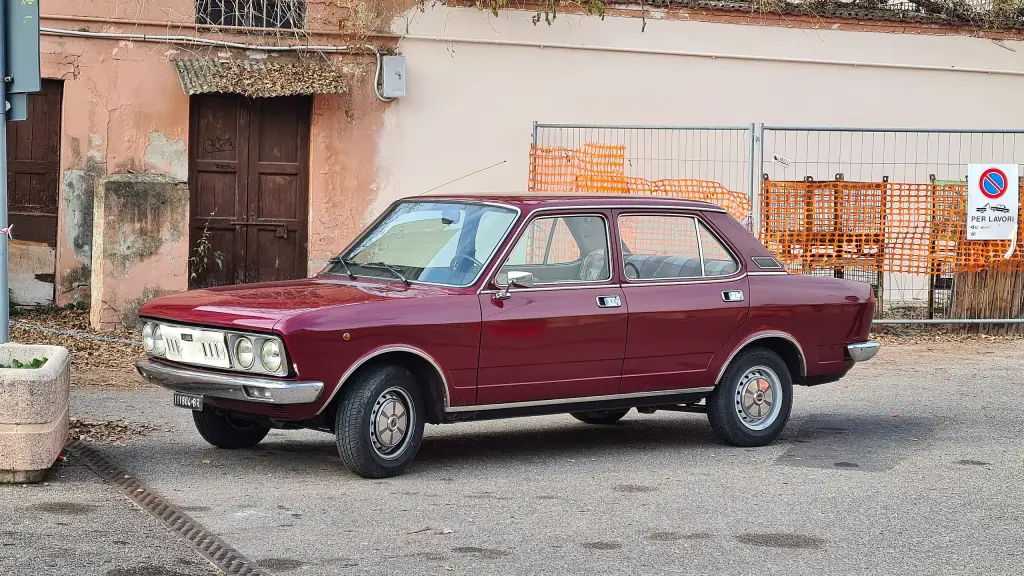
The Fiat 132 was a large family car produced from 1972 to 1981 as the replacement for the Fiat 125. Like its predecessor it used Fiat twin-cam engines as standard and came with a five-speed manual gearbox, still an unusual feature in its class in the mid-1970s. An updated version, the Argenta, was built from 1981 to 1985.
Fiat 132 at a glance
| Production | 1972–1981 |
|---|---|
| Replaced | Fiat 125 |
| Replaced by | Fiat Argenta |
| Body | four-door saloon |
| Engine | 1,600 cc and 1,800 cc twin cam; 2.0 litre; Sofim diesel from 1978 |
| Power | 107 hp (80 kW) from the revised 1,800 cc unit |
| Transmission | five-speed manual, optional automatic |
| Also assembled in | Spain, South Africa, Yugoslavia, Poland, South Korea |
| South African name | Elita, after 1977 |
| Yugoslav assembly | about 13,025 cars, 1974–1983 |
History of the Fiat 132
First series: 1972–1974
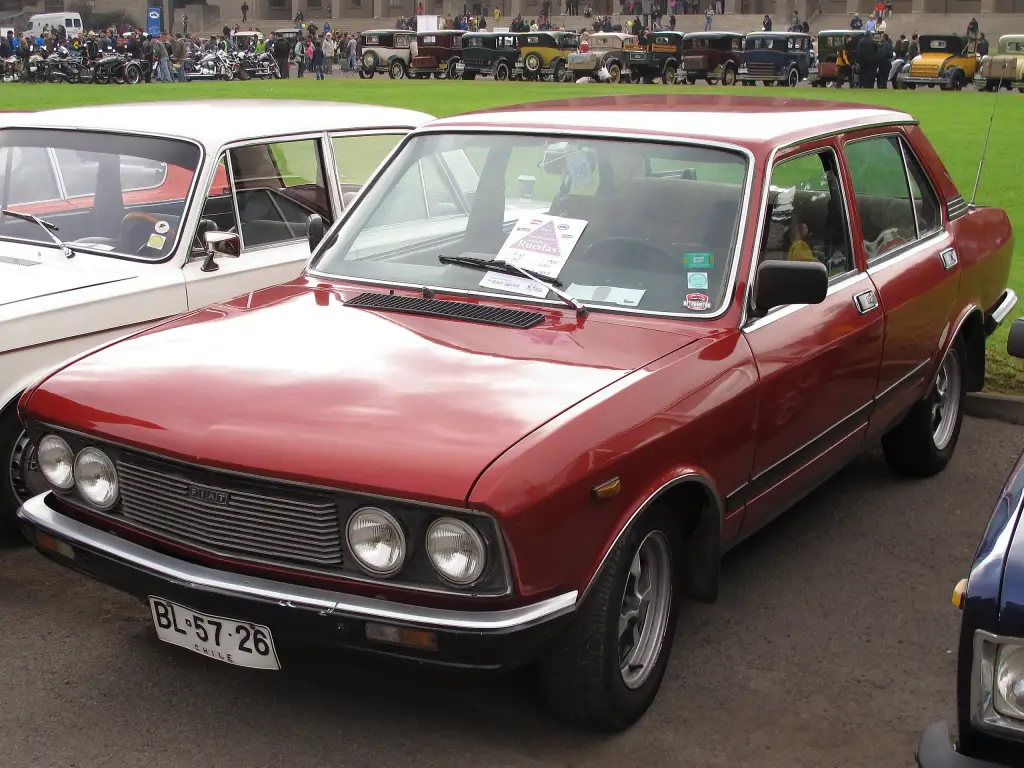
The 132 was introduced as the replacement for the 125 and, like it, used Fiat twin-cam engines as standard. Styling owed more to the larger, top-of-the-range Fiat 130. The five-speed manual gearbox was optional in some markets and standard in others, and a GM “Strasbourg” automatic was listed as an option. The first series came in two forms: a “normal” version with the 1,600 cc engine only, and a “special” with either the 1,600 or the 1,800 cc unit.
Second series: 1974–1977
In January 1974 the front suspension was substantially revised in response to criticism of the handling and the very low-geared steering, and wider tyres were fitted. Press reports welcomed the improved handling, although poor fuel consumption at high speed continued to draw criticism. An external redesign suggested a lower waistline through larger side windows, with a new grille, new rear lights and a reshaped C-pillar that had something of BMW’s Hofmeister kink and reminded some observers of the 5 Series. New shock absorbers came with the suspension work. The 1,600 cc engine was unchanged, but the 1,800 cc unit gained a modified cylinder head and carburettor for a small rise in claimed output to 107 hp and a flatter torque curve. Inside there was a redesigned steering wheel and better heating and ventilation controls. This series was sold as the GL with the 1,600 cc engine and the GLS with either engine.
Third series: 1977–1981
A further facelift came in April 1977, bringing plastic “safety” bumpers, large rubber side protection strips and higher-geared steering with servo assistance. Inside were a new dashboard, door cards and seat trims. One innovative feature was a pair of acrylic sun visors that could be pulled out of the headliner forwards and sideways at the same time. With the 130 discontinued, the 132 now became the flagship of the Fiat range. The third series was sold in one unified version, with some of the 2-litre car’s standard equipment optional on the 1,600. Sofim diesel engines joined the range in 1978 and fuel injection for the 2-litre engine in 1979.
Assembly outside Italy
The 132 was built in fewer places than the 125. SEAT made a version in Spain between 1973 and 1982, and the car was assembled in Rosslyn, South Africa, where after the 1977 update it was renamed Elita and, because of a capacity shortage at Fiat’s plant, assembled by Alfa Romeo South Africa. Zastava assembled it in Zagreb from 1974 to 1983, building some 2,000–3,000 cars a year for a total of 13,025, with wheels, battery and a plate added locally; it was popular with directors and officials. In Poland the car was offered from 1973 as the Polski Fiat 132p, shipped from Italy almost complete and finished by FSO, which built 4,461 by 1981 and was a favourite of state officials and the security services. Kia built 4,759 units from CKD kits in South Korea from 1979.
Design and features
- Twin-cam engines: 1,600, 1,800 and 2.0 litre units, with fuel injection from 1979.
- Five-speed gearbox: standard or optional depending on market, years before it became the norm.
- 1974 chassis work: revised front suspension, wider tyres and new shock absorbers.
- Acrylic sun visors: a 1977 novelty that pulled out of the headliner in two directions.
- Sofim diesel: the first oil-burner in the range, added in 1978.
Fiat 132 versions
- 132 normal: first series with the 1,600 cc engine.
- 132 special: first series with 1,600 or 1,800 cc.
- 132 GL and GLS: second series of 1974–1977.
- 132 third series: unified range with 1,600, 2.0, diesel and injection engines.
- Argenta: updated model built from 1981 to 1985.
The 132 succeeded the Fiat 125 and was replaced by the Fiat Argenta. Its larger relative was the Fiat 130, and more cars are in the Fiat collection.
Sources
- Fiat 132, English Wikipedia: series changes, engines, suspension work and overseas assembly