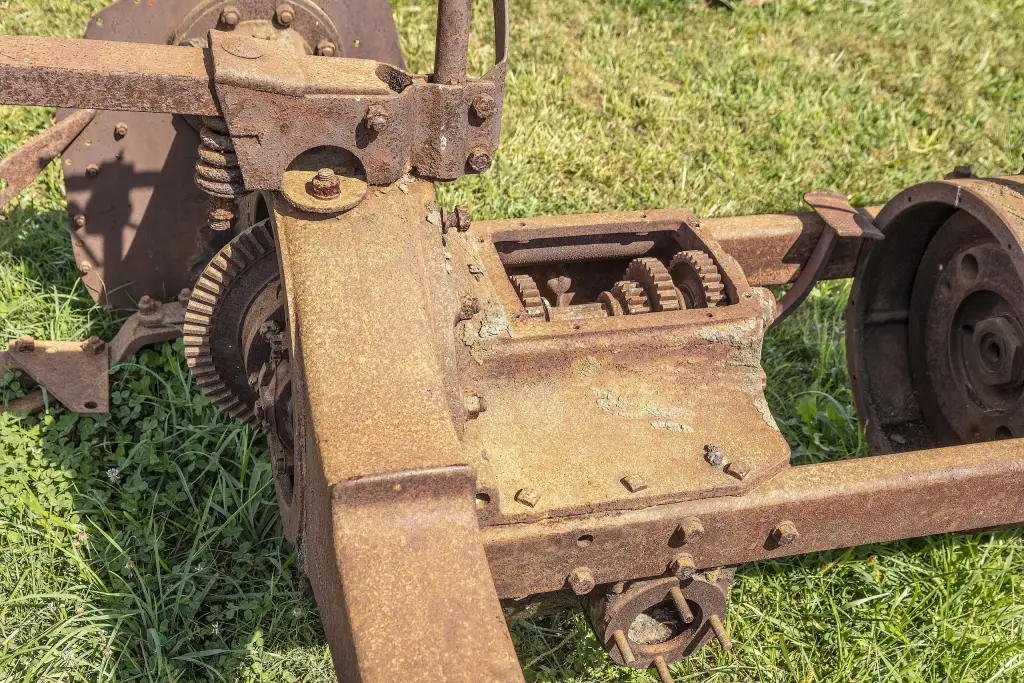
The Farmall F-20 was a medium-sized two-plow row-crop tractor produced by International Harvester from 1932 to 1939. It replaced the Farmall Regular and was itself replaced by the Farmall H in 1939. About 148,000 were built, and it was the larger of the two main Farmall models of the 1930s.
Farmall F-20 at a glance
| Maker | International Harvester, USA |
|---|---|
| Production | 1932–1939 |
| Predecessor | Farmall Regular |
| Successor | Farmall H |
| Engine | four-cylinder overhead valve, 29 hp (22 kW) |
| Transmission | sliding gear, four gears |
| Plow rating | two plows |
| Fuels | distillate and kerosene; petrol for starting |
| Rear axle | portal axle with drop gears |
| Wheels | steel standard, pneumatic tyres from 1933 |
| Paint | grey until 1936, then bright red |
| Price | $895–$1,000 |
| Built | about 148,000 |
Based on one source, the English Wikipedia article on the Farmall F-20.
History of the Farmall F-20
The Farmall F-20 was introduced in 1932 as a modernisation of the earlier Farmall Regular, and it remained in production until 1939. It had a more powerful engine, improved narrow front wheels and a four-cylinder overhead-valve engine producing 29 horsepower, driving through a four-gear sliding-gear transmission. The rear portal axle used drop gears to raise the clearance underneath the tractor higher than a simple axle would allow, and a wide front axle was available as an option. The F-20 name meant that the machine could pull two plows.
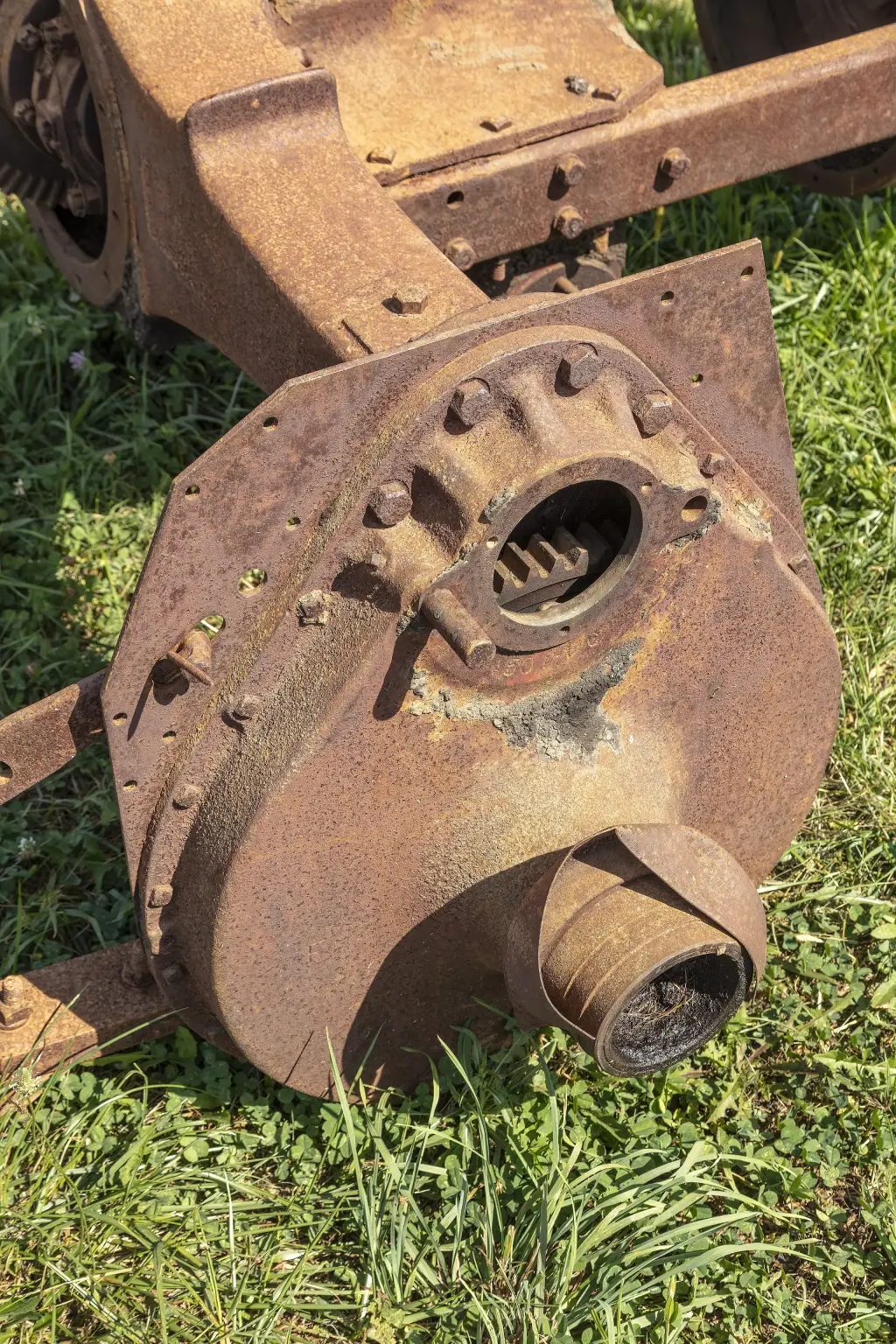
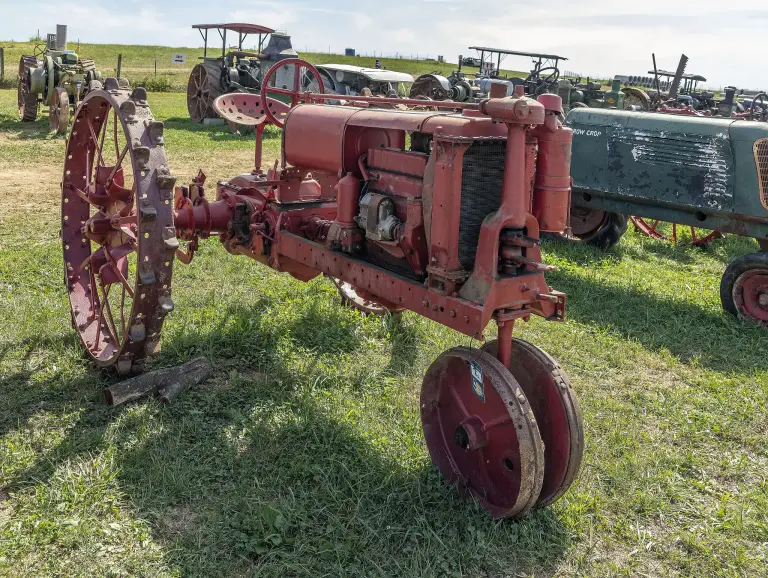
The tractor was offered for distillate and kerosene fuels; petrol was not an option except for starting the engine. The first tractors were delivered on steel wheels, with pneumatic tyres offered from 1933. Early F-20s were painted grey like the Regular, but from 1936 the model was painted bright red to increase visibility, which quickly became a trademark of the Farmall line. About 148,000 were built, and purchase prices ranged from $895 to $1,000.
A specialised version, the F-20 Cane Tractor, was produced with high clearance, a narrow rear wheel set and wide front wheels for sugar cane cultivation. In 1939 the F-20 was replaced by the Farmall H, which went on to become the most widely produced of International Harvester’s letter-series tractors. The F-20’s combination of a two-plow rating, adjustable row-crop axles and a simple four-speed gearbox made it a common sight on North American farms through the 1930s.
Design and features
- 29 hp engine: a four-cylinder overhead-valve unit with enough power for two plows.
- Portal rear axle: drop gears raised the clearance under the tractor.
- Four-gear gearbox: a sliding-gear transmission with four speeds.
- Fuel flexibility: distillate and kerosene versions, with petrol only for starting.
- Red from 1936: the colour change that became a Farmall trademark.
Farmall F-20 versions
- Farmall F-20 (1932–1939): the standard two-plow tractor.
- F-20 Cane Tractor: high clearance, narrow rear wheels and wide front wheels for sugar cane.
- Distillate and kerosene versions: the two regular fuel options.
- Steel-wheel and pneumatic-tyre versions: rubber tyres available from 1933.
The smaller Farmall F-12 was its stablemate in the 1930s, and the Farmall H replaced it in 1939. More Farmall tractors are in the Farmall collection.
Video: Hand Cranking the 1938 Farmall F-20
Video on YouTube.
Sources
- Farmall F-20, English Wikipedia: engine, transmission, fuels, paint, production