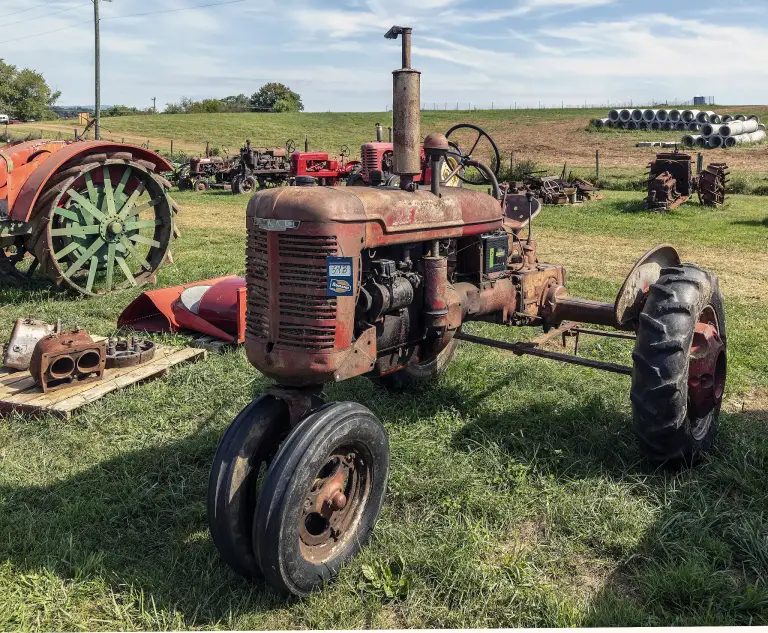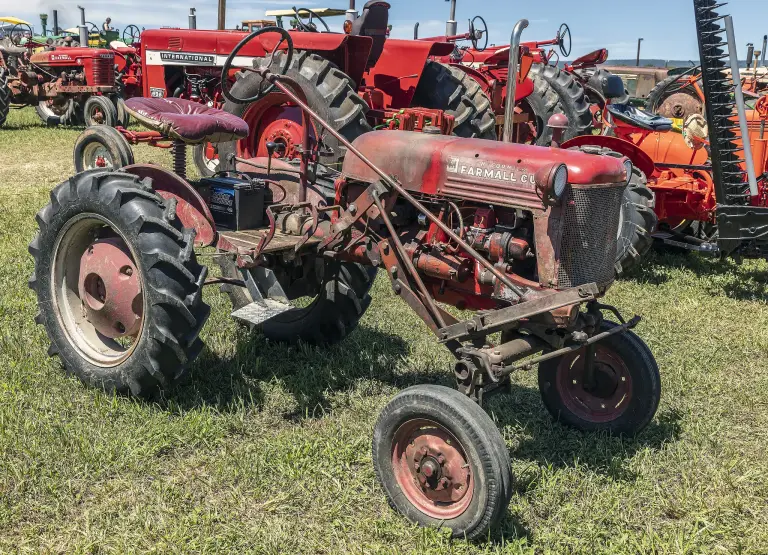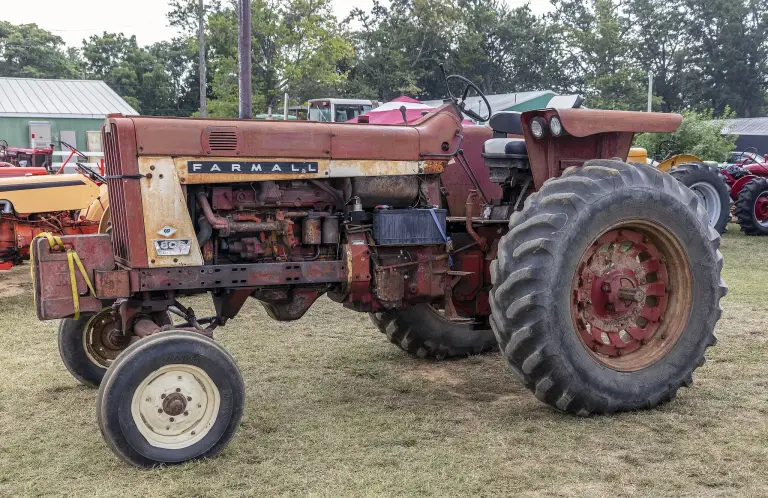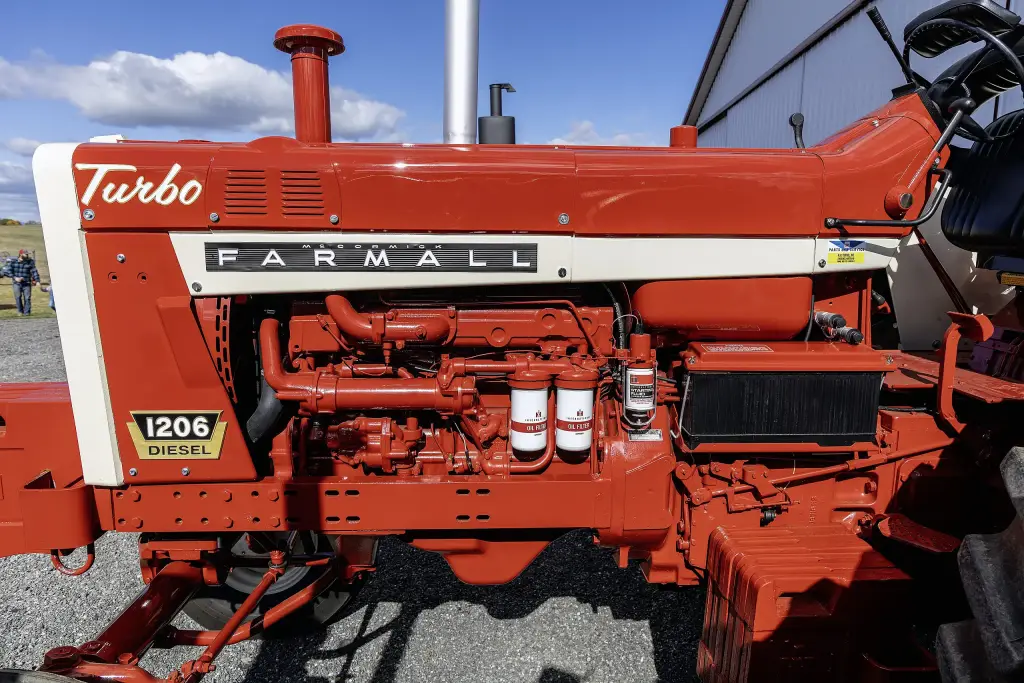
Farmall was a model name and later a brand name for tractors built by International Harvester, the American truck, tractor and construction equipment company. The name was usually presented as McCormick-Deering Farmall and later McCormick Farmall as the company’s branding changed. During the decades of Farmall production, from the 1920s to the 1980s, most of the tractors were row-crop machines that helped establish the category in the United States.
Farmall at a glance
| Brand | Farmall |
|---|---|
| Maker | International Harvester (IH) |
| Name forms | McCormick-Deering Farmall, later McCormick Farmall |
| Production era | 1920s to 1980s |
| Main type | row-crop and general-purpose tractors |
| Original Farmall’s role | an early tractor to combine the defining row-crop traits |
| Colour | bright red, a trademark from 1936 |
| Main buyers | small and medium-sized family farms |
| Legacy | many tractors still working or restored by collectors |
A brand overview based on one source, the English Wikipedia article on Farmall; it is not a single model.
History of the Farmall
The Farmall name began as the name of a single model and then grew to cover a whole line of tractors. International Harvester, itself an amalgamation of earlier farm equipment companies, used the legacy names McCormick and Deering in its branding, which is why Farmalls were usually sold as McCormick-Deering Farmall and later as McCormick Farmall. Farmall became a prominent brand in the twentieth-century mechanisation of American agriculture. Its machines had their origins in row-crop tractors, a category they helped establish and in which they long held a large share of the market. Most Farmalls were all-purpose tractors affordable to small and medium-sized family farms, able to do enough of the work needed on a farm that the need for hired hands was reduced and horses or mules were no longer required.
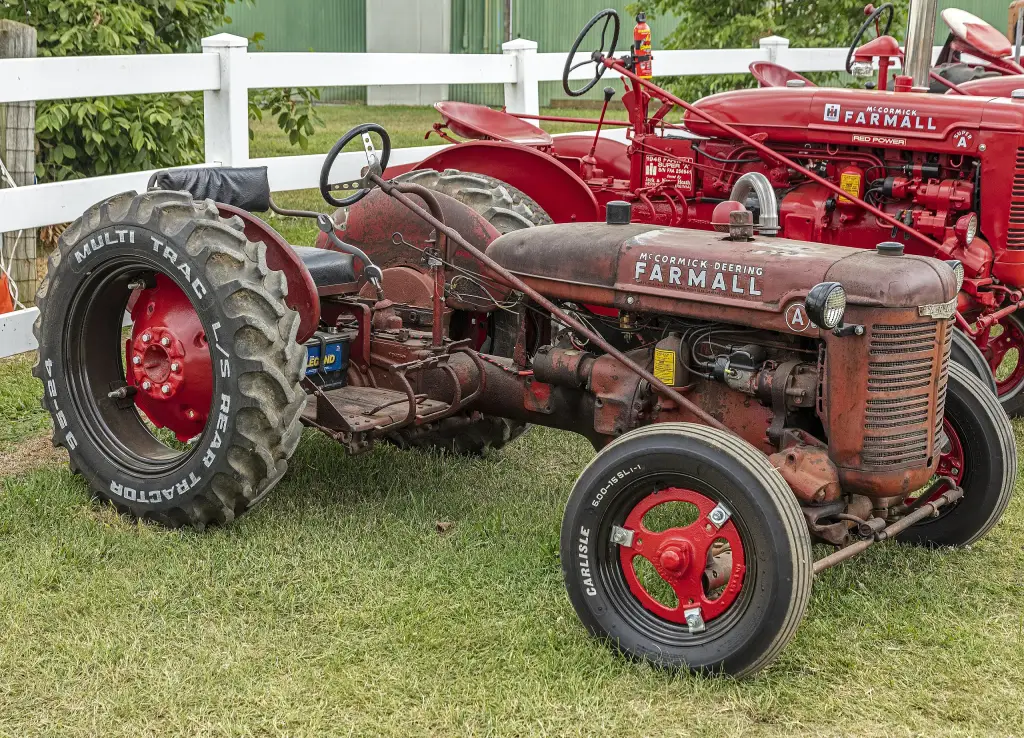
The original Farmall is widely regarded as the first tractor to combine a set of traits that came to define the row-crop tractor, although competitors followed quickly. It was not the first tractor to have any one of those traits, but it was early in bringing the winning combination to market. They included a tricycle configuration with a single front wheel or a narrowly spaced pair, high ground clearance, quickly adjustable axle track, good visibility all around and under the machine, and light weight. The tractor also had enough power for plowing and harrowing, a belt pulley for belt work, and a low price backed by a familiar brand and an extensive distribution and service network. The first group of traits allowed nimble manoeuvring and accurate cultivation, while the second let the Farmall do all the other work a farmer had previously done with a team of horses.
The Farmall could therefore replace a horse team entirely, which changed the economics of mechanisation, and it was mass-produced with the same low-cost, high-value approach as the Ford Model T and the Fordson tractor. Its capabilities were similar to the Fordson’s but its cultivating ability was better. In later decades the Farmall line remained a leading brand of all-purpose tractors, and its bright red colour was a distinctive badge; the shift to a bright, distinctive colour scheme in 1936 strengthened the branding. During the 1940s and 1950s the brand was ubiquitous in North American farming. Trends after the 1960s, such as the decline of cultivating in favour of herbicidal weed control and the consolidation of farming into larger but fewer farms, ended the era of Farmall manufacturing. Many Farmalls remain in farming service, however, and many others are restored and collected by enthusiasts.
Design and features
- Row-crop layout: tricycle front end, high clearance and a quickly adjustable track.
- All-purpose work: plowing, harrowing and belt work from one tractor.
- Low cost: affordable for small and medium family farms.
- Red paint: a distinctive brand badge, reinforced from 1936.
- Distribution: a familiar brand with a wide service network.
Farmall versions
- Original Farmall: the row-crop model that established the layout.
- F-series: the tractors that followed the original design.
- Orchard versions: specialised machines for orchard work.
- Fairway versions: variants built for golf courses and mowing.
Individual Farmall models include the Farmall H, the Farmall M and the small Farmall Cub. The whole range is in the Farmall collection.
Video: 1943 International Harvester Farmall H tractor
Video on YouTube.
Sources
- Farmall, English Wikipedia: brand history, row-crop traits, colour, decline