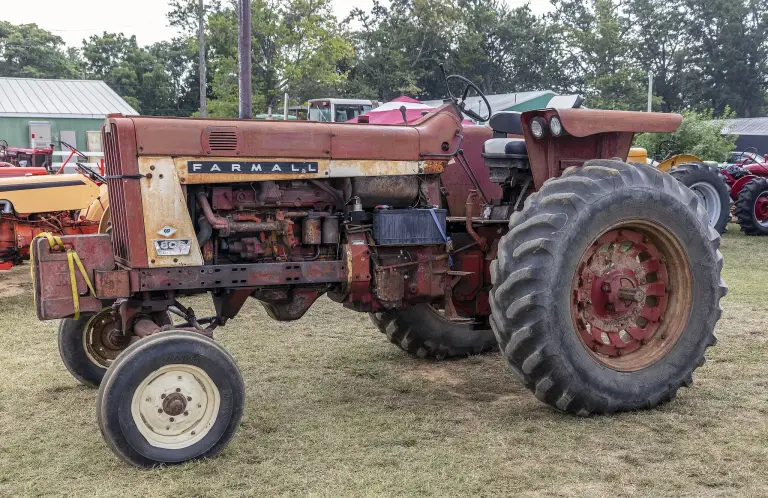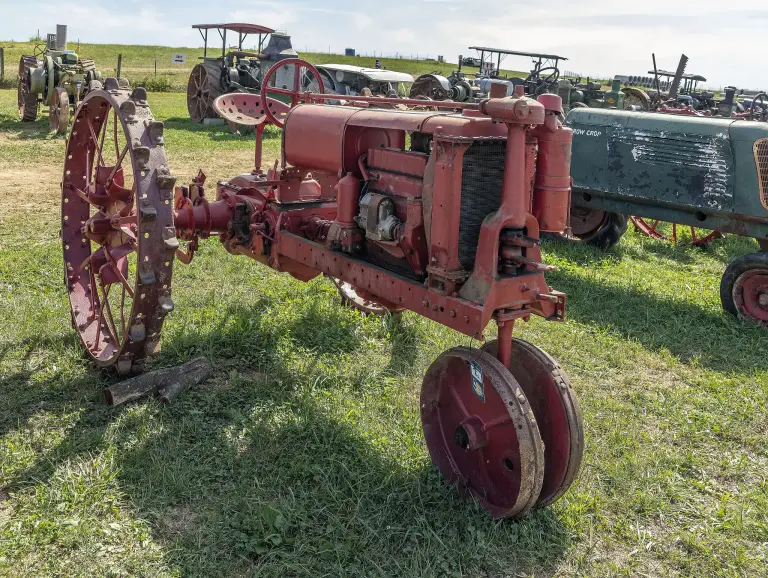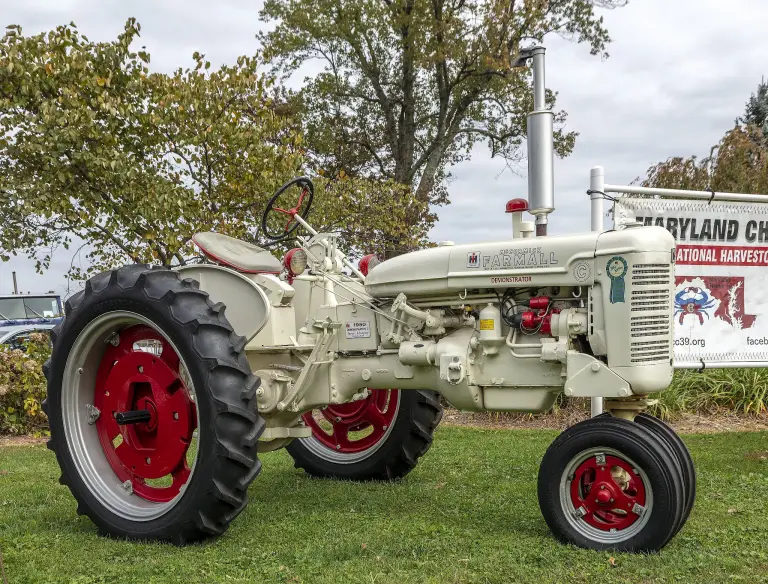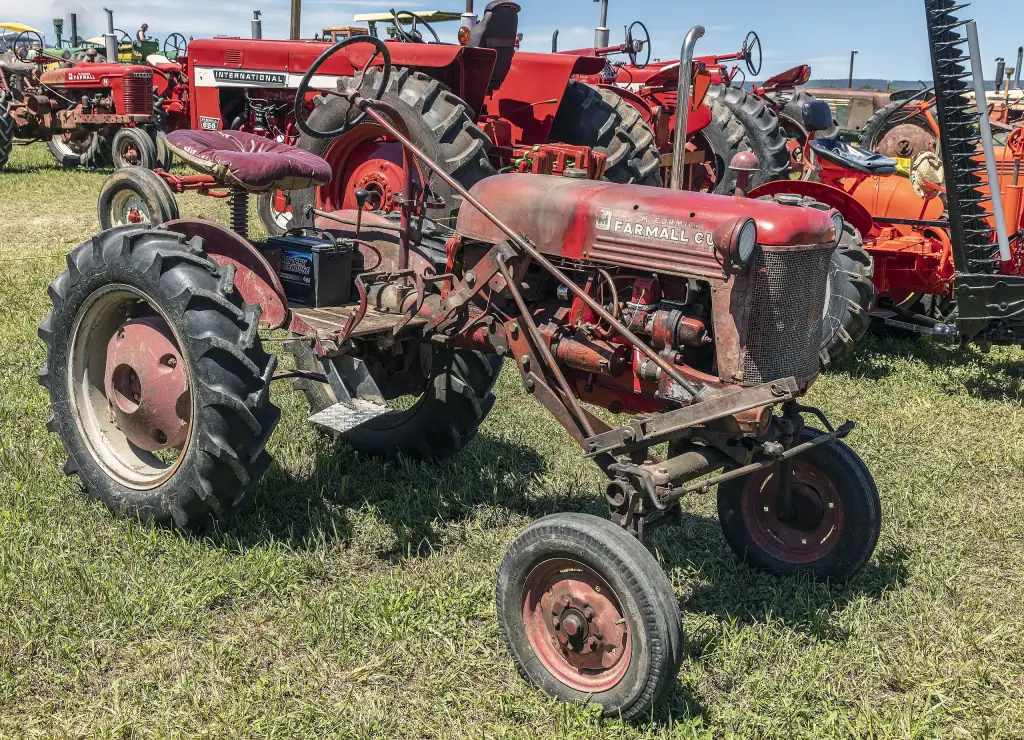
The Farmall Cub was the smallest tractor built by International Harvester, made in Louisville, Kentucky, from 1947 to 1981 under the McCormick-Deering, Farmall and International names. It was designed for the small-acreage farmer and to replace a horse or mule. More than 245,000 were built, making the Cub arguably the most popular small tractor in history.
Farmall Cub at a glance
| Maker | International Harvester, Louisville, Kentucky |
|---|---|
| Production | 1947–1981 |
| Engine | IH C-60, 59.5 cu in (0.981 L) four-cylinder |
| Power | 9.25 hp on the belt, 8 hp at the drawbar at 1600 rpm |
| Wheelbase | 69.25 inches |
| Layout | offset to the left, driver on the right (CultiVision) |
| Transmission | sliding gear |
| Lo-Boy introduced | 1955 |
| Colour | IH Red, Federal Yellow from 1960 |
| Built | over 245,000 |
| Also built in | St. Dizier, France, from 1955 |
Based on one source, the English Wikipedia article on the Farmall Cub.
History of the Farmall Cub
Development of the Cub began in July 1943 under the designation Farmall X, originally with a two-cylinder engine before the design moved to four cylinders. A prototype was running by December 1944, and in September 1945 the tractor became the Farmall Cub. It was aimed at the small-acreage farmer and intended to replace a horse or mule. The layout was offset to the left, with the driver’s seat and steering wheel on the right, an arrangement International Harvester called CultiVision because it gave a clear view of the work in front of the tractor.
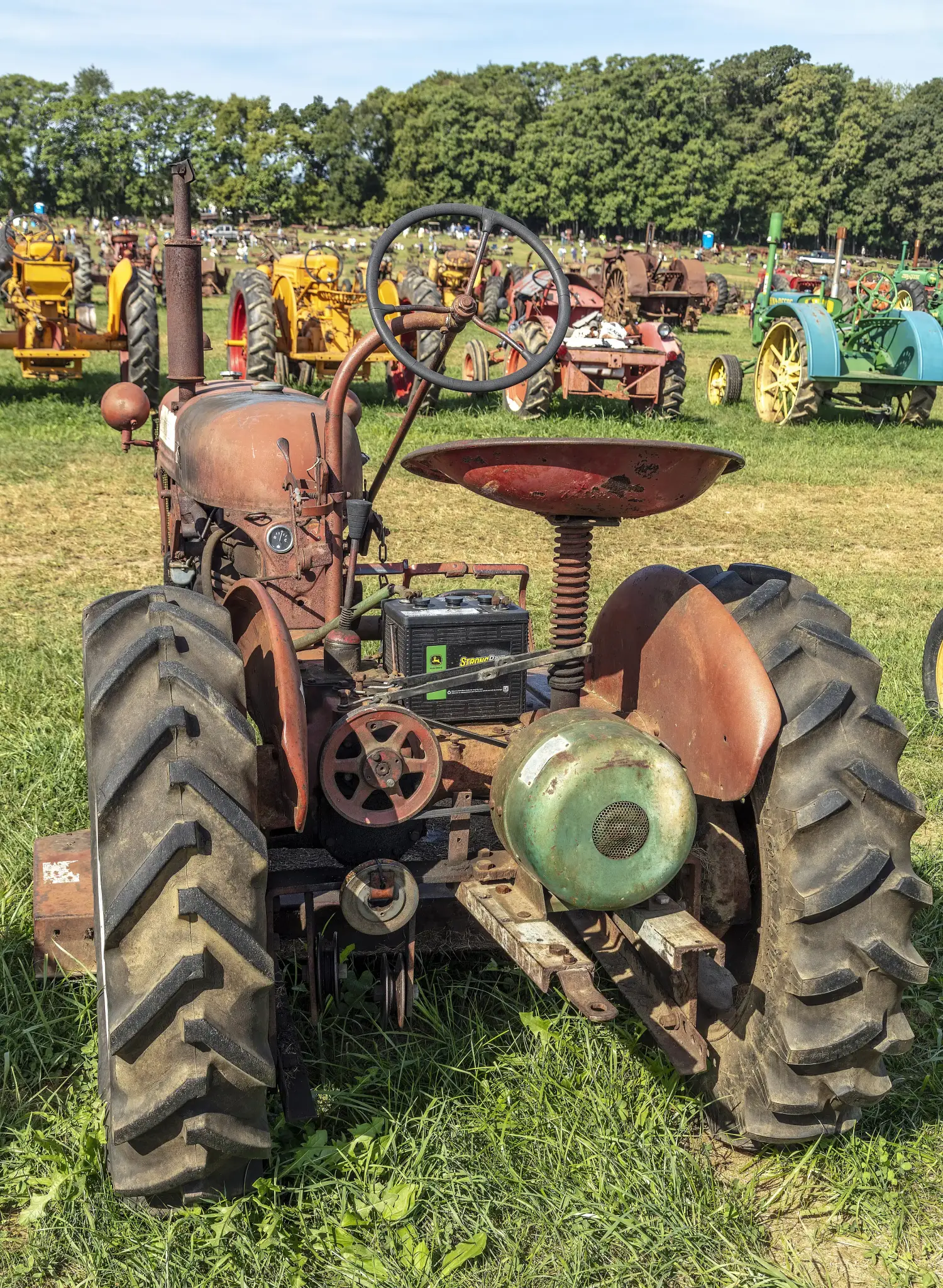
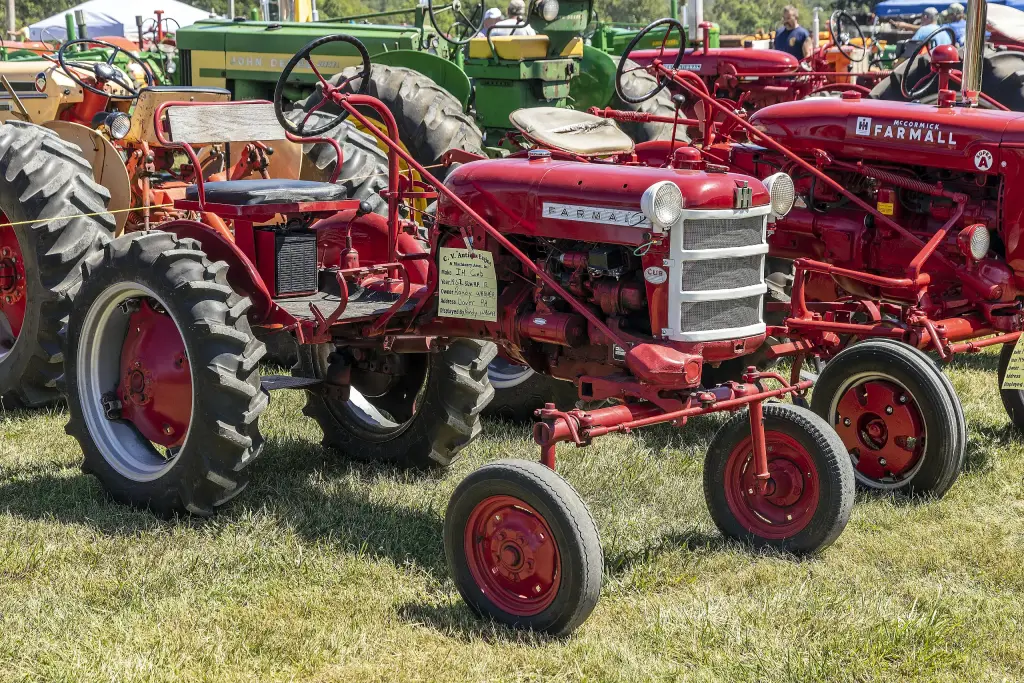
The Cub sat on a 69.25-inch wheelbase and used a four-cylinder C-60 gasoline L-head engine of 59.5 cubic inches, with a 2.625-inch bore and 2.75-inch stroke. At 1600 rpm the early engine produced 9.25 horsepower on the belt and 8 horsepower at the drawbar. From the 1960s power rose with higher rated speeds, reaching 15 horsepower for the International Cub and 154 Lo-Boy by 1975 and 18 horsepower for the 185 and 184 Lo-Boys. The Standard Cub and the Lo-Boy were the two main variations, recognised by their IH Red or Federal Yellow paint; in 1960 the standard colour changed from red to yellow, with red as an option, and in 1963 the grille became the flat style and the Farmall name gave way to International.
The Cub Lo-Boy arrived in 1955 as a lowered version of the Standard Cub: the rear axle housings were rotated, dropping the tractor by about 7 to 8 inches, the front axle extensions were lowered and the wheelbase was shortened to 62.5 inches. That lowered the centre of gravity, reduced the turning circle and made the tractor more manoeuvrable for mowing. The Lo-Boy was replaced in 1969 by the 154 Lo-Boy, which looked like the smaller Cub Cadet garden tractor, and the 184 and 185 were more powerful versions of it. International Harvester also built Cubs in St. Dizier, France, from 1955; the French Cub became the Super Cub with a more powerful engine in 1958 and stayed in production until 1964. In 1950, Cubs with serial numbers from 99356 to 106516 were painted white with red wheel centres for a dealer demonstration programme, and some were sold without being repainted red.
Design and features
- CultiVision layout: the tractor is offset to the left, with the driver on the right for a clear view.
- Small C-60 engine: 59.5 cu in and about 9 hp in early form.
- Lo-Boy option: a lowered, shorter version for mowing and manoeuvring.
- Long life: the same basic tractor was built from 1947 to 1981.
- Colour change: IH Red until 1960, then Federal Yellow with red as an option.
Farmall Cub versions
- Standard Cub (1947–1981): the original offset model.
- Cub Lo-Boy (1955–1969): lowered by 7–8 inches, wheelbase 62.5 inches.
- 154 Lo-Boy (1969): restyled replacement for the Lo-Boy.
- 184 and 185 Lo-Boy: more powerful versions of the 154.
- French Cub and Super Cub (1955–1964): built at St. Dizier, France.
- White demonstrators (1950): dealer demonstration tractors with red wheel centres.
The Cub was the smallest tractor in the Farmall range, smaller than the Farmall A and the Farmall C.
Video: 1952 Farmall Cub – Hand Cranking & Demonstration
Video on YouTube.
Sources
- Farmall Cub, English Wikipedia: development, engine, Lo-Boy, French production, colours