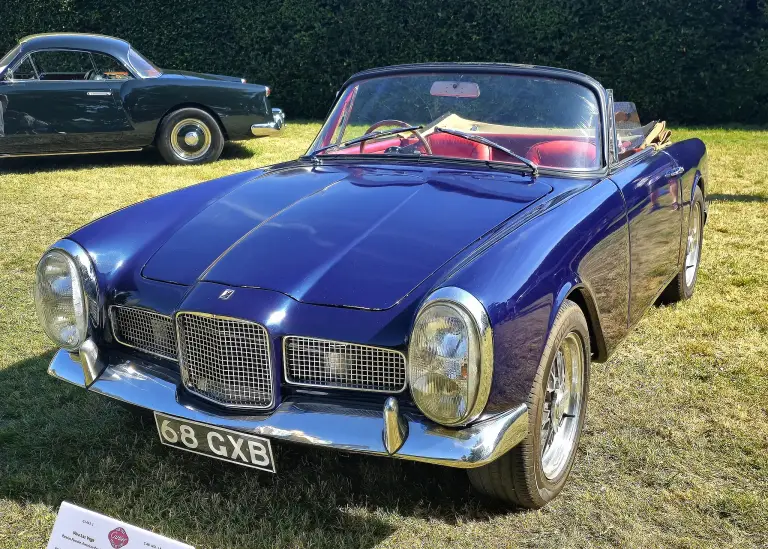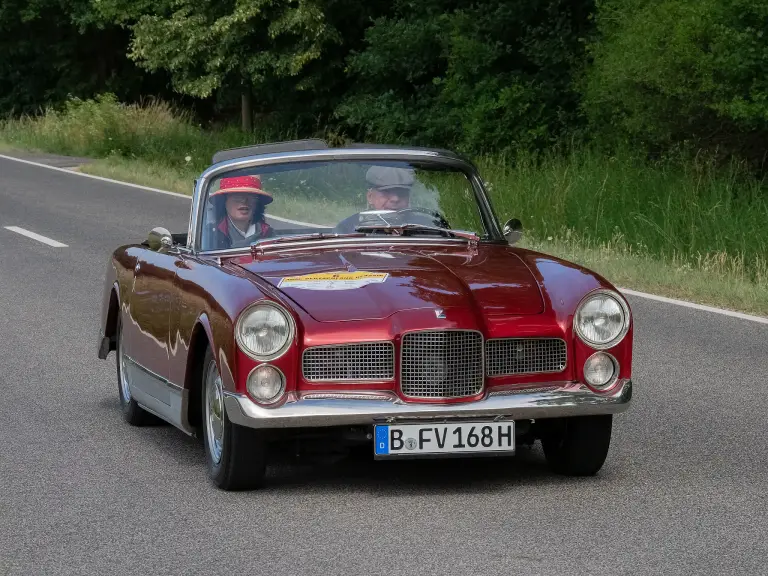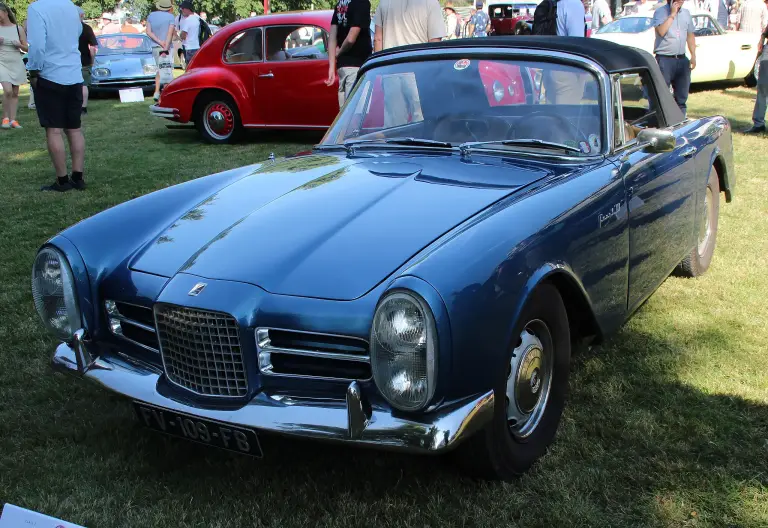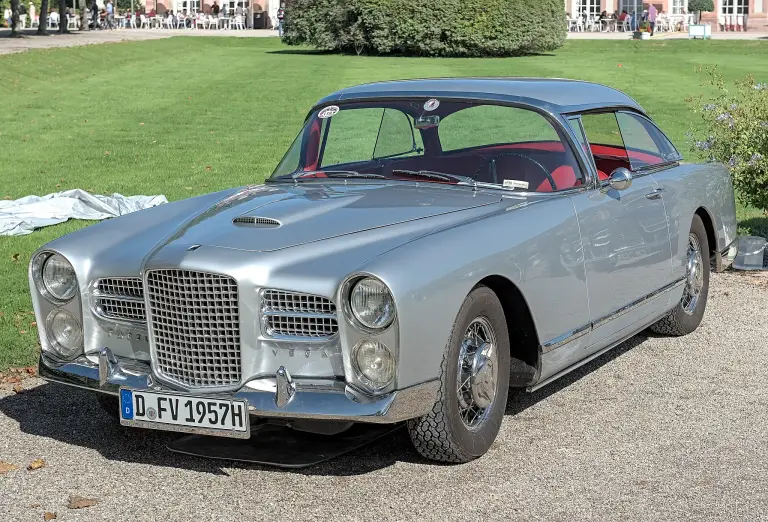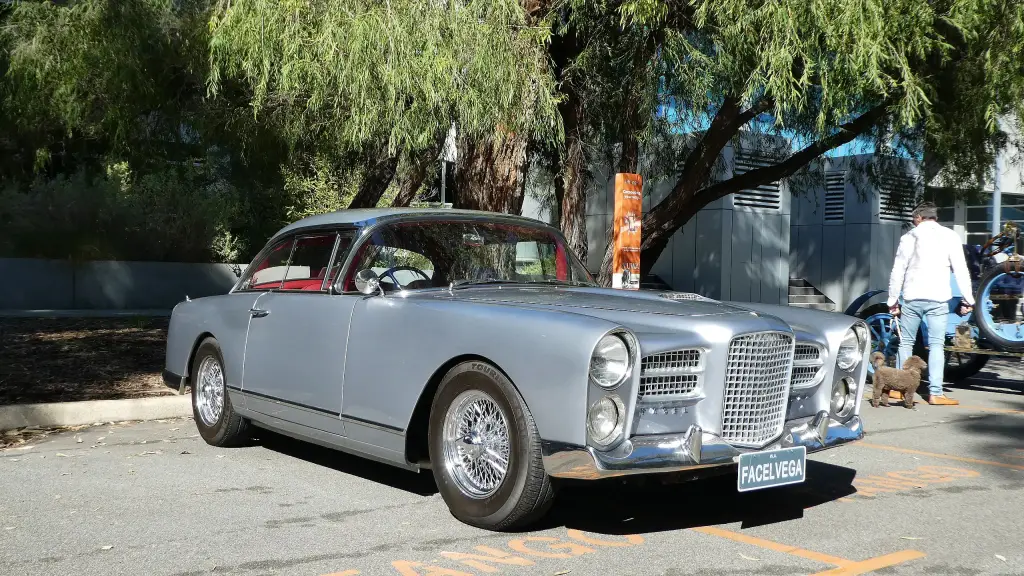
The Facel Vega HK500 was the ultimate development of the FV coupé series. Shown at the Paris Salon in October 1958, it combined a 5.8- or 6.3-litre Chrysler V8 with Dunlop disc brakes and a luxuriously equipped body. Its name came from its power-to-weight ratio of about five kilograms per horsepower, remarkable at the time.
Facel Vega HK500 at a glance
| Maker | Facel S.A., Colombes |
|---|---|
| Production | 1958–1961 |
| Type | HK, then HK1 |
| Class | four-seat grand tourer |
| Engine | Chrysler V8, 5.8 or 6.3 litres (361 or 383 cu in) |
| Power | 335 hp with automatic, 360 hp with manual |
| Transmission | TorqueFlite three-speed automatic or Pont-à-Mousson four-speed manual |
| Brakes | Dunlop discs all round, optional at first, standard from 1960–61 |
| Top speed | 237 km/h |
| Acceleration | 0–60 mph in 8.5 seconds |
| Built | 489 (490 by French sources) |
History of the Facel Vega HK500
From FVS to HK500
For 1959 Facel introduced the HK500, essentially a renamed and upgraded FVS. Production had begun in May 1958, and the car was presented at the Paris Salon in October of that year. The name referred to its power-to-weight ratio of five kilograms per horsepower. It was the most accomplished of the V8-engined Facel Vegas and the last evolution of the coupé line that had begun with the FV in 1954.
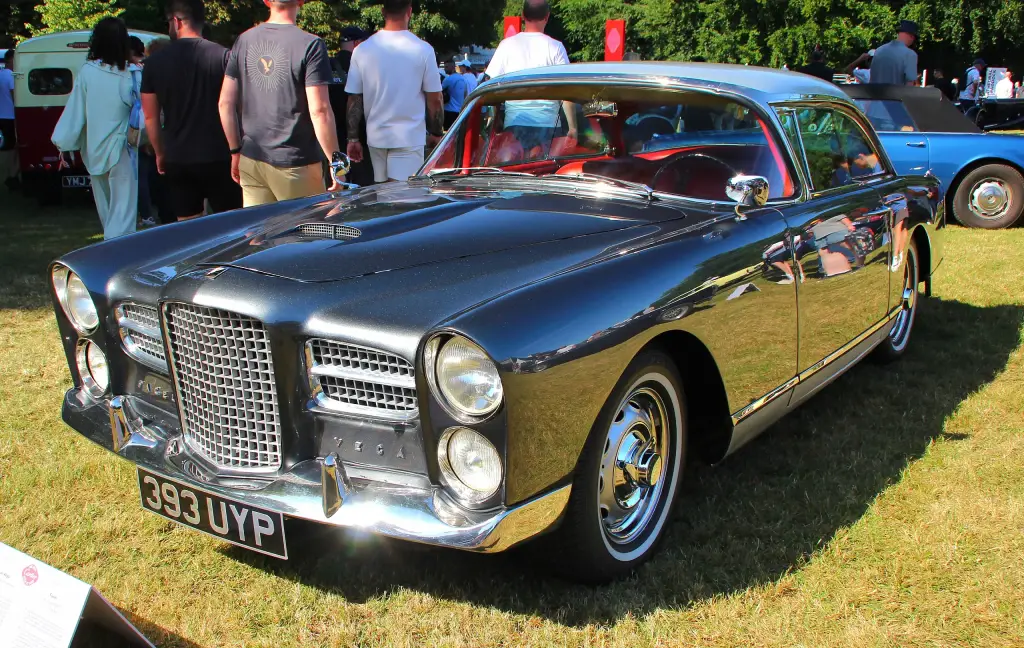
Engine and chassis
The first HK500s used the 5.8-litre V8 of the FVS, with 335 hp; a 6.3-litre Chrysler V8 of 360 hp soon followed. French sources quote a 5.9-litre (361 cu in) engine giving 360 hp with the manual gearbox and 335 hp with the automatic TorqueFlite. To handle the power, the HK500 was the first Facel Vega with Dunlop disc brakes on all four wheels. They were optional from 1960 and became standard on the HK1 in March of the following year. Power steering, tinted windows, air conditioning and a set of fitted luggage were on the options list, and the HK500 was the first model of the marque available with right-hand drive.
Speed and owners
On 26 October 1960 the journalist and racing driver Paul Frère was timed at 237.154 km/h on a motorway near Antwerp, a figure certified by the Royal Automobile Club of Belgium. The English Wikipedia gives a top speed of 147 mph (237 km/h) and 0–60 mph in 8.5 seconds. Stirling Moss and Maurice Trintignant both used an HK500 as their personal car.
The end of the line
The HK500 was replaced by the Facel Vega II in 1962. By then 489 had been built, or 490 according to French sources, one of them a specially made convertible. Total production of the FV and HK series is given as 842, or 846 depending on the source.
Design and features
- Chrysler V8: 5.8 or 6.3 litres, with 335 hp behind the automatic and 360 hp with the manual gearbox.
- Dunlop disc brakes: the first Facel Vega to have them on all four wheels.
- Grand touring comfort: power steering, tinted glass, air conditioning and fitted luggage were available.
- Right-hand drive: the first Facel model offered in this form for the British market.
- Proven speed: a timed 237.154 km/h near Antwerp in October 1960.
Facel Vega HK500 versions
- HK (1958–1960): the original model, with disc brakes optional.
- HK1 (1960–1961): disc brakes standard from March 1961.
- Manual and automatic: 360 hp with the Pont-à-Mousson four-speed, 335 hp with the TorqueFlite.
- Convertible: a single car specially made, in addition to the coupés.
The HK500 succeeded the Facel Vega FV and was replaced by the Facel Vega Facel II. More cars are in the Facel Vega collection.
Video: 1959 Facel Vega HK 500
Video on YouTube.
Sources
- Facel Vega FV, English Wikipedia: HK500 section: engine, performance, production
- Facel Vega HK 500, French Wikipedia: development, brakes, speed record, owners