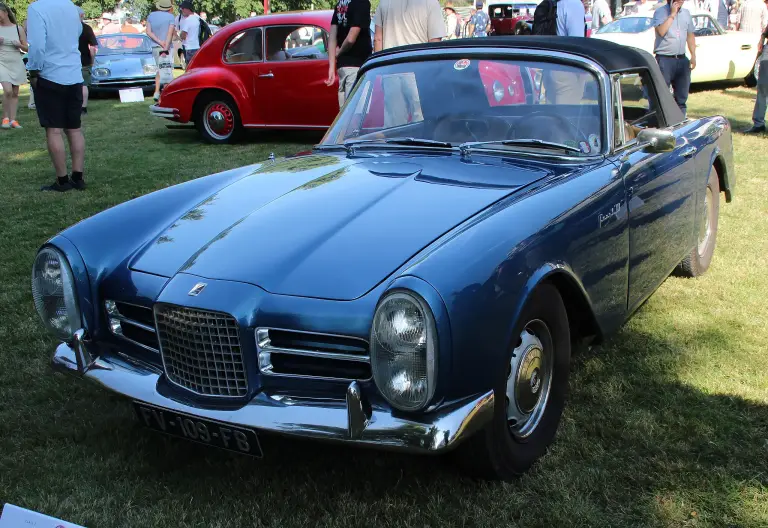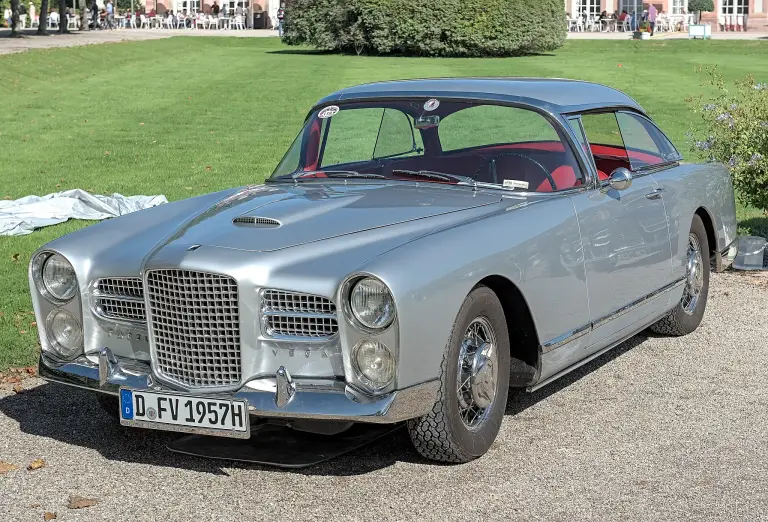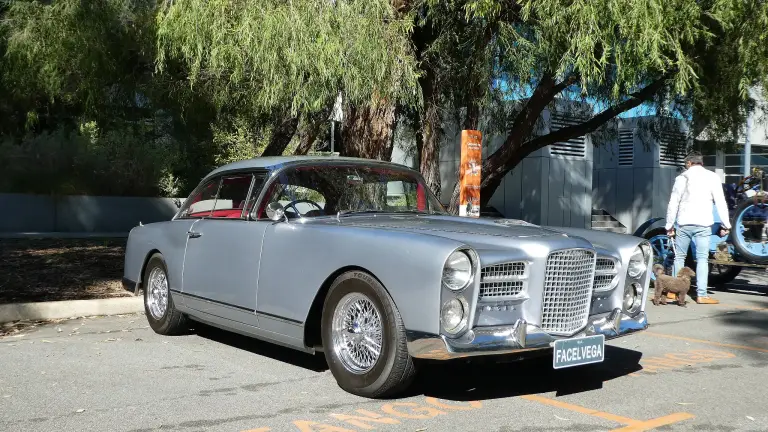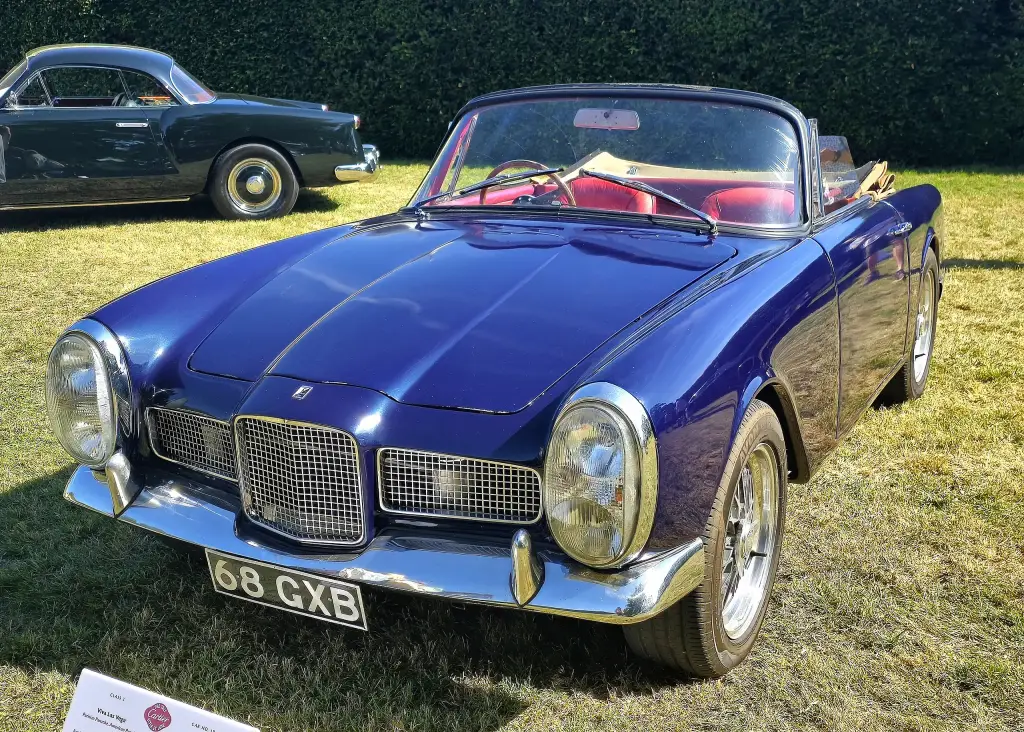
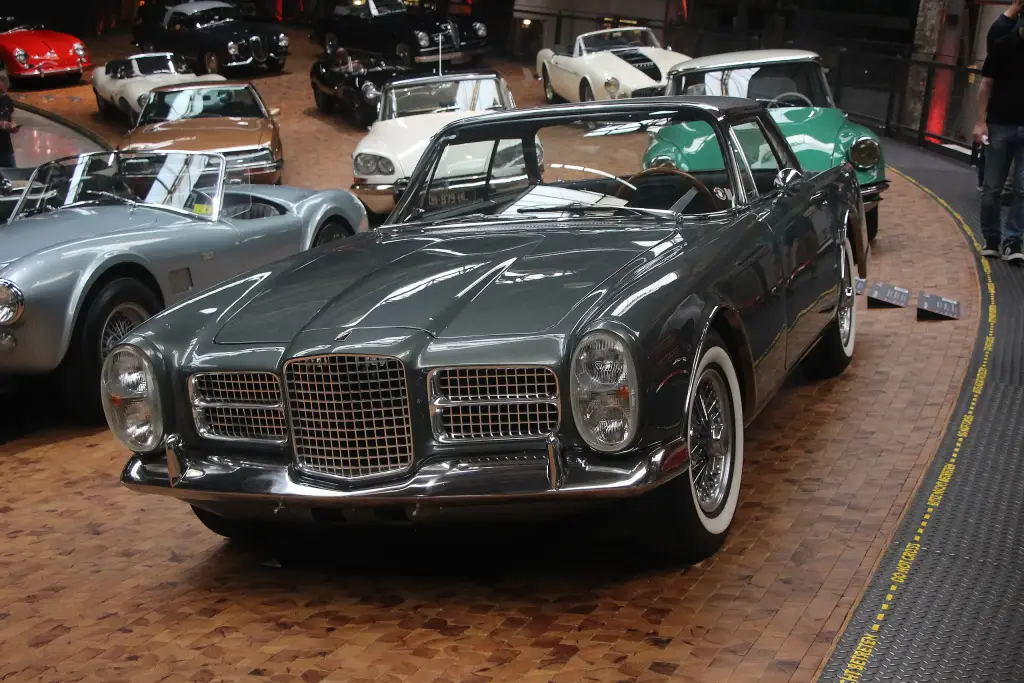
The Facel Vega Facel II was the last attempt by the Paris-based company to build a luxury GT in the French tradition. Shown at the 1961 Paris Motor Show, it used a 6.3-litre Chrysler V8 in a low, elegant coupé body. Jean Daninos called it the best car the company had made, but the collapse of Facel ended its production in 1964.
Facel Vega Facel II at a glance
| Maker | Facel S.A., Colombes |
|---|---|
| Production | 1961–1964 |
| Type | HK2 |
| Class | four-seat grand tourer |
| Engine | Chrysler V8, 6.3 litres (383 cu in); 6.7 litres (413 cu in) later |
| Power | 355 hp with automatic, 390 hp with manual; over 400 hp in the 6.7 |
| Transmission | TorqueFlite automatic or Pont-à-Mousson four-speed manual |
| Top speed | about 225 km/h automatic, 245 km/h manual |
| Brakes | Dunlop discs all round with servo |
| Weight | 1,880 kg dry |
| Built | 180 (184 by French sources) |
History of the Facel Vega Facel II
A company in trouble
By 1962 Facel was facing bankruptcy. The Facel II was to be its last attempt at a luxury GT in the French tradition. Jean Daninos, the company’s president, said of it: “The HK500 was the most interesting car we ever made but the Facel II was by far the best. It was totally elegant.” The company advertised it as “Le Coupé 4-places le plus rapide du Monde”, the fastest four-seat coupé in the world, and the American magazine Sports Car Graphic called it a “luxurious brute”.
Design and engineering
The Facel II was introduced at the 1961 Paris Motor Show. Its low roof gave it a rakish silhouette, and it was distinguished by profiled Marchal Mégalux headlights and additional circular tail lights. The engine was Chrysler’s 6.3-litre “Typhoon” V8, producing 355 hp with the TorqueFlite automatic or 390 hp with the manual gearbox, the difference coming from the second carburettor. With the automatic the top speed was about 225 km/h; with the French Pont-à-Mousson four-speed it reached about 245 km/h and could out-accelerate two-seat GTs such as the Aston Martin DB4, Ferrari 250 GT and Mercedes-Benz 300SL to 60 mph. Later cars received the 6.7-litre Chrysler RB “wedge” engine of more than 400 hp.
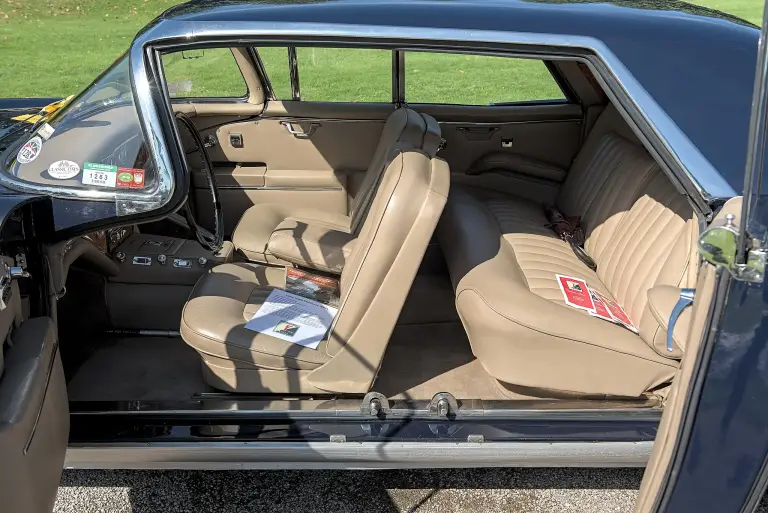
Dunlop disc brakes were fitted on all four wheels, and Hydrosteer power steering, leather seats, electric windows and a radio aerial became standard during the production run. Right-hand-drive British cars had Armstrong Selecta-Ride shock absorbers adjustable from the dashboard while driving. The wrap-around dash was metal, meticulously painted to look like wood, and many of the controls were aircraft-inspired. At 1,880 kg dry, and well over two tons with four passengers and a full tank, the Facel II was heavy, and its suspension was virtually unchanged from the HK500.
Contemporary verdicts
Autocar wrote that to step down into a Facel II and go motoring “must be the ambition of many who can never fulfil it”. Motor found it difficult to think of a more remarkable combination of speed and refinement, praising the smoothness and silence, the effortless gait at 100 mph and acceleration that left other fast cars behind. “One can enjoy the latest refinements of American brute force with European standards of control in an environment of British luxury and French elegance,” it concluded.
Demise and collectibility
In August 1961 Daninos was obliged to offer his resignation, and in 1964 Facel went into receivership, largely because of warranty claims against the smaller Facellia and its troublesome engine. Facel II production stopped after only about 180 cars. Today it is regarded as one of the most handsome cars of its era and among the most sought-after 1960s GTs. A partially restored right-hand-drive car formerly owned by Ringo Starr made £337,500 at Bonhams in London in December 2013; a derelict barn-find sold in Paris for €155,250 in February 2014; and a restored right-hand-drive car brought £315,100 in September 2017.
Design and features
- Chrysler V8: 6.3 litres with 355 or 390 hp, and a 6.7-litre unit of over 400 hp in later cars.
- Low, elegant body: a lowered roof, Marchal Mégalux headlights and circular tail lights.
- Lavish equipment: power steering, electric windows, leather and air conditioning were available.
- Exceptional pace: up to 245 km/h with the manual gearbox, and acceleration quicker than several two-seat GTs.
- Aircraft-inspired interior: a wrap-around metal dash painted to imitate wood.
Facel Vega Facel II versions
- Facel II automatic: TorqueFlite three-speed, 355 hp, about 225 km/h.
- Facel II manual: Pont-à-Mousson four-speed, 390 hp, about 245 km/h.
- 6.7-litre cars: late production with the Chrysler RB engine and more than 400 hp.
- Right-hand-drive British cars: with Armstrong Selecta-Ride adjustable shock absorbers.
The Facel II replaced the Facel Vega HK500; its smaller stablemate was the Facellia. More cars are in the Facel Vega collection.
Video: FACEL VEGA II 2 1962 – Test Drive in top gear | 6.3L Chrysler Typhoon V8 engine sound | SCC TV
Video on YouTube.
Sources
- Facel Vega Facel II, English Wikipedia: history, engines, performance, reviews, auction results
- Facel Vega Facel II, French Wikipedia: design details, production, owners