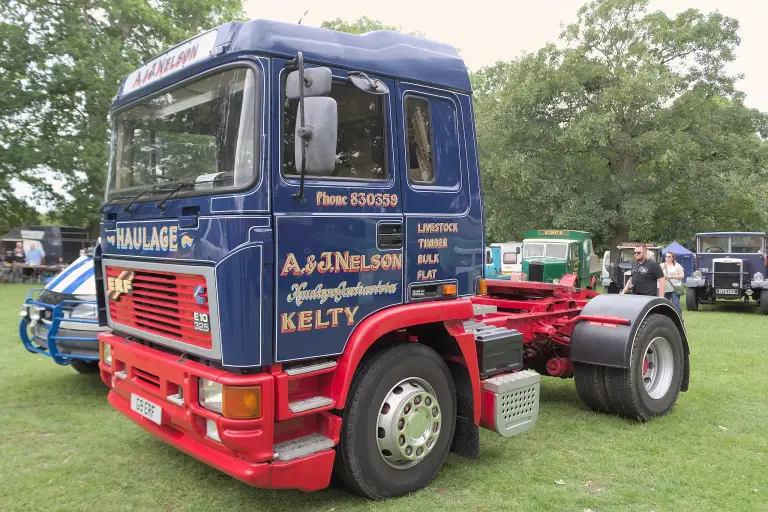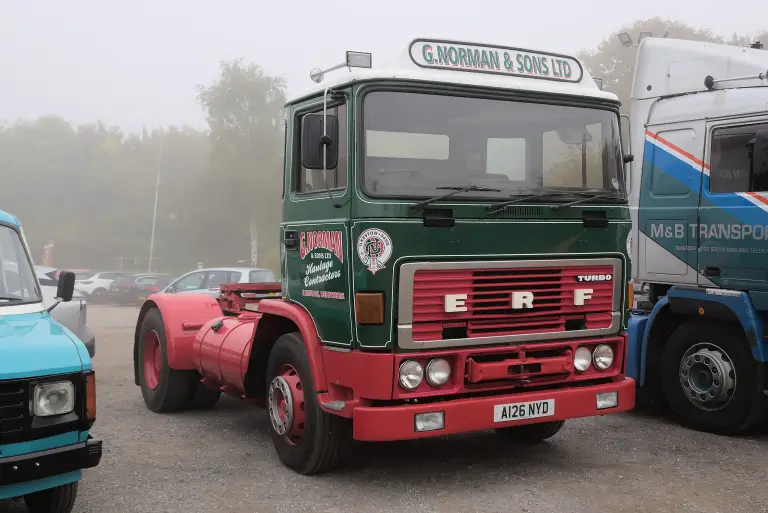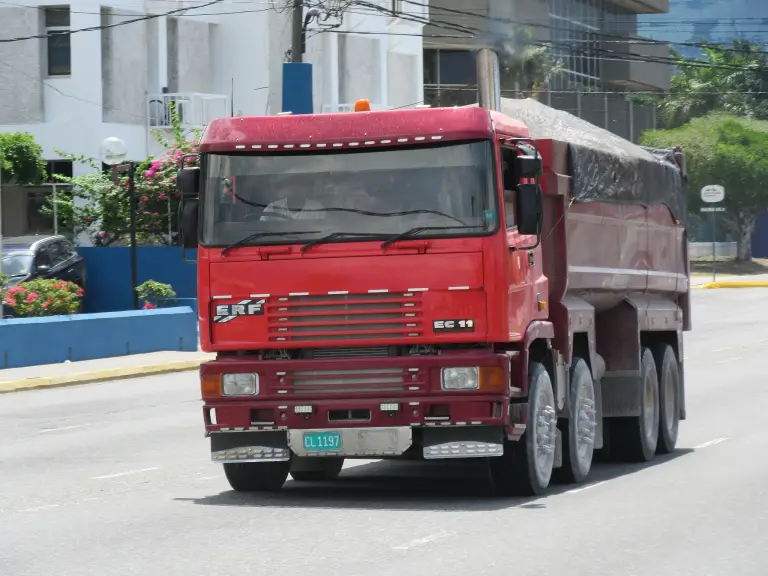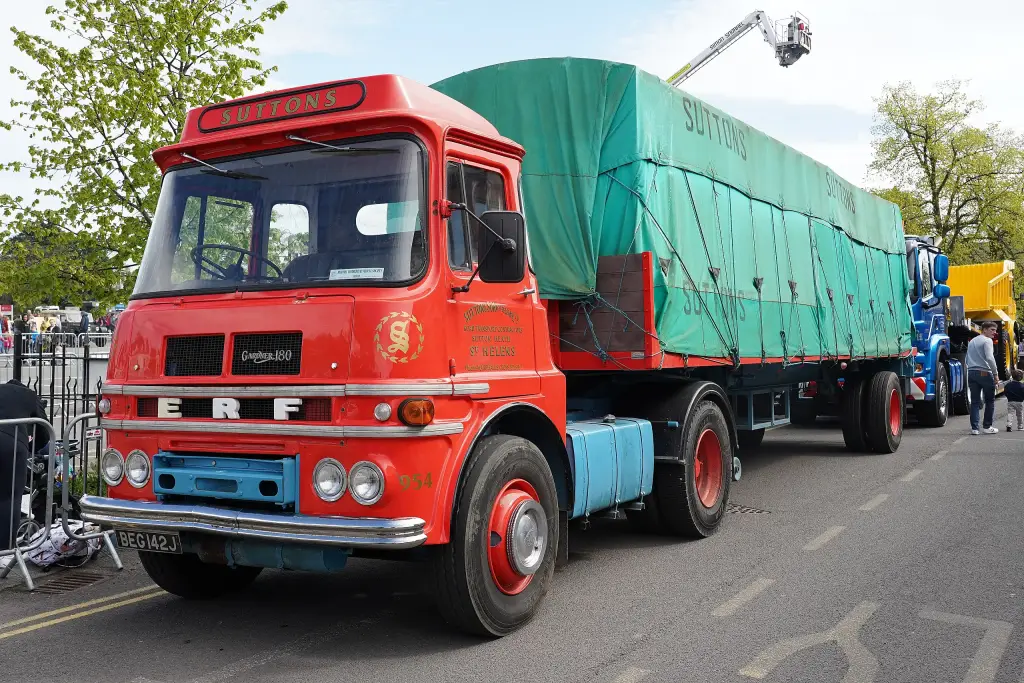
The LV was the ERF model line introduced in 1962. It continued the British maker’s policy of building its own chassis and cab while buying engines, gearboxes and axles from specialist suppliers, and it saw ERF through the middle of the 1960s.
ERF LV at a glance
| Maker | ERF (E. R. Foden Ltd), Sandbach, Cheshire |
|---|---|
| Production | from 1962 |
| Predecessor | KV series, from 1954 |
| Cab | forward-control cab, built by ERF and trimmed at Sandbach |
| Engines | Gardner diesel; Cummins from the mid-1950s, Rolls-Royce from the late 1950s, Perkins in the 1960s |
| Gearboxes | David Brown, bought in |
| Axles | Kirkstall Forge, bought in |
| Brakes | front disc brakes offered from 1958; spring parking brakes from 1962 |
| Chassis | three- and four-axle lorries, with twin-steer chassis among ERF’s specialities |
| Successor | A series, early 1970s |
ERF has no separate Wikipedia article for the LV; this page is based on the brand articles in English and German Wikipedia. It is therefore shorter than a full model article.
History of the ERF LV
ERF was founded in 1933 by Edwin Richard Foden, who had left the family firm of Foden after disagreeing with its board over the future of diesel power. He set up in Sandbach, Cheshire, and built the first ERF diesel lorry the same year, giving the first chassis the number 63, his age. From the start the company bought components from other suppliers rather than making them: engines came from Gardner, gearboxes from David Brown and axles from Kirkstall Forge. The cab was styled by the Sandbach coachbuilder John Henry Jennings, its structure was made in Northampton at Air Flow Streamlines and it was fitted out by ERF at Sandbach.
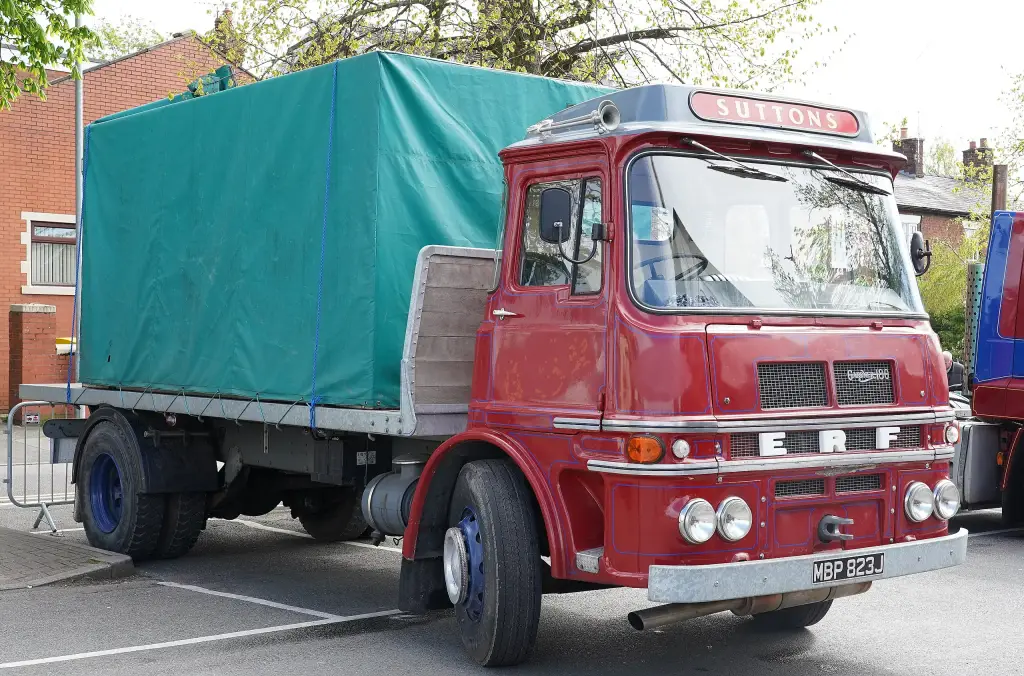
The post-war range moved on through the V series of 1948 to the KV series of 1954, whose rounded forward-control cabs with panoramic windscreens brought ERF large sales successes. Cummins engines became available in the mid-1950s and Rolls-Royce engines towards the end of the decade, alongside the Gardner units. ERF also made progress with brakes, offering front disc brakes in 1958 – a technology that only became widespread on heavy lorries in the 1990s – and spring parking brakes from 1962. Heavier export models were built as well, and some customers chose cabs from outside bodybuilders instead of ERF’s own.
The LV series arrived in 1962 as the next new model line. It was launched into a British lorry market in which ERF’s rival and former family firm Foden was abandoning the production of bonneted wagons, and in which Peter Foden, of the next generation of the founding family, was rising within ERF. Perkins Engines joined Gardner, Cummins and Rolls-Royce as a supplier of power units during the 1960s. The LV was followed at the start of the 1970s by the A series, whose range reached the 38-tonne gross train weight then allowed in Europe, and that in turn was developed into the B series of 1974 with its tilting cab.
Design and features
- Bought-in running gear: Gardner, Cummins, Rolls-Royce and Perkins engines, David Brown gearboxes and Kirkstall Forge axles around ERF’s own chassis and cab.
- Early disc brakes: ERF had offered front disc brakes since 1958, years before they became normal on heavy lorries.
- Spring parking brakes: fitted from 1962, the year the LV appeared.
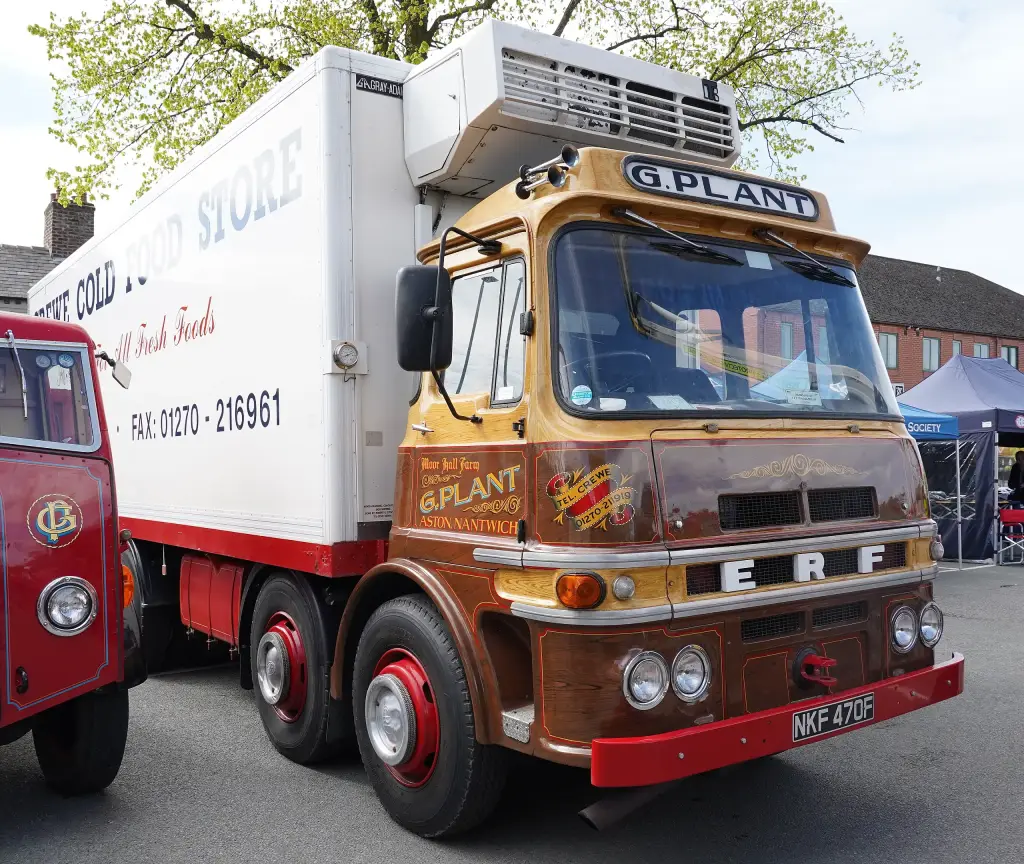
- Choice of chassis: three- and four-axle lorries were part of the range, and twin-steer chassis were an ERF speciality.
ERF LV versions
- LV series (from 1962): the model line that replaced the KV.
- Engine choices of the period: Gardner diesels, with Cummins from the mid-1950s, Rolls-Royce from the late 1950s and Perkins in the 1960s.
- Multi-axle chassis: three- and four-axle lorries were offered alongside the standard models.
- Twin-steer chassis: a layout ERF made a speciality of in this period.
- Export models: heavier versions were built for markets outside Britain.
The LV came between the earlier KV and the later C series, and its story belongs with the other lorries in the ERF collection.
Video: 1969 ERF 8 Wheeler LV Cab with 180 Gardner Short Drive
Video on YouTube.
Sources
- ERF (truck manufacturer), English Wikipedia: company history, component suppliers, cab
- ERF (Lkw), German Wikipedia: KV and LV series, brakes, engines