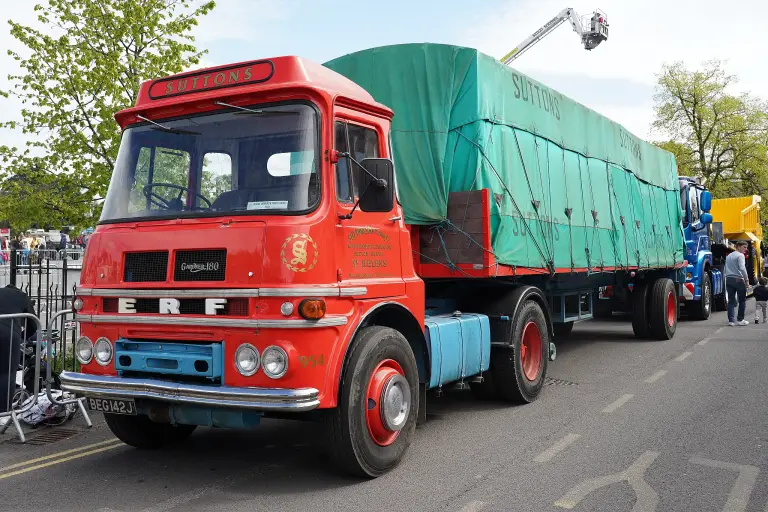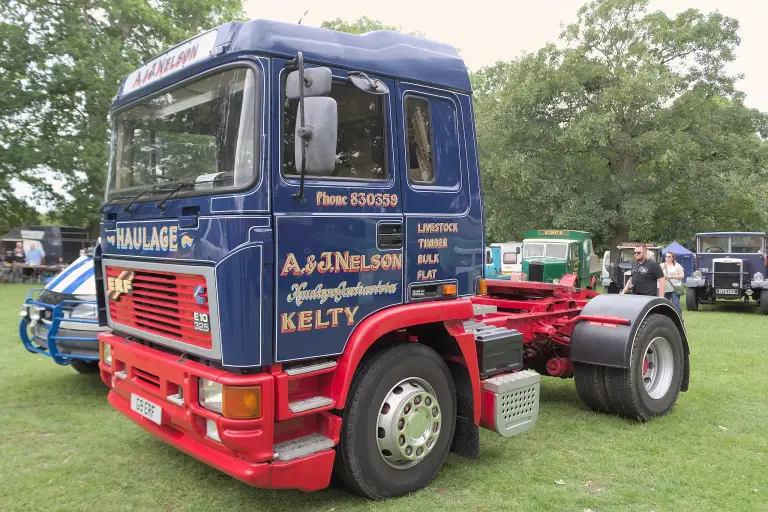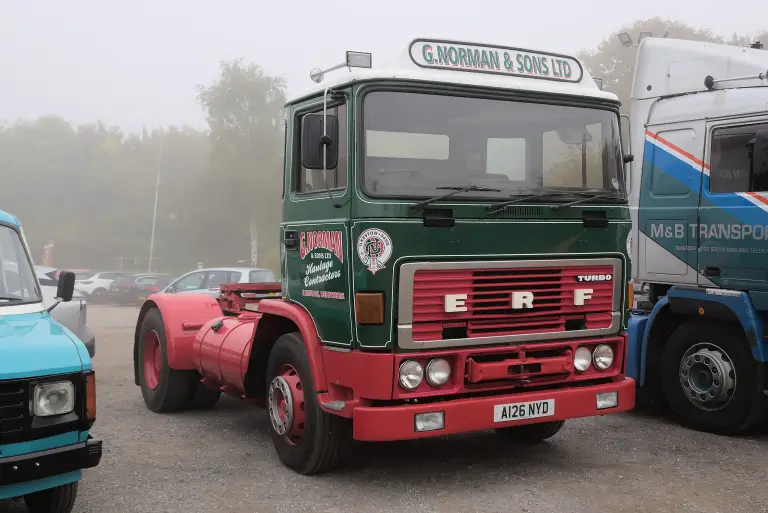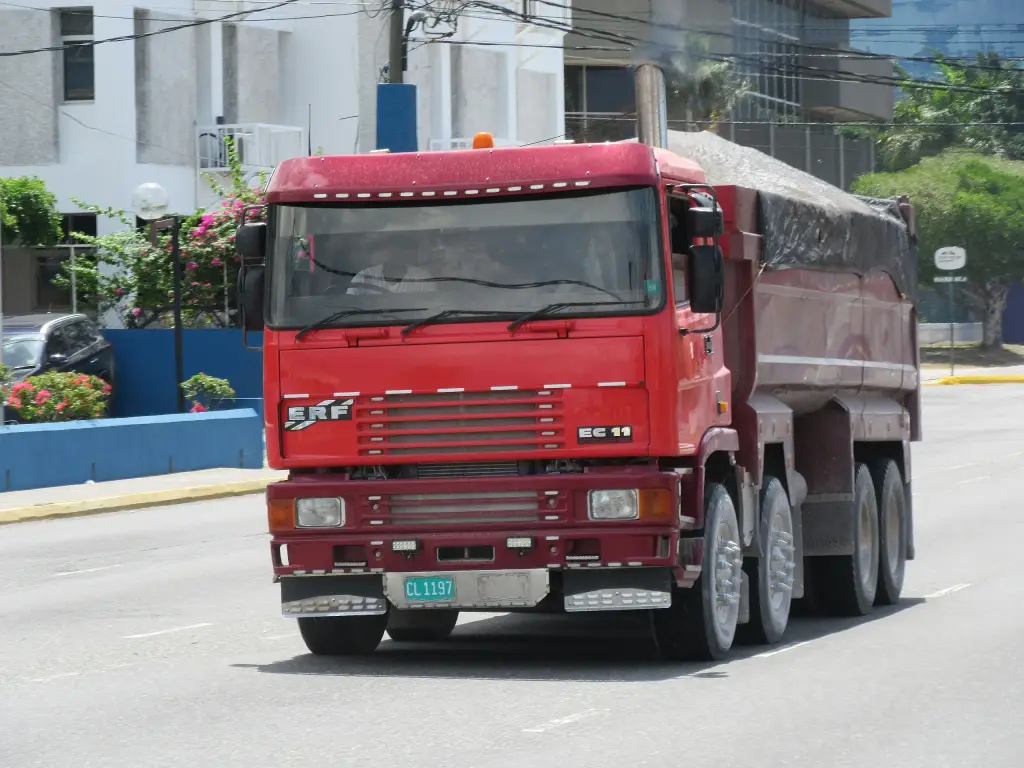
The EC was the ERF model line introduced in 1993 as a development of the E series. It was very successful, and in 2000 it was carried forward as the ECS and ECX types before ERF’s final range moved onto MAN production lines.
ERF EC at a glance
| Maker | ERF, Sandbach and Middlewich |
|---|---|
| Production | from 1993 |
| Based on | ERF E series |
| Further developed | ECS and ECX types in 2000 |
| Final range | ECT, ECM and ECL, based on MAN products |
| Engines | Cummins ISMe as an option, or MAN’s D20 common-rail unit |
| Assembly | Munich for ECT, Steyr for ECM and ECL |
| Badging | ERF name for the United Kingdom market only |
| Works | Middlewich closed in March 2002 |
| End | ERF-badged trucks ceased in July 2007 |
There is no separate Wikipedia article for the EC; this page is based on the brand articles in English and German Wikipedia and is shorter than a full model article.
History of the ERF EC
ERF had built lorries at Sandbach since 1933, when Edwin Richard Foden founded the company. Its post-war range ran through the V, KV and LV series, the A and B series of the 1970s and the C series of the early 1980s. At the end of that decade came the E series, ERF’s last independent model programme, which sold very well in Britain and recovered market share lost in the recession. The EC models of 1993 were a development of the E series and proved particularly successful, and in 2000 they were carried forward once more as the ECS and ECX types.
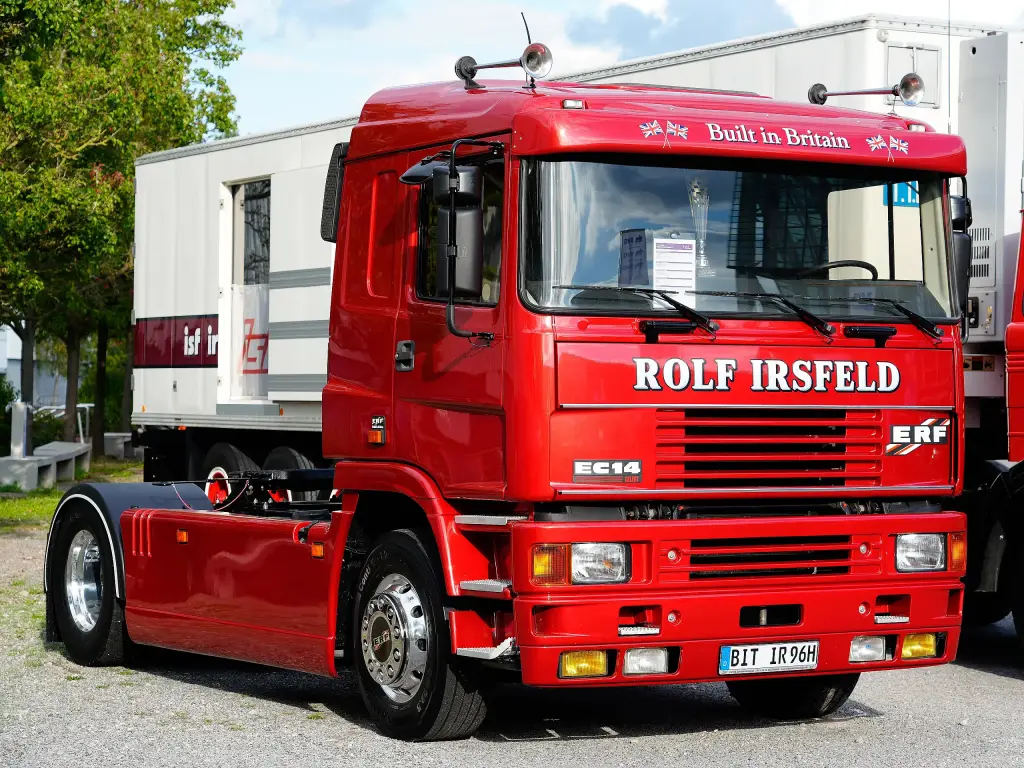
By then ERF was no longer independent. The Canadian Western Star group had bought the company in 1996, the works moved from Sandbach to Middlewich in 1999, and in 2000 Western Star sold ERF to MAN. ERF’s final model range consisted of the ECT, ECM and ECL, built on MAN’s production line in Munich for heavy trucks and at Middlewich for light trucks. The range was positioned to win a contract from the Ministry of Defence for 8,000 new trucks for the British Armed Forces. All of these ERF lorries were based on MAN products; the difference was that an ERF could be specified with the Cummins ISMe power plant as an alternative to MAN’s own D20 common-rail engine.
The Middlewich factory closed in March 2002. Production of the ECT moved to Munich, while ECM and ECL units moved to Steyr in Austria, where they were built on the same lines as their identical MAN counterparts. When Cummins declined to upgrade the ISMe engine to meet the Euro 4 emission regulations, MAN first decided to replace it entirely with the D20. With ERF badging used only in the United Kingdom, MAN stopped supplying ERF-badged trucks from July 2007, ending the marque.
Design and features
- Developed from the E series: the EC continued ERF’s last independent lorry design.
- Commercial success: one of ERF’s most successful model lines, carried on into the ECS and ECX.
- Cummins or MAN power: the Cummins ISMe engine could be specified instead of MAN’s D20 common-rail unit.
- British military contract: the final range was aimed at an order for 8,000 trucks for the British Armed Forces.
- MAN-based construction: the last ERF lorries were MAN products with ERF badging for the UK market.
ERF EC versions
- EC (1993): the original development of the E series.
- ECS (2000): one of the two types into which the EC was carried forward.
- ECX (2000): the second of the 2000 developments.
- ECT: heavy truck of the final range, built in Munich.
- ECM and ECL: the other final models, built at Steyr in Austria.
- Cummins ISMe option: an alternative to MAN’s D20 engine.
The EC grew out of the E series and followed the C series; the older LV shows ERF’s 1960s range. More lorries are in the ERF collection.
Video: ERF EC Series
Video on YouTube.
Sources
- ERF (truck manufacturer), English Wikipedia: final range, MAN ownership, Cummins ISMe, end of marque
- ERF (Lkw), German Wikipedia: E series, EC, ECS and ECX, MAN F-2000 and TGA