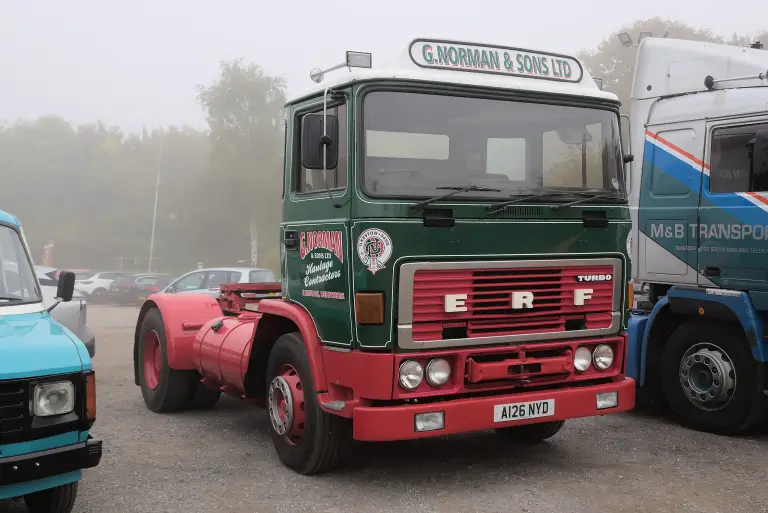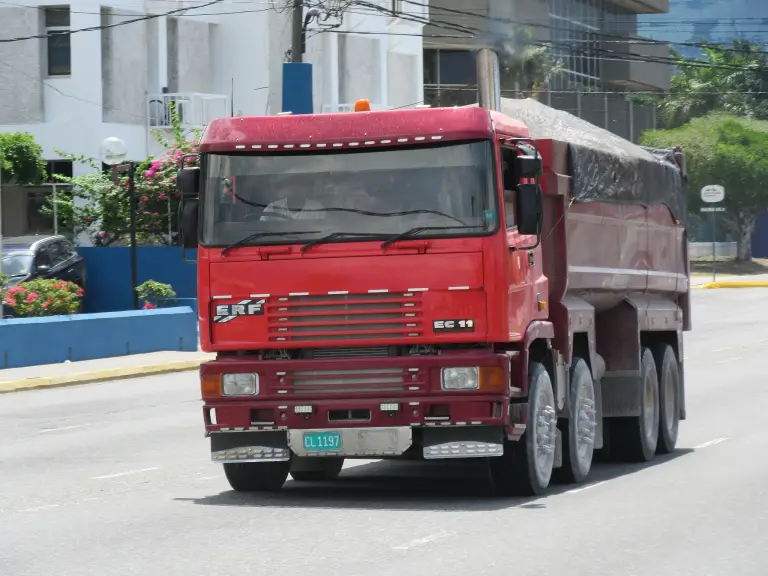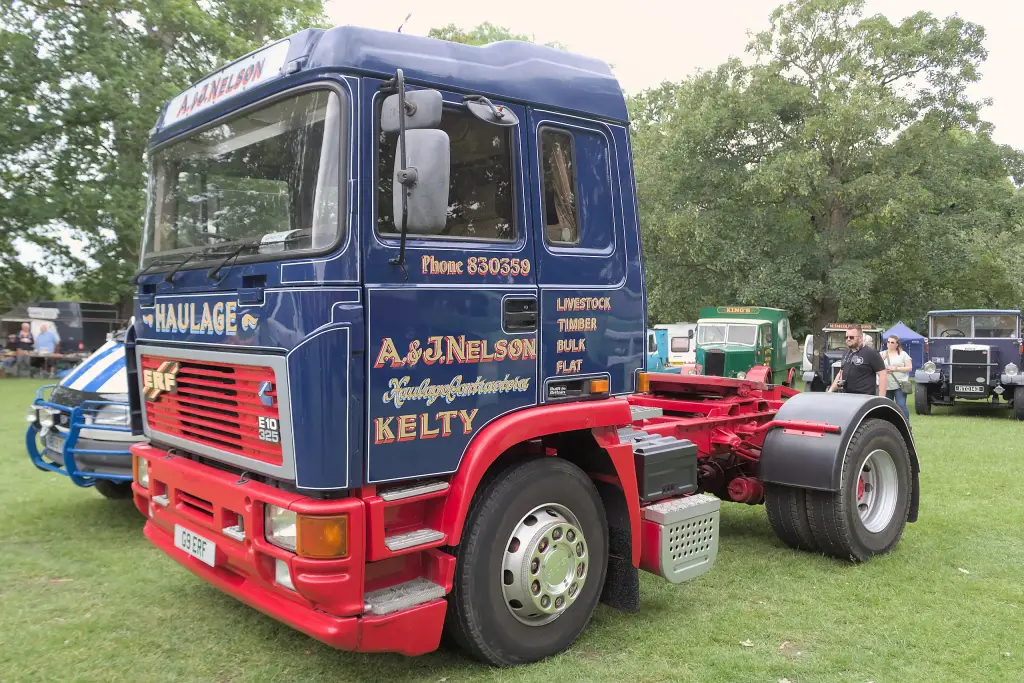
The E series was the last lorry range ERF developed as an independent manufacturer. Introduced at the end of the 1980s, it sold very well in Britain and recovered market share the company had lost in the recession of the early part of the decade.
ERF E series at a glance
| Maker | ERF, Sandbach, then Middlewich |
|---|---|
| Production | late 1980s onwards |
| Predecessor | C series |
| Successor | EC models of 1993, then ECS and ECX in 2000 |
| Position | ERF’s last independent model programme |
| Market | strong sales in Britain, recovered market share |
| Ownership | Western Star from 1996, MAN from 2000 |
| Works | Sandbach until 1999, then Middlewich |
| MAN era | MAN F-2000 cabs and technology, later MAN TGA with an ERF grille |
| Emissions | the last ERF-badged trucks met Euro 4 |
| End | last ERF built in July 2007 |
ERF has no separate Wikipedia article for the E series; this page is based on the brand articles in English and German Wikipedia. It is shorter than a full model article.
History of the ERF E series
ERF had built lorries at Sandbach since 1933, when Edwin Richard Foden set up the company after leaving Foden. Through the 1950s and 1960s its range ran from the V series to the KV and LV, and in the 1970s it moved through the A series to the B series of 1974 with its tilting composite cab. The C series followed at the beginning of the 1980s, a difficult period in which the British lorry market collapsed, ERF’s fire-engine business was sold and domestic sales fell to 1,083 lorries in 1981.
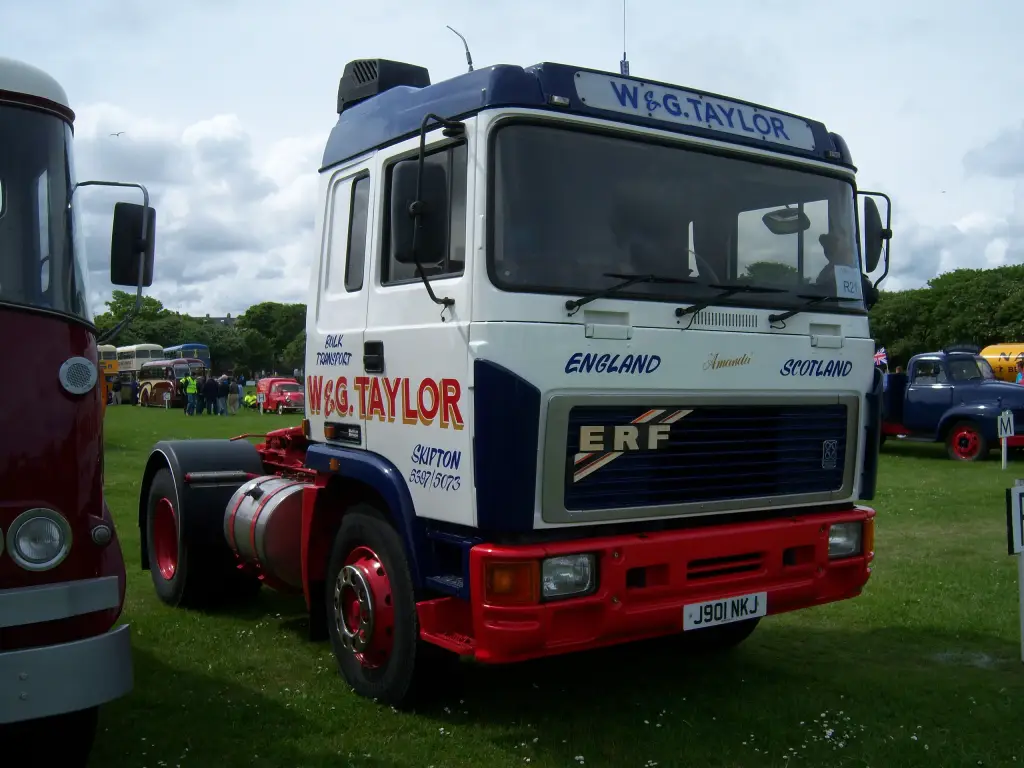
At the end of the 1980s ERF introduced the E series, which turned out to be its last independent model programme. It sold very strongly in Britain and won back market share that had been lost during the recession. The EC models appeared in 1993 as a development of the E series and were particularly successful; in 2000 they were carried forward again as the ECS and ECX types.
ERF’s independence did not last. The Canadian Western Star group bought the company in 1996, the works moved from Sandbach to Middlewich in 1999, and in 2000 Western Star sold ERF to MAN. The heavy lorries still called the E series gradually received cabs and technology from MAN’s F-2000 range, and when that range ended at MAN the new MAN TGA models arrived at ERF with only a distinctive radiator grille to identify them for the British market. The last ERF-badged vehicles therefore met the Euro 4 emission standard like their identical MAN sisters. Production moved to MAN’s works in Munich and Salzgitter; the Middlewich plant survived until 2002 on a large order for medium lorries for the British military, and the last lorry bearing the ERF name was built in Munich in July 2007, after 74 years.
Design and features
- Last of the independent ERFs: the final range designed by the company before MAN ownership.
- Strong home sales: a good seller in Britain that recovered lost market share.
- Basis of the EC: the EC models of 1993 were developed from the E series.
- MAN technology: later E-series heavy lorries took MAN F-2000 cabs and mechanicals, and then MAN TGA components.
ERF E series versions
- E series (late 1980s): the original independent range.
- EC models (1993): a further development of the E series and a strong seller.
- ECS and ECX (2000): the EC carried forward into two new types.
- MAN-based E-series lorries: heavy trucks with MAN F-2000 cabs and technology.
- MAN TGA-based ERF: the final vehicles, distinguished by an ERF radiator grille and built to Euro 4.
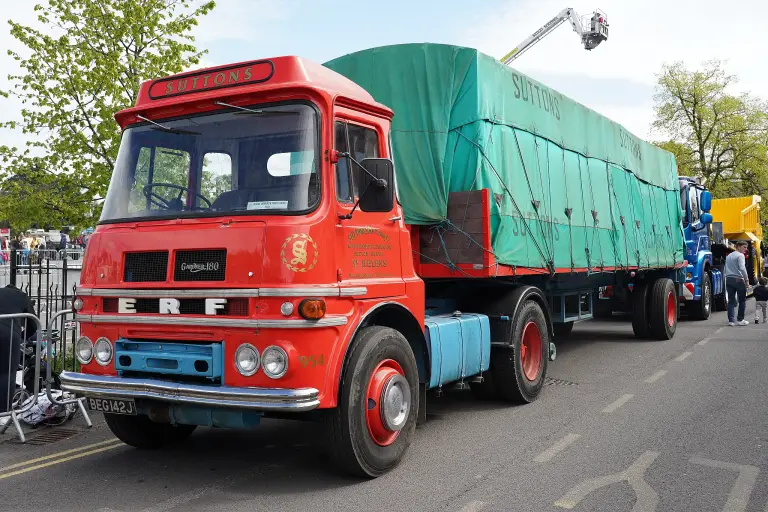
The E series followed the C series and led directly to the EC. The earlier LV shows what ERF was building in the 1960s, and more lorries are in the ERF collection.
Sources
- ERF (truck manufacturer), English Wikipedia: company history, MAN purchase, final range
- ERF (Lkw), German Wikipedia: E series, EC, MAN F-2000 and TGA, end of production