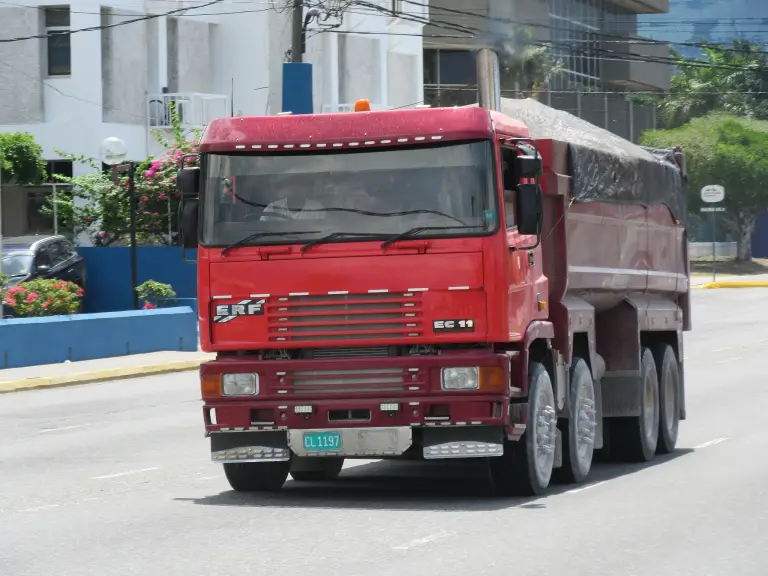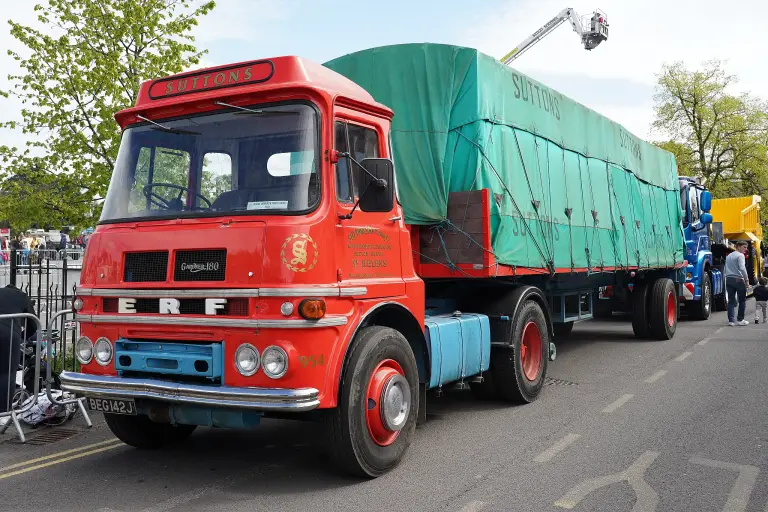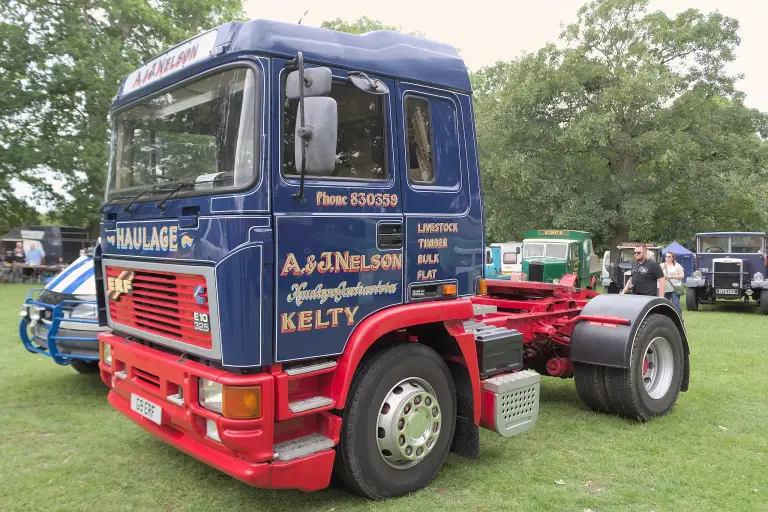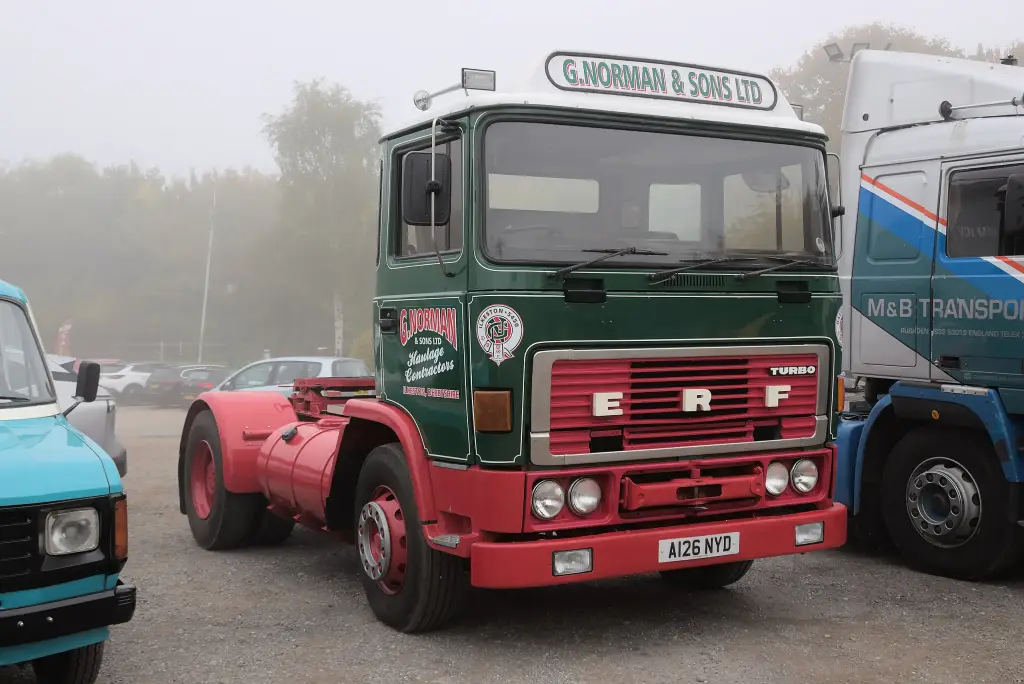
The C series was ERF’s new model line of the early 1980s. Like the B series before it, it used a cab of steel-and-plastic composite construction, but it arrived in the middle of a deep slump in British lorry sales that hit the small Sandbach maker hard.
ERF C series at a glance
| Maker | ERF, Sandbach, Cheshire |
|---|---|
| Production | early 1980s |
| Predecessor | B series of 1974 |
| Cab | steel-and-plastic composite construction |
| Market | British lorry sales collapsed at the start of the 1980s |
| Output | ERF had built up to 4,000 chassis a year before the recession |
| Domestic sales | 1,083 lorries in 1981 |
| Fire-engine business | sold to management, later Saxon Sanbec |
| Successor | E series, late 1980s |
There is no separate Wikipedia article for the C series; this page is based on the brand articles in English and German Wikipedia and is shorter than a full model article.
History of the ERF C series
ERF had grown from its foundation by Edwin Richard Foden in 1933 into one of Britain’s smaller specialist lorry makers, building its own chassis and cabs at Sandbach while buying engines, gearboxes and axles from suppliers such as Gardner, David Brown and Kirkstall Forge. Its post-war range ran through the V series of 1948 and the KV of 1954 to the A series at the start of the 1970s, which reached the 38-tonne gross train weight then permitted in Europe. The A series was developed into the B series of 1974, whose tilting cab was made partly from plastic components as well as the steel then usual.
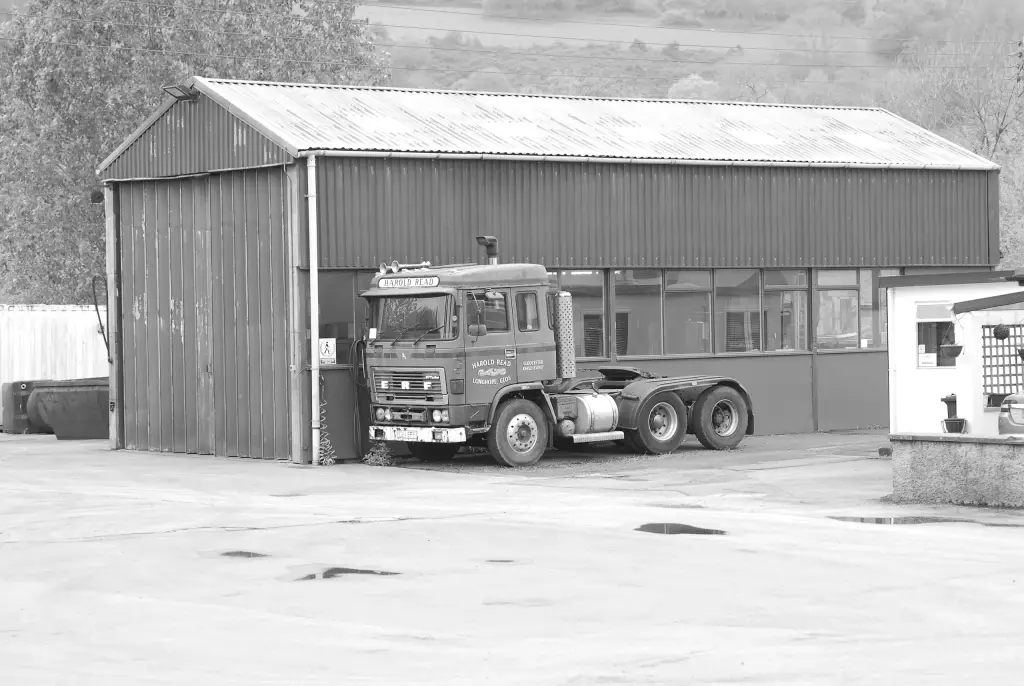
At the beginning of the 1980s ERF established the C series as another new model line, again with cabs built in steel-and-plastic composite construction. It was launched into a collapsing lorry market. ERF had been producing up to 4,000 chassis a year, and the downturn was severe enough for the company to sell its fire-engine business to its management; that business eventually became Saxon Sanbec. ERF was never a large manufacturer – its domestic sales reached only 1,083 lorries in 1981 – and the slump of the early 1980s made the C series years among the hardest in its history.
The C series was followed at the end of the 1980s by the E series, which proved to be ERF’s last independent model programme. It sold strongly in Britain and won back market share that had been lost during the recession, and from it the EC models were developed in 1993. ERF itself was bought by the Canadian Western Star group in 1996, moved its works from Sandbach to Middlewich in 1999 and became part of MAN in 2000, with the marque finally discontinued in 2007.
Design and features
- Composite cab: steel-and-plastic construction, continuing the approach begun with the B series.
- Own chassis and cab: ERF built both at Sandbach, trimming cabs that were structurally assembled elsewhere.
- Bought-in driveline: engines, gearboxes and axles came from outside suppliers, a policy ERF had followed since 1933.
- Small-maker scale: annual output of up to 4,000 chassis and domestic sales of about a thousand lorries in 1981.
ERF C series versions
- C series (early 1980s): the standard model line, replacing the B series.
- Composite-cab lorries: the steel-and-plastic cab construction shared with the later B-series development.
- Fire-engine chassis: ERF had built specialist fire-appliance chassis, though that side of the business was sold during the C-series years.
- Successor range: the E series of the late 1980s took over from the C series.
The C series sat between the B series and the E series, and its later relative was the EC. More ERF lorries are in the ERF collection.
Video: ERF C Series Gardner 6LXCT 230hp Turbo attacking Kelsall Hill
Video on YouTube.
Sources
- ERF (truck manufacturer), English Wikipedia: company history, output, fire-engine business, Western Star and MAN
- ERF (Lkw), German Wikipedia: B and C series, cabs, E series