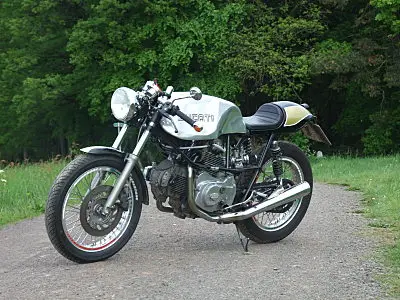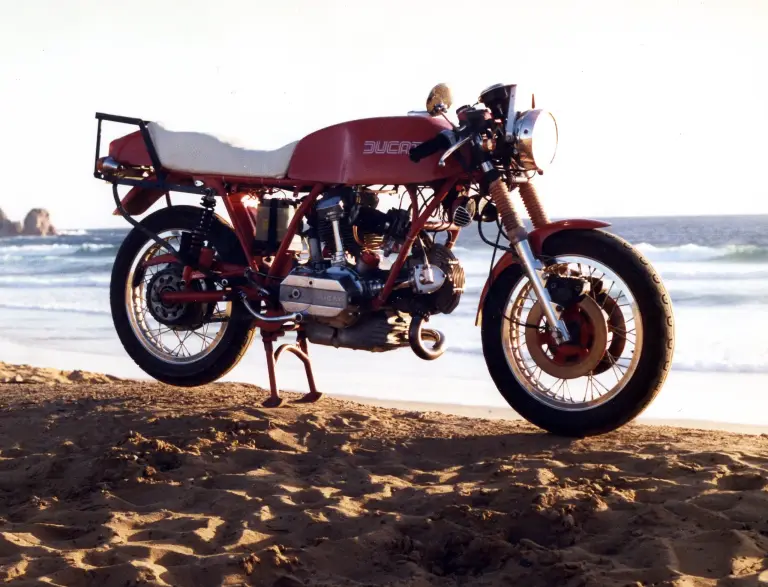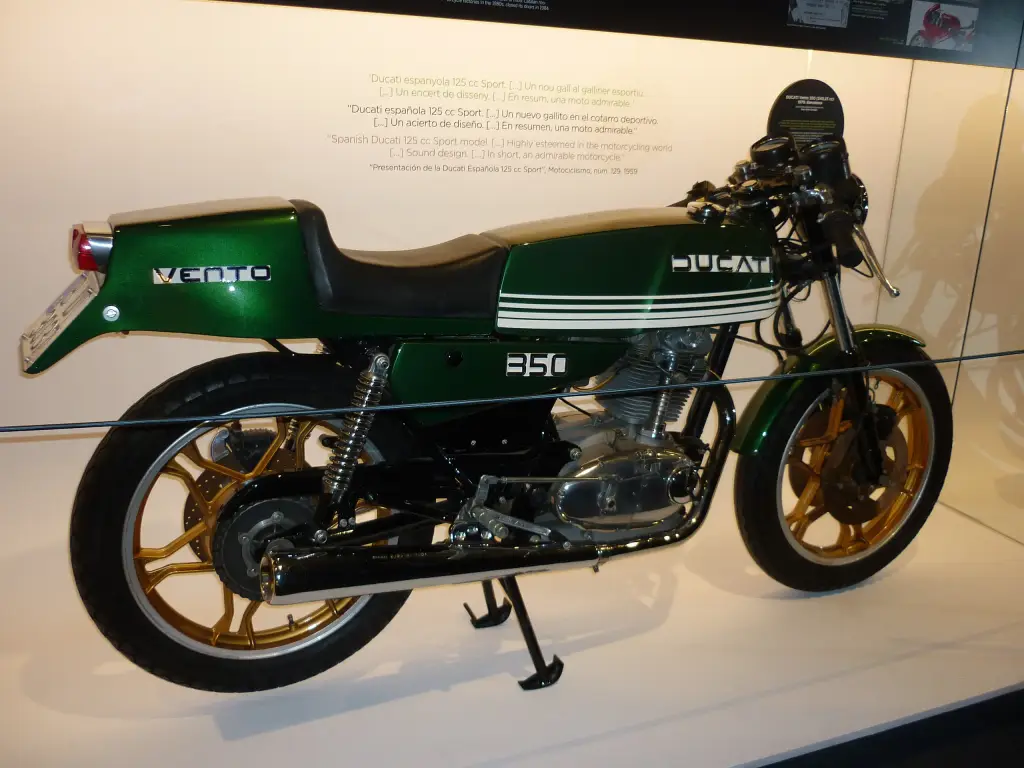
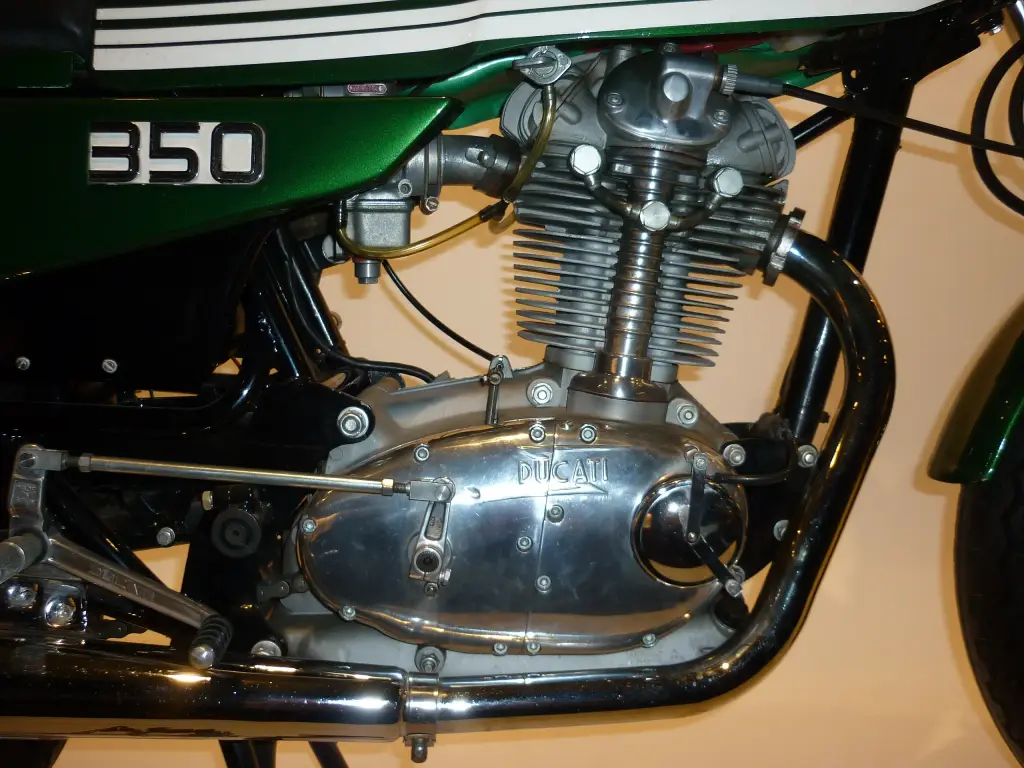
The Ducati Vento is a 340 cc single-cylinder bevel-drive SOHC motorcycle produced by the Spanish manufacturer MotoTrans, licensed by Ducati to build motorcycles under the Ducati brand. It was made from 1978 to 1983. The model is based on the 350 wide-case Ducati singles, which the Italian factory had stopped manufacturing in 1974 but which MotoTrans continued to develop.
Ducati Vento at a glance
| Maker | MotoTrans, Barcelona, under Ducati licence |
|---|---|
| Production | 1978–1983 |
| Type | café racer with single-cylinder bevel-drive engine |
| Engine | 340 cc SOHC single, alloy head and barrel, cast iron liner |
| Bore × stroke | 76 × 75 mm |
| Power | 28 bhp at 8,000 rpm |
| Top speed | 165 km/h |
| Carburettor | 32 mm Dell’Orto PHF |
| Brakes | twin 260 mm Brembo discs front, single disc rear |
| Tyres | Michelin 325×18 front, 350×18 rear |
| Wheels | six-spoke cast alloy |
History of the Ducati Vento
A Spanish Ducati
MotoTrans held a licence to produce motorcycles under the Ducati name. When Ducati ended the 350 wide-case singles in 1974, the Spanish firm kept developing them. The Vento had café racer styling and was intended as a successor to the earlier 24 Horas.
From prototype to production
A prototype was shown at the 1974 Automobile Barcelona Show alongside the touring Forza; it had a single front disc brake and wire wheels. A second prototype appeared with twin front discs and cast wheels. The machine went into production with a redesigned frame, a racing seat, clip-ons and rearsets. Compression was raised to 10:1 and a 32 mm Dell’Orto PHF carburettor fitted, lifting power to 28 bhp. To save weight the electric starter of the Forza was not fitted.
Colours and market
Most machines were finished in green, though some later ones were red. They were sold mainly in Spain.
The end
Production was suspended in late 1981 because MotoTrans was in financial trouble, then resumed in the summer of 1982. In 1983 production stopped when the company went into receivership.
Design and features
- Bevel-drive single: unit-construction 340 cc engine with alloy head and barrel, wet sump lubrication and battery-and-coil ignition.
- Café racer equipment: racing seat, clip-ons and rearsets from the start.
- Cycle parts: single cradle frame, Telesco forks, twin Telesco Hydrobag gas shocks and six-spoke cast alloy wheels.
- Brakes: twin 260 mm Brembo discs at the front, a single disc of the same size at the rear.
Ducati Vento versions
- 1974 prototype: single front disc and wire wheels, shown at the Barcelona show.
- Second prototype: twin front discs and cast wheels.
- Production Vento: redesigned frame, 10:1 compression, 32 mm carburettor, no electric starter.
The Vento continued the line of the Ducati 350 singles. Its place in the range is described in the Ducati collection.
Video: Ducati Vento 350 cc
Video by Joaquin Torres Prat on YouTube.
Sources
- Ducati Vento, English Wikipedia: model history, engine, cycle parts