The Dodge Copperhead is a concept car that Dodge unveiled at the 1997 North American International Auto Show in Detroit. It was designed as a slimmer, cheaper Viper for buyers who could not afford the Viper’s 75,000 dollar price, but it was cancelled before reaching production.
Dodge Copperhead at a glance
| Shown | 1997 North American International Auto Show |
|---|---|
| Class | concept sports car |
| Engine | 2.7 L aluminium DOHC V6, 220 hp at 6,000 rpm |
| Torque | 188 lb-ft at 4,900 rpm |
| Gearbox | five-speed close-ratio manual |
| Drive | rear-wheel drive |
| Layout | front longitudinal engine |
| Suspension | double wishbones with coil-over dampers |
| Tyres | 225/40R18 front, 255/40R18 rear |
| Planned price | about 30,000 dollars |
| Planned launch | 2000 |
| Outcome | cancelled; name dropped after a trademark complaint |
Based on one source: the English Wikipedia article on the Dodge Copperhead.
History of the Dodge Copperhead
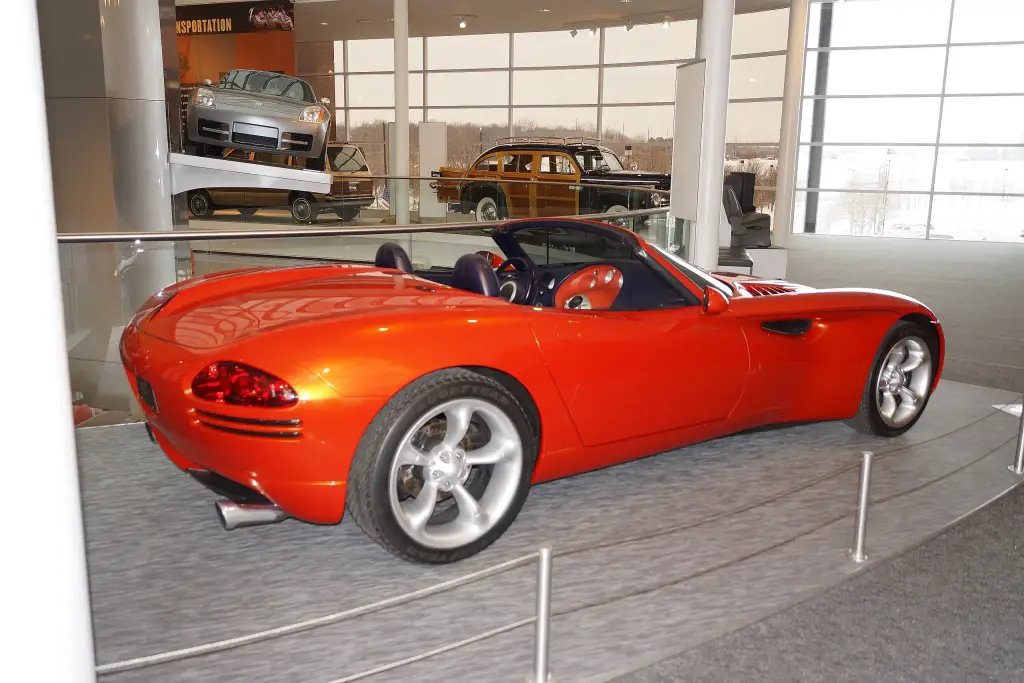
The Copperhead was created as a slimmed-down version of the Dodge Viper, aimed at buyers who could not afford the Viper’s 75,000 dollar cost. It was unveiled in Detroit in 1997, and some reviewers were impressed by its aerodynamic yet rugged styling in Copper Fire Orange and by the fact that its planned price of about 30,000 dollars was 45,000 dollars less than the Viper. Unlike the Viper, which was built for raw power, the Copperhead was made more for handling and driving pleasure. Dodge engineered it to make the driver feel the road by stretching the wheels to the ends of the frame, adding five inches of ground clearance and giving it a stiff suspension, which made it a car aimed at enthusiasts. It was due to be released in 2000 but was cancelled.
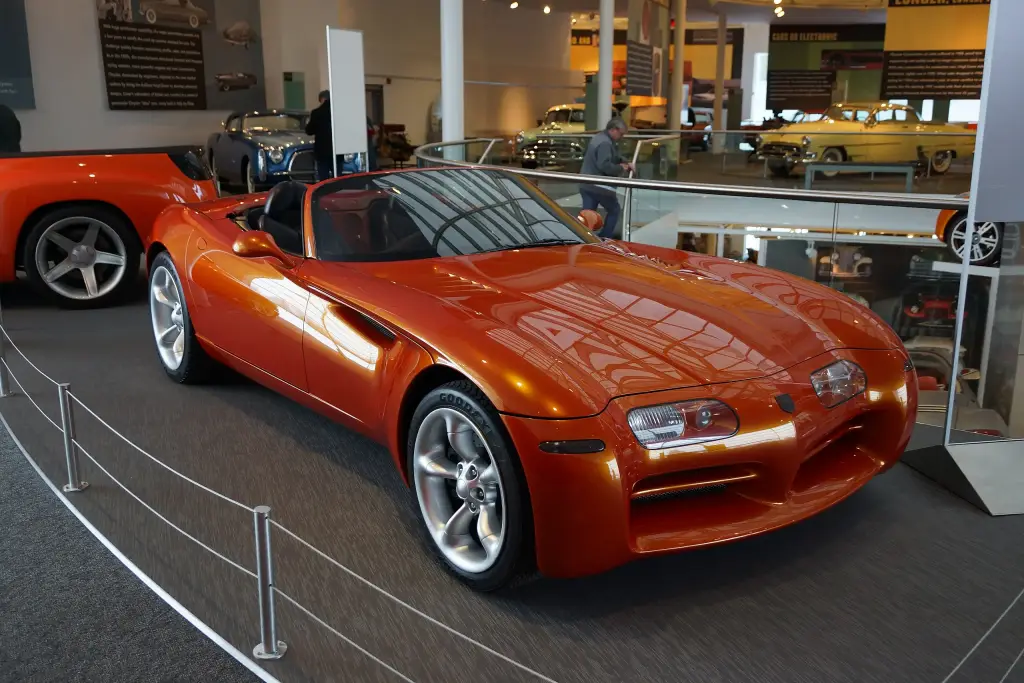
The exterior and interior were completely distinct from the Viper, even though some Viper elements remained. A new body kit replaced most of the Viper’s design and forced some parts to be changed in shape or position or removed altogether. The Copperhead was slightly shorter than the Viper, but its wheelbase was a foot longer. It had larger wheel arches, a larger front bumper, a slightly smaller grille, headlights below the bonnet line, side inlet pits instead of regular side inlets, no front air intake, smaller bonnet louvres, a stubby rear fin, smaller Viper tail lights and front wheels moved slightly forward for better handling.
Inside, the tachometer was redesigned in an old-school style, with four gauges in the middle of the dashboard for oil, speed, fuel and temperature, plus high-beam and indicator displays beside them. Below the gauges sat a head-shaped centre console with climate control, two air-conditioning fans, a temperature display and a radio, and below that the five-speed manual gearbox and handbrake. The whole console resembled a copperhead snake. The steering wheel was the same design used on the Phase ZB series Vipers.
Power came from a 2.7-litre all-aluminium DOHC V6 from Chrysler, mounted longitudinally at the front and producing 220 hp at 6,000 rpm and 188 lb-ft at 4,900 rpm, sent to the rear wheels through a five-speed close-ratio manual. The chassis was heavily based on the Viper but extensively modified, and the wide tyres helped keep the handling precise. The suspension used double wishbones with coil-over dampers in a short-and-long-arm layout. After the unveiling Dodge received a complaint about the rights to the Copperhead name: a customized 1950 Ford Coupe owned by Billy Gibbons of ZZ Top had already been registered as the Kopperhead. DaimlerChrysler therefore unofficially renamed the car, calling it the “Concept Vehicle” in press kits and merchandise, which made items carrying the Copperhead name collectable. The car appeared as a playable vehicle in Gran Turismo, Gran Turismo 2 and Test Drive 6.
Design and features
- Baby Viper: a smaller, cheaper sports car planned at about 30,000 dollars.
- 2.7-litre V6: an all-aluminium DOHC engine with 220 hp and a five-speed manual.
- Handling focus: wide track, long wheelbase and stiff suspension rather than raw power.
- Copperhead console: an interior centre console shaped like a snake’s head.
Dodge Copperhead versions
- Copperhead concept (1997): the only car built, shown in Copper Fire Orange.
- “Concept Vehicle”: the unofficial name used after the trademark complaint.
- Gran Turismo cars: the digital versions that kept the Copperhead name alive in games.
The Copperhead was a smaller brother to the Dodge Viper, and it shared the concept-car role with the Dodge Tomahawk. More Dodge models are in the Dodge collection.
Sources
- Dodge Copperhead, English Wikipedia: concept, design, engine, name dispute