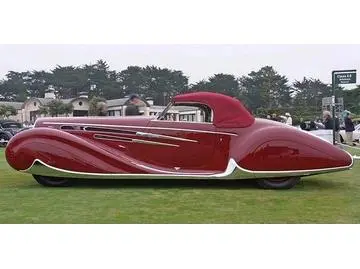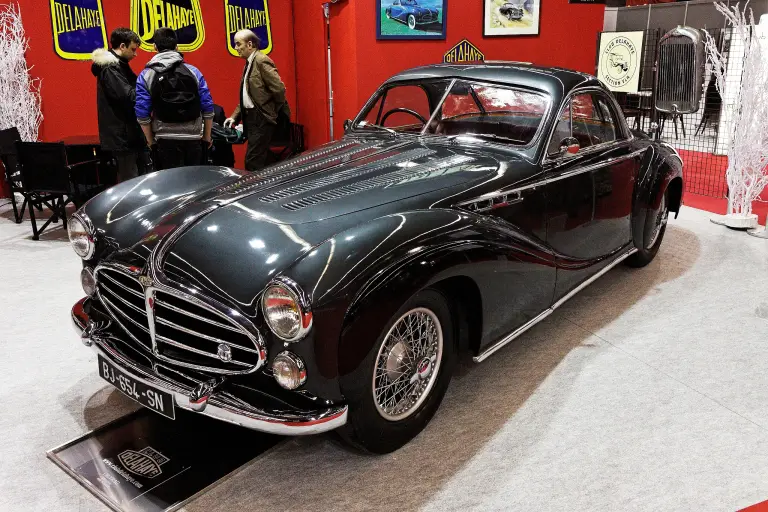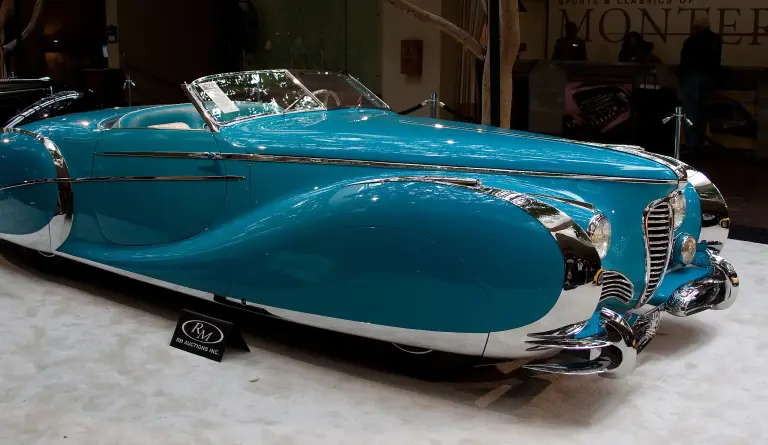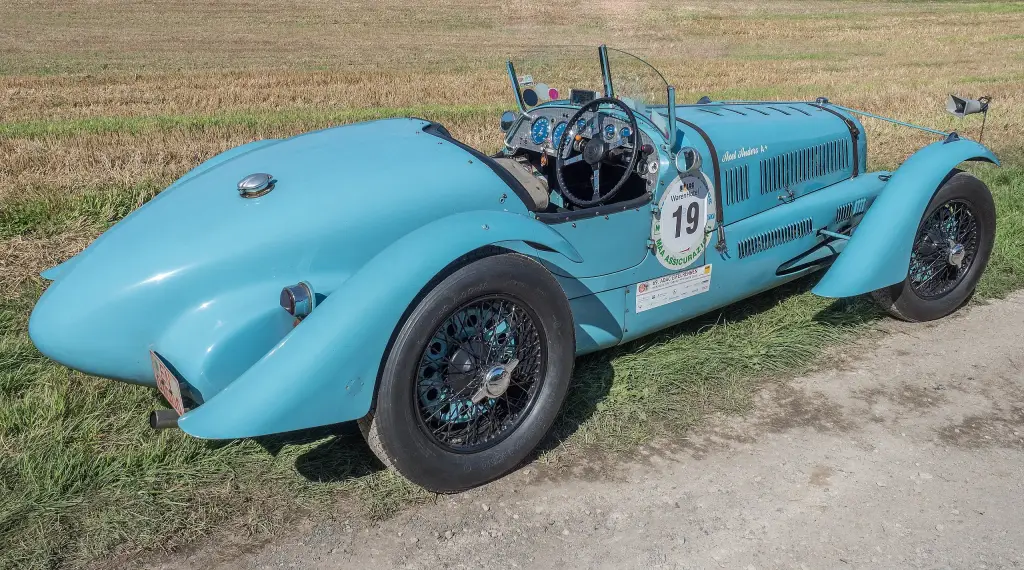
The Delahaye 135 was a luxury car built by the French firm Delahaye from 1935 until 1954. Designed by engineer Jean François, it was a sporting tourer sold as a rolling chassis to France’s leading coachbuilders, and it became one of the most successful racing cars of its era.
Delahaye 135 at a glance
| Maker | Delahaye, Paris |
|---|---|
| Production | 1935–1954 (3.2-litre cars to 1940) |
| Designer | Jean François |
| Engine | 3,196 cc overhead-valve straight six; 3,557 cc in the 135M |
| Power | 95 hp in the 135, 110 hp in the Coupé des Alpes |
| Top speed | 148 km/h (92 mph) with three carburettors |
| Wheelbase | 2.95 m for the 135MS, 2.70 m for competition cars |
| Front suspension | independent, leaf-sprung |
| Rear axle | live axle |
| Brakes | cable-operated Bendix |
| Gearbox | four-speed manual or Cotal pre-selector |
| Built | 2,592 (French Wikipedia) |
The 135M and 148 records were merged into this page; both versions are described above.
History of the Delahaye 135
1935: a sports tourer from a truck engine
The 135 was first presented in 1935 and marked Delahaye’s decision to build sportier cars than before. Its 3.2-litre overhead-valve straight six with a four-bearing crankshaft was derived from one of the company’s truck engines; the same unit, in gentler tune, went into the longer-wheelbase Delahaye 138. In twin-carburettor form the 135 gave 95 hp, and with three downdraught Solex carburettors 110 hp and a top speed of 148 km/h. The chassis had independent leaf-sprung front suspension, a live rear axle, cable-operated Bendix brakes and 17-inch spoked wheels, and it was sold with either a partly synchronised four-speed manual gearbox or a Cotal pre-selector. Success in the Alpine Rally gave the car its nickname, Coupé des Alpes.
1936–1939: 135M, 148 and 135MS
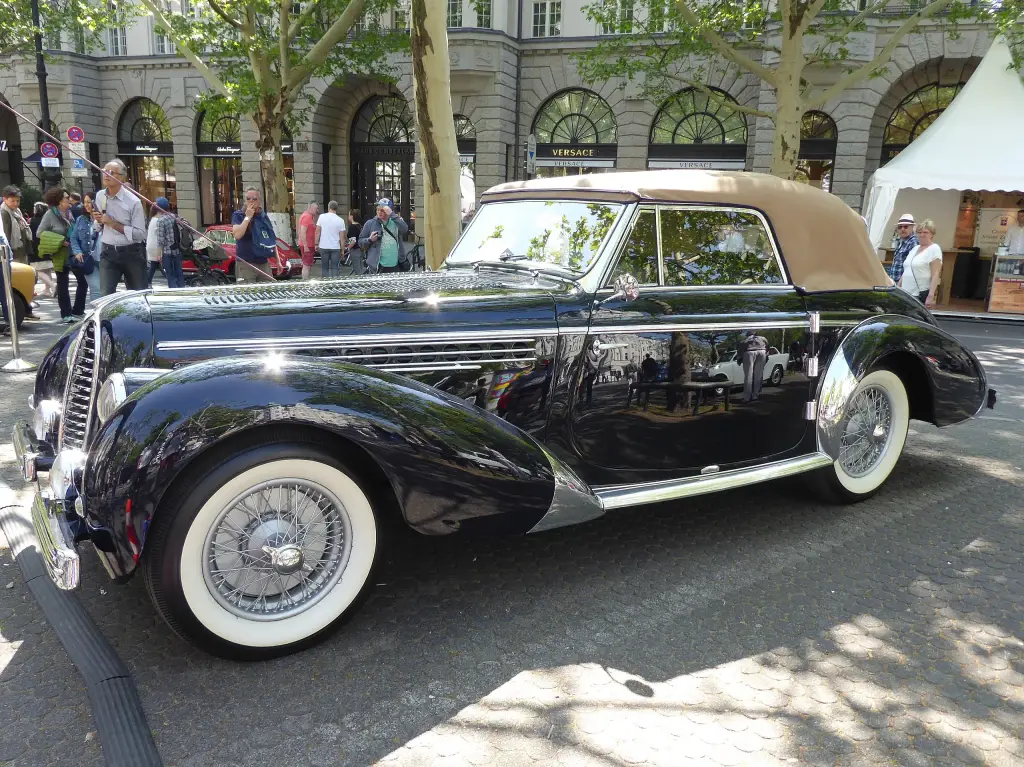
In 1936 a larger 3,557 cc engine created the 135M, largely the same car with 90, 105 or 115 hp depending on whether it had one, two or three carburettors. The same recipe produced a longer-wheelbase companion, the 148, on a 3,150 mm chassis, or 3,350 mm for the seven-seater; a smaller 134N with a 2,150 cc four-cylinder version of the six was offered on the two shorter wheelbases. The sportiest derivative, the 135MS, followed with 120 to 145 hp and over 160 hp in competition tune. It was the version most often raced and stayed available until 1954.
Racing record
The 135 was a force in late-1930s competition. It set the all-time record at the Ulster Tourist Trophy, finished second and third in the 1936 Mille Miglia, and won the Monte Carlo Rally in 1937. At Le Mans in 1938 Eugène Chaboud and Jean Trémoulet won outright while two more Delahayes came home second and fourth. A standard 135 was seventh at Le Mans in 1935, 135MS cars were second and third in 1937 and sixth and eighth in 1939, and after the war the same model still finished fifth, ninth and tenth. In the 1936 French Sports Car Grand Prix at Montlhéry, 135s filled second to fifth, seventh, eleventh and twelfth places, and John Crouch won the 1949 Australian Grand Prix in a 135MS.
Post-war life
Production of the 3.2-litre version ended with the German occupation in 1940 and was never resumed, but the 135M, 135MS and 148 came back after the war alongside the new 175. When the large-displacement chassis series was dropped in 1951, the 135M was reworked into the ponton-bodied Type 235, Delahaye’s last attempt to save itself. The 135MS continued until 1954, when the new owner Hotchkiss stopped it. French Wikipedia records 2,592 cars built between the autumn of 1935 and the end of 1952. The 135 also gave rise to the V12 racing Types 145 and 165 and to the 4.5-litre 175.
Design and features
- Truck-derived six: the 3.2-litre overhead-valve engine came from a Delahaye commercial vehicle and proved tough enough for racing.
- Chassis for coachbuilders: Figoni & Falaschi, Chapron, Saoutchik, Pourtout, Franay, Antem and others bodied the 135, so no two cars look alike.
- Cotal transmission: an electro-magnetic pre-selector gearbox was available alongside the manual.
- Competition pedigree: outright wins at Le Mans and Monte Carlo and a long list of class and place finishes.
Delahaye 135 versions
- 135 (1935–1940): 3.2 litres, 95 hp, the standard sporting tourer.
- Coupé des Alpes: 110 hp from three carburettors, 148 km/h.
- 135M (1936–1954): 3,557 cc, 90 to 115 hp, also built after the war.
- 148: longer 3,150 mm wheelbase, 3,350 mm as a seven-seater.
- 135MS: 120 to 145 hp, the most common competition version.
- 135 spécial: lightened 850 kg short-wheelbase chassis for racing.
The 135 was the starting point for the V12 Delahaye 165 and for the post-war Delahaye 175, and its last development was the Delahaye 235. More cars are in the Delahaye collection.
Video: 1937 Delahaye 135 Coupé des Alpes coupé by Chapron
Video on YouTube.
Sources
- Delahaye 135, English Wikipedia: design, engines, 135M and 148, racing record
- Delahaye type 135, French Wikipedia: production total, chassis list, post-war history