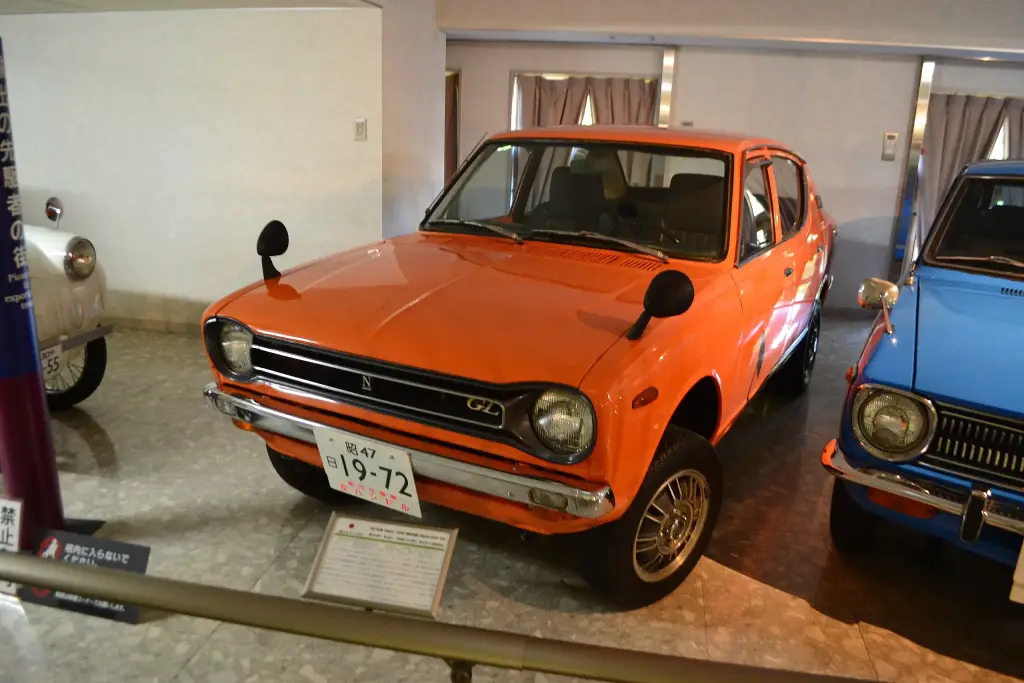
The Datsun Cherry was the small front-wheel-drive car that opened a new market for Nissan below the Sunny. Launched in 1970, it was sold in Europe as the Datsun 100A or 120A and, in its second generation, in North America as the Datsun F10. It was the first product to come out of a front-wheel-drive plan that Prince had begun before its merger with Nissan.
Datsun Cherry at a glance
| Maker | Nissan (Datsun), Japan |
|---|---|
| First generation | E10, from October 1970 |
| Second generation | F10, from 1974 |
| Bodies | two- and four-door saloons, three-door coupé, estate |
| Layout | front engine, front-wheel drive |
| E10 engines | 1.0 L A10 (988 cc), 1.2 L A12 (1,171 cc) |
| F10 engines | 1.0 L A10, 1.2 L A12, 1.4 L A14 |
| Suspension | independent at all four wheels |
| Transmission | four-speed manual; Sportmatic semi-automatic on the F10 |
| European names | Datsun 100A, 120A, 100A F-II, 120A F-II |
| North American name | Datsun F10 |
| Replaced by | Nissan Pulsar, from 1978 |
History of the Datsun Cherry
Before it merged with Nissan, Prince had planned a mass-produced front-wheel-drive car. After the merger in 1966 the project became a Datsun, and the Cherry was released in October 1970 as Nissan’s first front-wheel-drive car, slotted between the Sunny and the Bluebird. In Japan it was sold through a new dealer network, the Nissan Cherry Shop, separate from the Sunny and Bluebird shops.
The E10 had independent suspension at all four wheels and a choice of two A-series overhead-valve fours: the 1.0-litre A10 of 988 cc and the 1.2-litre A12 of 1,171 cc. The powertrain was a development of Prince’s original concept, itself inspired by the transmission-in-sump layout of the Mini, but with the gearbox in its own housing rather than sharing oil with the engine; the transfer gears gave the car a characteristic whine. The sporting Japanese Cherry X-1 used a twin-carburettor A12T with Hitachi side-draft carburettors.
In Europe the A10-engined car was the Datsun 100A and the A12 version the Datsun 120A, the latter available only as a coupé or, in 1978, as a semi-automatic saloon. The names Cherry and Datsun 1000 also appeared in advertising. In Britain the Cherry arrived in 1971 just as Datsun’s sales took off, from just over 6,000 cars that year to more than 30,000 the next, and the model was so popular there that it stayed on sale until 1976 even after its successor appeared.
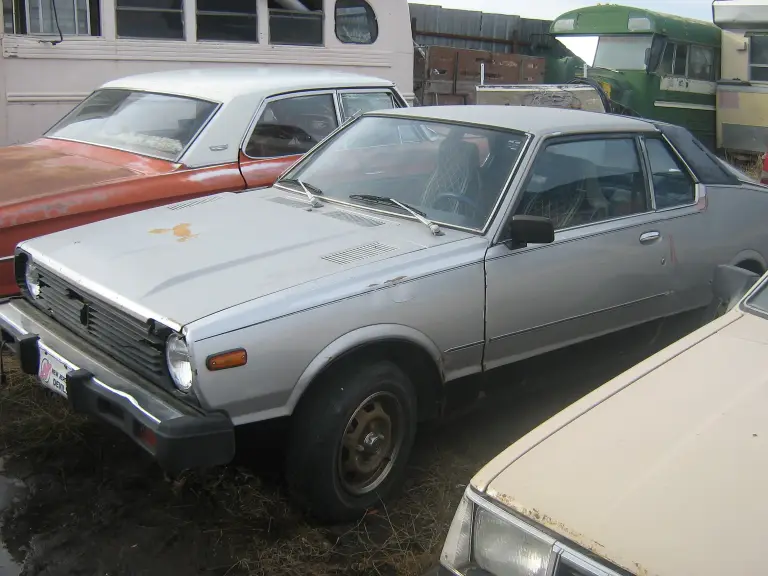
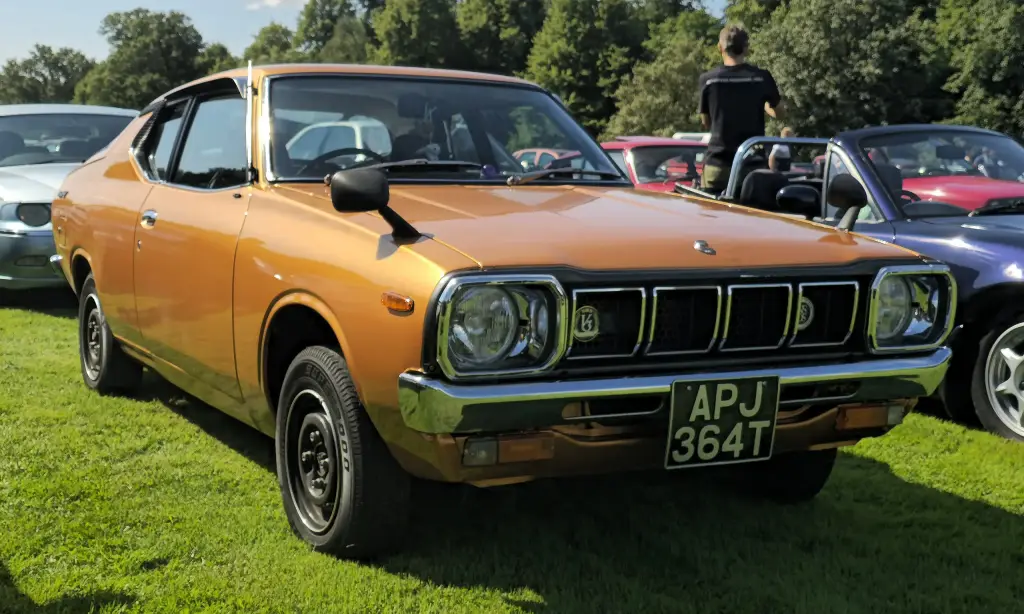
The second generation, the F10, arrived in 1974 and was known at home as the Cherry F-II and in North America as the Datsun F10 — Nissan’s first front-wheel-drive model sold there. It kept independent suspension all round and came with the A10, A12 or the new 1.4-litre A14, plus a two-pedal semi-automatic called the Sportmatic that used a torque converter instead of a clutch. Sales were disappointing, and the Cherry name was retired in Japan after this generation. In Europe the cars were the Datsun 100A F-II and 120A F-II, although importer names varied: in Switzerland the estate was sold as the Hobby. The Nissan Pulsar replaced the Cherry from 1978.
Design and features
- Nissan’s first front-wheel drive: a car that opened a new class below the Sunny.
- A-series engines: 1.0, 1.2 and later 1.4-litre overhead-valve fours.
- Prince inheritance: the gearbox sat in its own housing, which produced a distinctive whine.
- Sportmatic: a semi-automatic transmission with a torque converter on the F10.
- European badges: Datsun 100A and 120A, then 100A F-II and 120A F-II.
Datsun Cherry versions
- Cherry E10 (1970–1977): the first generation, sold as the Datsun 100A and 120A.
- Cherry X-1: the Japanese sporting model with a twin-carburettor A12T.
- Cherry F-II / F10 (1974–1978): the second generation, the Datsun F10 in North America.
- Sportmatic: the semi-automatic version of the F-II.
The Cherry was replaced by the Datsun 310, which was the Pulsar N10 in America, and it sat below the Datsun Sunny. More models are in the Datsun collection.
Sources
- Nissan Cherry, English Wikipedia: E10 and F10 generations, engines, European names
- Nissan Cherry, German Wikipedia: market history and dealer networks