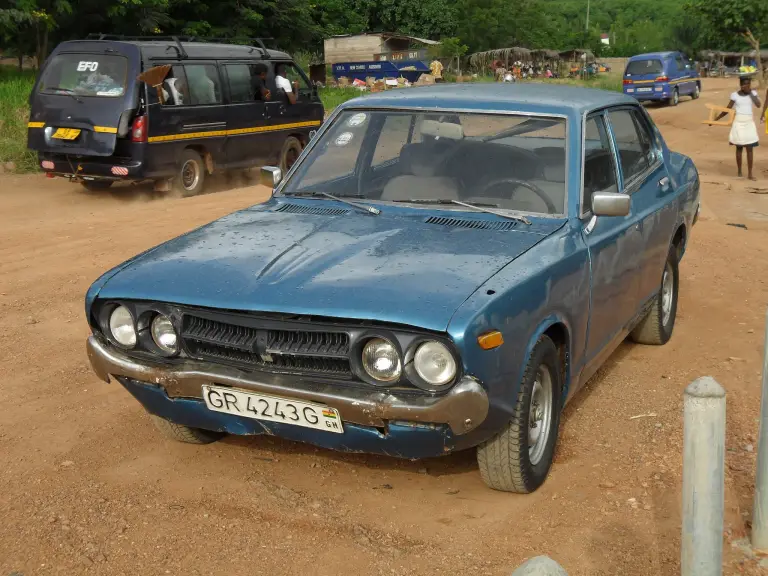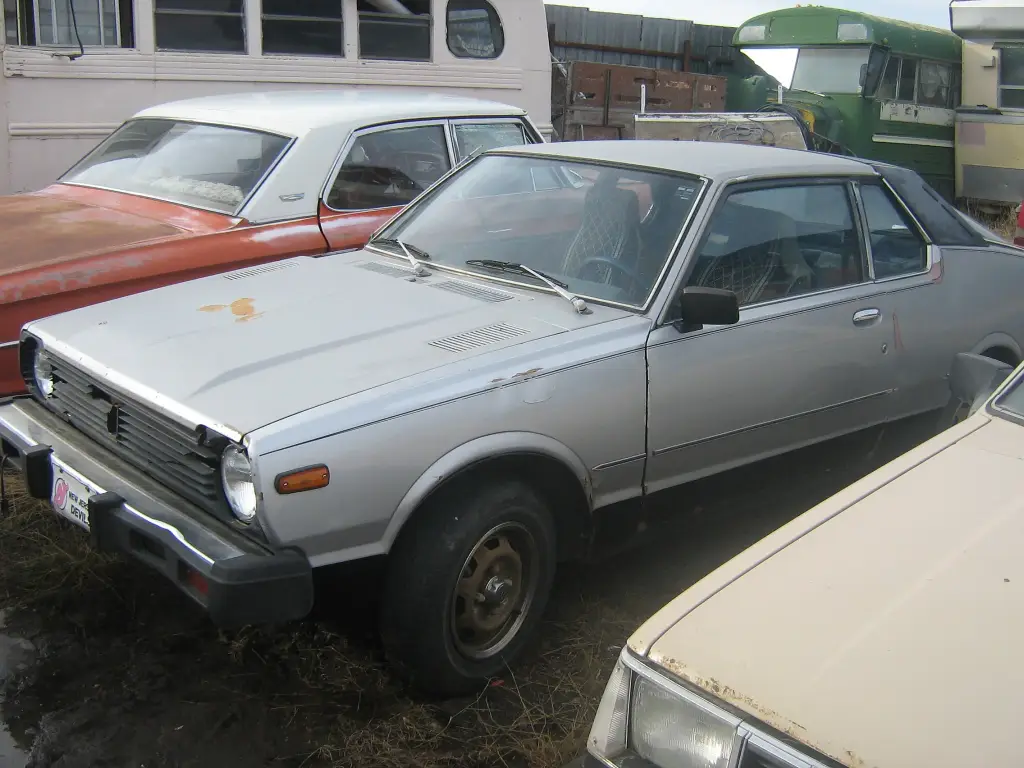
The Datsun 310 was the name Nissan used in the United States and Canada for the Nissan Pulsar N10, introduced in May 1978 as the replacement for the Cherry F-II. In Europe and much of Asia the same car was sold as the Datsun Cherry, badged 100A to 150A, and in Australia as the Datsun Pulsar.
Datsun 310 at a glance
| Maker | Nissan (Datsun), Japan |
|---|---|
| Introduced | May 1978 (N10) |
| Bodies | four-door fastback sedan, three-door hatchback, coupé, five-door hatchback, van |
| Engines | 1.0 L A10 (45 PS), 1.2 L A12 (52 PS), 1.4 L |
| Drive | front-wheel drive |
| Front suspension | MacPherson struts |
| Rear suspension | coil-sprung trailing arms |
| Steering | rack and pinion |
| Names in Europe | Datsun Cherry, 100A to 150A |
| Names elsewhere | Datsun Pulsar in Australia, New Zealand and South Africa |
| Also assembled | Greece (from 1980), South Africa, Malaysia |
History of the Datsun 310
The Pulsar N10 arrived in May 1978 to replace the Cherry F-II, and it benefited from engineering done by Prince before the merger with Nissan. It kept the Cherry’s rack-and-pinion steering and its independent suspension, with coilover struts in front and coil-sprung trailing arms at the rear. In Japan the Pulsar was sold through a separate dealer network from the Sunny, which it was meant to complement rather than replace.
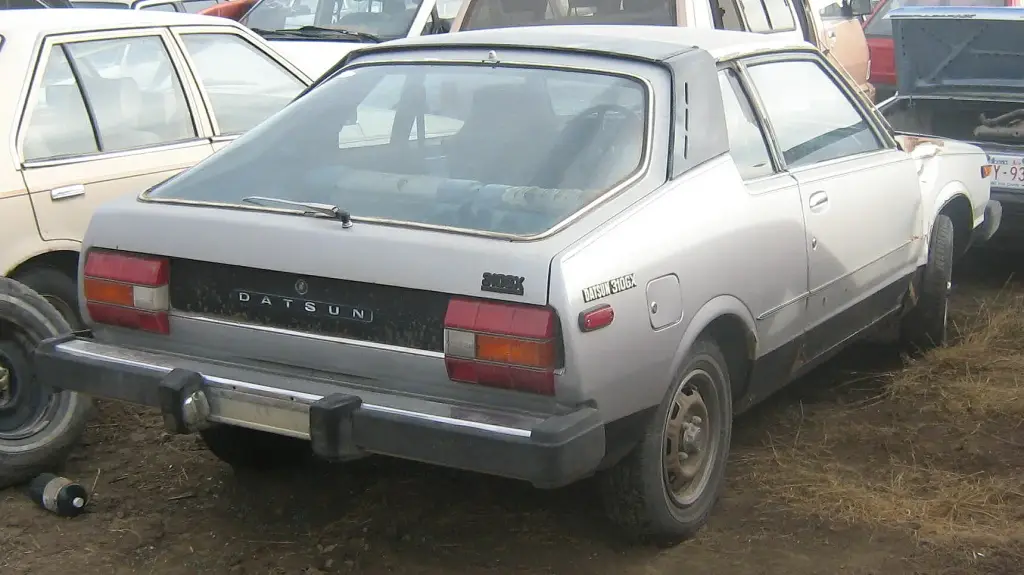
The most striking feature of the design was its long nose, which existed because Nissan had expected to build a rear-wheel-drive version for developing markets; in the end only front-wheel-drive cars were made. At launch there was only a four-door fastback sedan, with 1.2- or 1.4-litre engines, and the three-door hatchback and coupé followed in September 1978. Many export markets also had a 1.0-litre A10 with 45 PS, while the 1.2-litre A12 gave 52 PS.
Naming changed from country to country. In Europe and most of Asia the car was the Datsun Cherry or the Datsun 100A, 120A, 130A, 140A and 150A, depending on engine and trim, and in Belgium it was even sold as the Cherry Europe to separate it from the older F-II. In the United States and Canada it was the Datsun 310, and it went to Australia, New Zealand, South Africa and Malaysia as the Datsun Pulsar. It entered the Australian market in October 1980, with a facelift a year later.
The N10 was also the first passenger car Nissan assembled in its new Greek plant, where the local partner TEOKAR built it with the 1.0 and 1.2-litre engines from 1980. It was assembled in South Africa and, by Tan Chong Motor, in Malaysia; some late South African cars used the square headlamps and tail lamps of the Skyline-based Langley. A Japanese derivative, the Nissan Langley, joined the range in 1980 as a “mini Skyline”.
Design and features
- Front-wheel drive: a modern layout that replaced the rear-drive Cherry F-II.
- Long nose: styling left over from an abandoned rear-drive plan.
- Wide body range: sedan, three- and five-door hatchbacks, coupé and a van.
- Small engines: from a 45 PS 1.0 to a 1.4-litre unit.
- Local assembly: built in Greece, South Africa and Malaysia as well as Japan.
Datsun 310 versions
- Datsun 310 (US and Canada): the American name for the N10.
- Datsun Cherry and 100A–150A (Europe): the same car under its European badges.
- Datsun Pulsar (Australia and others): the export name in the southern hemisphere.
- Nissan Langley (Japan, from 1980): a sportier derivative with four-wheel independent suspension.
The 310 replaced the Datsun Cherry and shared its market slot with the Datsun Sunny. More models are in the Datsun collection.
Video: Datsun Sunny 310 – Autotaku
Video by AutomobileOtaku on YouTube.
Sources
- Nissan Pulsar, English Wikipedia: N10 history, engines, market names
- Nissan Pulsar, German Wikipedia: generation codes and European names