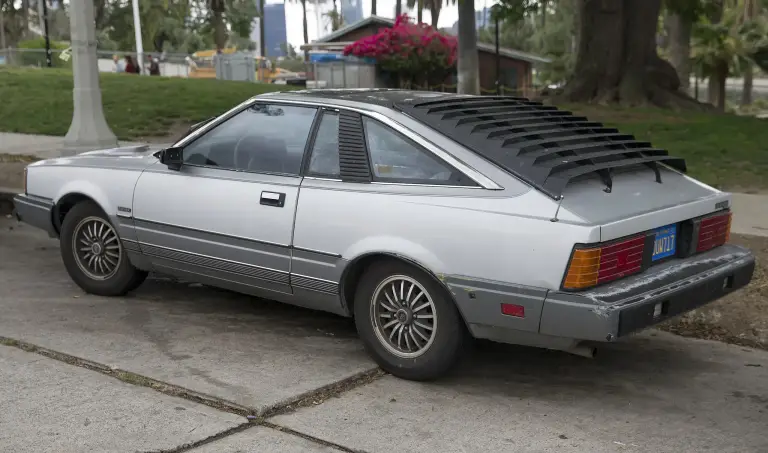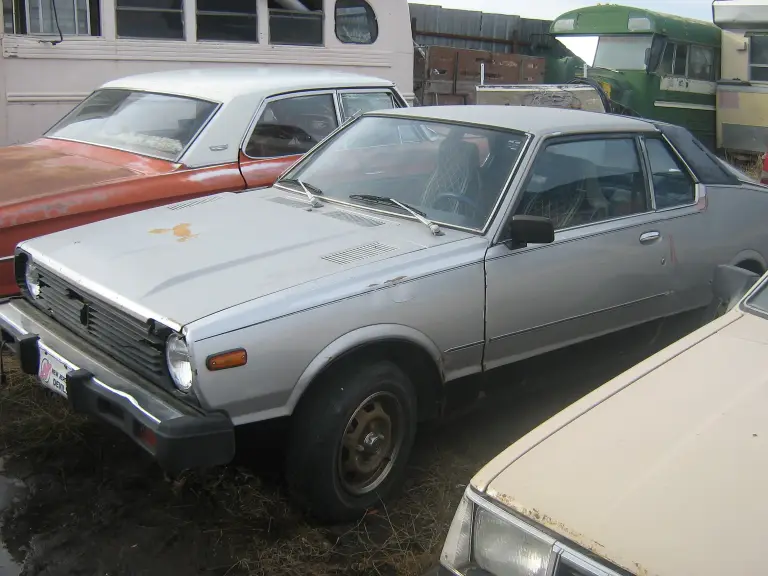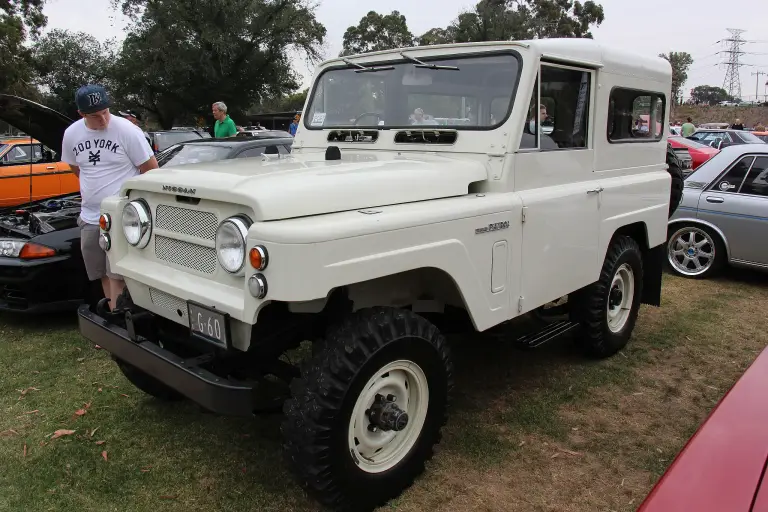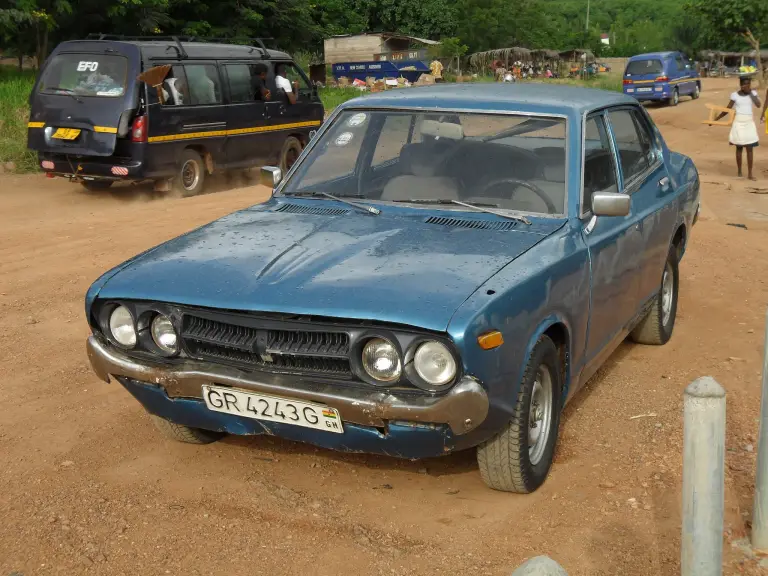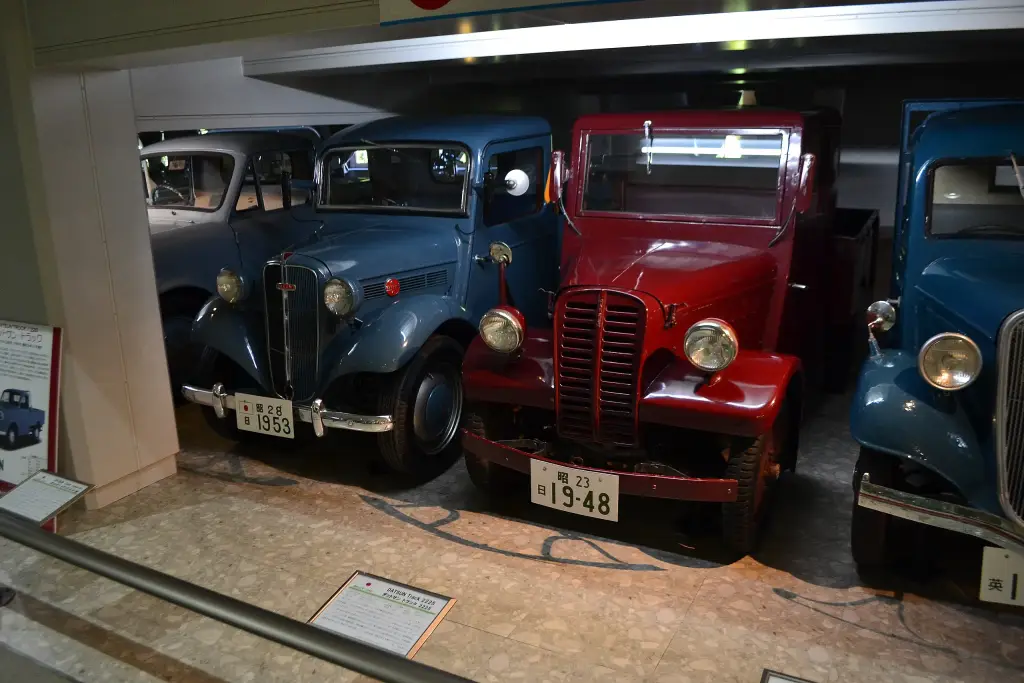
The Datsun Truck was Nissan’s compact pickup line, built from 1955 to 1997 under that name and descended from trucks that go back to 1934. It was sold as a Datsun until 1983 and as a Nissan afterwards, and it was replaced by the Frontier and Navara in 1997. In Japan it was sold only through Nissan Bluebird Store dealerships.
Datsun Truck at a glance
| Maker | Nissan (Datsun), Japan |
|---|---|
| Line | 1934–1997 |
| First ancestor | Type 13, April 1934 |
| Post-war start | Datsun 1121, 1946 |
| Model numbering | chassis, bonnet, cab and rear body each had a digit |
| Datsun 120 | January 1955, 860 cc Type 10 engine, 25 PS |
| Datsun 220 | November 1957, first Datsun truck sold in the United States |
| Datsun 320 | August 1961, 1.2-litre E-1 engine, 60 PS |
| Datsun 520 | May 1965, 1.3-litre J13 |
| Datsun 620 | February 1972, King Cab from 1977 |
| Datsun 720 | October 1979, last Datsun-badged version |
| Replaced by | Nissan Frontier and Navara, 1997 |
The article summarises the English Wikipedia page on the Datsun Truck, which covers the whole line; this page is based on one source.
History of the Datsun Truck
The Datsun truck line began with the Type 13 of April 1934, which was later used as the basis of the Datsun DC-3 roadster. Small trucks based on the company’s passenger cars, the 14T, 15T and 17T, continued to be built until early 1944. After the war came the 1121 of 1946, technically close to the 17T but with an extremely simple pressed-steel body, almost no chrome and some wooden parts, because materials were scarce; it used the 15 PS Type 7 engine.
A rapid stream of model numbers followed as pre-war parts ran out. The naming was systematic: the first digit stood for the chassis and engine, the second for the bonnet and grille, the third for the cab and the fourth for the rear body. The 4146 of August 1950 introduced the 860 cc Type 10 engine with 15 kW and a top speed of 70 km/h; the 5147 of 1951 brought a longer wheelbase and hydraulic brakes; and the 6147 of 1953 ended the line in 1955.
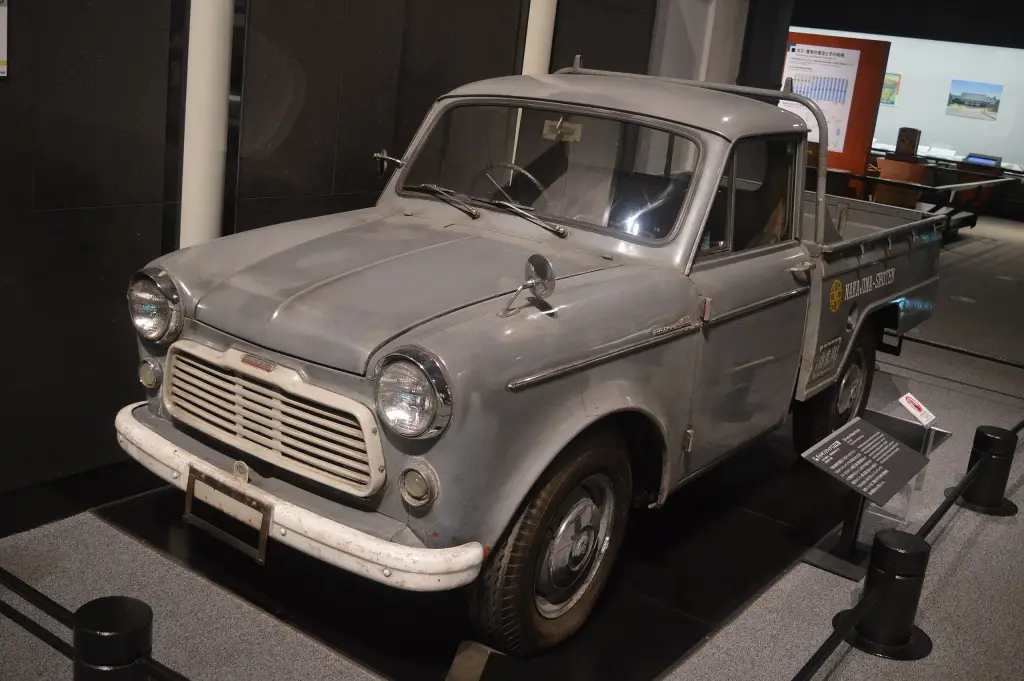
The all-new 120-series arrived in January 1955 as a load-carrying version of the Datsun 1000 saloon, with delivery van, panel van and double-cab bodies and the 25 PS 860 cc engine. It was one of the first Nissan products sold in Europe, with 200 units shipped to Spain in 1956. The 220 of November 1957 added a stronger chassis and was the first Datsun truck exported to the United States. The 320 of August 1961, the 520 of May 1965 and the 620 of February 1972 followed, each growing in size and power, until the 720 of October 1979 carried the line into the 1980s.
From 1983 the trucks were sold as Nissans, and the D21 generation ended the story in 1997, when the Frontier and Navara replaced it. Along the way the small Datsun pickup became one of the most familiar Japanese vehicles in the United States, where it competed with much larger American trucks and earned a reputation for durability.
Design and features
- Long history: from a 1934 ancestor to the 1997 D21.
- Systematic codes: four digits for chassis, bonnet, cab and rear body.
- Passenger-car roots: early trucks were load-carrying versions of Datsun saloons.
- Exports: the 220 was the first Datsun truck sold in the United States.
- Seven decades of names: 120, 220, 320, 520, 620 and 720.
Datsun Truck versions
- Datsun 120 (1955–1960): the first all-new post-war truck, with the 860 cc engine.
- Datsun 220 (1957–1961): a stronger chassis and the first American exports.
- Datsun 320 (1961–1965): the E-1 engine and 60 PS.
- Datsun 520 and 620: the 1960s and 1970s generations.
The individual generations have their own pages: Datsun 220, Datsun 520, Datsun 620 and Datsun 720. More models are in the Datsun collection.
Sources
- Datsun truck, English Wikipedia: whole line: predecessors, models, engines, markets