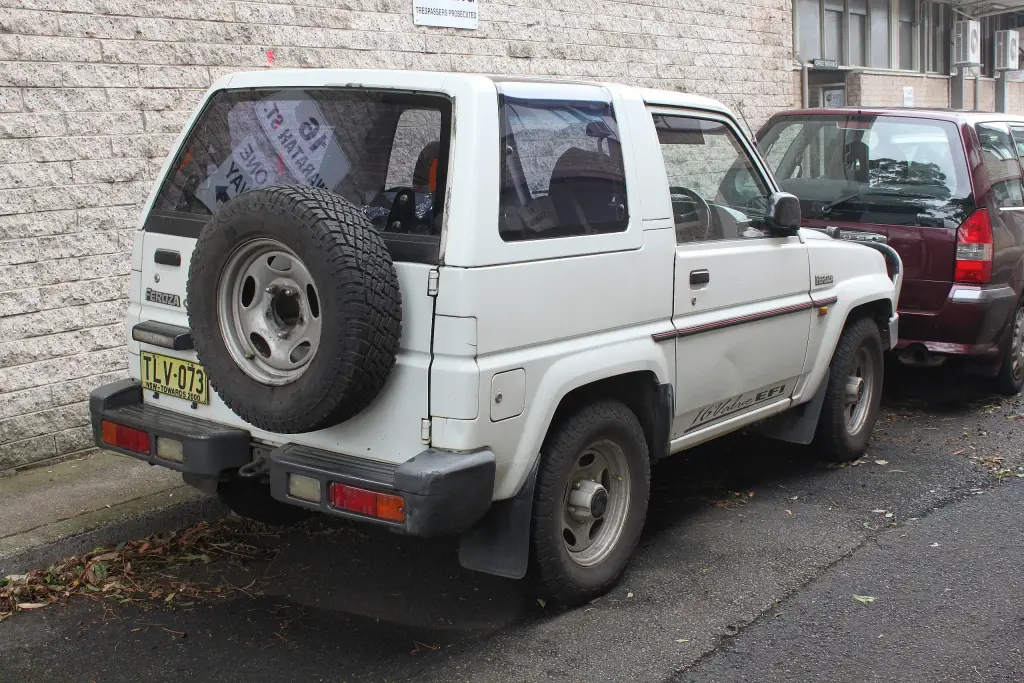
The Daihatsu Feroza was a nameplate used between 1989 and 2002 for two SUV models. In most export markets it meant the F300 series, the version of the Daihatsu Rocky sold outside Japan. In Indonesia the same name was used for a petrol-engined, rear-wheel-drive variant of the Rugger.
Daihatsu Feroza at a glance
| Maker | Daihatsu, Japan |
|---|---|
| Nameplate used | 1989–2002 |
| First model | Feroza F300, export version of the Rocky |
| F300 production | 1989–2002 |
| Second model | Feroza F70, based on the Rugger |
| F70 layout | rear-wheel drive, petrol engine |
| F70 market | Indonesia |
| F70 production | 1993–1999 |
Based on one source; the English article is a short nameplate list.
History of the Daihatsu Feroza
The F300: a Rocky for export
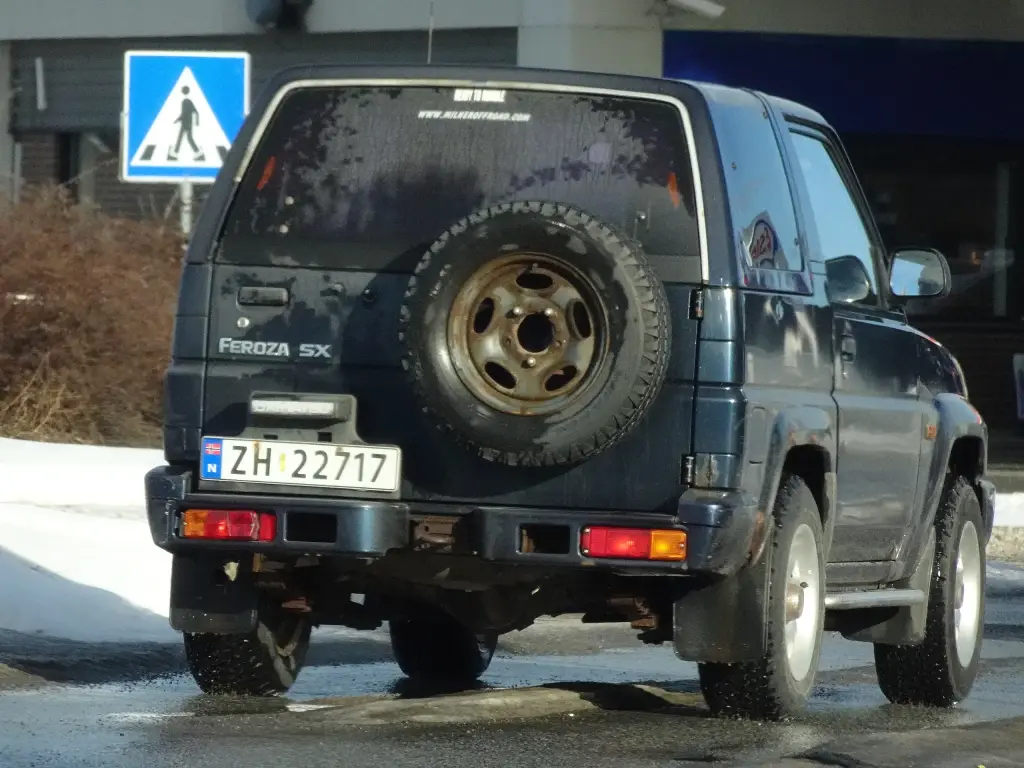
The first and better known Feroza was the F300 series, an export version of the Daihatsu Rocky sold between 1989 and 2002. The car was the same design as the Rocky, which was the name used in Japan; the Feroza badge was applied in the markets where Daihatsu sold it as an export model.
The F70: an Indonesian variant
The second Feroza was a different vehicle. The F70 was a gasoline-engined, rear-wheel-drive variant of the Rugger, and Daihatsu sold it in Indonesia between 1993 and 1999. Where the F300 was an export version of a Japanese model, the F70 was a local-market derivative of another Daihatsu SUV.
Design and features
- Export nameplate: Feroza was the name used outside Japan for the F300 Rocky.
- Two separate models: the F300 and the F70 were different vehicles under one name.
- Indonesian variant: the rear-wheel-drive F70 based on the Rugger.
Daihatsu Feroza versions
- Feroza F300 (1989–2002): the export version of the Rocky.
- Feroza F70 (1993–1999): rear-wheel-drive petrol model for Indonesia.
The Feroza was the off-road model of the Daihatsu collection, a role later taken by the Taft; the Delta covered commercial work.
Sources
- Daihatsu Feroza, English Wikipedia: the two models and their dates