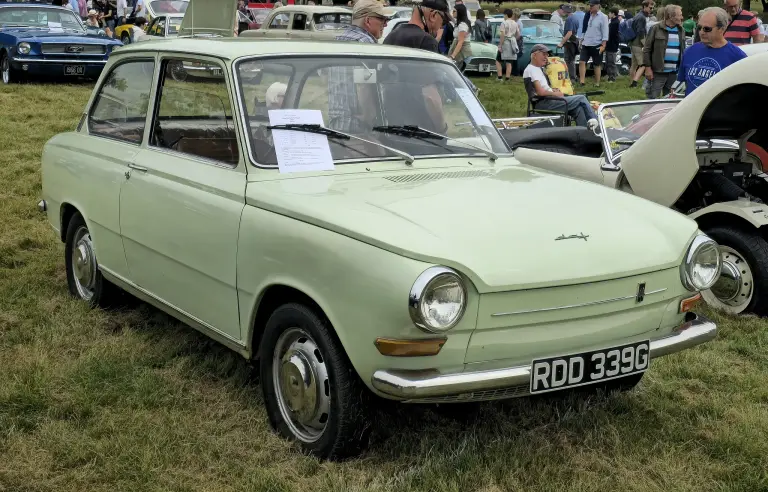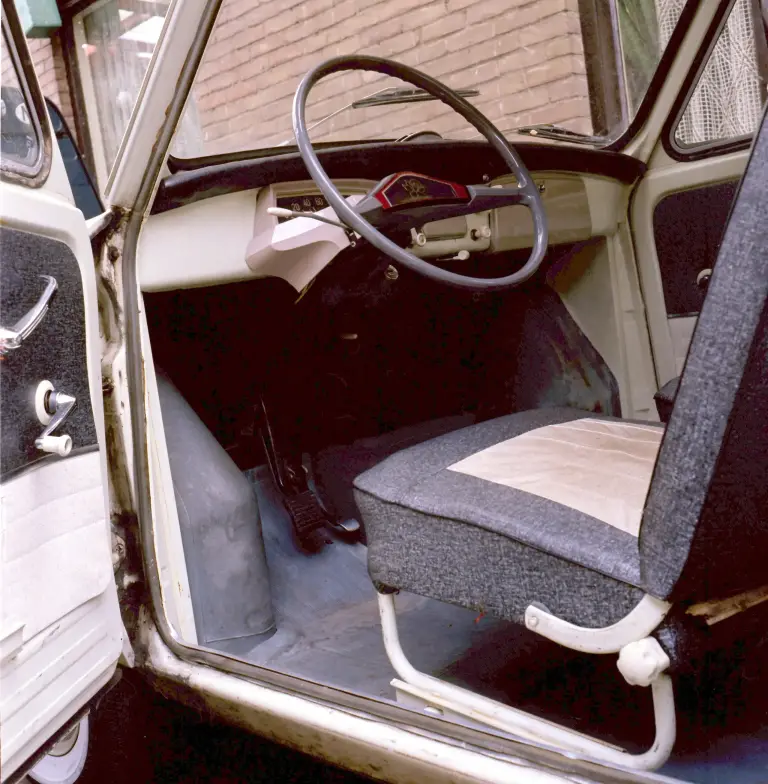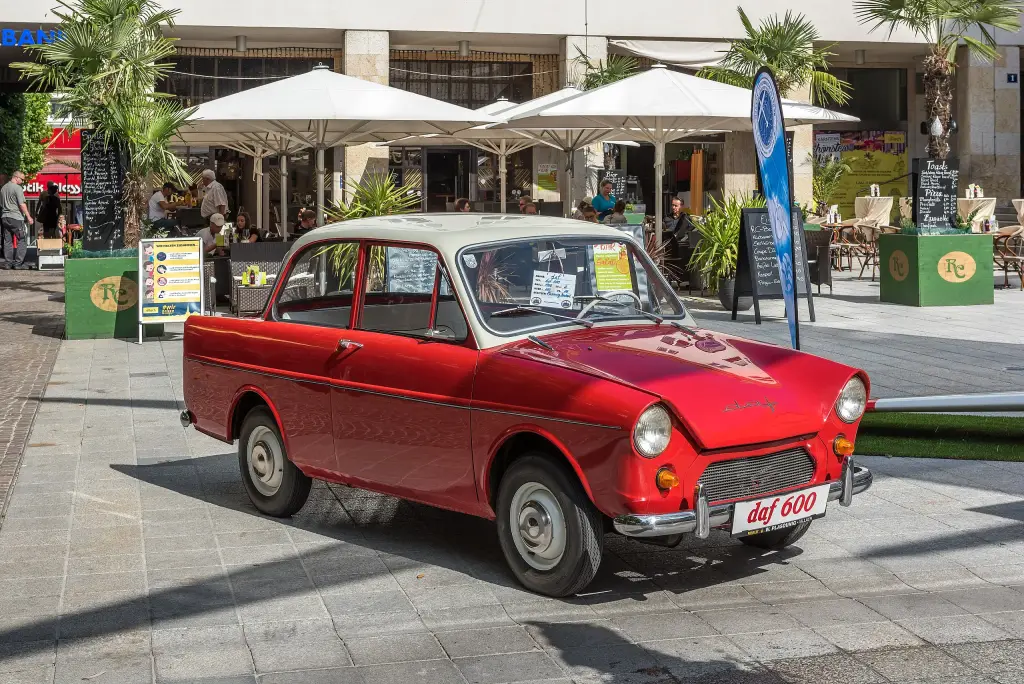
The DAF 600 was the first passenger car built by the Dutch company DAF. Presented at the Amsterdam motor show in February 1958 and in production from 1959 to 1963, it introduced the Variomatic, the belt-driven automatic transmission that would define every DAF car.
DAF 600 at a glance
| Maker | DAF, Eindhoven |
|---|---|
| Presented | Amsterdam Motor Show, February 1958 |
| Production | 1959–1963 |
| Engine | air-cooled flat-twin, 590 cc |
| Bore and stroke | 76 mm × 65 mm |
| Power | 22 hp at 4,000 rpm |
| Transmission | Variomatic CVT |
| Wheelbase | 2,050 mm |
| Length | 3,610 mm |
| Height | 1,440 mm |
| 0–80 km/h | 33 seconds |
| Top speed | 90 km/h |
| Built | 30,591 |
History of the DAF 600
Why DAF built a car
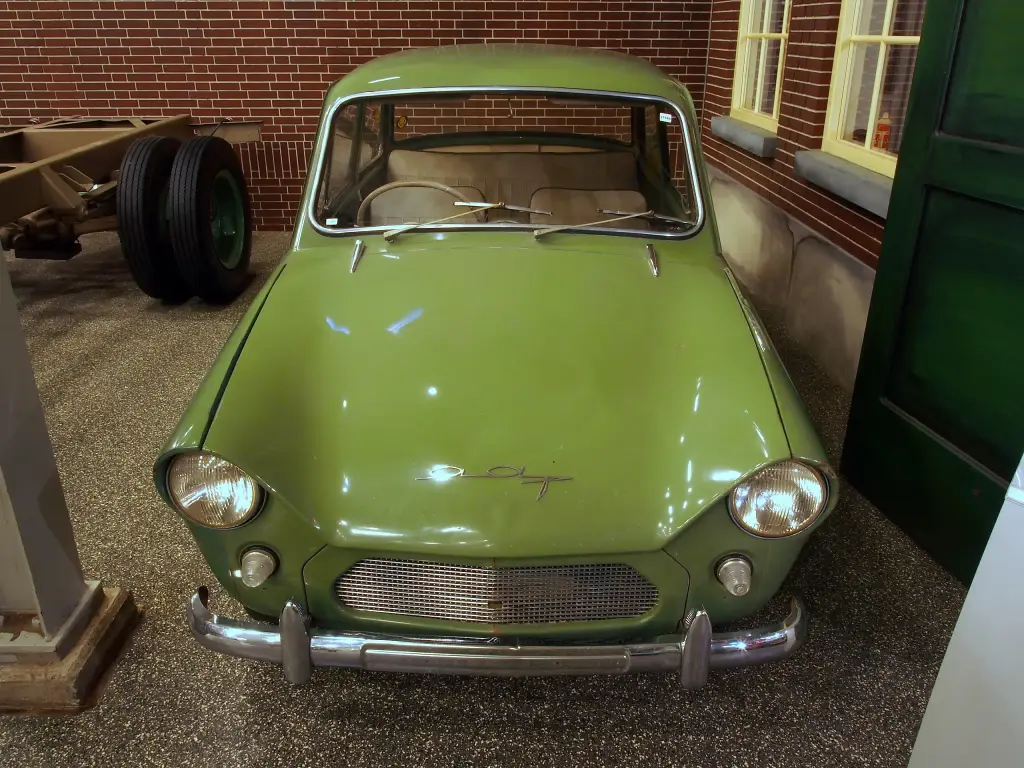
DAF had made its name with trucks, and the idea of a small car grew out of Hub van Doorne’s dislike of manual gearshifts. He had bought a Buick with a Dynaflow automatic and wanted that kind of comfort in a small, cheap car, but the American gearbox was too big and swallowed too much power. According to the company story, the answer came from the rubber drive belts used in the factory; another version says Van Doorne bought a small Dutch-built vehicle called the Homemade. The design work was largely done by Joan van der Brugghen, and the first test car was a Lloyd fitted with the new transmission.
The Variomatic
The 600 was the first production car since the Clyno of the 1920s to have a continuously variable transmission. The Variomatic used engine speed through centrifugal weights to move the pulleys, helped by inlet manifold vacuum. It produced one peculiar result: the car went faster if the driver gently released the accelerator at top speed, because the greater vacuum moved the pulleys to a higher ratio. With enough time and a level road a DAF 600 would creep from about 97 km/h to nearly 110 km/h that way. A switch on the dashboard reversed the action of the vacuum on the diaphragm for stronger engine braking.
Sales, versions and reputation
DAF showed the car at the RAI in 1958 and interest was so great that, by one account, visitors stood on Volvo cars to see it; production was revised and only got going in 1959. The first two cars built went to Truus Smulders-Beliën, the first Dutch woman to be a mayor, and to the chairman of the Dutch automobile club; she had not ordered a car at all and did not hold a driving licence. The 590 cc engine was DAF’s own air-cooled four-stroke flat-twin, and larger versions of it stayed in production until the DAF 46 was dropped in 1976. There were roughly three generations of the 600, differing in detail, and a hill-holder was added along the way. Cheap conversions that limited the car to 25 km/h so that it could be driven without a licence damaged its image in the Netherlands. Complaints about power led DAF to replace the 600 with the DAF 750, and 30,591 cars were built in all.
Design and features
- First DAF car: the company’s move from trucks into passenger cars.
- Variomatic: the first production CVT since the 1920s Clyno.
- 590 cc flat-twin: an air-cooled four-stroke of DAF’s own design, 22 hp.
- Growing top speed: lifting off the accelerator at maximum speed raised it further.
- Engine braking switch: a dashboard control for stronger retardation.
DAF 600 versions
- First generation: the original 1959 car.
- Later generations: about three versions with detail changes and a hill-holder.
- 25 km/h conversions: cars limited for drivers without a licence.
- DAF 750: the more powerful successor.
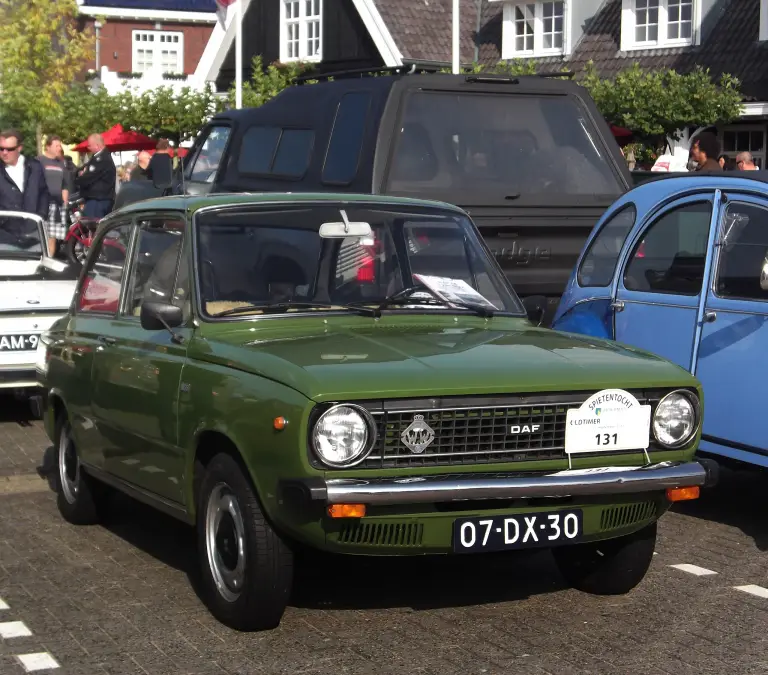
The 600 began the line that continued with the Daffodil and the DAF 33, and its transmission lived on in the DAF 46. More cars are in the DAF collection.
Sources
- DAF 600, English Wikipedia: production, engine, Variomatic behaviour
- DAF 600, Dutch Wikipedia: origins, dimensions, generations, image