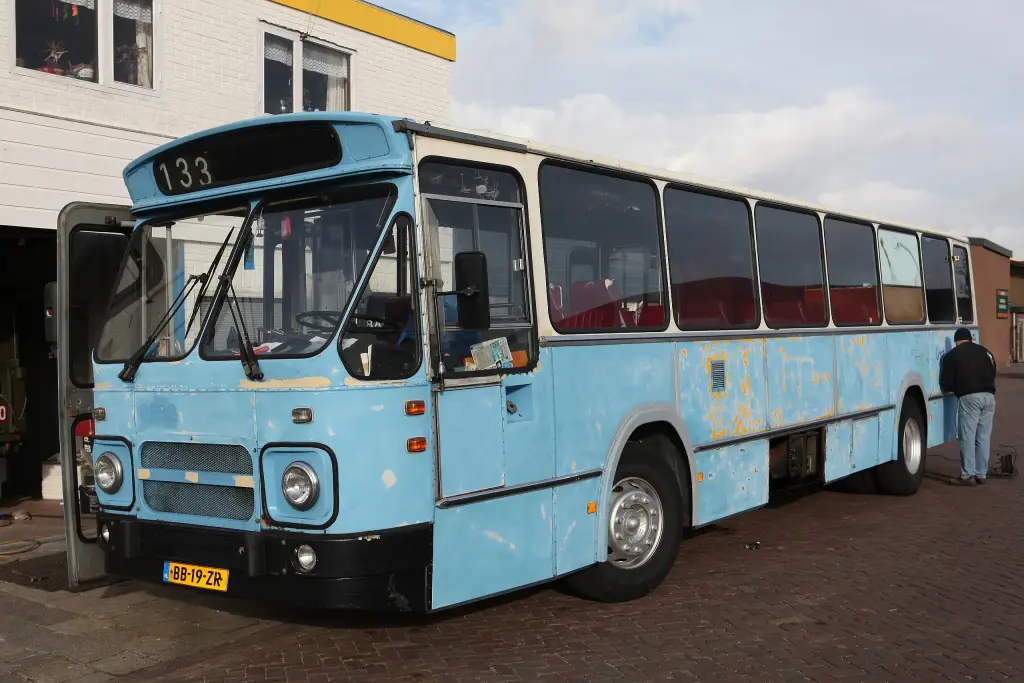
The DAF MB200 was a chassis for buses and coaches, developed in Eindhoven in 1965 as the successor to the TB160. Its engine lay under the floor between the front and rear axles rather than standing at the front, which gave a better weight distribution and let coachbuilders use the full length of the vehicle.
DAF MB200 at a glance
| Maker | DAF, Eindhoven |
|---|---|
| Developed | 1965 |
| Predecessor | DAF TB160 chassis |
| Engine | DAF DKDL1160, 11.6-litre six, 170 hp |
| Layout | underfloor engine between the axles |
| Gearboxes | Wilson GB340, ZF semi-automatic, later Allison or ZF automatic |
| Length | 11.85 m, or 10.5 m in the short version |
| Wheelbase | 6.00 m or 5.64 m; 5.00 m in the short version |
| Articulated | MBG200 from 1982, 18 m, 252 hp turbo engine |
| Successors | SB220 and MB230, 1988 |
History of the DAF MB200
An engine under the floor
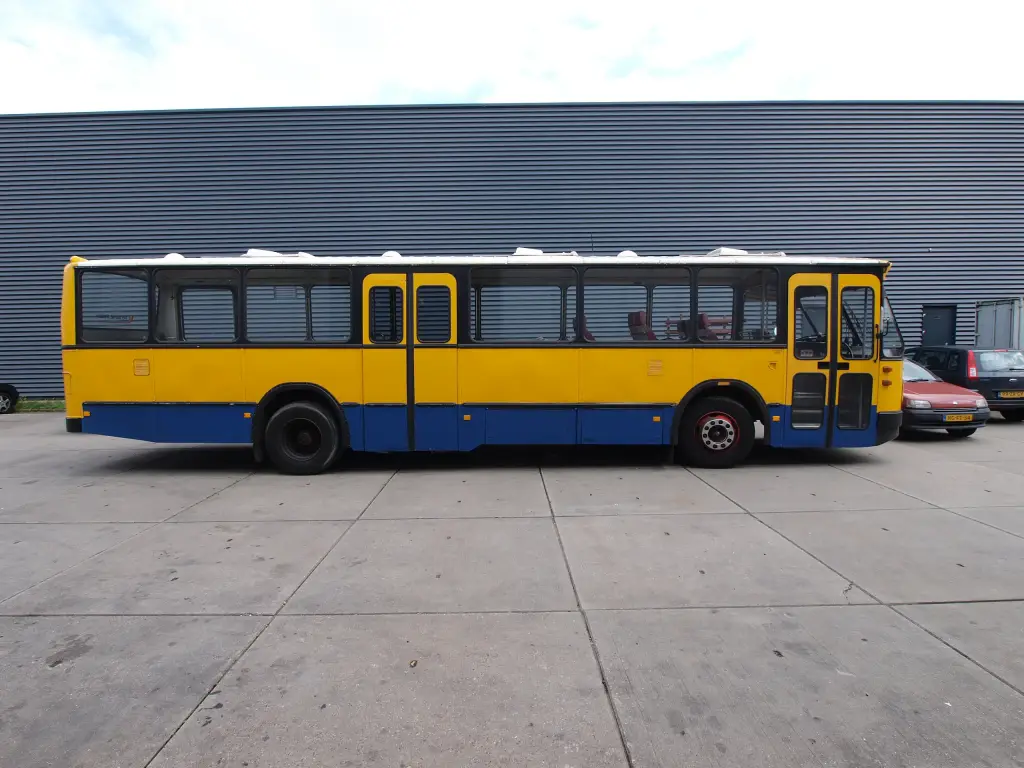
DAF developed the MB200 in 1965 to replace the TB160 chassis of 1958. The decisive change was the engine: instead of standing upright at the front, it lay flat under the floor between the front and rear axles. That gave a better weight distribution than the TB160 and freed space for the body, which made the chassis attractive to coachbuilders across Europe.
Dutch standard buses and British coaches
In 1969 a regional bus chassis was developed on the MB200 underframe for the Dutch standard buses bodied by Den Oudsten of Woerden and Hainje of Heerenveen. The original DAF DO diesel, a licence-built version of the widely used Leyland O680, was replaced by the 11.6-litre DAF DKDL1160. The chassis was at first delivered mainly to the subsidiaries of the Dutch railways with a Wilson GB340 semi-automatic gearbox and fluid coupling; at other operators such as GTW the Wilson coupling had an electric transmission. A three-speed ZF semi-automatic was also available, and later fully automatic gearboxes from Allison or ZF. British operators bought the chassis for coaches too, at a time when vehicles built on the European continent were still fairly rare in the United Kingdom: the first of more than 600 arrived there in 1975.
Lengths and the articulated version
Several chassis were offered. Twelve-metre buses had a wheelbase of 6.00 m or 5.64 m, the shorter one allowing a wider entrance door, and there was a shorter 10.5-metre version with a 5.00 m wheelbase. In 1982 an articulated bus joined the range as the MBG200: 18 metres long, with a turbocharged 11.6-litre engine of 252 hp. A standard MB200 was 11.85 m long, 2.5 m wide and 3.2 m high, weighed 9,920 kg and could carry 16,560 kg, with a 250-litre fuel tank; the articulated version weighed 14,844 kg and had a 340-litre tank. In 1988 the chassis was replaced by the SB220, with the engine at the back for city and regional buses and also available as an articulated bus, and by the MB230 with a mid-mounted engine for regional service and coaching. Both stayed in production until 1993.
Design and features
- Underfloor engine: better weight distribution and more space for the body.
- 11.6-litre DAF diesel: the DKDL1160 with 170 hp in the standard bus.
- Many bodies: Dutch standard buses, British coaches and bodies from other countries.
- MBG200: an articulated 18-metre version from 1982 with 252 hp.
DAF MB200 versions
- MB200 standard: the 11.85 m chassis on a 6.00 m or 5.64 m wheelbase.
- Short MB200: 10.5 m long with a 5.00 m wheelbase.
- Regional chassis: the 1969 version for Dutch standard buses.
- MBG200: the articulated bus of 1982.
The MB200 was replaced by the DAF SB220 and the MB230, and the heavy truck engines of the period are described in the DAF F241 article. More models are in the DAF collection.
Sources
- DAF MB200, English Wikipedia: engine, gearbox, British imports, successors
- DAF MB200, Dutch Wikipedia: development, standard buses, dimensions