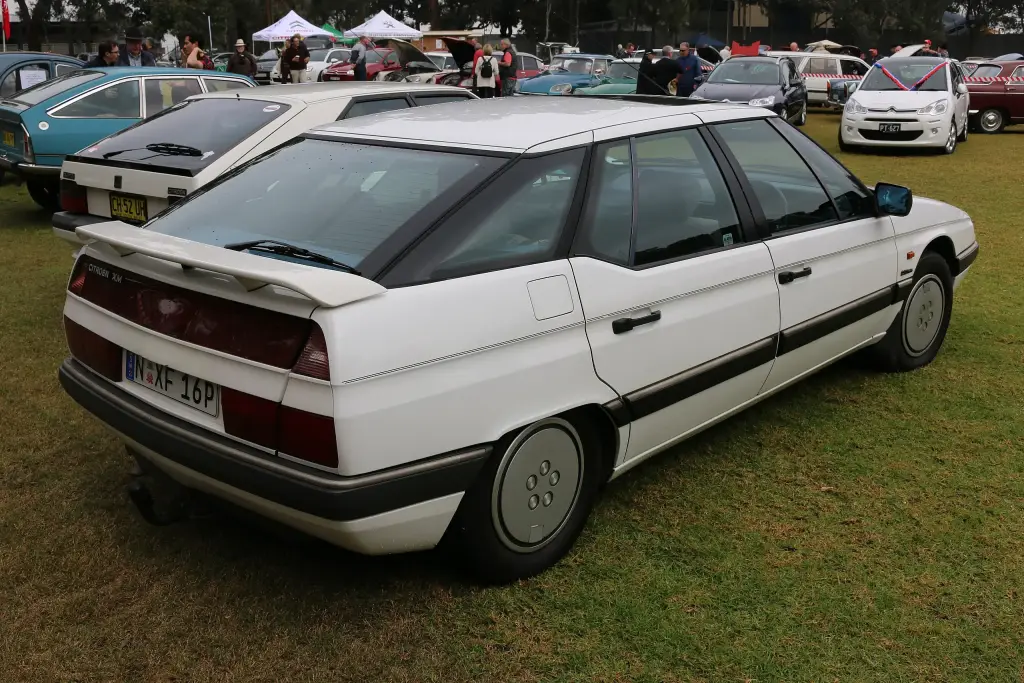
The Citroën XM is an executive car built and marketed from 1989 to 2000. It was voted European Car of the Year for 1990 for its design and technological innovation, and it was the first production car in the world with electronically controlled hydropneumatic suspension.
Citroën XM at a glance
| Maker | Citroën, France |
|---|---|
| Production | 1989–2000 |
| Launched | 23 May 1989 |
| Built | 333,405, of which 31,035 Heuliez-built Breaks |
| Award | European Car of the Year 1990 |
| First | electronically controlled hydropneumatic suspension |
| Body | partially galvanised shell, large rear hatch |
| Platform | shared with the Peugeot 605 |
| Engines | including a 3.0-litre V6 |
| Facelift | 1994 |
| Replaced by | Citroën C6 (launched at the end of 2005) |
Based on one source (English Wikipedia).
History of the Citroën XM
1989: a new flagship
The XM was launched on 23 May 1989 as the company’s flagship saloon, replacing the Citroën CX, and went on sale in France immediately, reaching Britain in right-hand drive from October 1989. The CX Break and Familiale stayed in production until the spring of 1991, when the XM Estate arrived. The new car had electronic management of its suspension, a partially galvanised body shell and the option of a 3.0-litre V6, and it shared its floorpan with the Peugeot 605. Rear passengers sat higher than those in front for a better view, and to improve comfort when the large rear hatch was open some cars had an additional interior rear window.
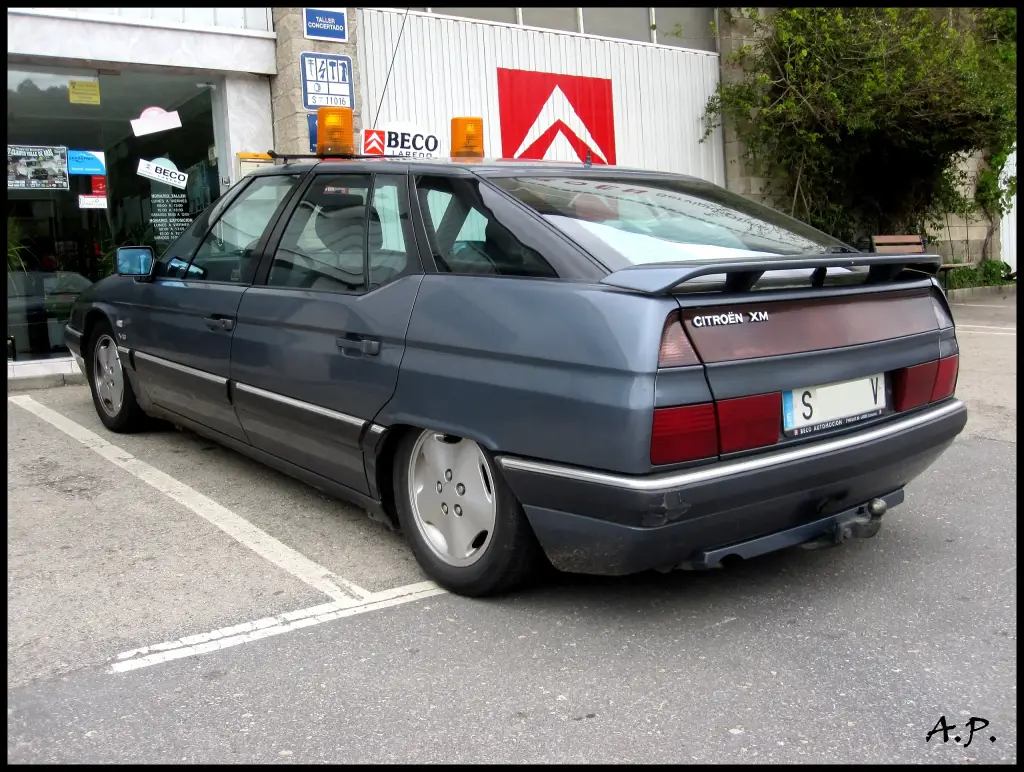
The award and the expectations
The XM was meant to compete with the Mercedes-Benz W124, Audi 100 and BMW 5 Series in a sector worth 14.2% of the European market, and with mainstream rivals such as the Ford Scorpio and Opel Omega; Citroën said the car was supposed to “take what Citroën means and make it acceptable”. Six months after its launch it won European Car of the Year for 1990, with almost twice as many votes as the second-placed Mercedes-Benz SL, and went on to win 14 more major awards within a year.
Why it never sold as planned
The hoped-for 450 cars a day, or 160,000 a year, never materialised. Like the CX, the XM lacked the worldwide distribution of its German rivals, and it arrived only a year before a major global recession: British registrations fell from more than 2.3 million in 1989 to less than 1.6 million in 1991. The market for executive cars from volume manufacturers was itself in decline as buyers moved to prestige brands and put speed and handling ahead of the ride comfort Citroën specialised in. The XM was also underdeveloped at launch, with reliability problems, and its controversial styling alienated buyers who wanted a conventional three-box saloon; the least expensive XM was nearly 50% dearer at launch than the equivalent CX. In Japan it was sold through Mazda’s Eunos chain and later by Citroën’s traditional importer Seibu Motor.
The end and the name
Production ended in 2000 after 333,405 cars in 11 years, 31,035 of them Heuliez-built Breaks, following a facelift in 1994. The replacement, the Citroën C6, did not arrive until the end of 2005. In 2021 Citroën ceded use of the XM name to BMW for its BMW XM SUV.
Design and features
- Electronic hydropneumatics: the first production car in the world with computer-controlled suspension.
- 1990 Car of the Year: won with almost twice the votes of the Mercedes-Benz SL.
- Raised rear seats: a theatre-style layout, with an extra interior rear window on some cars.
- Peugeot 605 floorpan: shared with its PSA sister model.
- Estate by Heuliez: 31,035 of the 333,405 cars built.
Citroën XM versions
- XM saloon (1989): the hatchback flagship.
- XM Estate / Break (1991): built by Heuliez.
- XM V6: the 3.0-litre version.
- 1994 facelift: the updated range.
The XM replaced the CX and was replaced by the C6; its smaller relative is the Xantia. More cars are in the Citroën collection.
Video: Citroen XM Y4
Video by Bidone1967 on YouTube.
Sources
- Citroën XM, English Wikipedia: launch, technology, award, market, production