The Citroën Type A was produced from June 1919 to December 1921 in Paris, and it was the first car Citroën ever made. A total of 24,093 were built.
Citroën Type A at a glance
| Maker | Citroën, Quai de Javel, Paris |
|---|---|
| Production | June 1919–December 1921 |
| Built | 24,093 |
| Designation | 10 HP Type A |
| Engine | water-cooled 1,327 cc four, 18 hp |
| Top speed | 65 km/h |
| Suspension | inverted quarter-elliptic springs front, double quarter-elliptics rear |
| Brakes | rear wheels only, by hand lever, plus a transmission brake on a pedal |
| Wheelbase | 2,550 mm on the short chassis |
| Price | 7,950 francs in the first year, 12,500 a year later |
| Output | 100 cars a day, the first mass-producer in Europe |
Based on one source (English Wikipedia).
History of the Citroën Type A
From shells to cars
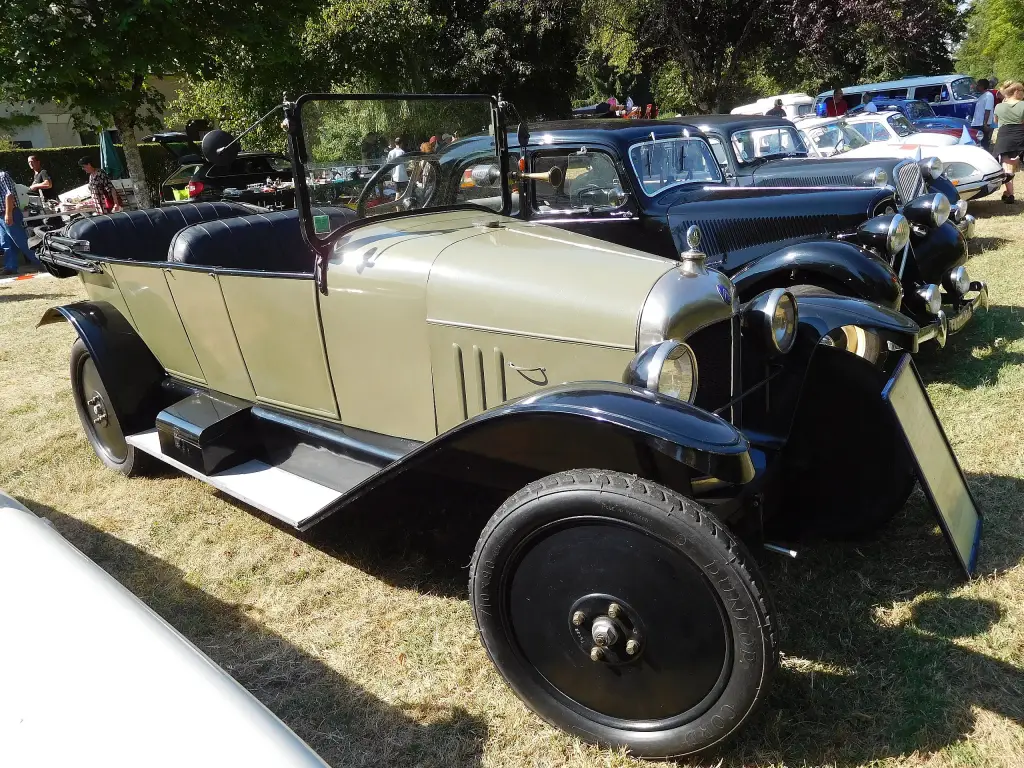
During the First World War André Citroën was producing ammunition, but as early as 1917 he was investigating a light car of the medium range, developed under the direction of Jules Salomon. The result, designated the 10 HP Type A, had a water-cooled 1,327 cc four-cylinder engine of 18 hp and a maximum speed of 65 km/h. The chassis had inverted quarter-elliptic springs at the front and double quarter-elliptics at the rear, and braking was on the rear wheels only, by hand lever, with a foot pedal working a transmission brake.
Two chassis and many bodies
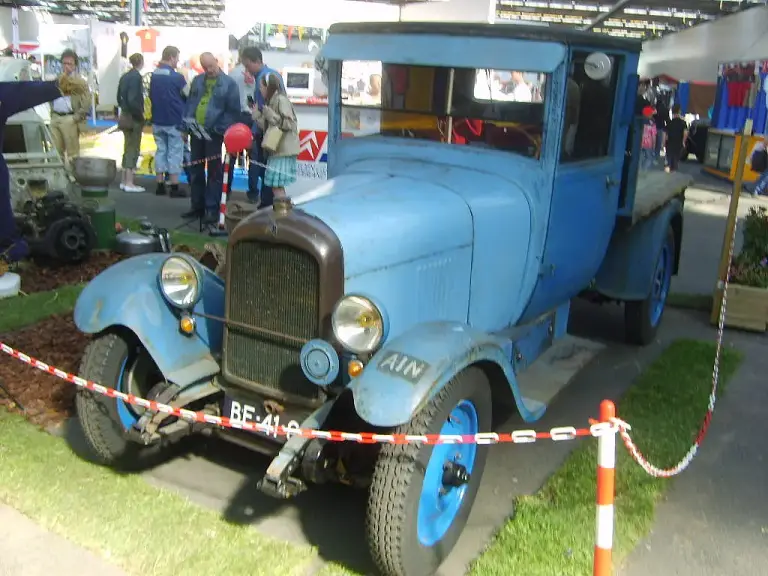
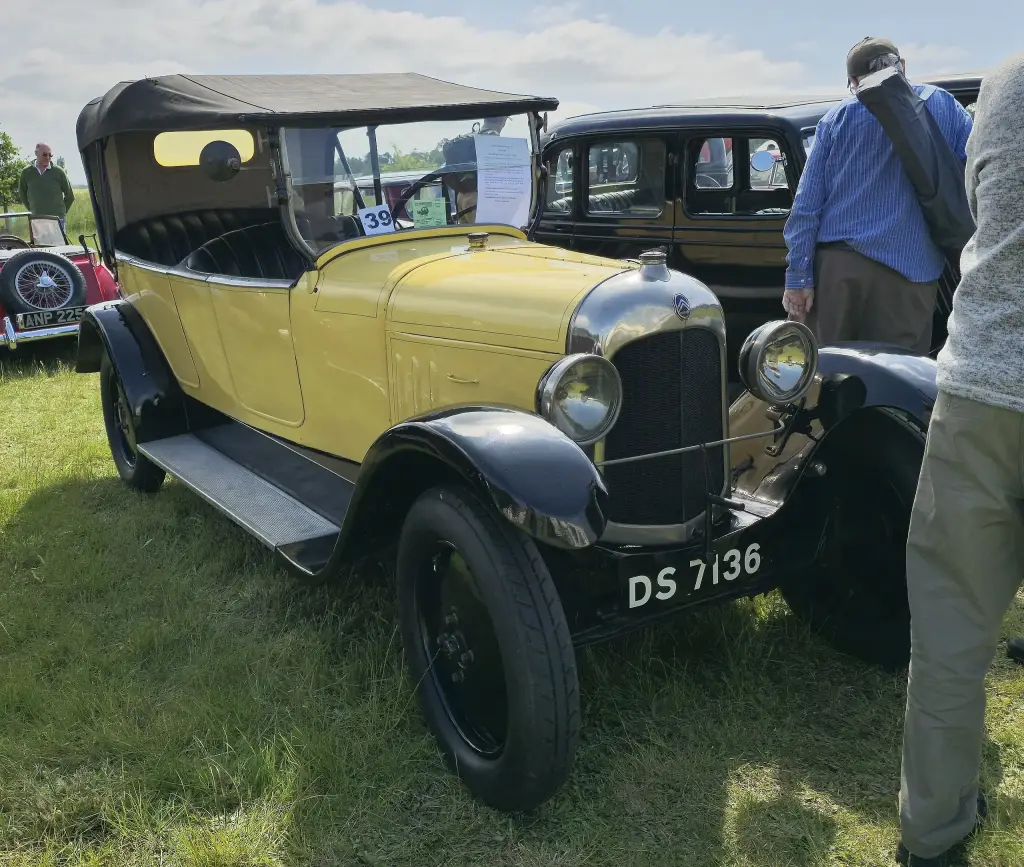
The chassis came in two lengths and could carry a variety of coachwork. The long chassis was available as a Torpedo four-seat tourer, a Torpedo Sport, a Conduite Intérieure, a Coupé de Ville and a light truck; the short chassis as a three-seat Torpedo, a Conduite Intérieure, a Coupé de Ville and a camionette van. The short 2,550 mm wheelbase was available only on demand until the start of 1920, after which the option was withdrawn to maximise standardisation and the cost benefits that came with it.
The chevrons and the price
The final drive used a bevel gear with herringbone teeth, whose shape inspired the Citroën double chevron logo. In its first year the standard Type A cost 7,950 francs; a year later the price had risen to 12,500. After a slightly hesitant start in 1919, sales took off in 1920, when more than 20,000 cars left the factory in a single year; with a production rate of 100 vehicles a day, Citroën became the first mass-production car maker in Europe. The car was rated at 10 CV fiscally and advertised as 10 HP.
Design and features
- First Citroën: the car that started the marque in 1919.
- 1,327 cc four: 18 hp and 65 km/h, with a three-speed gearbox.
- Herringbone final drive: the shape behind Citroën’s double chevron badge.
- Two chassis lengths: long for tourers and trucks, short for the small bodies.
- Mass production: 100 cars a day by 1920.
Citroën Type A versions
- Torpedo: four-seat tourer on the long chassis.
- Torpedo Sport: the sporting version.
- Conduite Intérieure and Coupé de Ville: closed bodies.
- Camionette: the van on the short chassis.
- Light truck: commercial body on the long chassis.
The Type A was followed by the Type B2 and the small Type C 5HP. More cars are in the Citroën collection.
Video: Citroen Type A 1919 – 1921
Video by Peter Olerhead on YouTube.
Sources
- Citroën Type A, English Wikipedia: origins, engineering, bodies, price, production