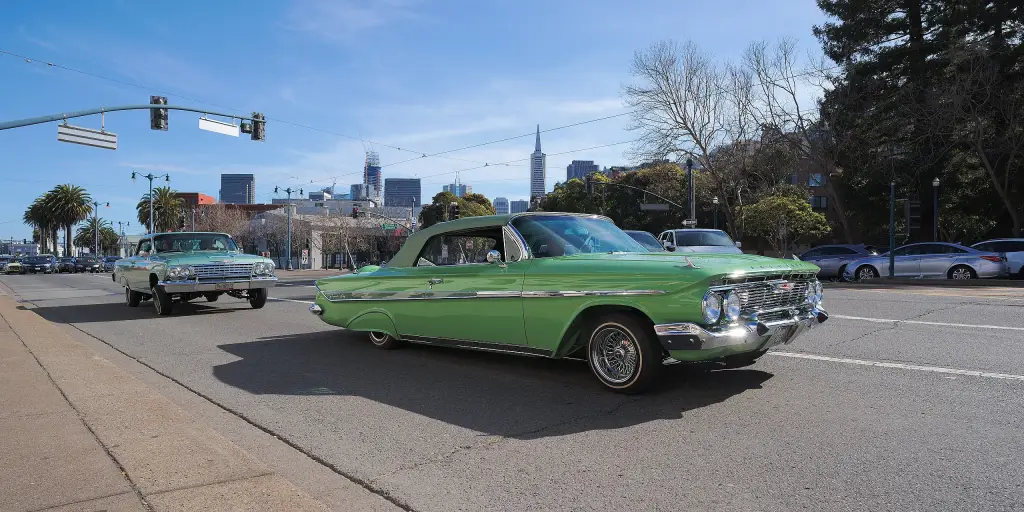
The Chevrolet Impala was Chevrolet’s flagship passenger car for most of its life. Introduced for 1958 as the top of the Bel Air range, it was built in ten generations until 2020, with a break between 1985 and 1994 and another between 1996 and 2000.
Chevrolet Impala at a glance
| Production | 1958–1985, 1994–1996, 2000–2020 |
|---|---|
| Class | Full-size car |
| Position | Chevrolet’s flagship, above the Bel Air and Biscayne |
| First model | 1958 Bel Air Impala hardtop and convertible |
| 1958 output | 125,480 coupés and 55,989 convertibles |
| 1958 engines | 283 cu in V8, and the new 348 cu in big-block |
| Tail lights | three per side, against two on lesser models |
| 1994–1996 | Caprice-based sedan with a 5.7-litre V8 |
| 2000 revival | front-wheel-drive family sedan |
| Last generation | tenth, from 2014 |
History of the Chevrolet Impala
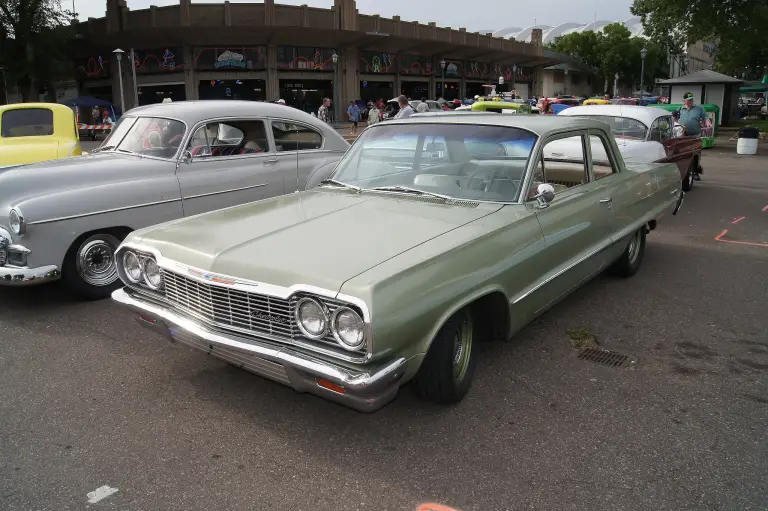
The Impala name was first used on a 1956 General Motors Motorama show car with Corvette-like styling, named after the African antelope whose image became the car’s logo. The production car arrived for 1958 as the top of the Bel Air line, sold as a two-door hardtop and a convertible; the Bel Air badges were left off the car, its literature and its advertising. From the windscreen pillar back the 1958 car differed from cheaper Chevrolets, with a shorter greenhouse, a longer rear deck and a longer wheelbase for the same overall length. It had three tail lights on each side where lesser models had two and wagons had one, plus crossed-flag insignia and dummy rear-fender scoops.
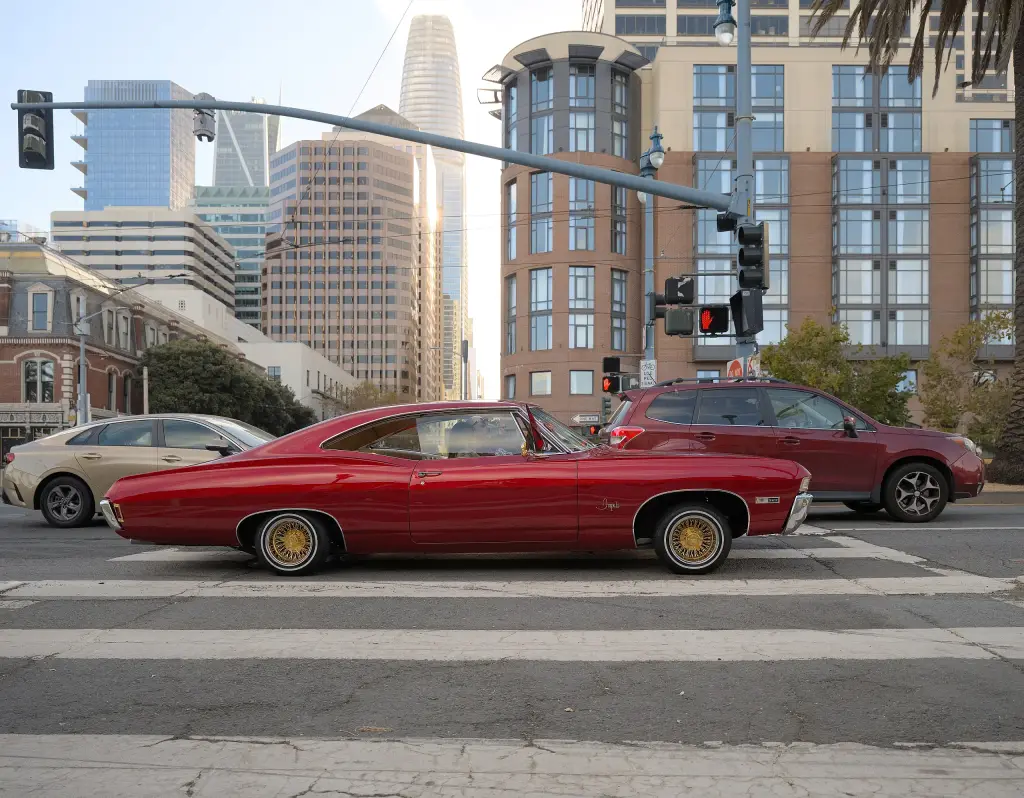
The 1958 Impala introduced several engineering changes: a new X-shaped frame in place of the perimeter frame, coil springs at the rear instead of leaf springs, optional air suspension and dual headlamps across the range. The standard engine was the 283 cu in V8 with up to 250 hp using Rochester Ramjet fuel injection, and Chevrolet’s first big-block, the 348 cu in V8, was optional with 250 or 280 hp. In that recession year 125,480 coupés and 55,989 convertibles were built, about 15 percent of Chevrolet production, and the Bel Air Impala helped Chevrolet return to first place in American sales.
The Impala stayed at the top of the range until the Caprice was created above it in 1966, and remained Chevrolet’s most popular full-size model into the mid-1980s. It returned briefly from 1994 to 1996 as a V8 version of the Caprice Classic sedan, and again in 2000 as a front-wheel-drive family car. The tenth generation of 2014 was rated first among affordable large cars by US News & World Report that year, and the ninth generation was kept on as the Impala Limited for fleet buyers until 2016. The last Impala was built in 2020.
Design and features
- Triple tail lights: the Impala’s mark from 1958, against two on cheaper models.
- 1958 engineering: X-frame, coil rear springs and optional air suspension.
- Big-block debut: the 348 cu in V8 was Chevrolet’s first big-block and an Impala option.
- Ten generations: rear-wheel-drive flagship, then front-wheel-drive family sedan.
Chevrolet Impala versions
- 1958 first generation: the Bel Air Impala hardtop and convertible.
- 1960s Impalas: the full range of sedans, coupés, convertibles and wagons.
- 1994–1996 Impala SS: the Caprice-based V8 sedan.
- 2000–2020: the front-wheel-drive Impala and Impala Limited.
The Impala sat above the Chevrolet Bel Air and Chevrolet Biscayne and below the Chevrolet Caprice. More cars are in the Chevrolet collection.
Video: 2014 Chevrolet Impala review
Video by UsedCarsTV on YouTube.
Sources
- Chevrolet Impala, English Wikipedia: introduction, 1958 model, generations, revival