The Caterpillar D5 is a small track-type bulldozer with an unusual history: the original series was built for a single year, 1939, and the name was brought back in 1967 and has stayed in the range ever since.
Caterpillar D5 at a glance
| Type | small track-type bulldozer |
|---|---|
| First series | 1939 (9M), 46 machines |
| Origin of the first D5 | D4 chassis with the six-cylinder D6 engine of 45 hp (34 kW) |
| Reintroduced | 1967 |
| D5B | 1977 |
| D5H | 1985, the first elevated sprocket D5 |
| D5G | 2001, hydrostatic drive |
| D5K | gross 74.5 kW (100 hp), net 71.6 kW (96 hp), bore 105 mm |
| D5K weight | about 15,000 kg (33,000 lb) |
| D5K XL and LGP | 9,408 kg and 9,683 kg operating weight |
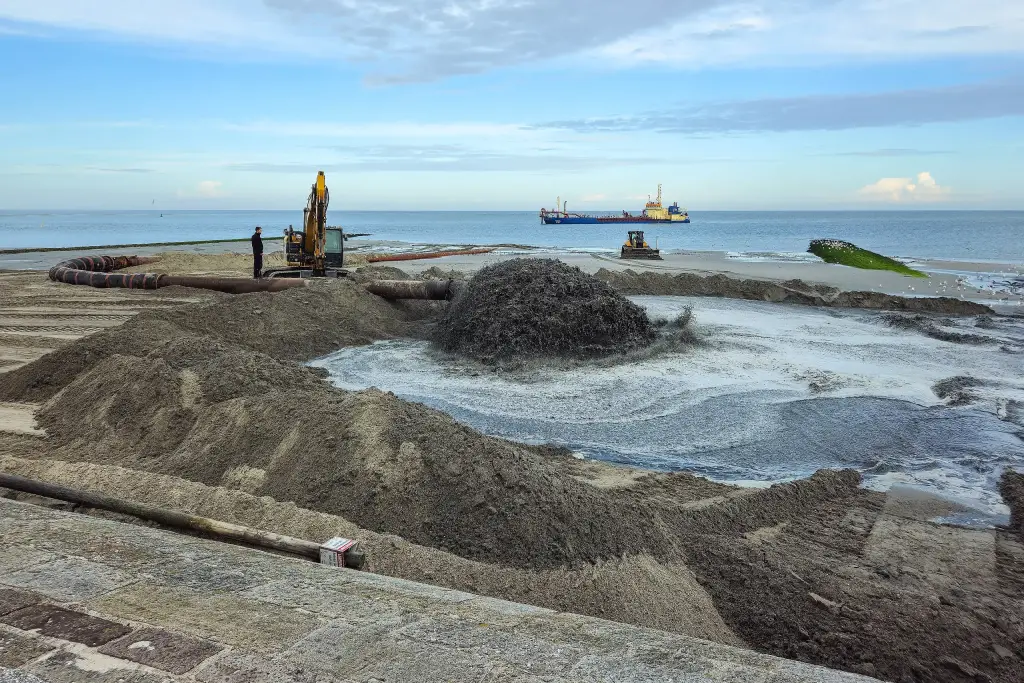
The photograph shows a Caterpillar dozer on beach nourishment work and does not identify the model.
History of the Caterpillar D5
The 46 machines of 1939
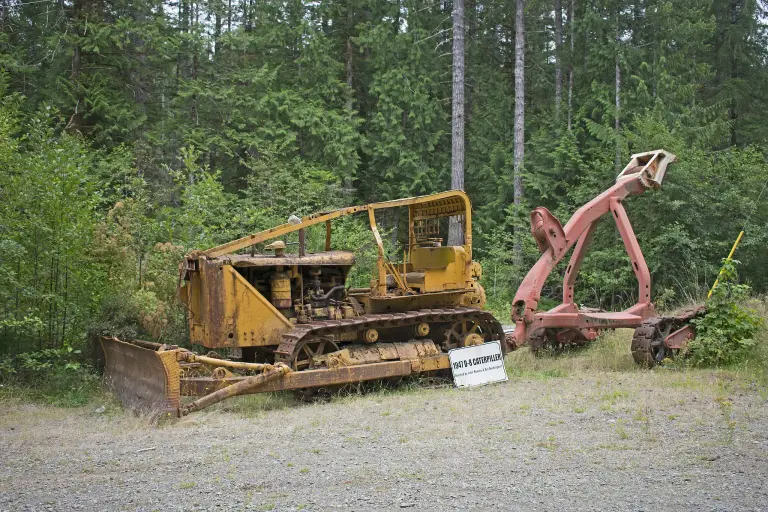
The original D5 series was built only in 1939. It was a cross between the D4 chassis and the six-cylinder 45 horsepower (34 kW) D4600 engine of the D6, and just 46 were made under the 9M designation. The name then disappeared for nearly thirty years.
From 1967 to the D5G
The D5 returned in 1967 and was followed by the D5B in 1977 and the D5H in 1985, the first D5 with an elevated sprocket; a low ground pressure version, the D5H LGP, ran on wide and long tracks for soft ground. The D5E came in 1993 and stayed until 1999, and the D5M and D5N carried the larger elevated-sprocket line to 2006. A second family grew out of Caterpillar’s partnership with Mitsubishi Heavy Industries: the D5C of 1992–2002 was a smaller low-drive machine, and the D5G of 2001 brought hydrostatic drive.
The D5K
The D5K is quoted with a gross power of 74.5 kW (100 hp) and a net 71.6 kW (96 hp), a bore of 105 mm and a weight of about 15,000 kg (33,000 lb). Its XL version has an operating weight of 9,408 kg and the LGP 9,683 kg. Over the years Caterpillar often built different D5s at the same time, a lighter one closer to the D3 and D4 and a heavier one closer to the D6, which is why the letter in the name does not always follow the order of introduction.
Design and features
- Two beginnings: 46 machines in 1939 and a fresh start in 1967.
- Elevated sprocket: introduced on the D5H of 1985.
- Hydrostatic drive: the D5G of 2001, from the Mitsubishi partnership line.
- D5K: 100 hp gross, about 15 tonnes, in XL and LGP forms.
Caterpillar D5 versions
- D5 (1939): the original 9M series, 46 built.
- D5, D5B and D5H (1967–85): the reintroduced line and its first two successors.
- D5H LGP: low ground pressure version with wide, long tracks.
- D5E, D5M and D5N: the models between 1993 and 2006.
- D5C and D5G: the smaller Mitsubishi-derived line, hydrostatic from 2001.
- D5K: the 100 hp machine specified above.
The D5 is the small bulldozer below the Caterpillar D6 and above the Caterpillar D4; more machines are in the Caterpillar collection.
Video: CATERPILLAR D5 bulldozer
Video by Linemedia on YouTube.
Sources
- Caterpillar D5, English Wikipedia: 1939 series, reintroduction, version list, D5K specifications