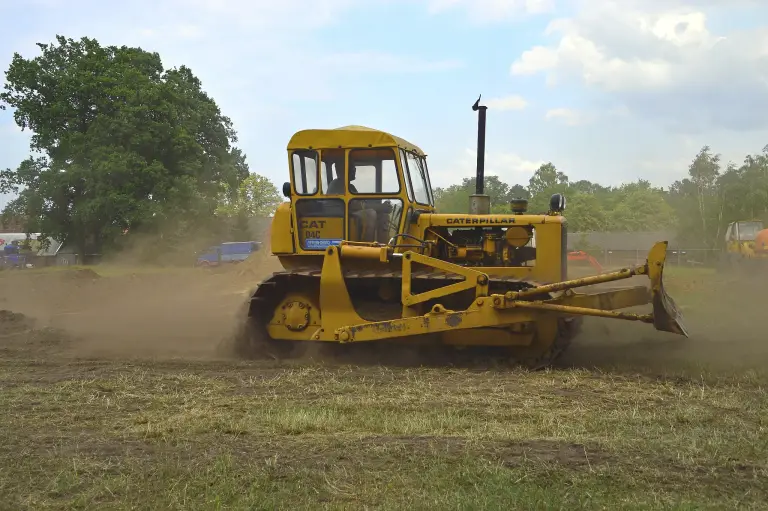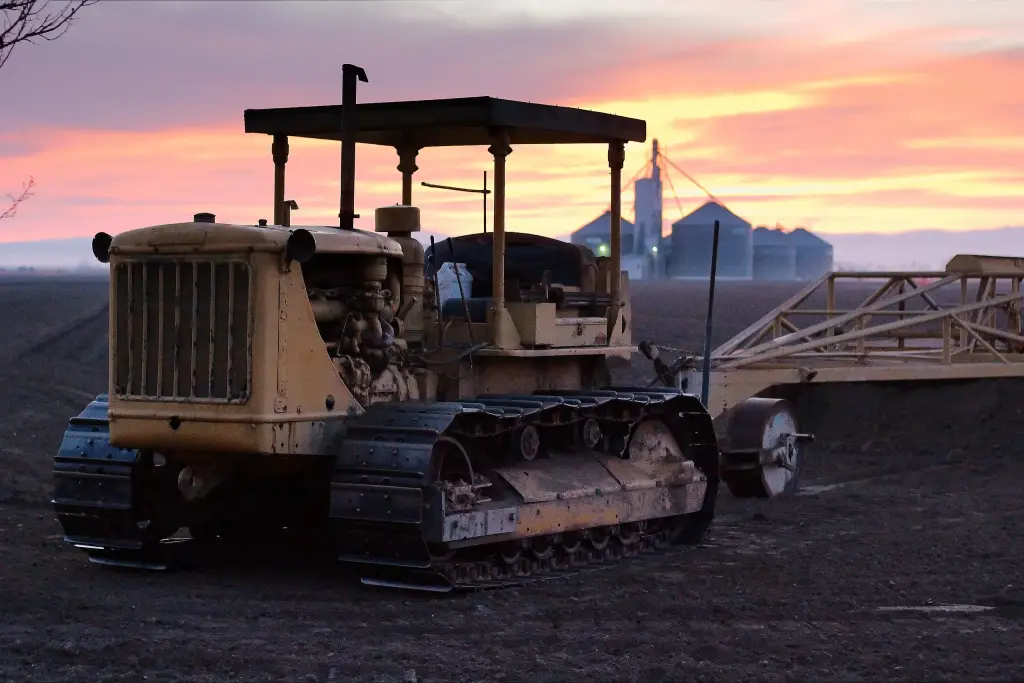
The Caterpillar D7 is a medium track-type tractor, most commonly sold as a bulldozer. It was first manufactured in 1938 and has been developed through a long series of versions, including the diesel-electric D7E of 2009 that replaced the transmission with a generator and two electric motors.
Caterpillar D7 at a glance
| Type | medium track-type tractor, usually a bulldozer |
|---|---|
| First built | 1938 |
| D7C | 1955 |
| D7D | 1959 |
| D7E (1961) | 160 hp (120 kW) |
| D7F | 1969, 180 hp (130 kW) |
| D7G | 1974, 200 hp (150 kW) |
| D7H | 1986, 215 hp (160 kW), first D7 with an elevated drive sprocket |
| D7R | 1996, followed by the D7R Series 2 of 240 hp (180 kW) |
| D7E (2009) | 235 hp (175 kW) diesel-electric with a C9.3 engine |
| Current D7 | high drive returned in 2020, without a letter |
| Place in the range | between the D3 of 77 hp and the D11 of 935 hp |
History of the Caterpillar D7
From 1938 to the D7G
The D7 was first manufactured in 1938. A series of improved models followed: the D7C in 1955, the D7D in 1959, the 160 hp (120 kW) D7E in 1961, the 180 hp (130 kW) D7F in 1969 and the 200 hp (150 kW) D7G in 1974. In 1986 the 215 hp (160 kW) D7H became the first D7 with Caterpillar’s elevated drive sprocket undercarriage, and the D7R replaced it in 1996, followed by the D7R Series 2.
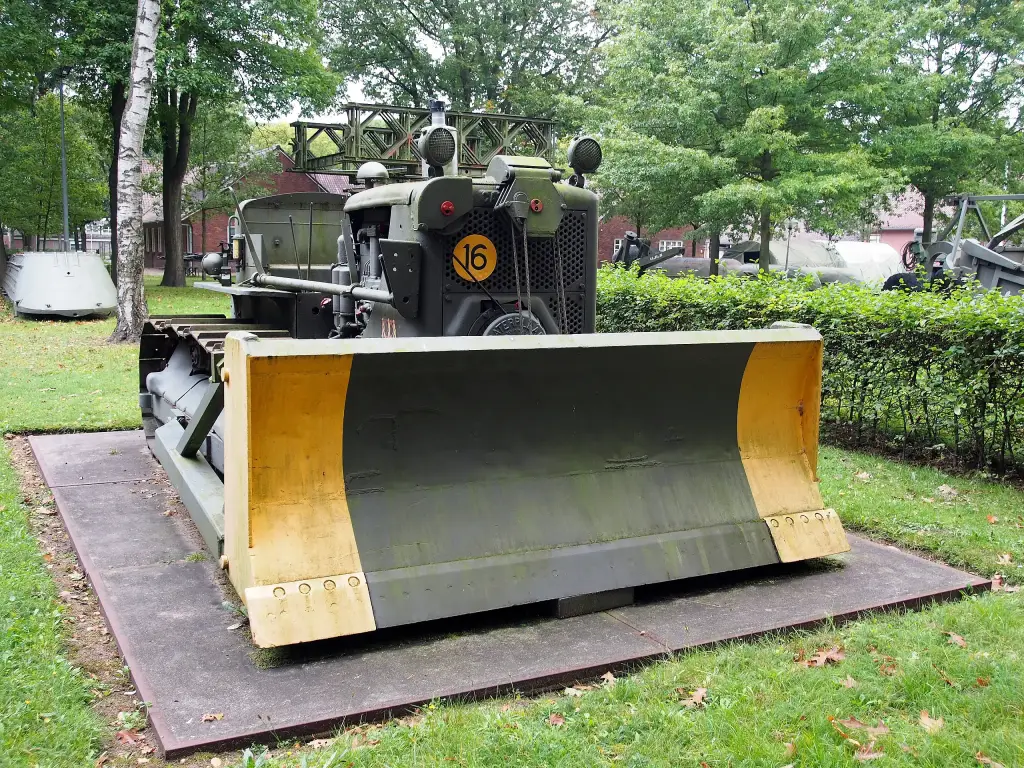
The diesel-electric D7E
At Conexpo in March 2008 Caterpillar introduced the D7E, a 235 hp (175 kW) machine with a diesel-electric drive: a 537 cubic inch C9.3 diesel turns a generator that supplies two AC drive motors. Compared with the D7R Series II it was projected to move 25 percent more material per gallon of fuel, with 10 percent greater productivity and 10 percent lower lifetime operating costs. The D7E returned to a traditional flat-track layout for that iteration only; the high-drive design came back in 2020 with the D7, which dropped the generational letter under Caterpillar’s new naming system.
In service
The D7R Series II, at 240 hp and about 20 tonnes, sits in the middle of a range that runs from the D3 of 77 hp and 8 short tons to the D11 of 935 hp and 124 short tons. An agricultural version without blade or rippers is common on farms. Specially modified D7Es with Rome plows cleared forest in the Vietnam War, the US Army used armoured D7Gs, with armour developed by Israel Military Industries, to clear minefields and unarmoured D7G and D7H machines for earthworks, and later developed a remote-controlled D7G for mine clearing. The US Marine Corps replaced its D7Gs with John Deere 850J MCT tractors in 2009, and the Egyptian Army operates an unknown number of armoured D7R II machines.
Design and features
- Long line: in production since 1938 in more than a dozen versions.
- Elevated sprocket: from the D7H of 1986.
- Diesel-electric D7E: C9.3 engine, a generator and two AC motors instead of a gearbox.
- Military use: armoured D7G and D7H tractors, mine plows and a remote-controlled D7G.
Caterpillar D7 versions
- D7C, D7D, D7E, D7F and D7G (1955–74): the classic line from 160 to 200 hp.
- D7H (1986): the first with an elevated drive sprocket, 215 hp.
- D7R and D7R Series 2 (1996 onwards): up to 240 hp.
- D7E (2009): the diesel-electric machine of 235 hp.
- D7 (2020): the current high-drive model without a letter.
The D7 is the medium tractor between the Caterpillar D6 and the Caterpillar D8; more machines are in the Caterpillar collection.
Video: Caterpillar D7 E Series 1964 at work
Video by Tji Muhonen on YouTube.
Sources
- Caterpillar D7, English Wikipedia: version history, D7E diesel-electric drive, military use, blades, size range