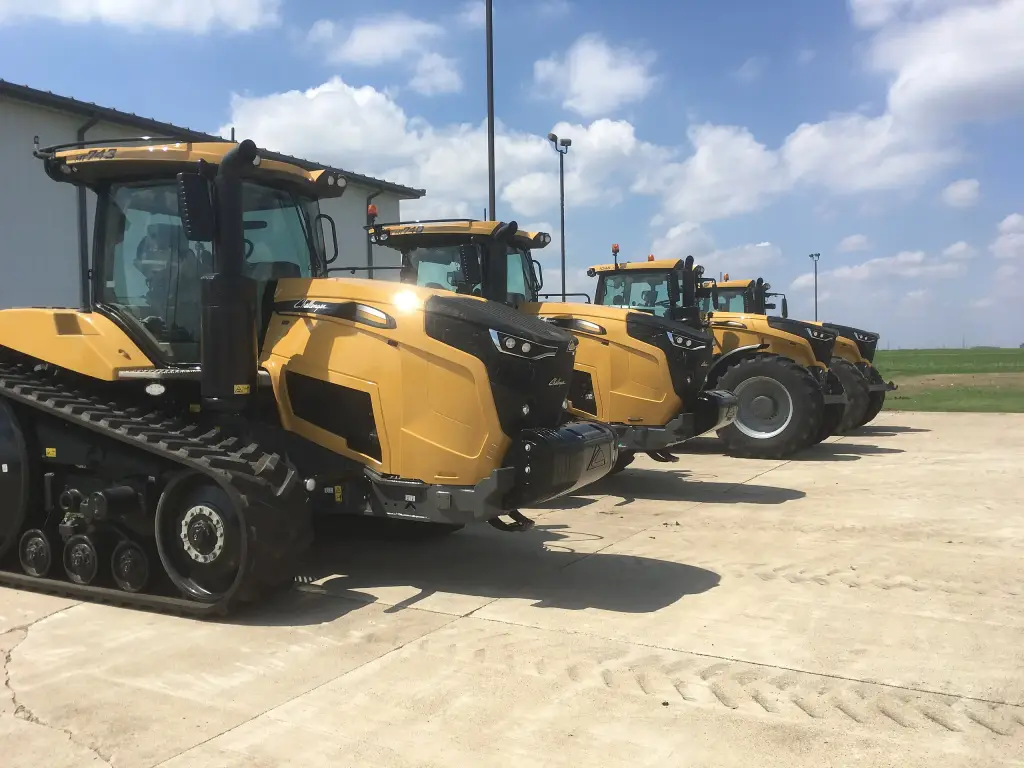
Challenger is an American brand of agricultural tractors created by Caterpillar Inc. in 1986. Its first machine, the Challenger 65, ran on rubber tracks and brought the flotation of tracks to farm work; the brand passed to AGCO in 2002 and its production ended in 2024.
Caterpillar Challenger at a glance
| Brand created | 1986, by Caterpillar Inc. |
|---|---|
| First model | Challenger 65, 270 gross hp (200 kW) |
| Running gear | Mobile-Trac System: rubber tracks and suspension |
| Row crop models | Challenger 35, 45 and 55, introduced in 1995 |
| Built at | Dekalb, Illinois, while owned by Caterpillar |
| Sold to AGCO | 2002 |
| Since 2002 built at | Jackson, Minnesota |
| Most powerful | Challenger MT875B, 430 kW (580 hp) gross |
| Production ended | 2024 |
| Machine in the film | Challenger MT865C |
The English Wikipedia page covers the Challenger brand as a whole, including the years after 2002 when it belonged to AGCO; the farm tractors are the subject here rather than Caterpillar’s construction machines.
History of the Caterpillar Challenger
The Challenger 65
The original model was the Challenger 65, which used the Mobile-Trac System: rubber tracks with a suspension, combining the flotation and traction of steel tracks with the versatility of rubber tyres. Caterpillar marketed it as the world’s first rubber-tracked agricultural tractor, although a company using surplus military equipment had built rubber-tracked tank tractors before. The 65 was a 270 gross hp (200 kW) machine, used mainly for heavy tillage, and it was built at Caterpillar’s Dekalb, Illinois plant.
Row crop and the 65B
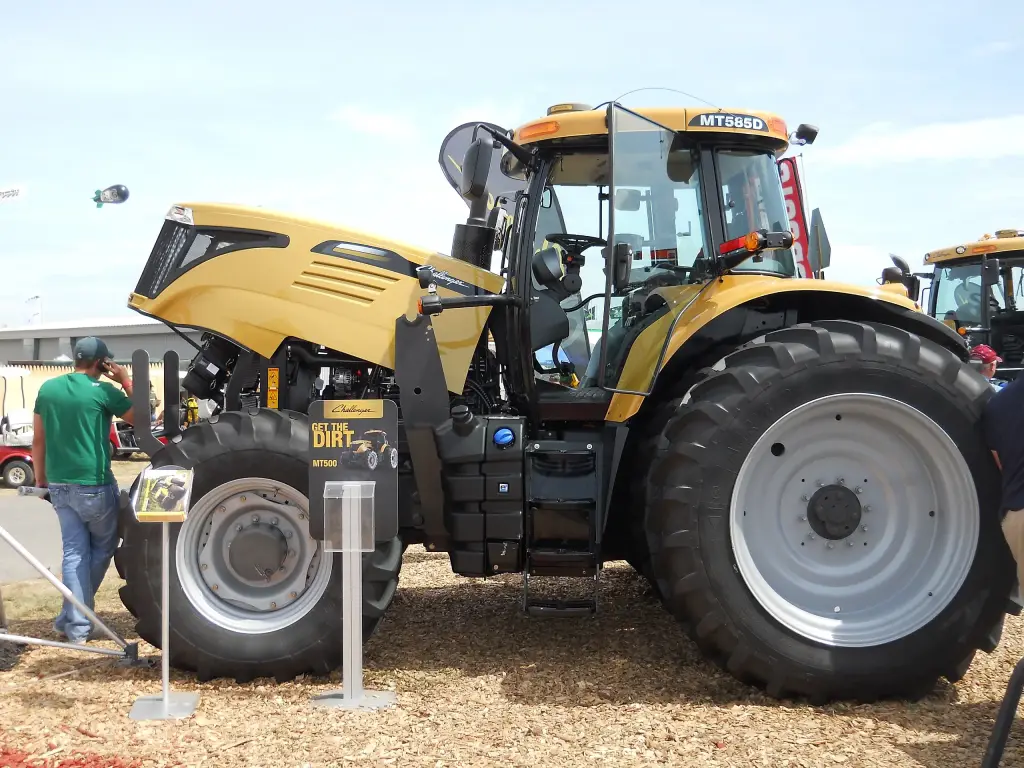
In 1995 Caterpillar added the first row crop tracked machines, the Challenger 35, 45 and 55, of 130 to 168 kW at the PTO, for jobs the larger tractors could not do. In the late 1990s came the Challenger 65B, an upgraded 65 that kept most of the original specification but brought improvements that raised reliability.
AGCO years
Caterpillar sold the Challenger name and its agricultural assets to AGCO in 2002, and since then the tractors have been built at Jackson, Minnesota; at the time most Challenger dealers were also Caterpillar construction equipment dealers. The Caterpillar Challenger MT875B, at 430 kW (580 hp) gross, was the most powerful production tractor of its time, and in 2007 it tilled 644 hectares in 24 hours with a 14 m disc harrow, using 4.42 litres of diesel per hectare. With the D series AGCO moved to its own AGCO Power engines, meeting Tier 4i/Stage 3B with urea-based selective catalytic reduction. By 2023 only the tracked 700 and 800 series were still built; AGCO phased the brand out from 2020 and production ended in 2024.
Design and features
- Rubber tracks: the Mobile-Trac System of tracks and suspension that started the brand.
- Farm power: 270 gross hp (200 kW) in the first Challenger 65.
- Row crop range: the 35, 45 and 55 of 1995, from 130 to 168 kW at the PTO.
- Record work rate: 644 hectares tilled in 24 hours by an MT875B in 2007.
Caterpillar Challenger versions
- Challenger 65: the original rubber-tracked tractor of 1986.
- Challenger 35, 45 and 55: row crop models introduced in 1995.
- Challenger 65B: an upgraded 65 of the late 1990s.
- MT875B: the 430 kW (580 hp) model that set the 2007 tillage record.
- MT865C: the machine in the film below.
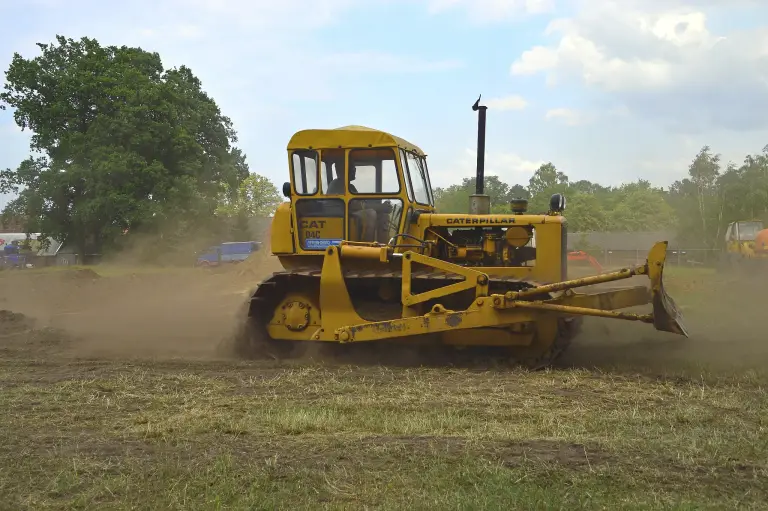
The Challenger line was Caterpillar’s farm branch alongside its earthmoving machines, such as the D6 and the 930G; more of them are in the Caterpillar collection.
Video: Caterpillar Challenger MT865C – 500 hp sound
Video by lesagri51 on YouTube.
Sources
- Challenger Tractor, English Wikipedia: brand history, models, engines, 2007 record, end of production