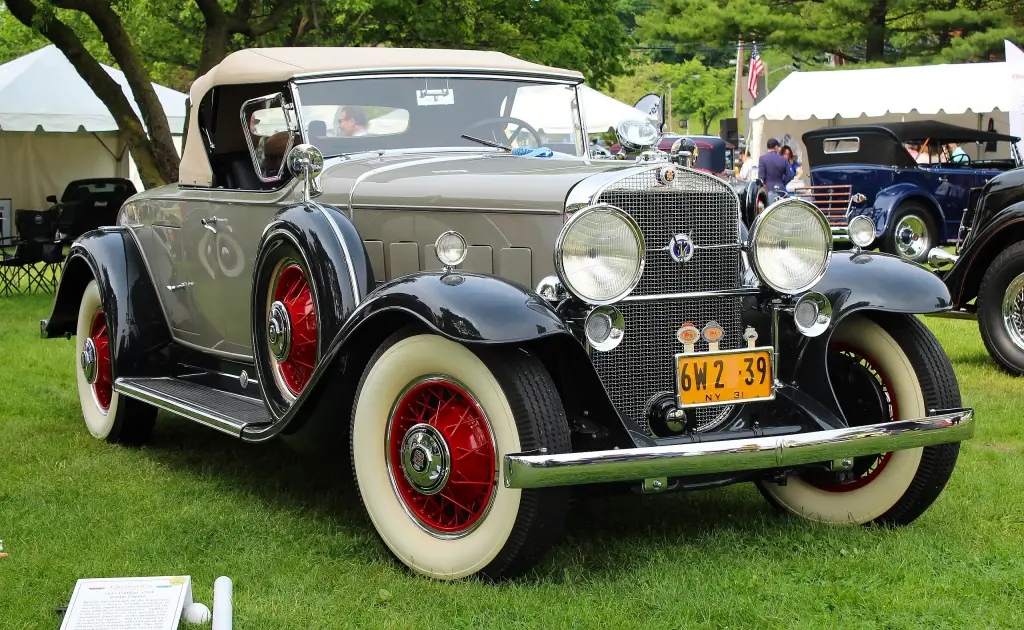
The Cadillac V-12 was a luxury car built from 1930 to 1937, positioned just below the top-of-the-line V-16. It used the Cadillac V12 engine, was furnished with similar custom bodies and was made in relatively small numbers, 10,903 cars in seven model years, most of them in the first year.
Cadillac V-12 at a glance
| Maker | Cadillac, General Motors |
|---|---|
| Production | 1930-1937 |
| Engineer | Owen Nacker, who also designed the V-16 |
| Engine | 45-degree overhead-valve V12 |
| Bore and stroke | 3.125 in bore, 4 in stroke, as on the V-16 |
| Power | 135 hp, against 175 hp for the V-16 |
| Wheelbase | 140 in (3,556 mm) or 143 in (3,632 mm) |
| Price, 1931 | from $3,795, about $2,000 less than a V-16 |
| 1931 sales | 5,733, against 363 V-16s |
| Total built | 10,903 |
| Series names | 370 (1931-1935), 80 and 85 (1936-1937) |
| Distinguishing mark | a figure 12 on the headlight tie bar |
Based on one source: the English Wikipedia article on the V-12.
History of the Cadillac V-12
In the mid and late 1920s luxury makers began work on extravagant multi-cylinder engines, with more cylinders giving smoother power than the straight-eight and V8 units then at the top of the market. Cadillac set out to top them all with a V-16 and derived a V-12 from it, and general manager Larry Fisher even leaked news of the V-12 to the press to keep the V-16 secret. Owen Nacker, who designed the 45-degree overhead-valve V-16, designed the V-12 as essentially a truncated V-16: it kept the four-inch stroke but was bored out from 3 to 3.125 inches. The 45-degree bank angle was less ideal than a 60-degree layout, and the V-12 produced 135 hp against the V-16’s 175.
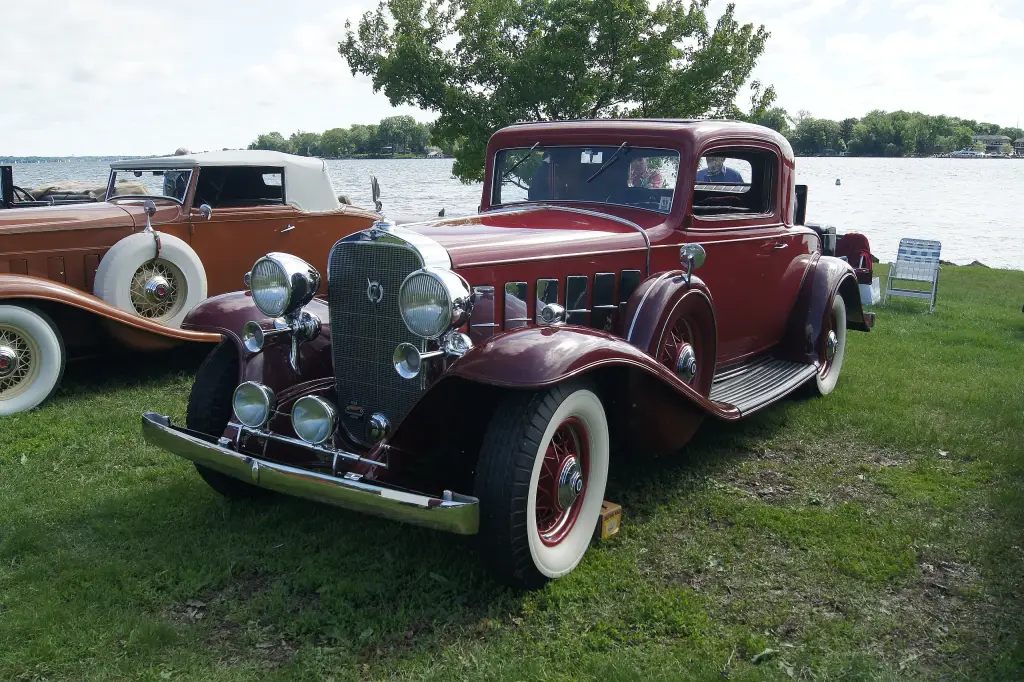
Series 370
The 1931 Model 370A was introduced in October 1930, and a V-12 roadster served as the pace car at the Indianapolis 500. The V-12 had a shorter wheelbase than the V-16, 140 or 143 inches against 148, but a similar choice of Fisher and Fleetwood semi-custom bodies. Only up close, reading the figure 12 on the headlight tie bar, could most people tell it from a V-16, although the hood was four inches shorter and the lights and horns smaller. It cost about $2,000 less, from $3,795, and outsold the V-16 immediately: 5,733 cars in 1931 against 363. The 1932 Series 370B had a flared radiator shell and stiffer frame but sales fell to 1,740 in the Depression, then to 953 in 1933 with the Series 370C. The 1934 Series 370D moved to a new chassis with Knee-Action front suspension and dual X-frame construction, and the 1935 Series 370E added the Fisher Turret Top and 150 hp.
Series 80 and 85
For 1936 the V-12 was renamed the Series 80 and 85, on 131-inch and 138-inch wheelbases, all Fleetwood-bodied with Turret Tops; 901 were sold. In 1937 the Series 80 was dropped, leaving only the long-wheelbase Series 85, which sold 478 cars and was discontinued at the end of the year. Cadillac later built V-12 concepts and racing engines, but the V-12 of 1930-1937 remains its only standard production V-12 automobile.
Design and features
- Truncated V-16: the same stroke and a bigger bore, on the same 45-degree layout.
- V-16 looks for less money: nearly identical bodies, about $2,000 cheaper.
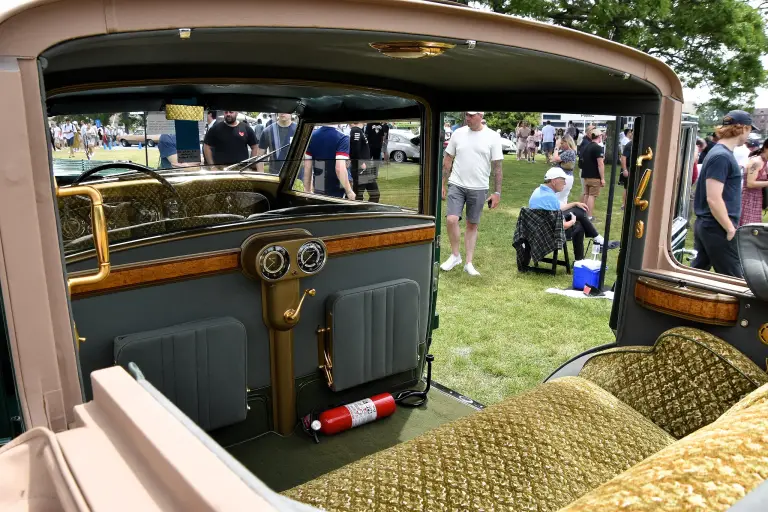
- Semi-custom coachwork: Fisher and Fleetwood bodies on two wheelbases.
- Knee-Action suspension: from the 1934 Series 370D, with a dual X-frame chassis.
Cadillac V-12 versions
- Series 370A (1931): the first year and by far the best seller.
- Series 370B to 370E (1932-1935): annual styling and chassis changes.
- Series 80 (1936): the short-wheelbase V-12.
- Series 85 (1936-1937): the long-wheelbase car that closed the line.
The V-12 sat below the V-16 and above the eight-cylinder Series 60; the later V16 idea returned in the Sixteen concept. More Cadillacs are in the Cadillac collection.
Sources
- Cadillac V-12, English Wikipedia: origin, engine, series, sales