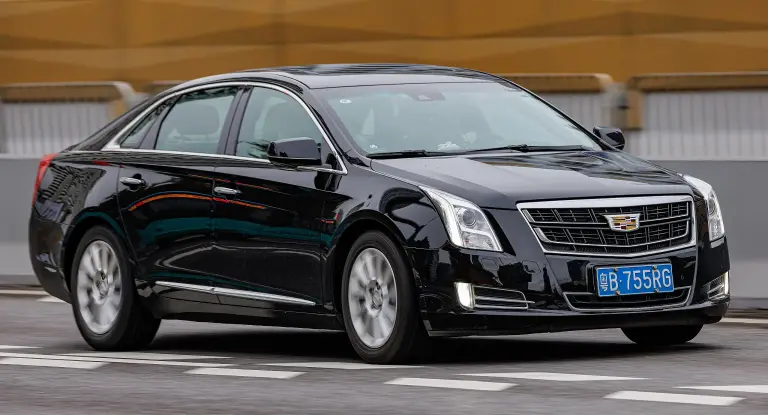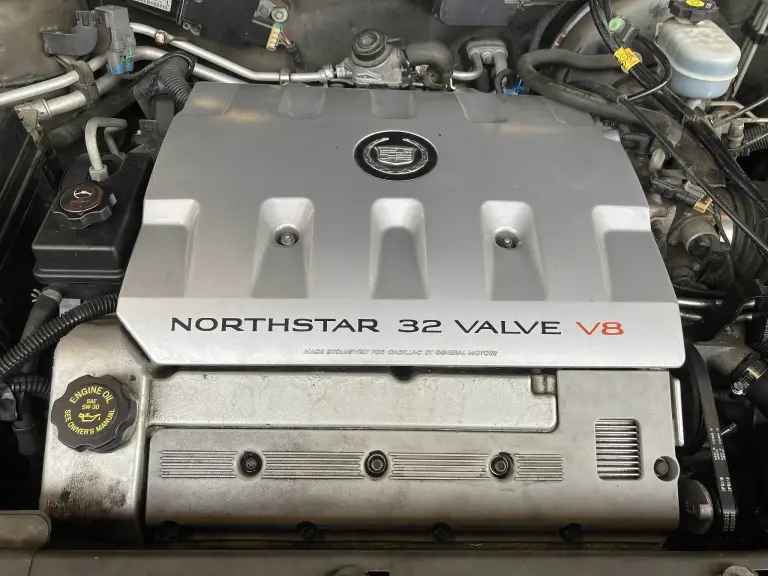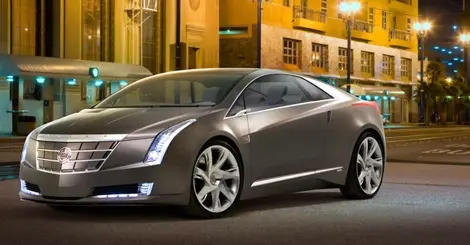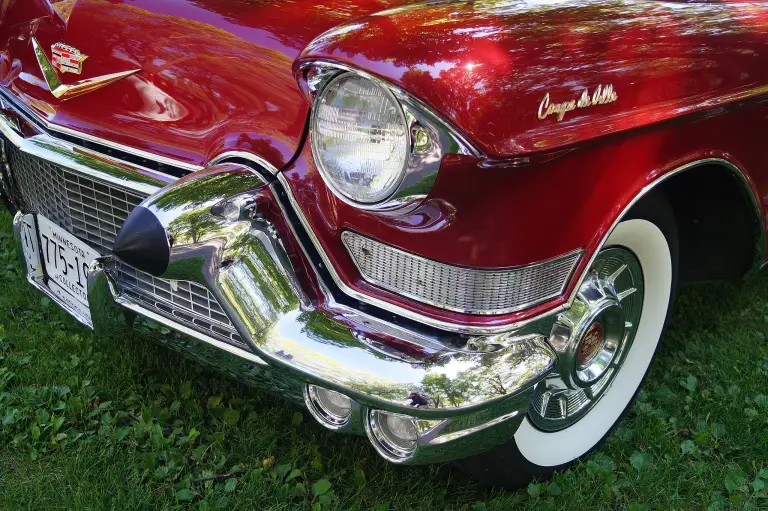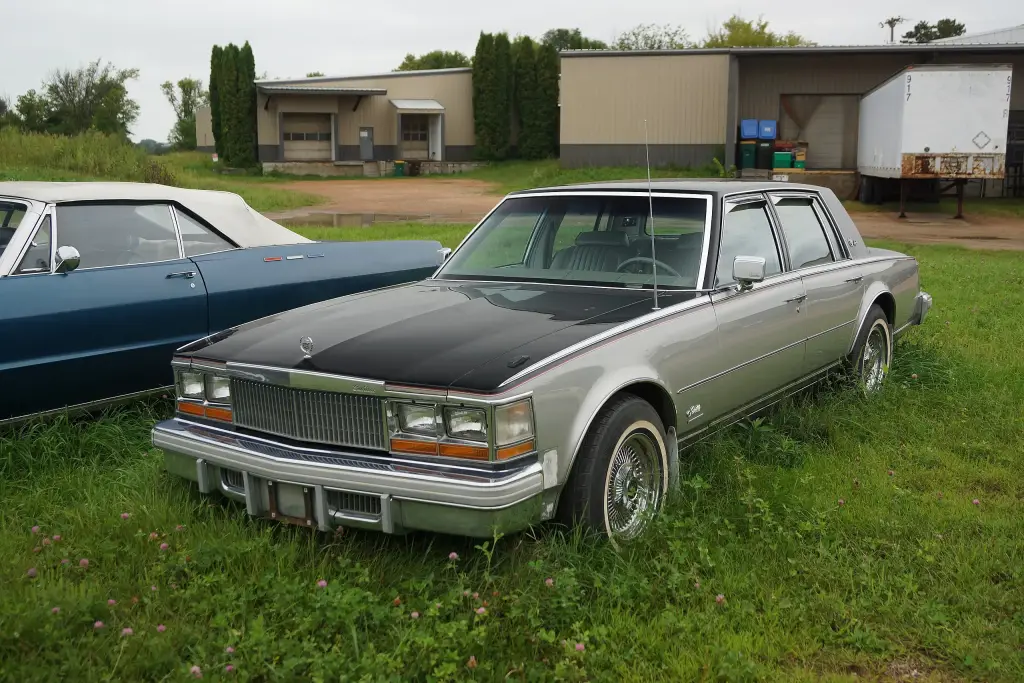
The Cadillac Seville was Cadillac’s first small luxury car, sold from the 1976 to 2004 model years. Introduced in May 1975 as an early 1976 model, it was Cadillac’s answer to the growing popularity of European luxury imports from Mercedes-Benz, Audi and BMW.
Cadillac Seville at a glance
| Maker | Cadillac, General Motors |
|---|---|
| Production | 1976-2004 |
| Introduced | May 1975, as an early 1976 model |
| Basis | GM X-body, re-engineered as the K-body |
| Construction | unibody with a bolt-on subframe |
| Price, 1976 | $12,479 |
| 1976 production | 43,772 |
| Weight saving | almost 1,000 lb (450 kg) less than a de Ville |
| Bodies | four-door sedan |
| Largest market rivals | Mercedes-Benz, BMW, Audi |
| Replaced by | Cadillac STS in 2004 |
Based on one source: the English Wikipedia article on the Seville, read mainly for the first generation.
History of the Cadillac Seville
The name of “Cadillac’s first small car” was chosen over reviving LaSalle, the favourite of the design staff, mainly because, in the words of marketing director Gordon Horsburgh, “it had no negatives”. Leland, after co-founder Henry M. Leland, was rejected because buyers would not understand it and because Leland had also co-founded Cadillac’s rival Lincoln; LaSalle had a troubled past and St. Moritz was hard to pronounce. Seville, a Spanish province and its capital, had already been used by Cadillac for a two-door hardtop version of the 1956 Eldorado.
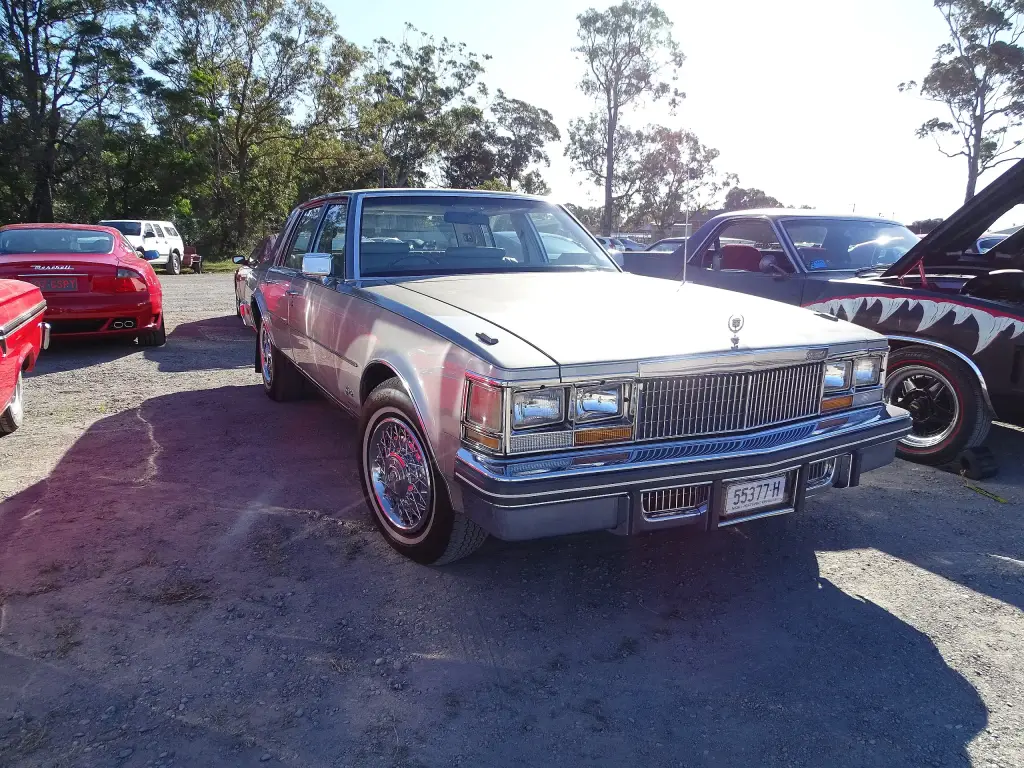
Smaller, dearer, better equipped
The Seville turned Cadillac’s traditional marketing upside down. It was the smallest car in the range and also the most expensive except for the Series 75 Fleetwood limousines, at $12,479. It was almost 1,000 pounds lighter than the full-size de Ville, so it was more nimble and easier to park while keeping the full complement of Cadillac features. Styling took strong cues from the Rolls-Royce Silver Shadow, with a crisp angular body that set the tone for GM styling for the next decade and a wide track that made the car look substantial.
K-body engineering
The unibody construction used a bolt-on subframe and a rear suspension based on the 1968-74 rear-wheel-drive X-body, and the substantial re-engineering earned the car its own K-body designation. Engineers chose the X-body rather than the Opel Diplomat because GM executives thought re-engineering an Opel would cost more, and a front-wheel-drive layout like the Eldorado’s was rejected because the transaxle was made in small numbers for the E-body and the GMC motorhome. To ensure quality in the first run, the first 2,000 cars were built in one colour, Georgian silver, with one set of options. The Seville was successful enough to inspire imitators, including the Lincoln Versailles and the Chrysler LeBaron.
Design and features
- International size: a compact Cadillac built to fight European imports rather than American rivals.
- Angular styling: a crisp body inspired by the Rolls-Royce Silver Shadow that previewed GM design of the 1980s.
- Full Cadillac equipment: the smaller body still carried the division’s usual luxury features.
- K-body chassis: X-body components re-engineered on a bolt-on subframe.
Cadillac Seville versions
- First generation (1976-1979): the original K-body car.
- Elegante: the best-equipped trim of the early cars.
- Later generations: the model continued through 2004.
- STS: the performance trim that grew into a model of its own and replaced the Seville.
The Seville was Cadillac’s first compact luxury car, a role later taken by the Cimarron; its successor was the STS, and the Eldorado had used the name first. More Cadillacs are in the Cadillac collection.
Video: 1979 Cadillac Seville Intro
Video by King Rose Archives on YouTube.
Sources
- Cadillac Seville, English Wikipedia: name, concept, first generation, prices