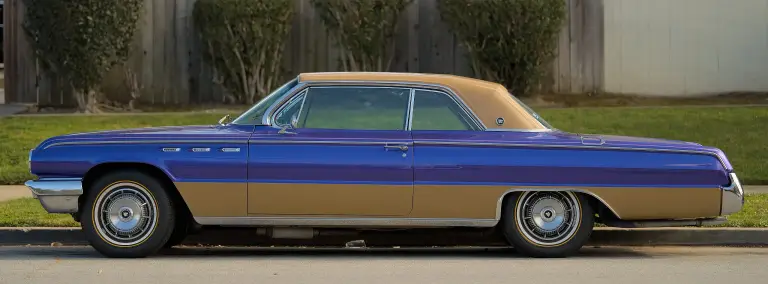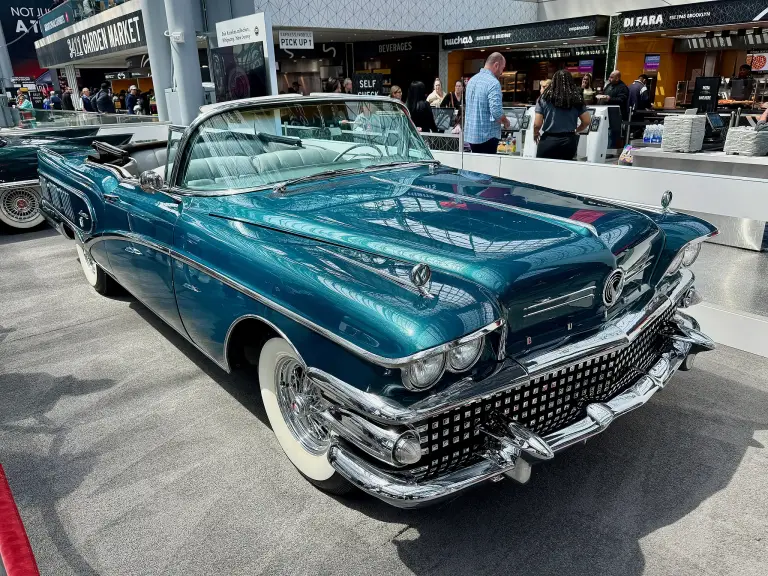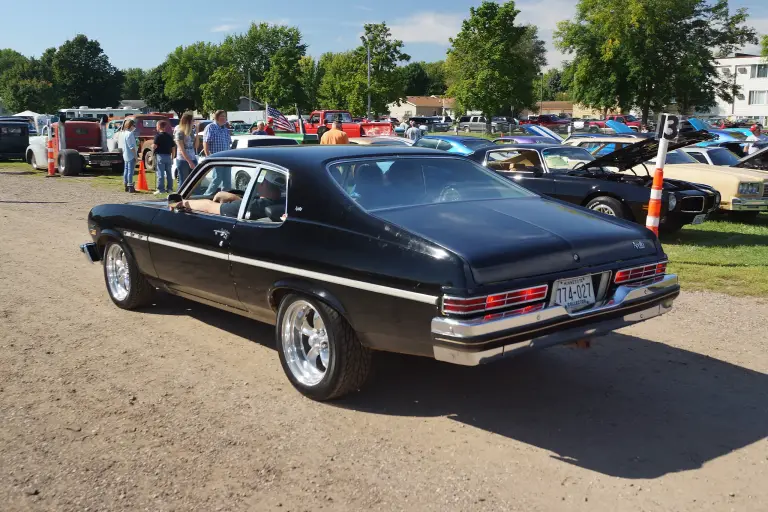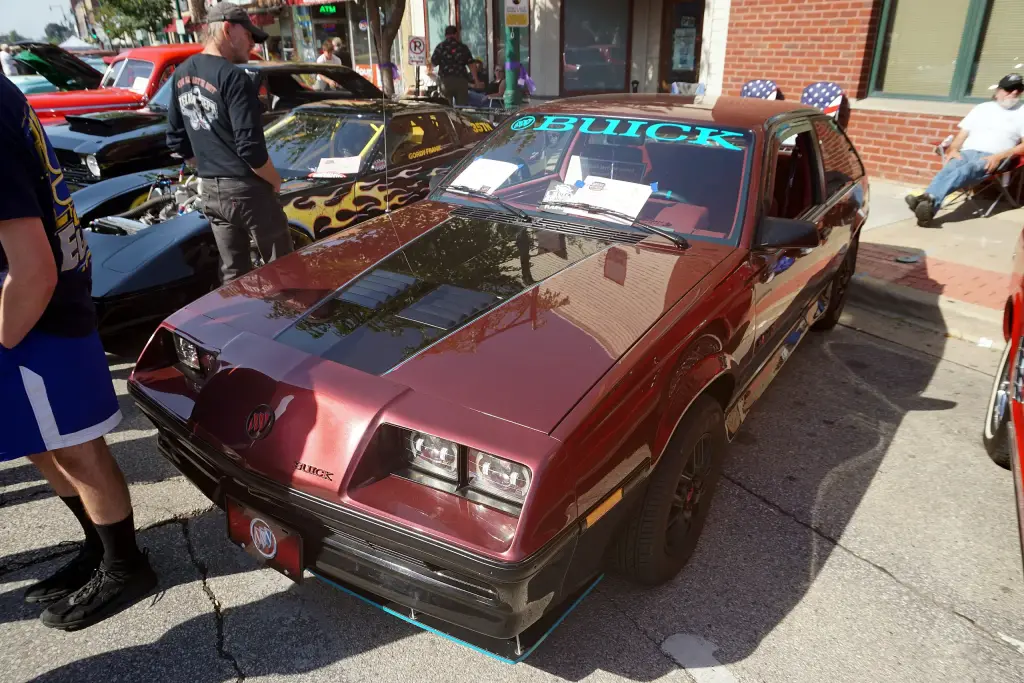
The Buick Skyhawk was built in two quite different generations. The first, from 1975 to 1980, was a rear-drive hatchback with a V6; the second, from 1982 to 1989, was a front-drive compact on GM’s J-car platform.
Buick Skyhawk at a glance
| Maker | Buick, General Motors |
|---|---|
| Production | 1975–1980 and 1982–1989 |
| First generation | H-body, rear-wheel drive hatchback |
| Based on | Chevrolet Vega and Monza |
| First engine | 3.8 L (231 cu in) V6, 110 hp |
| First wheelbase | 97.0 in (2,460 mm) |
| Second generation | J-car, front-wheel drive |
| Second bodies | two-door sedan and hatchback, four-door sedan, wagon |
| Second engines | 1.8 L and 2.0 L four-cylinders |
| 1982 Limited price | $7,931 |
| H-body total | 125,311 cars |
Based on one source, the English Wikipedia article on the Skyhawk.
History of the Buick Skyhawk
The first Skyhawk was introduced in September 1974 for the 1975 model year. It was a subcompact, four-passenger hatchback on GM’s rear-drive H-body, badge-engineered from the Chevrolet Monza and based on the Chevrolet Vega, and it shared its platform with the Oldsmobile Starfire and Pontiac Sunbird. It was the smallest car to wear a Buick badge in more than sixty years.
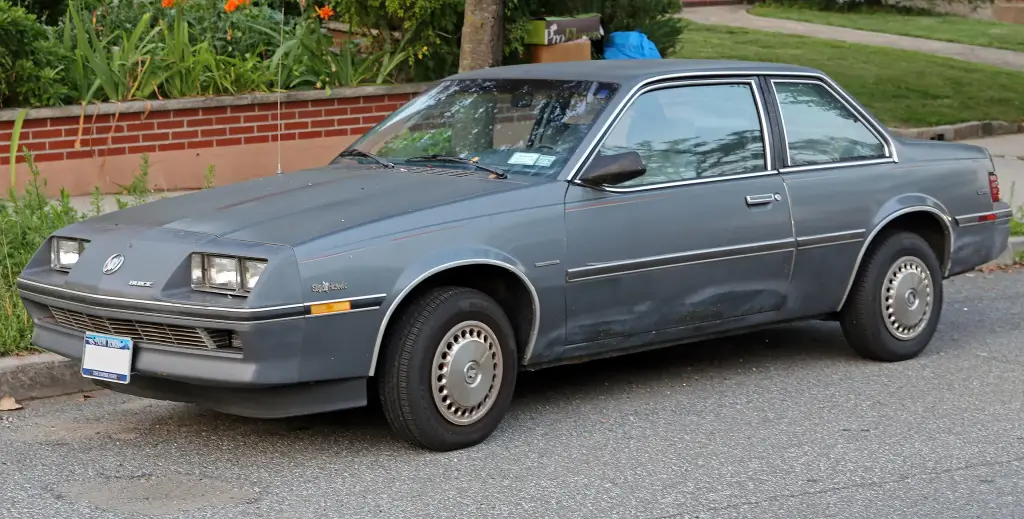
On a 97-inch wheelbase and 65.4 inches wide, the Skyhawk was among the first cars to use the new quad rectangular headlamps, and its shape was often compared with the Ferrari 365 GTC/4. Throughout its life the H-body car had only one engine, Buick’s 3.8-litre V6 with a two-barrel carburettor, making 110 hp. A four-speed manual was standard and a three-speed automatic optional.
A cheaper Skyhawk S joined it in mid-1975, and 1976 brought an optional five-speed manual, vented front discs and the Astroroof, a large tinted glass roof with an aluminium band running across it. A conventional sliding sunroof was optional from 1977. For 1979 there was a facelift with single rectangular headlamps and a Road Hawk package with a Rallye ride and handling set-up. The H-body was discontinued on 21 December 1979 after 125,311 Skyhawks in six model years.
The second generation arrived at the 1982 Chicago show as a front-wheel-drive car on the J-platform, sold as a two-door and four-door sedan in Custom and Limited trim. The standard engine was a 1.8-litre overhead-valve four of 88 hp, with a Brazilian-built overhead-cam 1.8 and a 2.0-litre four offered alongside it, plus a five-speed manual. A 1982 Skyhawk Limited sedan cost $7,931 before options. The suspension was shared with the front-drive Skylark and Century, and the dashboard was unique to the Skyhawk and the Oldsmobile Firenza.
Design and features
- Two platforms: rear-drive H-body, then front-drive J-car.
- V6 only: the first generation was never sold with a four-cylinder.
- Astroroof: a large tinted glass panel with an aluminium band.
- Limited trim: the top level of the 1982–89 cars.
Buick Skyhawk versions
- Skyhawk (1975–80): the H-body hatchback with the 3.8 V6.
- Skyhawk S: a cheaper, less equipped version from mid-1975.
- Road Hawk (1979): the Rallye handling package.
- Second generation (1982–89): J-car sedan, hatchback and wagon.
The first Skyhawk shared its platform with the Chevrolet Monza just as the Apollo shared its with the Nova, and the second used the same front-drive engineering as the Skylark. More Buicks are in the Buick collection.
Sources
- Buick Skyhawk, English Wikipedia: both generations, engines, equipment, production