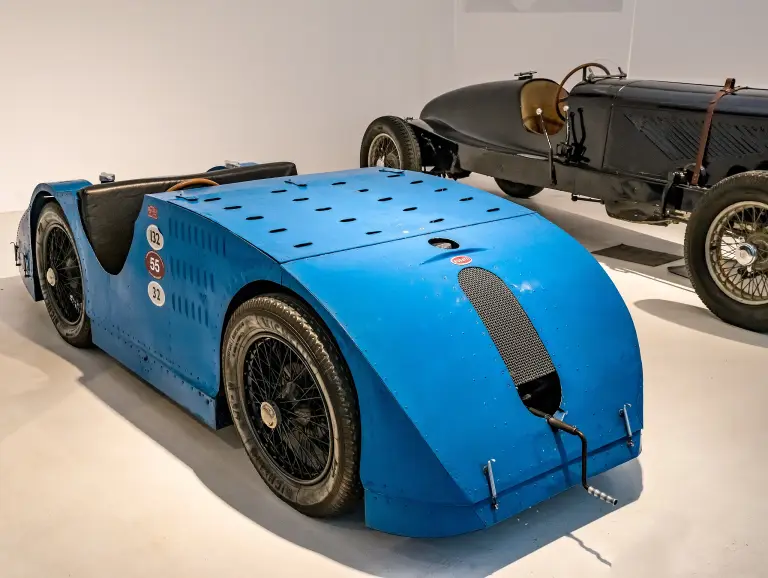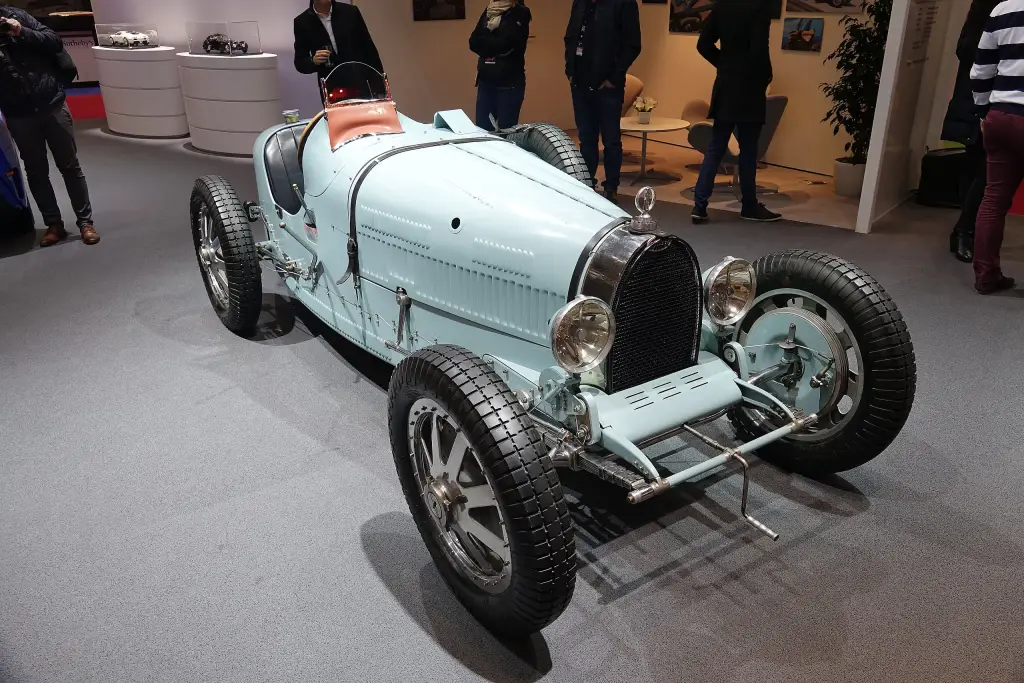
The Bugatti Type 35 is one of the most successful racing cars ever built. Produced at Molsheim between 1924 and 1930, it won more than 1,000 races and made the idea of a race-ready car that a private owner could buy famous around the world.
Bugatti Type 35 at a glance
| Maker | Bugatti, Molsheim |
|---|---|
| Production | 1924–1930 |
| Class | racing car, also sold to privateers |
| Engine | 1,991 cc three-valve overhead-cam straight-eight |
| Bore × stroke | 60 mm × 88 mm |
| Power | 90 hp at 6,000 rpm in the Type 35 |
| Wheels | cast alloy, an early use on a production racer |
| Race wins | over 1,000 |
| Targa Florio | won five years in a row, 1925–1929 |
| Notable detail | Doxa eight-day dashboard clock |
Based on one source, the English Wikipedia article.
History of the Bugatti Type 35
The car
The Type 35 was built at Molsheim from 1924 to 1930 and was extremely successful with the factory team, while also being bought by privateers from all over the world; it pioneered the idea of a race-ready car available for purchase. Its arched, egg-shaped radiator and tapered ‘Bordino tail’ are unmistakable, and it is also remembered as one of the first cars with cast alloy wheels. In 1926 it took the Grand Prix World Championship after winning 351 races and setting 47 records in the two previous years; at its height the Type 35 averaged 14 wins a week. Bugatti won the Targa Florio five times in a row from 1925 to 1929.
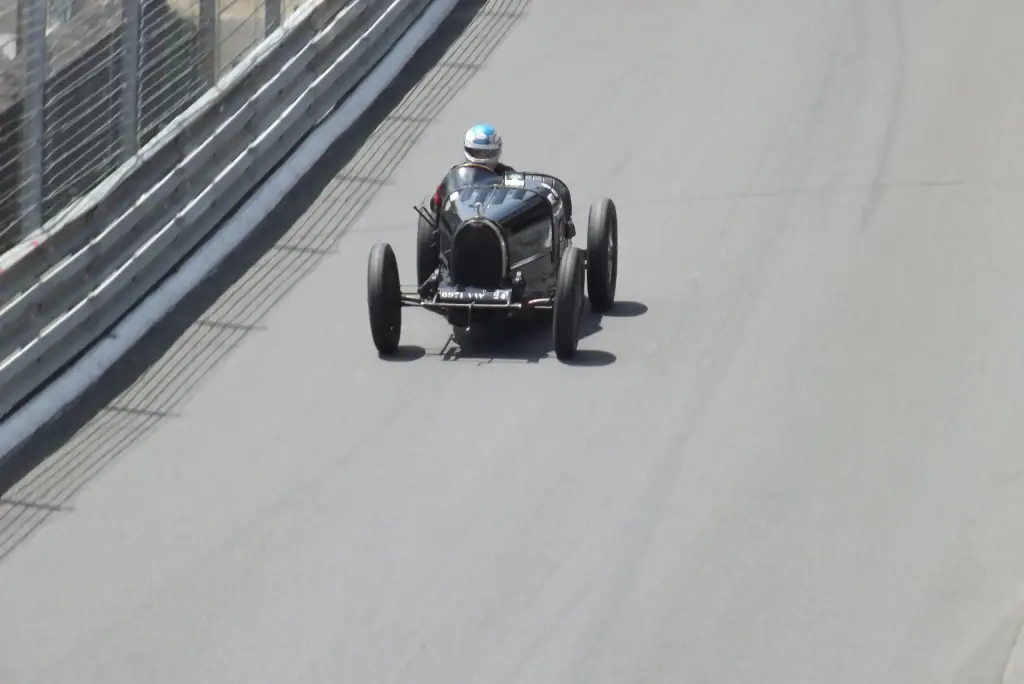
Type 35
The original model appeared at the 1924 French Grand Prix at Lyon. Its first race was a failure because of badly vulcanised Dunlop tyres, but the car showed promise and was refined. It used an evolution of the three-valve 1,991 cc overhead-cam straight-eight first seen on the Type 29, with a 60 mm bore and 88 mm stroke, five roller bearings, a 6,000 rpm limit and 90 hp. The car had a hollow front axle to cut unsprung weight, springs passing through the front axle instead of being U-bolted, and a Doxa eight-day dashboard clock. 96 unsupercharged cars were built.
Type 35A and 35T
A mechanically simpler version, the Type 35A, appeared in May 1925 for road use while keeping the racing look; the public nicknamed it ‘Tecla’ after a maker of imitation jewellery. It had plain crankshaft bearings, smaller valves, coil ignition and wire-spoked wheels, and 139 were built. The Type 35T of 1926 was made for the Targa Florio with the engine enlarged to 2,262 cc by a longer 100 mm stroke, which put it outside the 2.0-litre Grand Prix limit; 13 were built.
Supercharged: 35C and 35B
The Type 35C of 1926 added a Roots supercharger despite Ettore Bugatti’s dislike of forced induction, giving nearly 128 bhp from a single Zenith carburettor; it finished first and second on its debut at the 1926 Milan Grand Prix at Monza, and about 45 were made, at 91,500 French francs in 1929. The Type 35B, called Type 35TC by the factory, combined the 2.3-litre engine of the 35T with a large supercharger for 138 bhp; a British Racing Green 35B driven by William Grover-Williams won the first Monaco Grand Prix in 1929. About 37 were built, but the factory went back to the 35C because the 35B used more fuel.
Type 37, 37A and 39
The Type 37 used the same chassis and body as the Type 35 but a new 1.5-litre straight-four of 60 bhp, easier for privateers to maintain; about 223 were built. The supercharged Type 37A reached 80–90 bhp and had larger shrouded brake drums, with about 67 made. The Type 39 was similar to the Type 35 but with a shorter-stroke 1,493 cc crankshaft; ten were built, some supercharged as Type 39A.
Design and features
- Racing record: over 1,000 wins, 351 race victories and 47 records in two years, five Targa Florio wins in a row.
- Straight-eight: a 1,991 cc three-valve engine with roller bearings and a 6,000 rpm limit.
- Alloy wheels: among the first racing cars with cast alloy wheels and a hollow front axle.
- Supercharged versions: the 35C and 35B added Roots blowers for up to 138 bhp.
Bugatti Type 35 versions
- Type 35 (1924): the unsupercharged original, 90 hp, 96 built.
- Type 35A (1925): the simpler ‘Tecla’ road version, 139 built.
- Type 35T (1926): 2,262 cc Targa Florio model, 13 built.
- Type 35C (1926): supercharged 2.0-litre, about 45 built.
- Type 35B (1929): 2.3-litre supercharged, 138 bhp, about 37 built; won Monaco in 1929.
- Type 37 / 37A: 1.5-litre four-cylinder versions, about 223 and 67 built.
- Type 39 / 39A: 1,493 cc racing version, ten built.
The Type 35 replaced the Type 32 as Bugatti’s works racer, and its engine family led on to the Type 40. More cars are in the Bugatti collection.
Sources
- Bugatti Type 35, English Wikipedia: history, versions, engines, production numbers