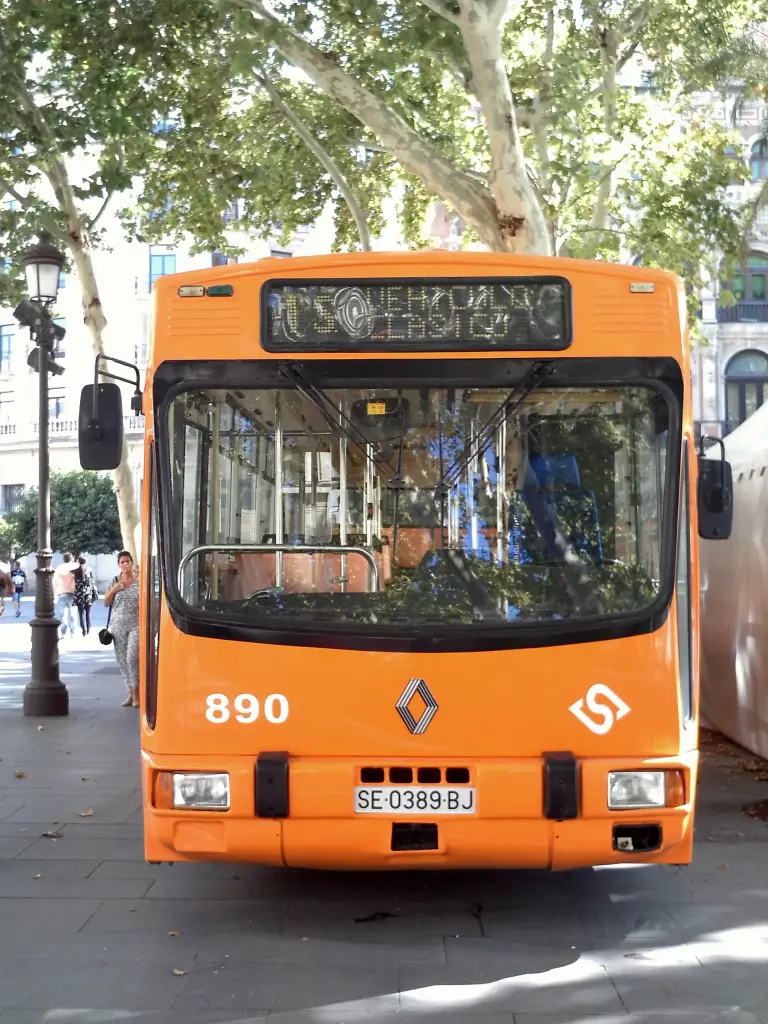
The Berliet PR100 is a full-size city bus developed by Berliet and built from 1971. It was one of the first French buses designed for one-man operation with a rear engine, and after the merger it was sold as a Renault until the last PR112 was delivered in 1999.
Berliet PR100 at a glance
| Maker | Berliet, then Renault Véhicules Industriels |
|---|---|
| Production | 1971–1999 |
| Class | single-deck city bus |
| Length | 11.23 metres, 11.35 with bumpers |
| Wheelbase | 5.60 metres |
| Engine at launch | Perkins V8.510, 178 PS |
| Later engines | Berliet diesel from 1973, Renault MPS of 206 or 253 PS |
| Gearbox | Wilson semi-automatic; ZF automatic in the PR100.2 |
| Articulated | PR180 from 1980, marketed as the Megabus |
| Versions | PR100, PR100.2 of 1984, PR112 of 1993 |
| Built | 11,760 by Berliet and Renault, 20,600 with partners |
| Successor | Renault R312 and PR112 |
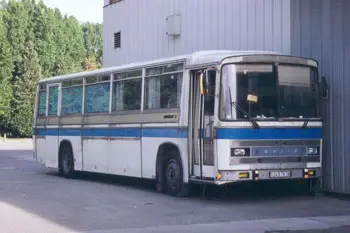
Based on the English article on the Renault PR100 and the French article on the PR 100. The photographs show Renault-badged PR100s of the later production.
History of the Berliet PR100
Origins
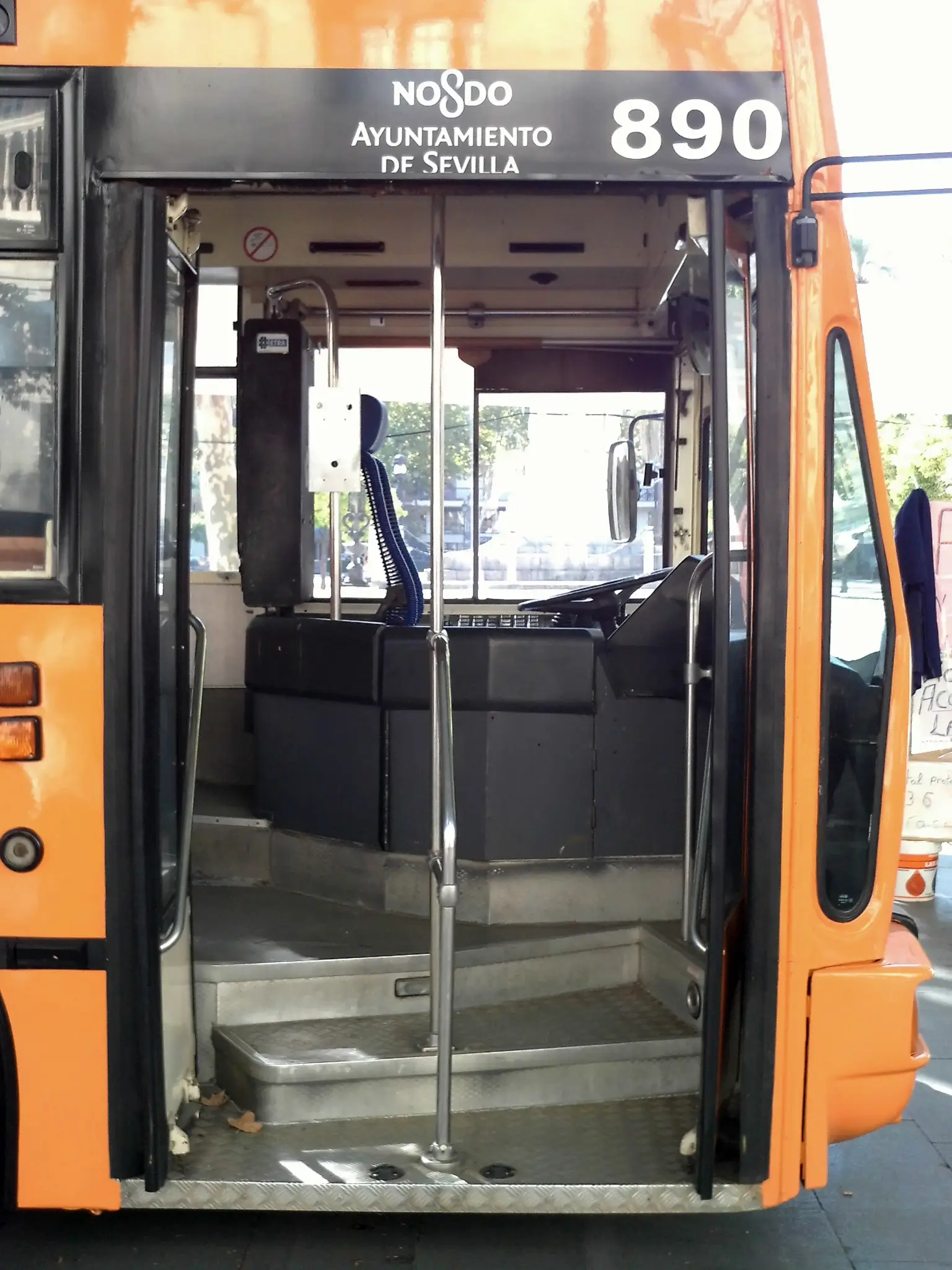
At the end of the 1960s most French city buses had a front engine and were arranged for two-man operation, with a driver and a conductor. Berliet designed the PCM for the Paris transport authority RATP to those rules, but it failed both technically and commercially against the Saviem SC10. Berliet then began a bus for one-man operation with front entry, following German quality standards. Two prototypes were built in 1970 and four pre-series vehicles in 1971 as the PR 100.P for demonstration; the bus was officially presented in May 1971 at the 20th international coach week in Monte Carlo as the PR 100.PA. It had a front entrance with a second door set back just before the second axle, and the engine lay longitudinally under the floor in the rear overhang.
A modern body
The PR100 was not quite the first French bus with a rear engine, since the Million-Guiet-Tubauto B 9 and the Isobloc 655 DHU had used the layout in the 1950s, though their production stayed confidential; most such buses in France were foreign, such as those of the Belgian maker Brossel. Its body was a self-supporting shell with a fully welded tubular frame, where the PCM had a body bolted to a chassis. The front face, registered by the maker, had a flat anti-glare windscreen inclined eleven degrees backwards and only 90 cm from the ground, and two side windows helped the driver when docking. The rear window was the same pane as the windscreen, simply turned upside down, an idea of Alfred Engels, then head of the design office, which saved tooling and parts.
Mechanicals and badges
The first engine was the English Perkins V8.510, a V8 of 138 kW, or 187 hp, limited to 131 kW and 178 hp because it drank too much oil and fuel and was too noisy. It drove through a Wilson Pont-à-Mousson HVD semi-automatic gearbox with electric manual control, with a fully automatic Voith Diwa or Pont-à-Mousson unit as an option. The Airlam suspension of air cushions and leaf springs was shared with the Stradair lorry, the PH buses and the Cruisair coaches, and the floor stood 645 mm above the road at the front and 670 mm in the centre. A Berliet diesel became available in 1973 as the PR100.PB. The bus carried the Berliet name and logo on the left of its front until 1980; after the merger the PR 100.MI and ER 100 wore the Renault diamond designed by Victor Vasarely, with RENAULT lettering at the rear left, and from 1979 the range was sold as a Renault.
The PR100.2 and the end
In 1984 the front was slightly altered and the bus became the PR100.2, recognised by a revised bumper that incorporated the lights, an asymmetrical windscreen with an arched top and a separately mounted destination display. It used a Renault MPS turbocharged six-cylinder diesel of 206 PS and 900 Nm or 253 PS and 1,000 Nm, with a four-speed ZF automatic, and its body was 11.4 metres long, 2.5 metres wide, on the same 5.6-metre wheelbase. PR100s ran mainly in France, with some exported to Algeria, Australia and Morocco; the design was built under licence by Jelcz in Poland, and PR100.2 chassis were assembled in Spain with Hispano Carrocera bodywork. In Britain the PR100 arrived in 1988 with Northern Counties bodywork, but only a handful were sold. In Australia ACTION took 258 and Transperth 250 PR100.2s, the ACTION cars badged as Macks. The PR112 of 1993, with a new front by Safra, was the last development, delivered until 1999.
Design and features
- Rear engine: mounted longitudinally under the floor in the rear overhang, which freed the front for passengers.
- One-man operation: front entrance and a second door before the rear axle, without a conductor.
- Welded shell: a self-supporting tubular frame and an angular body, modern for 1971.
- Wide family: standard, articulated PR180, PR112 and the ER100 and PER180 trolleybuses.
Berliet PR100 versions
- PR100: the original 1971 bus, with Perkins or Berliet power.
- PR100.2: the 1984 revision with a new front and Renault MPS engine.
- PR112: the 1993 version with a Safra front, built until 1999.
- PR180: the articulated Megabus of 1980, with 62 seats and 144 standing places.
- ER100 and PER180: the trolleybus and articulated trolleybus versions.
The PR100 succeeded the PH range in city service, and the Cruisair covered the touring side. More models are in the Berliet collection.
Video: Berliet PR100 MI ex-SEMTAO n°95 – 2 août 2012 (Centre technique municipal ville de Saran)
Video by Le Tram de Tours on YouTube.
Sources
- Renault PR100, English Wikipedia: production, PR100.2, PR112, PR180, exports
- Renault PR 100, French Wikipedia: origins, design, body, engines, badges