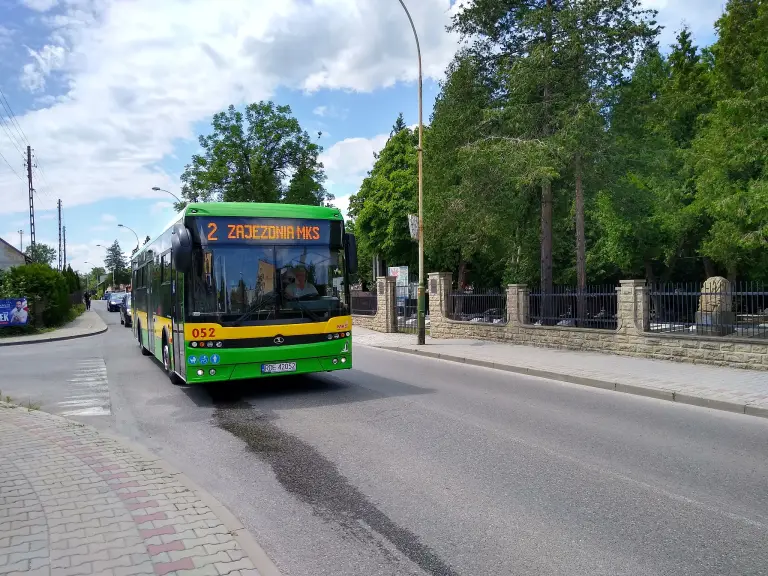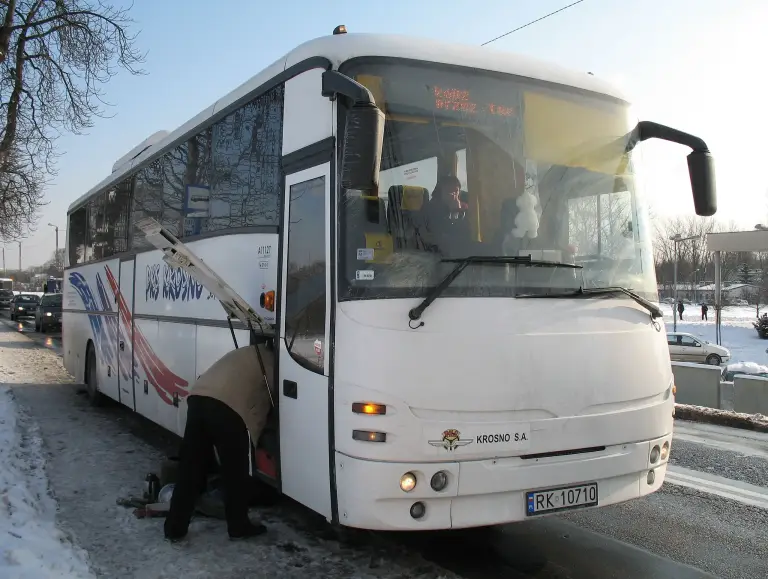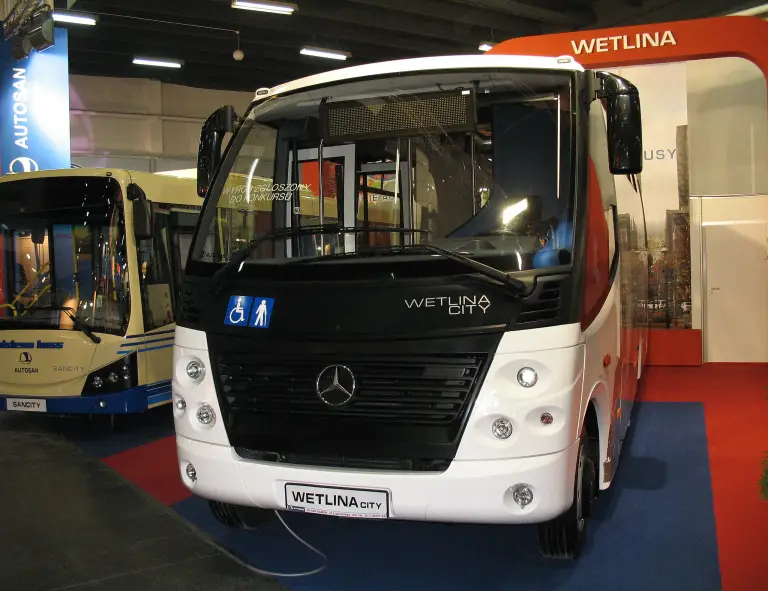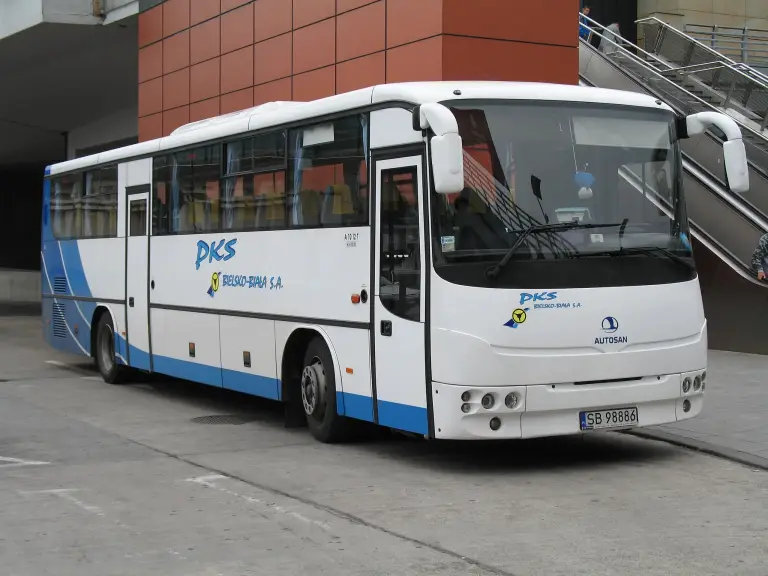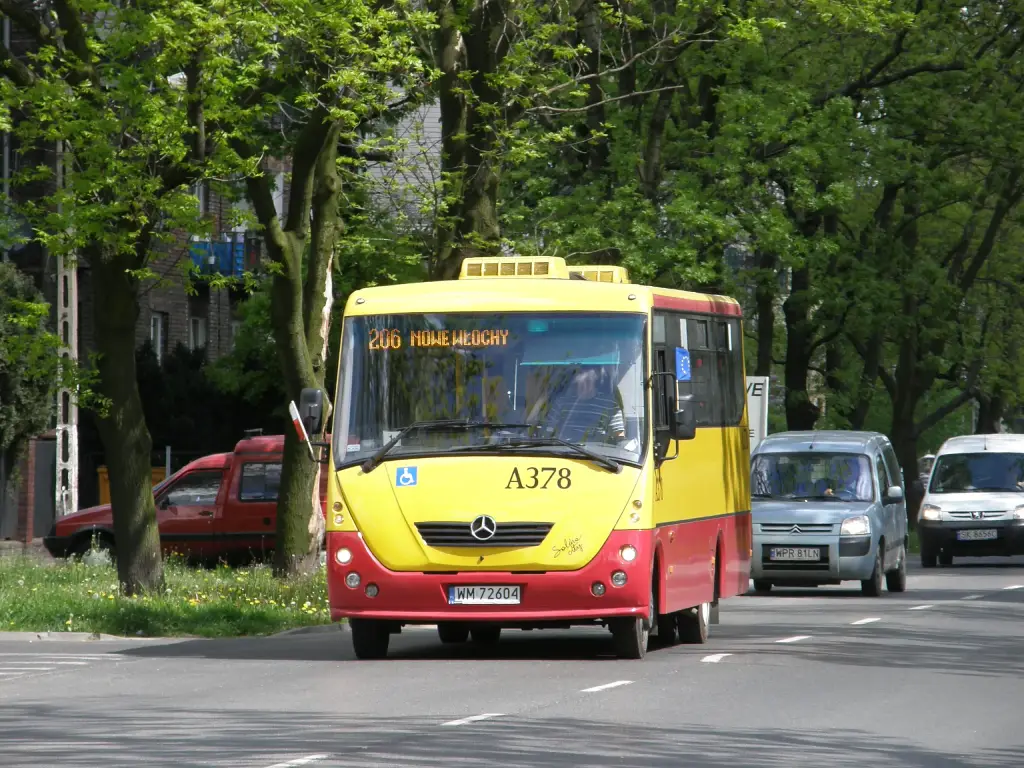
The Autosan Solina is a family of minibuses produced from March 2006 to the end of 2011. It replaced the H7 Traper and Trafic and was built on a Mercedes-Benz Vario chassis, in intercity, urban, suburban and special versions.
Autosan Solina at a glance
| Maker | Autosan, Sanok, Poland |
|---|---|
| Production | March 2006 – end 2011 |
| Class | mini bus, city, suburban and intercity |
| Chassis | Mercedes-Benz Vario O.815D, O.818D from late 2006 |
| Debut | Transexpo, autumn 2005 |
| Main versions | H7-10.06/.07, H7-20.06, H7-10.06 LE, H7-20.07 Solina City, H7-10DW |
| Gearbox | five-speed manual; Allison LCT-1000 automatic optional from 2007 |
| Suspension | mechanical front, pneumatic rear |
| Brakes | discs with ABS |
| Special versions | school prototype 2006, 22 prison vans 2007 |
| Exports | Sweden, Norway, Slovakia, Romania, Hungary |
| Successor | Autosan Wetlina |
History of the Autosan Solina
From Traper to Solina
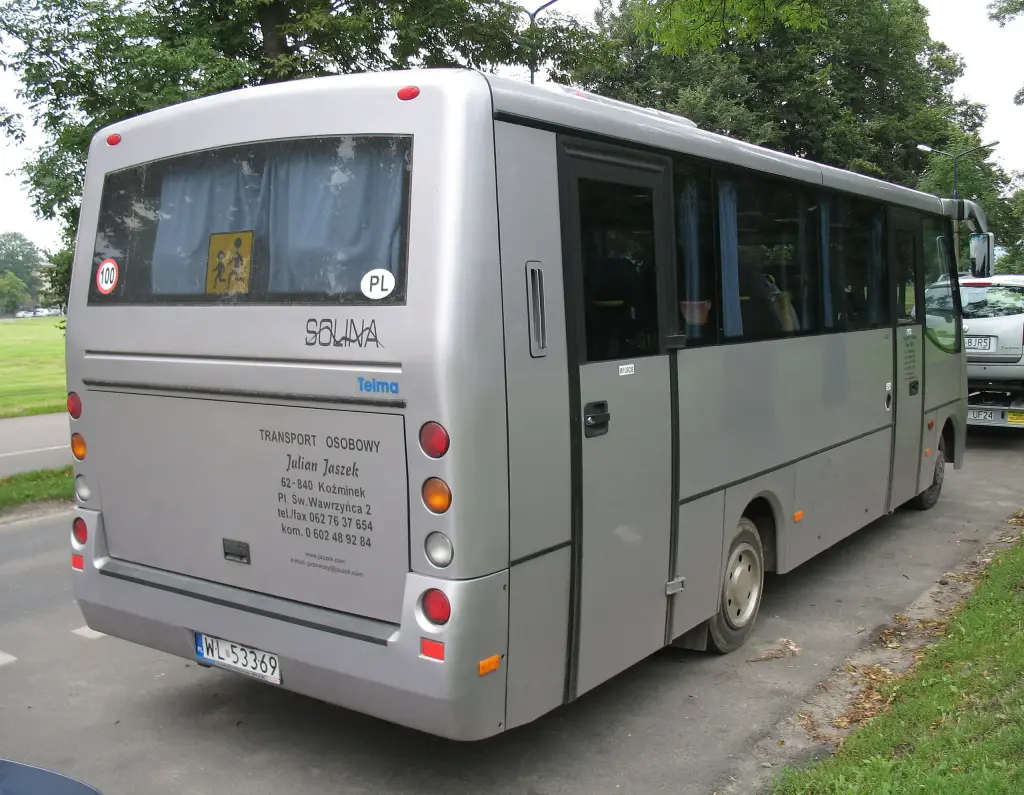
The H7-10MB Solina made its debut at the Transexpo fair in autumn 2005 and replaced the H7 Traper and Trafic family, which was built until March 2006. Unlike those buses, the Solina was built on a Mercedes-Benz Vario O.815D chassis, from the end of 2006 on the O.818D as the .07 sub-type. The body is a welded steel tube frame with stainless-steel and plastic panels glued to it and aluminium side flaps and door leaves. The front axle has mechanical suspension and the rear pneumatic, with disc brakes and ABS on both; a retarder and an on-board trip computer were standard.
Versions and exports
The family included intercity buses (H7-10.06 and H7-10.07 Solina), urban and suburban models (H7-20.06 Solina, H7-10.06 Solina LE and H7-20.07 Solina City) and the special H7-10DW. The Solina LE and Solina City had a low-entry platform at the rear overhang. From 2007 a five-speed Allison LCT-1000 automatic could be ordered in both urban and intercity versions, standard on the Swedish market, and in 2009 pneumatically operated rear doors became optional on the intercity model.
A school bus prototype was built in 2006, and in 2007 the Polish police headquarters ordered 22 H7-10DW prison vans for transporting detainees. Output reached several dozen buses a year, probably 58 in 2006. Outside Poland the Solina family was operated in Sweden, Norway, Slovakia, Romania and Hungary: exports were 10 units in 2006, 18 in 2007 and at least 6 in 2008.
The end of the H7 name
The Autosan Wetlina entered production in 2008 and was built in parallel with the Solina for a time. The end of the Solina was to come with the Euro 5 standard, but because customers still wanted the older range, some special versions of the H7 were built to order for a short period. At the end of 2010 the H7 code was dropped from the trade name, leaving Autosan Solina and Autosan Solina City, and series production ended at the end of 2011.
Design and features
- Mercedes-Benz Vario chassis: a light-truck base rather than Autosan’s own frame.
- Corrosion-resistant body: stainless steel and plastic panels on a welded steel tube frame.
- Low-entry versions: Solina LE and Solina City had a low floor at the rear overhang.
- Comfort equipment: retarder and trip computer as standard, automatic gearbox optional.
- Special bodies: a school prototype and 22 prison vans for the police.
Autosan Solina versions
- H7-10.06 and H7-10.07 Solina: intercity versions.
- H7-20.06 Solina: urban version.
- H7-10.06 Solina LE: low-entry suburban version.
- H7-20.07 Solina City: urban low-entry version.
- H7-10DW Solina: prison van, 22 built for the police in 2007.
- Solina and Solina City: names used after the H7 code was dropped in 2010.
The Solina replaced the H7 and was itself succeeded by the Wetlina. More mini buses are in the Autosan collection.
Video: Autosan H7-20 Solina in Warsaw
Video on YouTube.
Sources
- Autosan Solina, Polish Wikipedia: history, versions, exports, equipment
- Autosan, English Wikipedia: model range