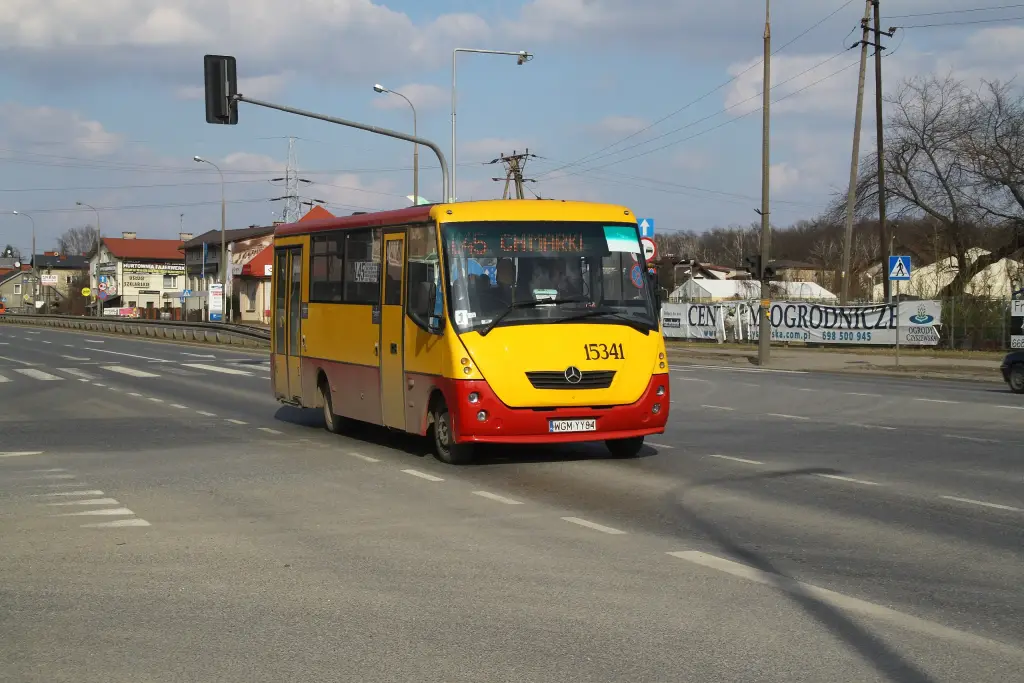
The Autosan H7 is a series of mini-class city, intercity and specialised buses introduced in 1999 and mass-produced between 2000 and 2006. It replaced the H6 family and was developed by Autosan-Bussan, the Sanok spin-off that built the front-engined H6 range.
Autosan H7 at a glance
| Maker | Autosan-Bussan, later Autosan, Sanok |
|---|---|
| Introduced | 1999 |
| Mass production | 2000–2006 |
| Class | mini city, intercity and special buses |
| Predecessor | Autosan H6 |
| Prototype | H7-10.01, 1999 |
| Length | H7-10.01: 7,152 mm; H7-10.02: 7,353 mm |
| Engine | Iveco 8040.45, 3,908 cm³, 100 kW (136 hp), Euro 2 |
| Gearbox | Iveco 2855.01 six-speed manual |
| Urban version | H7-20.01, 38 passengers |
| Successor | Autosan Solina, from 2006 |
History of the Autosan H7
Origins
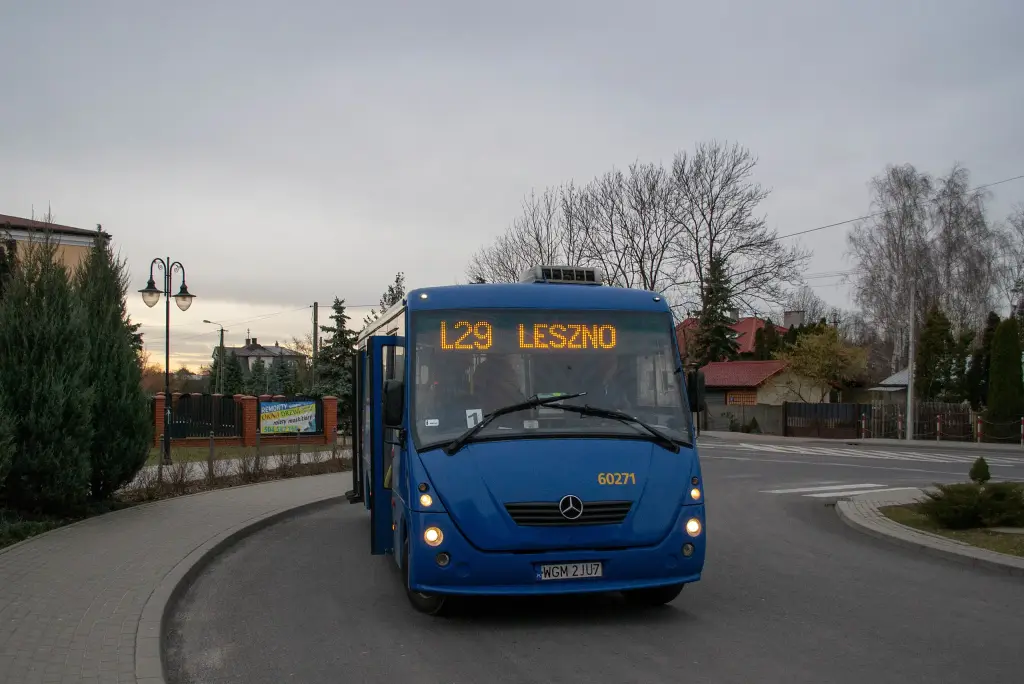
In the second half of the 1990s urban and intercity transport declined while competition in the mini-class segment grew. Autosan-Bussan, split off from Autosan and specialising in the front-engined H6 buses offered since 1992, began work on a new model, the H7. Its main rival was the Kapena City, developed in 1997 with the Italian firm Cacciamali on an Iveco TurboDaily chassis, alongside Turkish buses from Anadolu, Otoyol and Temsa on Isuzu and Mitsubishi chassis. After consulting customers, Autosan-Bussan based the new series on the H6-10 and H6-20, with more passenger space and better driving characteristics.
H7-10.01 and H7-20.01
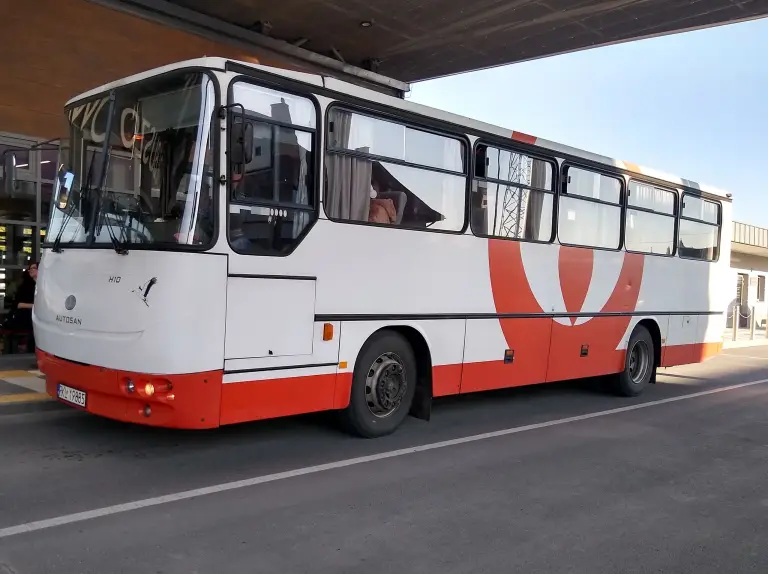
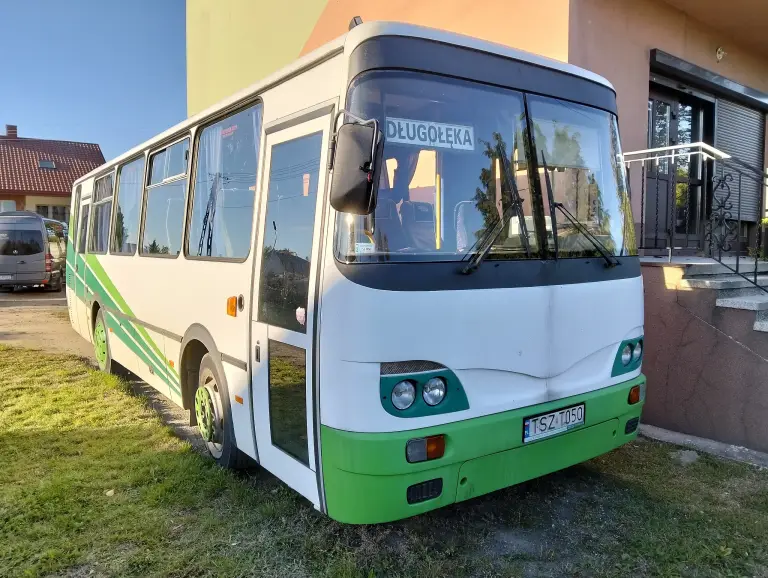
The prototype intercity H7-10.01 was unveiled in 1999 as an improved H6-10. Its body was lengthened by 797 mm to 7,152 mm while remaining structurally and stylistically unified with its predecessor. It had a single-leaf manually operated door between the axles in a 0-1-0 layout and a separate driver’s door on the left, and carried 35 passengers, 28 of them seated. Power came from a turbocharged Iveco 8040.45 four-cylinder diesel of 3,908 cm³ and 100 kW (136 hp) meeting Euro 2, with a six-speed Iveco 2855.01 gearbox and FSC Star axles on leaf springs. Production began in 2000 with pneumatically operated outward-opening doors and an optional second door at the rear; 12 units were delivered in the first year.
The urban H7-20.01 was developed alongside it. Its body was also 797 mm longer than the H6-20.03, raising capacity to 38 passengers, 20 seated, with pneumatic doors in a 0-2-1 layout. It used the same 100 kW Iveco engine with a five-speed Iveco 2845.5 gearbox. In 2000, at the request of the Rapid-Bus company serving Warsaw, a version was built with an Andoria 4CT107 four-cylinder diesel of 4,360 cm³ and 77 kW (105 hp) and a five-speed TS5-40 gearbox.
Traper and the later H7
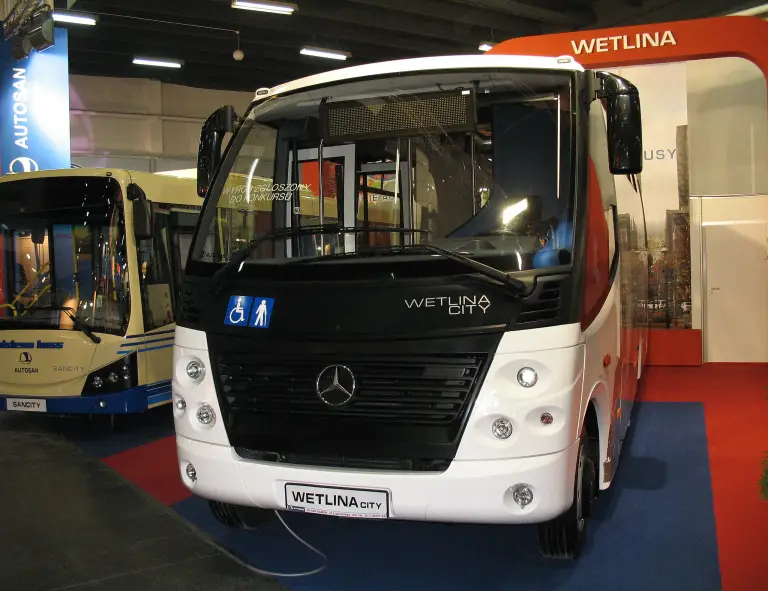
In 2001 came a significantly modernised H7-10.02, marketed as the H7-10 Traper. It had an entirely new body that broke with the styling of the earlier H7 and the H6: 201 mm longer at 7,353 mm, 96 mm wider at 2,376 mm and 55 mm taller at 2,847 mm, with room for 28 seated and 7 standing passengers. Headlights and indicators were borrowed from the A10 family, and all windows were bonded rather than rubber-mounted. The H7 range was built until 2006, when the new Solina family arrived; the Solina buses kept the H7 designation until the end of 2010, and production of the Solina/Solina City ended in 2011, when the Wetlina became the successor.
Design and features
- Mini class: about 7.2 to 7.4 metres long, for city and intercity routes.
- Two body generations: the H6-derived body of 1999 and the new Traper body of 2001.
- Iveco power: the 8040.45 diesel and Iveco gearboxes were standard, with a Polish Andoria alternative.
- Star running gear: rigid axles on leaf springs, simple and easy to service.
- Bonded windows: introduced with the 2001 Traper.
Autosan H7 versions
- H7-10.01 (1999): intercity prototype and first production version.
- H7-20.01: urban version with a 0-2-1 door layout.
- H7-10.02 Traper (2001): new body, 28 seated and 7 standing passengers.
- H7-20.02: the matching urban version of the Traper.
- H7-10MB and H7-20MB Solina: later models that kept the H7 code until 2010.
The H7 was replaced by the Solina, which in turn gave way to the Wetlina. Larger Sanok buses are in the Autosan collection.
Sources
- Autosan H7, English Wikipedia: origins, versions, dimensions, engines
- Autosan H7, Polish Wikipedia: model history
- Autosan, English Wikipedia: company context