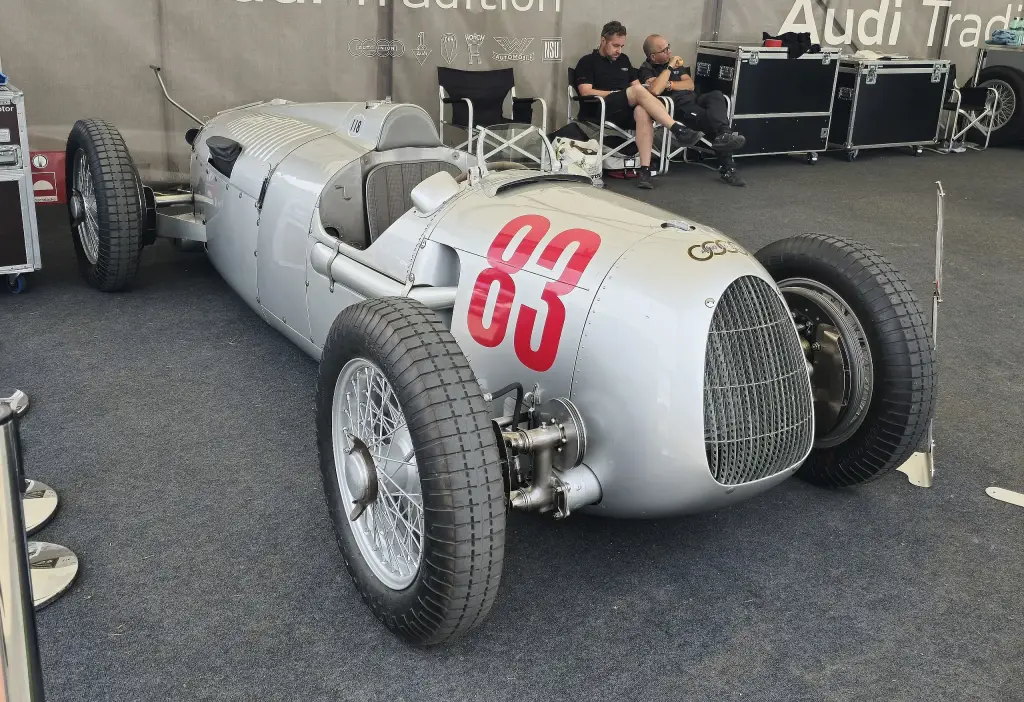
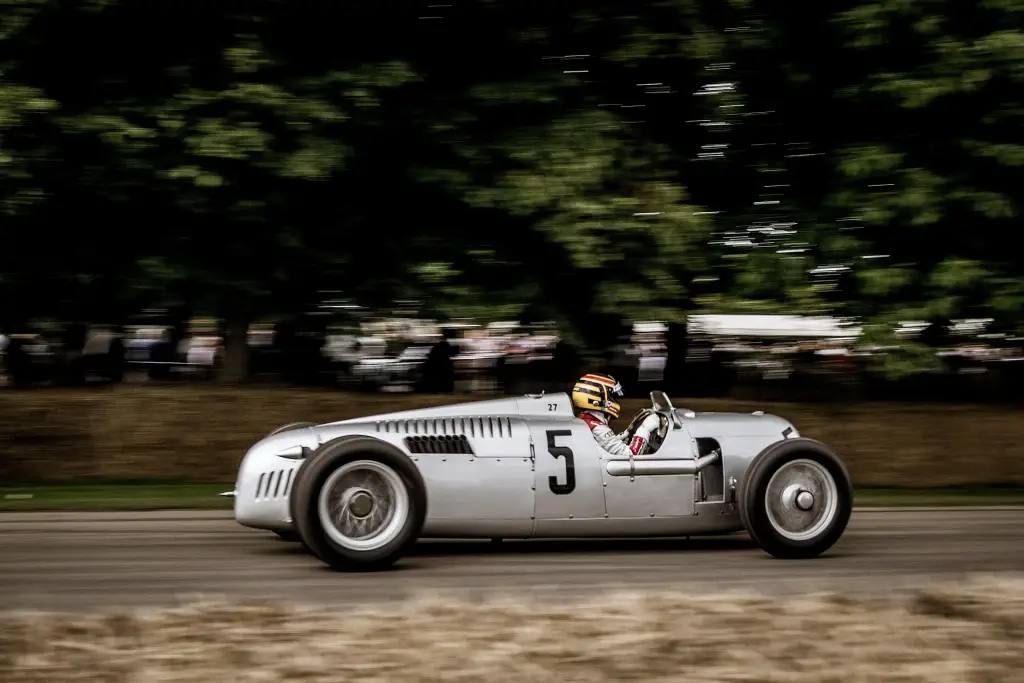
The Auto Union Type C was the third of the V16 Grand Prix cars that Auto Union built in Zwickau between 1933 and 1939 to a design bought from Ferdinand Porsche. With a supercharged 4,360 cc engine behind the driver and around 295 PS, it was part of the pair of German teams that the press called the Silver Arrows.
Auto Union Type C at a glance
| Maker | Auto Union, Horch works, Zwickau |
|---|---|
| Designer | Ferdinand Porsche, with Karl Rabe |
| Racing years | 1933–1939, Types A to D |
| Formula | 750 kg, from 1933 |
| Layout | rear mid-engine, rear-wheel drive |
| Engine, Types A–C | supercharged V16, 4,360 cc |
| Power | 295 PS (217 kW) |
| Valves | 32, single overhead camshaft |
| Type D (1938–1939) | supercharged 3-litre V12, about 550 hp |
| Race wins | 25 between 1935 and 1937 |
| Drivers | Rosemeyer, Nuvolari, Stuck, Varzi, von Delius |
| Rivals | Mercedes-Benz |
Based on one source, the English Wikipedia article on the Auto Union racing cars, which covers Types A to D.
History of the Auto Union Type C
The P-Wagen
Having lost his job at Steyr, Ferdinand Porsche founded his engineering office in Stuttgart with Karl Rabe and backing from Adolf Rosenberger. There were few commissions in the depression, so in 1932 Porsche set up Hochleistungsfahrzeugbau (HFB) to develop a racing car for which he had no customer. In 1933 the governing body AIACR announced a new formula limiting the weight of the car, without driver and fluids, to 750 kg — a rule meant to keep engines near 2.5 litres. Rabe submitted the first draft of a car for it on 15 November; Josef Kales was responsible for the V16 engine. The mid-engined layout followed Max Wagner’s 1923 Benz Tropfenwagen.
The Auto Union deal
Auto Union had been formed in 1932 from Audi, DKW, Horch and Wanderer. Its chairman, Baron Klaus von Oertzen, wanted a showpiece, and on Rosenberger’s insistence he met Porsche. At the 1933 Berlin Motor Show the Chancellor, Adolf Hitler, announced a state racing programme with an annual sum for Mercedes-Benz; the driver Hans Stuck, unable to get a Mercedes seat, brought Porsche and Auto Union to him, and Hitler agreed to fund a second German team as well. Auto Union bought Hochleistungs Motor GmbH and with it the P-Wagen project for 75,000 Reichsmarks and moved the work to Chemnitz.
Behind the driver
The layout was radiator, driver, fuel tank and engine, from front to rear — rear mid-engined and rear-wheel drive, unusual at the time and not seen again in Grand Prix racing until the Cooper of the late 1950s. All cars had independent suspension with parallel trailing arms and torsion bars at the front; Porsche used a swing axle at the rear to counter oversteer. The original engine was designed as a six-litre but the first examples displaced 4,360 cc and gave 295 PS. It had two cylinder blocks inclined at 45 degrees and one overhead camshaft working all 32 valves, the intake valves in hemispherical heads being opened through rocker arms.
Racing record
The Type B of 1935 wore a streamlined body designed by Paul Jaray. Between 1935 and 1937 Auto Unions won 25 races with Ernst von Delius, Tazio Nuvolari, Bernd Rosemeyer, Hans Stuck and Achille Varzi, and the team was strongest in 1936 and 1937. The cars were hard to handle: the power-to-weight ratio was so extreme that wheelspin could be provoked at over 160 km/h, and the tail-heavy weight distribution brought marked oversteer. For 1938 a new formula limited supercharged engines to three litres, so the V16 became a V12 of about 550 hp in the Type D, which was easier to drive thanks to its smaller engine placed closer to the centre of mass and a de Dion rear axle. The two German teams dominated Grand Prix racing until the war broke out in 1939.
Design and features
- Rear mid-engine layout: engine and fuel tank behind the driver, a layout that only returned to Grand Prix racing in the late 1950s.
- Supercharged V16: 4,360 cc, two blocks at 45 degrees, single overhead camshaft and 32 valves, 295 PS.
- Silver bodywork: the streamlined Type B body of 1935 was designed by Paul Jaray.
- Independent suspension: trailing arms and torsion bars in front, a swing axle at the rear.
- Demanding handling: tail-heavy, prone to oversteer and wheelspin above 160 km/h.
Auto Union Type C versions
- Type A (1934–1935): the first V16 car of the 750 kg formula.
- Type B (1935–1936): Jaray streamlined body, V16.
- Type C (1936–1937): the most successful V16 version, 295 PS.
- Type D (1938–1939): supercharged 3-litre V12 of about 550 hp, de Dion rear axle.
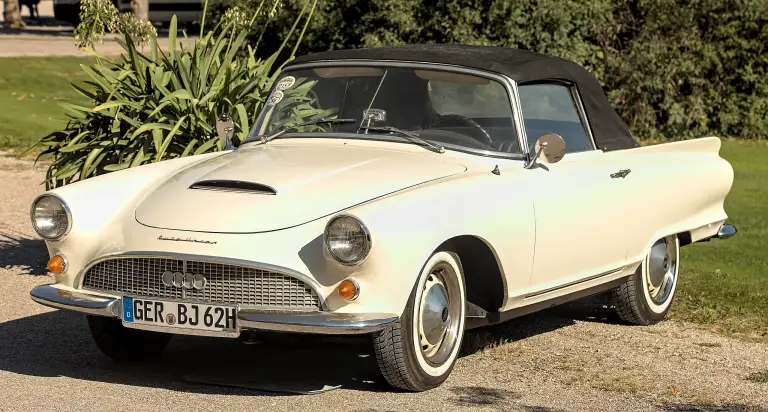
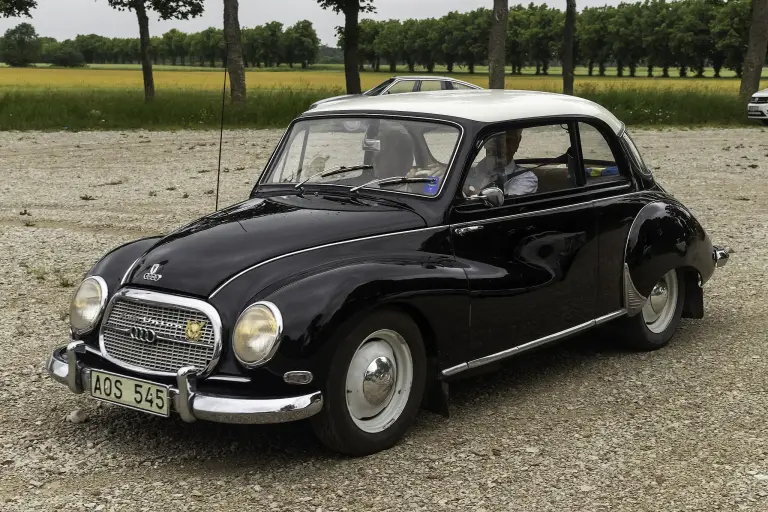
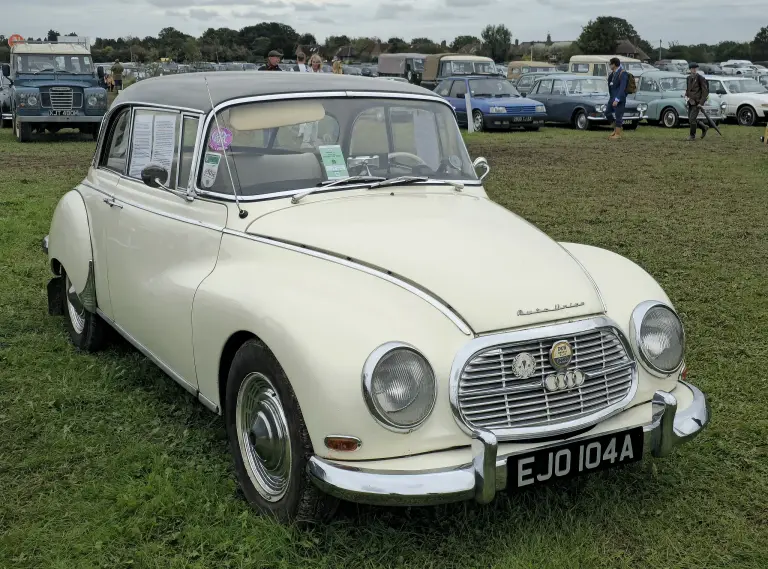
After the war Auto Union built small two-stroke cars such as the DKW 3=6 and the Auto Union 1000. More cars are in the Auto Union collection.
Sources
- Auto Union racing cars, English Wikipedia: design, engines, racing record