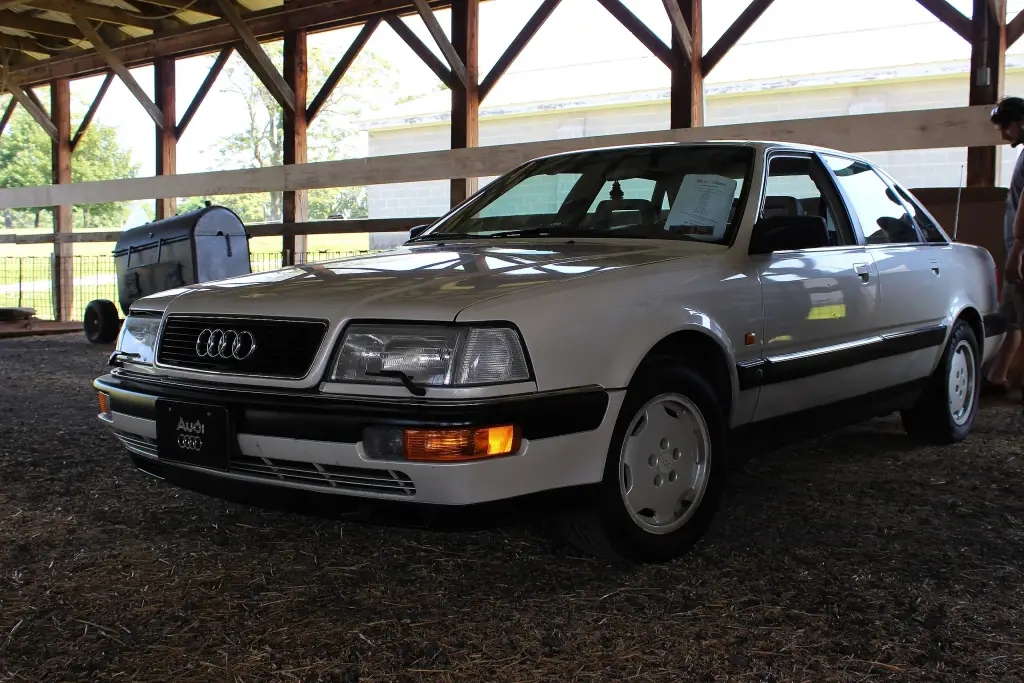
The Audi V8 is the full-size luxury saloon with which Audi entered the top class in 1988. It was the first Audi with a V8 engine and the first to combine quattro four-wheel drive with an automatic gearbox, and it won the German touring car championship twice before the Audi A8 replaced it.
Audi V8 at a glance
| Production | 1988–1994 |
|---|---|
| Class | full-size luxury saloon |
| Platform | D1/D11, based on the Audi 100/200 C3 |
| Engines | 3.6 and 4.2 V8, 32 valves |
| 3.6 output | 250 PS, 340 Nm |
| 4.2 output | 280 PS, 400 Nm |
| Gearbox | four-speed automatic, five- or six-speed manual |
| Drive | quattro permanent four-wheel drive |
| Wheelbase | 12 mm longer than the Audi 200 |
| Long version | 271 cars, built by Steyr-Daimler-Puch in Graz |
| Total production | about 21,565 cars |
| DTM titles | 1990 and 1991 |
History of the Audi V8
Origins
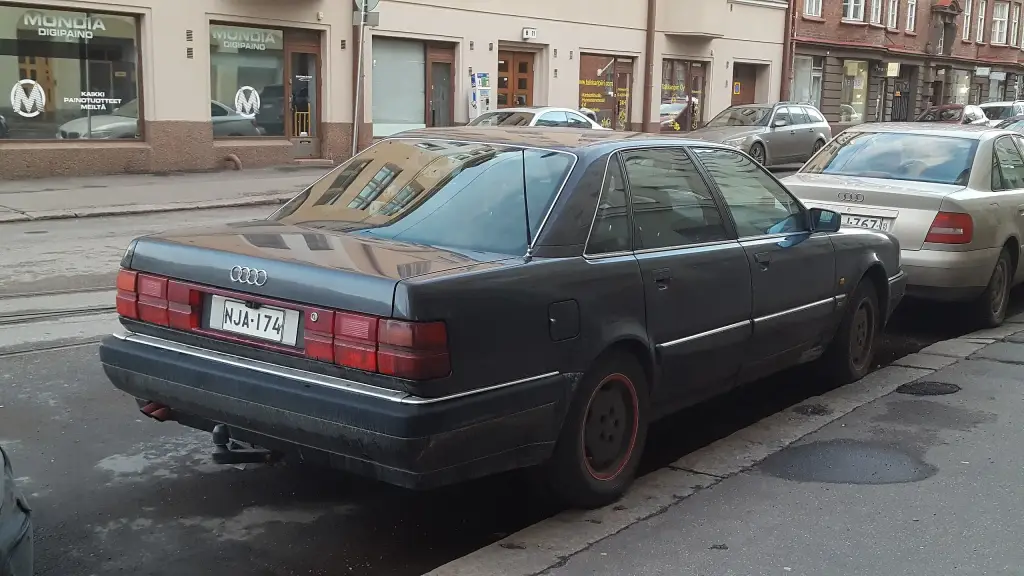
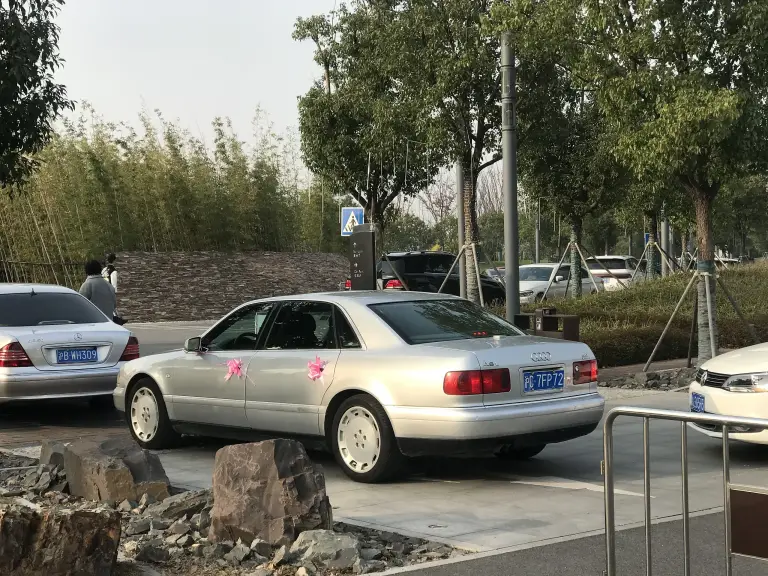
Audi had moved up the market with the Audi 80 and 100, but the Audi 200 was too obviously derived from the 100 to compete with the Mercedes-Benz S-Class, the BMW 7 Series and the Jaguar XJ. The new flagship was launched at the Paris motor show in autumn 1988 as the Audi V8, on a new D platform that was nevertheless a stretched version of the C3 platform of the 100 and 200. The wheelbase grew by 12 mm and the body by 5 cm, and the car was recognizable by a grille integrated into the bonnet, new bumpers and headlights, and all-red tail lamps. It was the first luxury saloon of its class with permanent four-wheel drive as standard.
Engines and technique
Both engines were all-aluminium 32-valve V8s with four camshafts, developed from the 16-valve four-cylinder of the VW Golf GTI. The 3.6-litre produced 250 PS at 5,800 rpm and 340 Nm at 4,000 rpm; from the 1992 model year a 4.2-litre version followed with 280 PS and 400 Nm. A four-speed ZF automatic was standard and a five-speed manual, later a six-speed, was available. The body was fully galvanized with a ten-year anti-perforation warranty, and almost all body parts were specific to the V8 even though it looked like the 100 and 200.
Market and motorsport
The V8 sold below Audi’s expectations: it was about 30 per cent more expensive than comparable base models from Mercedes-Benz and BMW, and its similarity to the Audi 100 and 200 did not help. From October 1992 the Audi 100 S4 with the same V8 engine and a lower price became a strong alternative. A long-wheelbase V8 L was built by Steyr-Daimler-Puch in Graz, 271 cars in all, and one Avant was made for the wife of Ferdinand Piëch. In motorsport the V8 quattro won the DTM drivers’ titles in 1990 and 1991 with Hans-Joachim Stuck and Frank Biela, the first back-to-back titles in the series. The Audi A8 replaced the V8 in 1994.
Design and features
- First Audi V8: an all-aluminium 32-valve engine with four camshafts.
- quattro with an automatic: the first Audi to combine the two; manual cars used a Torsen centre differential.
- Galvanized body: with a ten-year anti-perforation warranty.
- Long version: the V8 L was 30 cm longer and built in Graz.
- DTM winner: the V8 quattro took the drivers’ title in 1990 and 1991.
Audi V8 versions
- V8 3.6: 250 PS, from 1988.
- V8 4.2: 280 PS, from the 1992 model year.
- V8 L: long-wheelbase version, 271 cars.
- V8 quattro DTM: racing version, two drivers’ titles.
The V8 sat above the Audi 200 and was replaced by the Audi A8; its body was based on the Audi 100. More models are in the Audi collection.
Video: Die PS Profis – Jean Pierre checkt einen Audi V8
Video by ANDYWISCHEROPP on YouTube.
Sources
- Audi V8, English Wikipedia: overview, body, engines, gearboxes and motorsport
- Audi V8, German Wikipedia: development, design, engines, long version and production
- Audi V8, Italian Wikipedia: origins, design, interior and price