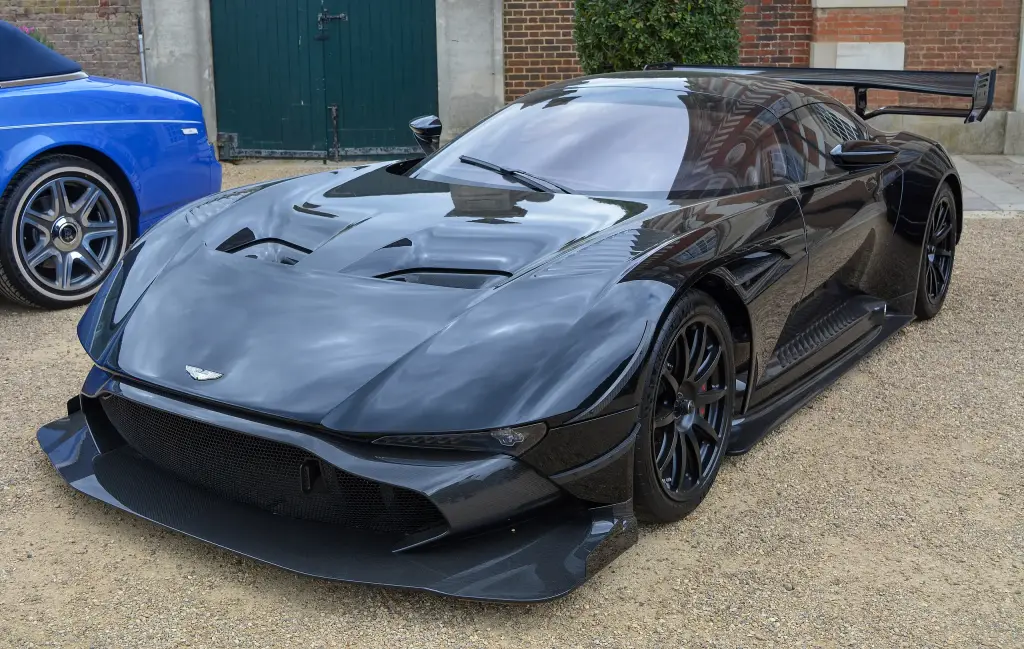
The Aston Martin Vulcan is a two-door, two-seat, high-performance lightweight track-only car launched by Aston Martin at the 2015 Geneva Motor Show. It was designed by the company’s creative officer Marek Reichman, taking inspiration from the Vantage, the DB9 and the One-77.
Aston Martin Vulcan at a glance
| Maker | Aston Martin, United Kingdom |
|---|---|
| Launched | 2015 Geneva Motor Show |
| Production | 24 cars, one for each hour of Le Mans |
| Price | US$2.3 million each |
| Engine | 7.0 L naturally aspirated V12 |
| Power | 831 PS (820 hp) at 7,750 rpm |
| Torque | 780 N·m (575 lb·ft) at 6,500 rpm |
| Gearbox | Xtrac 6-speed sequential |
| Top speed (no wing) | 335 km/h (208 mph) |
| 0–60 mph | 2.9 seconds |
| Dry weight | 1,350 kg |
| Brakes | Brembo carbon-ceramic, 380 mm front and 360 mm rear |
English Wikipedia is the only source used here, so the facts were not cross-checked against a second source.
History of the Aston Martin Vulcan
Design and engine
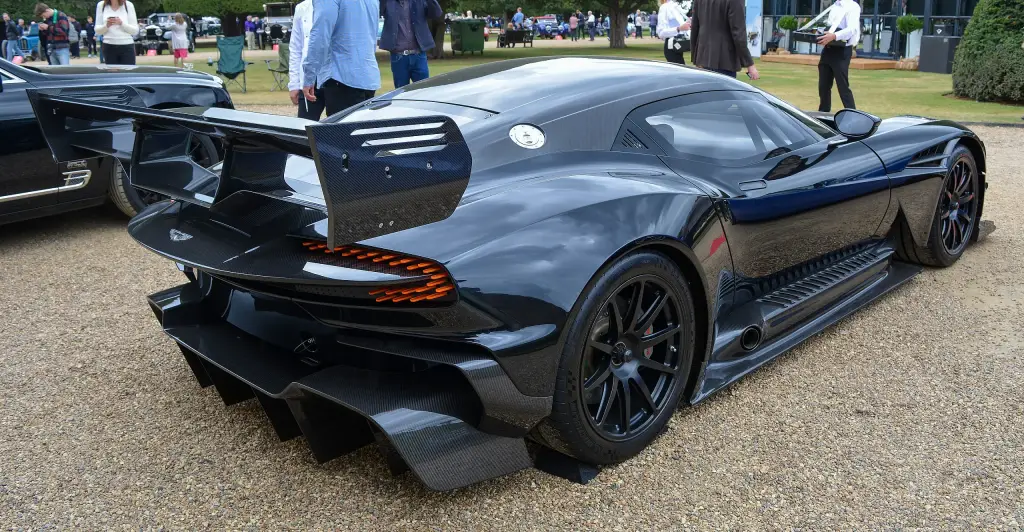
Production totalled 24 cars, one for each hour of the 24 Hours of Le Mans, and one was included with the penthouse of the Aston Martin Residences tower in Miami. The 7.0-litre naturally aspirated V12 sits in an aluminium alloy chassis with a carbon-fibre body and produces 831 PS and 575 lb·ft. A magnesium torque tube carries a carbon-fibre propeller shaft, and there is a limited-slip differential. A selector knob sets the power to 507 PS, 684 PS or the full 831 PS. The car makes GT3-level downforce through its front splitter, rear diffuser and adjustable rear wing, which Aston Martin says gives 324 kg at 100 mph.
Chassis
The suspension is race-derived pushrod with anti-dive geometry and Multimatic DSSV adjustable dampers, with driver-adjustable anti-lock braking and variable traction control. It runs on Michelin Pilot Sport Cup 2 tyres on 19-inch centre-lock APP-TECH wheels. Like the Ferrari FXX, 599XX, FXX-K and McLaren P1 GTR, the Vulcan must be approved for track days by the factory, but its customers can keep the car themselves.
AMR Pro and the road-legal car
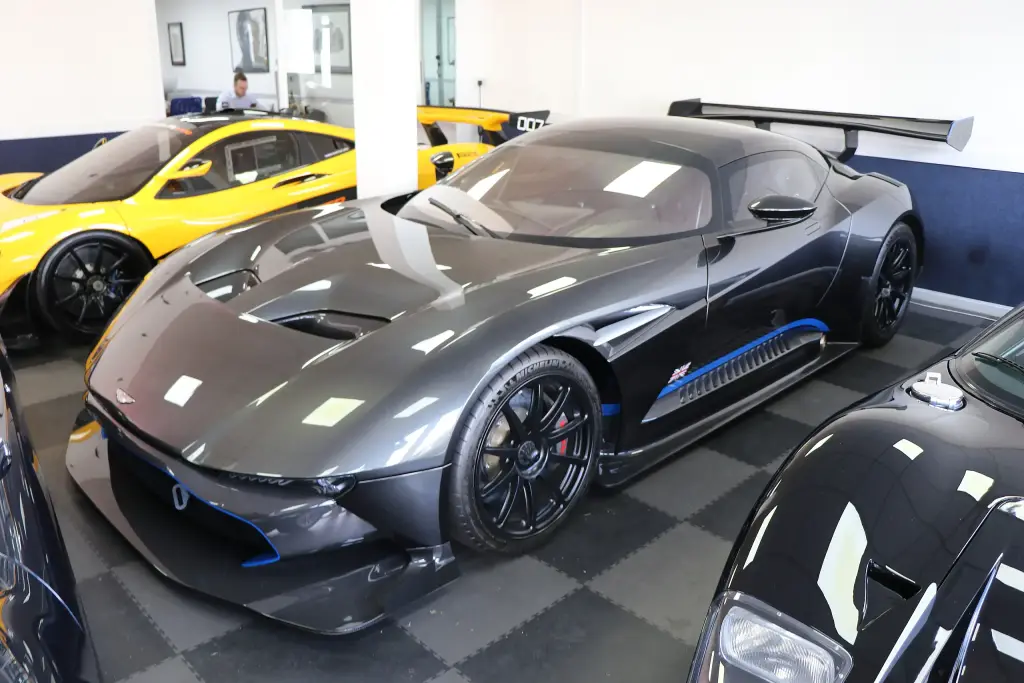
The AMR Pro package, shown at the 2017 Goodwood Festival of Speed, adds a dual-element rear wing with a Gurney flap, large dive planes, wheel arch louvres and turning vanes, raising downforce by 27% and giving a 47/53 weight distribution, with a shorter final drive ratio and the same engine; all cars can be fitted by Aston Martin’s Q division. One Vulcan was made road legal by RML Group in 18 months, with a raised ride height, new headlights, a shortened splitter, a remapped V12 and altered gear ratios; it remains the only road-legal Vulcan.
Design and features
- Power modes: 507, 684 or 831 PS.
- Downforce: 324 kg at 100 mph, 1,362 kg at top speed.
- Ownership: customers keep the cars but need factory approval for track days.
Aston Martin Vulcan versions
- Vulcan (2015): 24 cars.
- AMR Pro (2017): aero package for existing cars.
- RML road-legal conversion: one car.
More Aston Martin cars are in our Aston Martin collection and more show cars in Concept Cars.
Sources
- Aston Martin Vulcan, English Wikipedia: specifications, AMR Pro, road-legal car