The Ariel Red Hunter was the name used for a range of Ariel single-cylinder and twin-cylinder motorcycles. They were designed by the firm’s chief designer Val Page in 1932 around an overhead-valve single-cylinder engine he had developed six years earlier.
Ariel Red Hunter at a glance
| Maker | Ariel Motorcycles, Birmingham |
|---|---|
| Introduced | 1932 |
| Designer | Val Page |
| Engine type | overhead-valve single-cylinder |
| Capacities | 250 cc, 350 cc and 500 cc |
| Twin versions | from 1948, De Luxe (KG) and Red Hunter (KH) 500 cc twins |
| Tank finish | dark red, painted in a former cinema opposite the works |
| Testing | every engine run for two hours on a test bench |
| Performance, 500 cc | 0–60 mph in 10.9 seconds |
| Famous rider | Sammy Miller, 500 cc success from 1955 |
Based on one source, the English Wikipedia article on the Red Hunter. The old record was titled simply “Ariel 350”; the 350 cc single was part of the Red Hunter range.
History of the Ariel Red Hunter
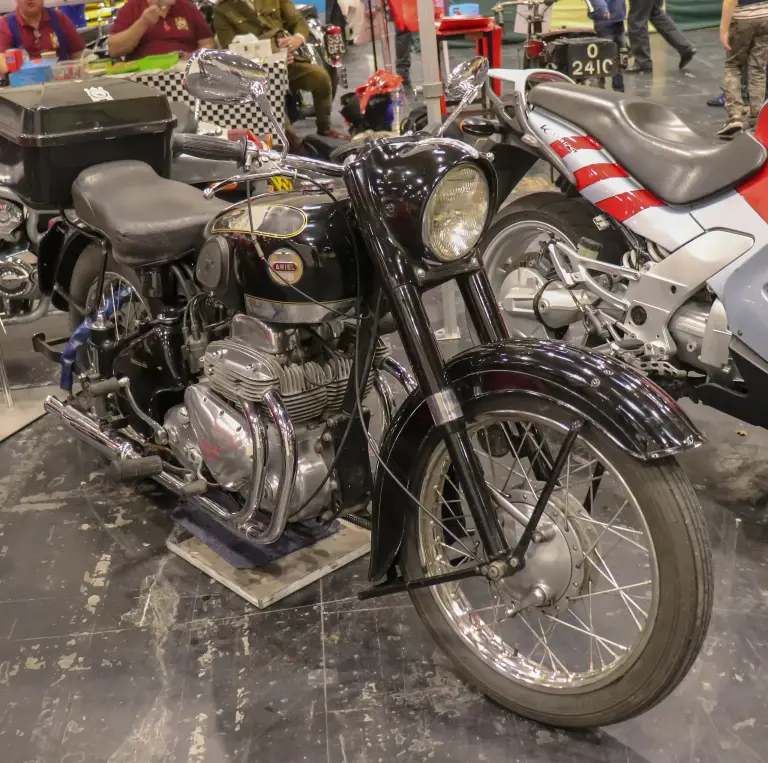
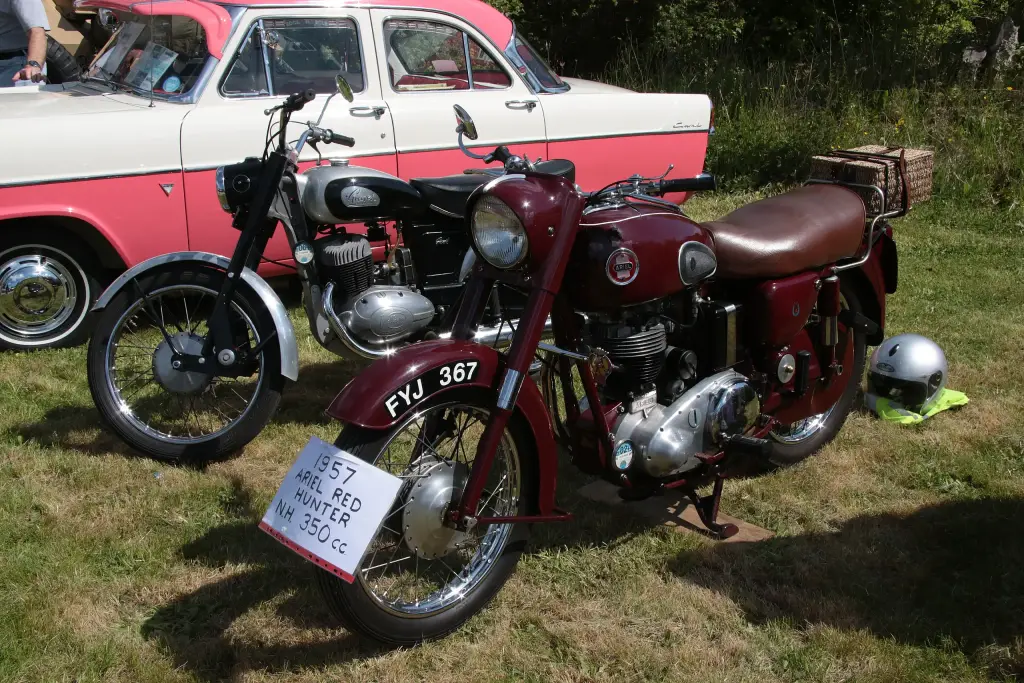
Val Page, Ariel’s chief designer, created the Red Hunter in 1932 around an overhead-valve single-cylinder engine he had developed six years earlier. Originally it was the sports version of the Ariel 500, and 250 cc and 350 cc versions were developed alongside it. The model became popular with grass track and trials riders, whose exploits helped to build its reputation. From 1948, the 500 cc twin-cylinder Ariels were produced in two forms, the touring De Luxe (KG) and the sporting Red Hunter (KH).
The machines were instantly recognisable by their paint. All Red Hunters had distinctive dark red petrol and oil tanks, and these were painted in the former Bournbrook cinema opposite the main Ariel factory in Dawlish Road, Birmingham. Reliability was part of the pitch: every engine was run for two hours on a test bench to maintain Ariel’s record of reliability and quality control.
The Red Hunter was a commercial success and formed the backbone of the company. Ariel’s position became strong enough that it was able to purchase Triumph. Performance of the 500 cc models was respectable for the period: acceleration from 0 to 60 mph took 10.9 seconds, and a machine could be stopped from 25 mph in under 24 feet.
Edward Turner developed the design further, adding chrome and turning it into a popular touring road bike. Handling improved with the arrival of rear suspension and telescopic forks, and from the 1950s the engine gained an alloy cylinder head. It was also a competition machine: champion Sammy Miller had great success with a 500 cc Red Hunter from 1955. The Red Hunter name covered a whole family of engines and frames rather than a single model, which is why examples from the 1930s and the 1950s look very different from one another.
Design and features
- Overhead-valve single: Val Page’s engine, developed in 1926 and installed in a sports chassis in 1932.
- Dark red tank: the finish that gave the model its name, applied by hand in the old Bournbrook cinema.
- Bench-tested engines: two hours of running for every engine before it left the works.
- Edward Turner updates: chrome detailing, rear suspension, telescopic forks and an alloy cylinder head.
- Trial and grass track success: a favourite of competition riders, and of Sammy Miller from 1955.
Ariel Red Hunter versions
- Red Hunter 250 and 350: the smaller sports singles developed from the original design.
- Red Hunter 500 single: the core model of the 1930s range.
- Red Hunter KH (1948 onwards): the sporting 500 cc twin.
- De Luxe KG (1948 onwards): the touring 500 cc twin built alongside the KH.
- 1950s specification: alloy cylinder head and updated cycle parts.
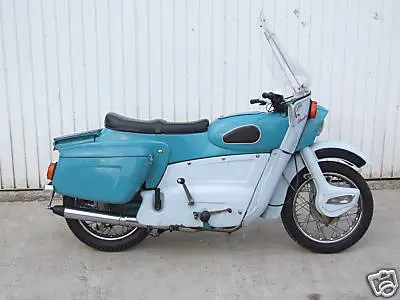
The Red Hunter sat alongside the four-cylinder Square Four, and the company’s last two-stroke was the Leader. The modern Ariel makes the Atom; more in the Ariel collection.
Video: Ariel 350 cc, 1936
Video on YouTube.
Sources
- Ariel Red Hunter, English Wikipedia: design, paintwork, testing, performance, riders