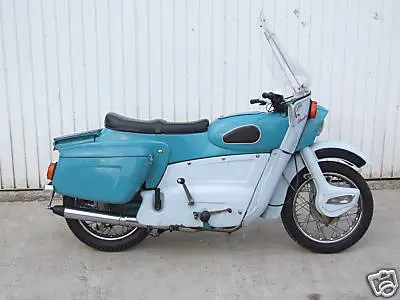
The Ariel Leader was a British motorcycle produced by Ariel Motorcycles between 1958 and 1965. A radical design, it was fully enclosed with an integral windscreen and was the first British motorcycle to have optional flashing indicators. After a few years of success Ariel could no longer compete against Japanese imports, and the last Leader was made when the factory closed in 1965.
Ariel Leader at a glance
| Maker | Ariel Motorcycles, Birmingham |
|---|---|
| Production | 1958–1965 |
| Designers | Val Page and Bernard Knight |
| Engine | 250 cc two-stroke |
| Frame | monocoque backbone of 20-gauge pressed steel |
| Fuel tank | hidden inside the frame, filled by lifting the hinged dual seat |
| Bodywork | fully enclosed, integral windscreen |
| Equipment | headlight trimmer, extendable lifting handle, permanent windscreen mounting |
| Options | hard-luggage panniers, flashing indicators, parking light, windscreen extension, rear rack, clock |
| Award | Motor Cycle News Motorcycle of the Year, 1959 |
| Built | about 22,000 |
Based on one source, the English Wikipedia article on the Leader, which also covers the Arrow.
History of the Ariel Leader
The Leader was designed by Val Page and Bernard Knight. Its 250 cc two-stroke engine hung from a monocoque backbone fabricated from 20-gauge pressed steel panels, and the fuel tank was hidden inside that structure, reached by lifting the hinged dual seat. A dummy petrol tank served as storage and was large enough for a spare crash helmet. The fully enclosed body, similar in idea to the one Phil Vincent developed for the Vincent Black Prince, was the most prominent feature: none of the working parts of the motorcycle were visible.
The standard machine was unusually well equipped for a British bike of its day, with a headlight trimmer, an extendable lifting handle to make centrestand use easier and a permanent windscreen mounting. Factory options included integral hard-luggage panniers, the first flashing indicators offered on a British motorcycle, a dash-mounted parking light, a windscreen top-extension adjustable on the move, a rear rack and a clock aperture in the dashboard that was closed by an Ariel badge when no clock was fitted.
Launched in mid-1958, the Leader claimed to offer the comfort of a scooter with the performance of a motorcycle. It sold well and won the Motor Cycle News Motorcycle of the Year award in 1959. Ariel supported the launch with such a wide range of options that few of the 22,000 Leaders produced were identical, and the colour schemes, many of them two-tone, were themselves a break with tradition; they included Oriental Blue or Cherry Red with Admiral Gray accents.
A cheaper, stripped version, the Ariel Arrow, appeared in 1959 and was developed into the Golden Arrow sport model in 1961. A sister machine, the Arrow 200, had a smaller 200 cc engine obtained by reducing the bore from 54 mm to 48.5 mm while keeping the same stroke, which brought it into a lower tax band and lower UK rider insurance premiums. In his 1964 Motor Cycle road test Bob Currie reported an absolute top speed of 74 mph with the rider lying flat and a cruising speed that could be held at 60 mph. In 1960 a prototype Arrow with a 349 cc four-stroke twin was built to sell alongside the Leader, but development money ran out and the project was dropped.
Later in production the Ariel two-strokes failed to compete with Japanese imports. BSA closed the Ariel factory in 1965, but continued to make Ariel Arrows until 1967, the last Ariel motorcycle of the original company. In 1970 BSA revived the brand for the Ariel 3, a 49 cc trike that was a commercial failure.
Design and features
- Fully enclosed bodywork: pressed-steel panels hid the engine, tank and working parts behind an integral windscreen.
- Monocoque frame: 20-gauge steel panels formed the backbone and enclosed the fuel tank.
- Dummy tank storage: the faux petrol tank was big enough for a spare crash helmet.
- First optional indicators: flashing indicators were offered on a British motorcycle for the first time.
- Long options list: panniers, parking light, adjustable windscreen extension, rear rack and clock aperture.
Ariel Leader versions
- Leader (1958–1965): the fully enclosed 250 cc two-stroke.
- Arrow (1959): a cheaper, stripped version of the Leader.
- Golden Arrow (1961): the sport version of the Arrow.
- Arrow 200 (1964): 200 cc engine with a 48.5 mm bore for a lower tax band.
- BSA-built Arrow 200: production continued after the Ariel factory closed, until 1967.
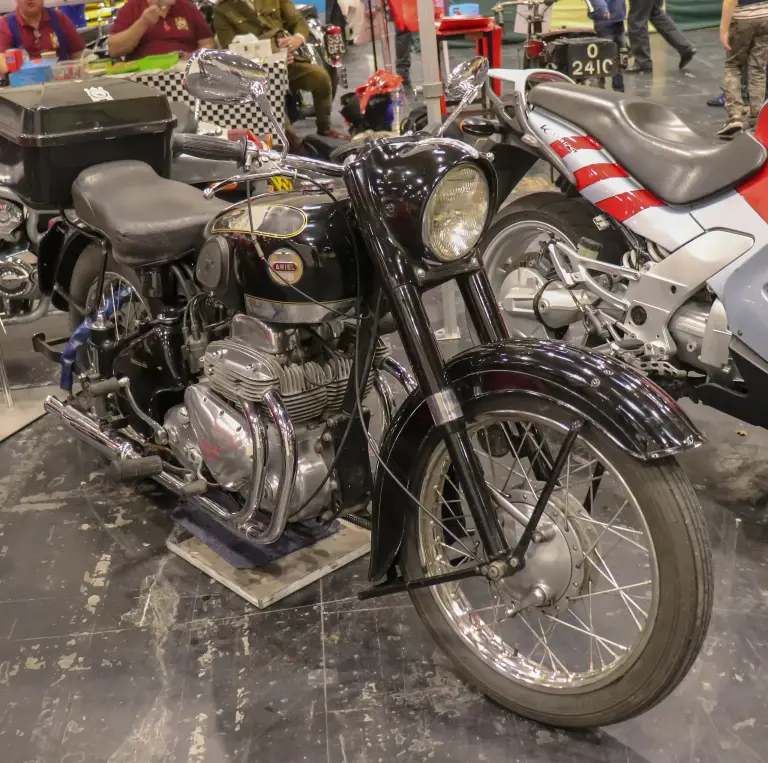
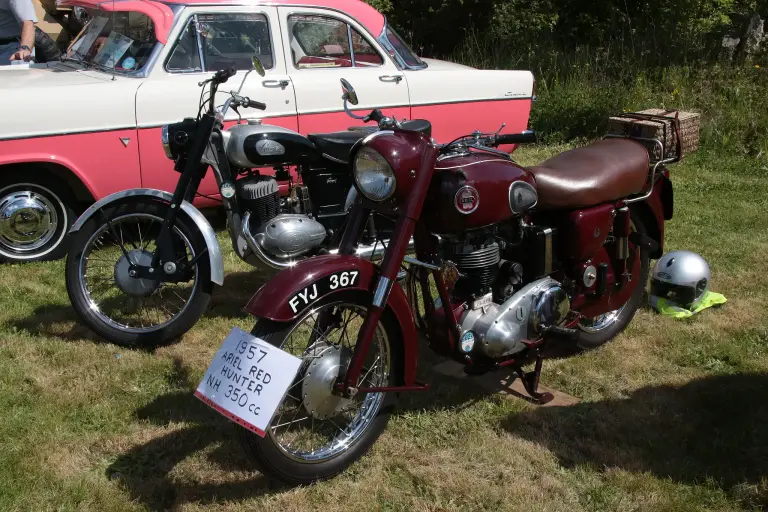
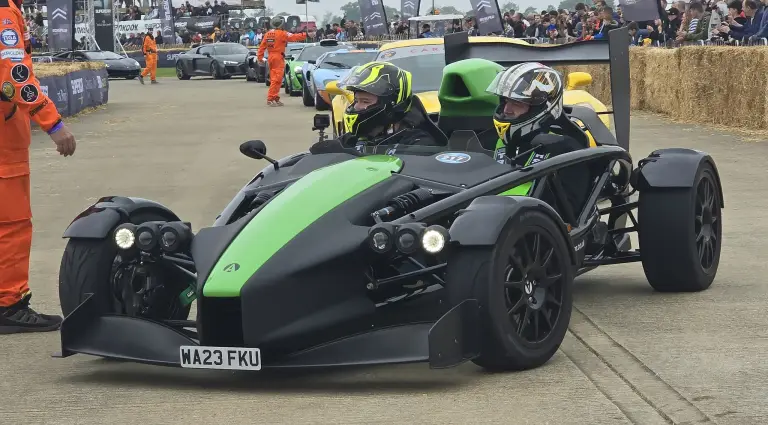
The Ariel range also included the four-stroke Red Hunter and the Square Four, while the modern company is known for the Atom.
Video: Ariel Leader (1959)
Video on YouTube.
Sources
- Ariel Leader, English Wikipedia: development, equipment, launch, Arrow versions, demise